

How to remove fingernail polish from carpet without making the stain five times bigger. That was the question I asked myself at 11 p.m. on a Friday, holding a soaked cotton ball and staring at a half-palm-sized red blotch on my apartment's off-white wall-to-wall. I had just done the exact wrong thing, and I am writing this so you don't do the same thing I did when you try to remove fingernail polish from carpet.
My girlfriend was staying over for the weekend. She was removing her polish at the kitchen counter with a cotton ball soaked in acetone. The cotton ball slipped. She grabbed a paper towel, called out, "Babe, can you get this?" and handed me the bottle of pure acetone. I am going to walk you through the next ninety seconds, because they are the reason I now know how to remove fingernail polish from carpet and the reason I will never touch acetone again without a plan.
How I Made the Fingernail Polish Stain 5x Worse in 90 Seconds
Here is what I did, and what I should have done instead.
I took the cotton ball, dabbed it on the drop of polish that had hit the carpet, and thought, "I'll just kind of spread it thin so it dries faster." That is the worst thing you can do. The acetone did not absorb the polish, it carried the polish deeper into the fiber and sideways across the carpet. By the time I lifted the cotton ball, the spot had gone from a quarter to half a palm. I had tried to remove fingernail polish from carpet and instead turned a drop into a disaster.
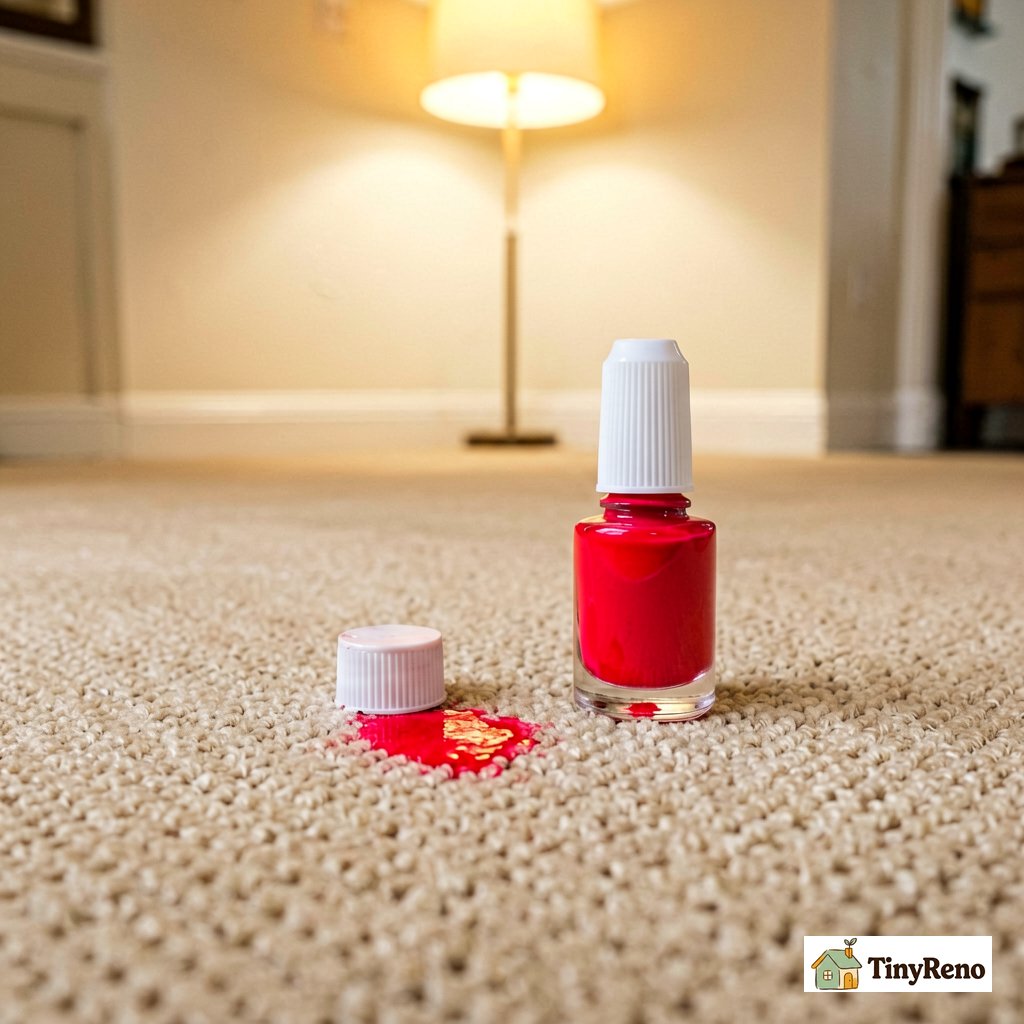
What I should have done is stop, put the acetone down, and blot the drop with a dry white cloth, the same way you blot a coffee spill. Pressure, not motion. Lift, don't smear. The polish was still wet, the fibers had not absorbed it yet, and a single firm press would have pulled most of it back up.
The lesson, in one line: when you try to remove fingernail polish from carpet, don't add more solvent unless you're ready to pull it back out immediately. Solvent dissolves the polish, but if you don't blot it up right away, the dissolved polish migrates deeper into the fiber instead of coming out.
The 3 Methods I Tested (And the 1 That Actually Worked)
After I stopped panicking, I made a list of every method I could find. There were three that renters actually try. Here is what each one does, and how each one ended for me.
| Method | What I tried | What happened |
|---|---|---|
| Warm water + dish soap | Damp cloth, blotted the stain, then pressed for 30 seconds | Lifted maybe 10% of the color on the first pass. Did nothing on the second pass. Water alone cannot break down nail polish. |
| Non-acetone remover | Dampened a fresh cotton ball, pressed (not rubbed) on the stain, replaced cotton ball every 30 seconds | This is the one that actually worked. Took four cotton balls and about an hour, but the red went from half-palm down to a faint pink shadow. |
| Professional spot cleaner (Rug Doctor spot treatment) | Rented from the grocery store for $5, sprayed on, waited 10 minutes, blotted | Did almost nothing. The active ingredient is the same detergent you already have at home, and the stain was too set for surfactant alone. |
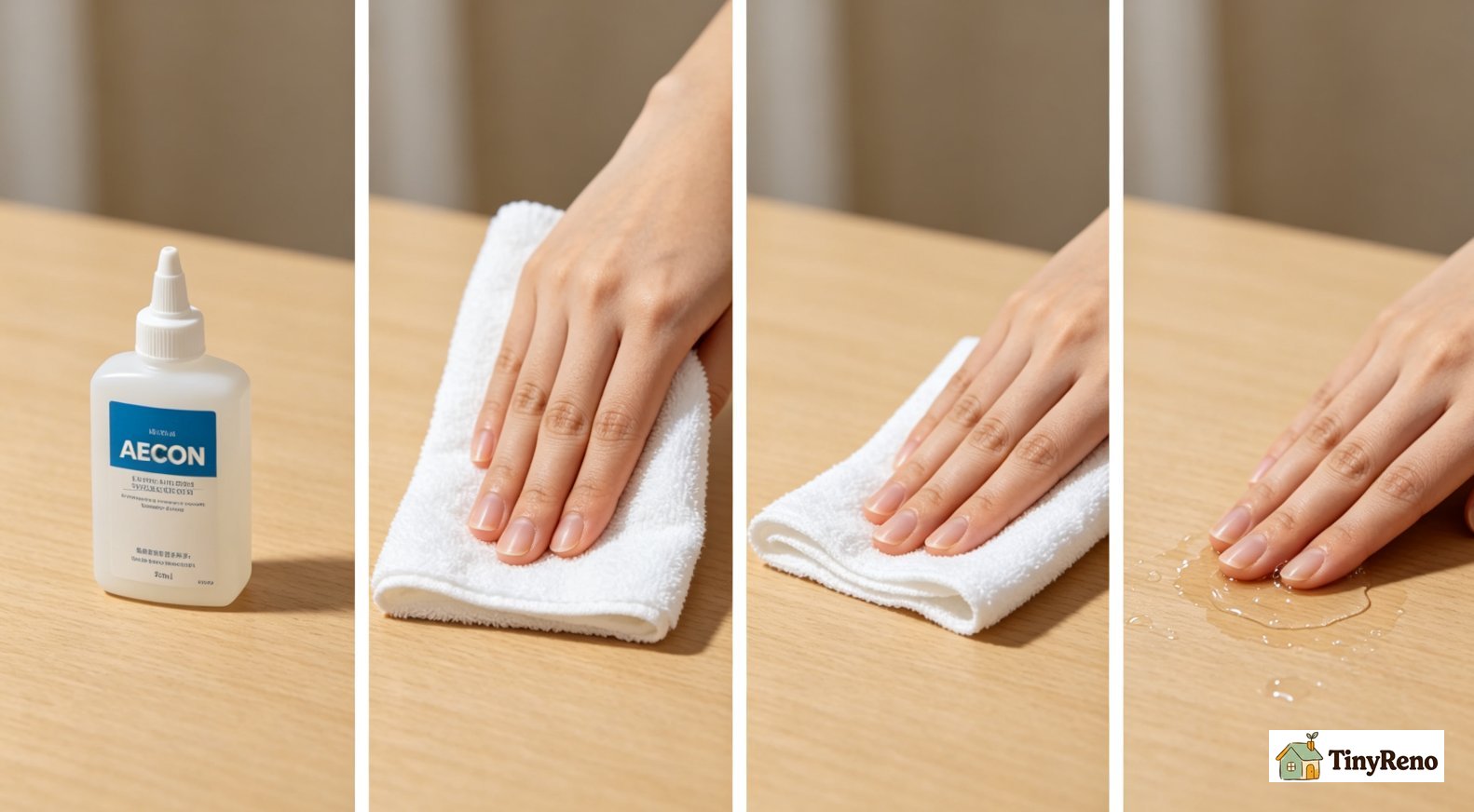
If you only remember one thing about how to remove fingernail polish from carpet, it is this: non-acetone remover, applied by pressing with a fresh cotton ball every 30 seconds, is the method that works. Acetone makes it worse. Water alone does nothing. And the spot cleaners you rent are mostly water and surfactant, which is not strong enough for polish.
Why Acetone Is a Renter's Worst Enemy on Carpet
Acetone is the active ingredient in most drugstore nail polish remover, and it is the reason most people who try to remove fingernail polish from carpet end up with a bigger stain than they started with. Here is what it does that you cannot see.
Acetone is a solvent that dissolves polish, but it is also a solvent that dissolves the latex-backed glue that holds carpet fibers to the backing. When you pour acetone on a polish stain, three things happen at once: the dissolved polish flows deeper into the pad, the acetone attacks the glue under the visible fiber, and the carpet pile loosens. You do not see the glue damage until you move out and the landlord pulls back the carpet to inspect the pad. That is when the $80 polish stain turns into a $400 carpet replacement.
Non-acetone remover, the kind that uses ethyl acetate or methyl acetate instead of pure acetone, is gentler. It still dissolves polish, but it does not attack the latex glue as aggressively. It is also slower, which is actually a benefit on carpet: a slow-dissolving solvent gives the cotton ball time to pull the polish back up before it migrates down. That is the entire reason the non-acetone method worked for me when I tried to remove fingernail polish from carpet the second time, two days later, on a stain I had given up on.
What to Do in the First 60 Seconds Before the Polish Sets
If you get to the stain within a minute of the spill, you have a real chance of pulling most of it up before it sets into the fiber. Here is the sequence that works.
- Do not touch the drop with anything wet. Step away from the acetone bottle. Set it on the counter.
- Blot the drop with a dry white cloth or paper towel. Press straight down. Hold for 10 seconds. Lift, move to a clean spot, repeat. Do not smear.
- Pick up the polish that transferred to your cloth or paper towel. Fold the cloth so the wet spot is inside, then blot again with a clean outer surface. This keeps you from re-depositing.
- Pour a teaspoon of cold water on what remains. Blot immediately. The water dilutes the polish at the surface and stops the spot from setting.
- Blot once more with a dry towel. then let the spot air-dry for 10 minutes. You want the surface dry enough that a towel won't stick to the fiber. Then press-dry with a white towel and a heavy book overnight. Don't skip the press-dry — that's what stops the ring from forming.
The first sixty seconds are the easiest window. After that, you're in the multi-hour recovery below — it still works, but it takes longer and you may not get 100% of the color out.
The 4-Hour Recovery: A Step-by-Step for Set Stains
If, like me, you did the acetone thing and the stain has set for more than ten minutes, you are in recovery mode. The stain will not come out 100%, but it can come out 90%, and 90% is usually the difference between losing $50 of your deposit and losing $300. Here is the step-by-step that worked on the stain I had given up on.
- Get a non-acetone remover. Drugstore brand, any color, ethyl acetate or methyl acetate on the label. Do not use acetone. Do not use 100% acetone.
- Test in a closet corner first. Put a single drop on a hidden bit of carpet. Wait 5 minutes. If the carpet color does not transfer to your cloth, you are safe to proceed.
- Dampen a fresh cotton ball. Squeeze out any dripping liquid. The cotton ball should be damp, not wet.
- Press onto the stain for 30 seconds. Do not rub. Lift the cotton ball straight up.
- Move to a clean spot on the cotton ball, or grab a fresh one. Repeat the press. You will see the color transfer. Stop and switch when the cotton ball stops picking up color.
- Keep going until no more color transfers. On a half-palm stain, this took me four cotton balls and about 50 minutes of intermittent pressing.
- Pour a teaspoon of cold water on the area. Blot with a clean cloth. This pulls up any remaining remover residue.
- Press-dry overnight. White towel, heavy book on top. Do not air-dry.
After the four-hour recovery, the spot went from half-palm-sized bright red to a faint pink shadow about the size of a thumbnail. My landlord had been in the apartment six months earlier for a different inspection. During the move-out walk-through, she didn't flag it. That's the bar I aim for now: not invisible, but invisible to a landlord on a 90-second look. I got lucky that night. I also learned exactly what not to do next time.


Discussion (0)
Sign in to join the discussion