

How to clean window glass without streaks was the question I tried to solve with the wrong tools for 8 years, and the answer is simpler than I expected. I tried newspaper, paper towels, household glass cleaner, vinegar, and a microfiber cloth. The newspaper left ink on the frame. The paper towels left lint. The household glass cleaner left a haze. The vinegar worked sometimes and didn't work other times. The microfiber cloth worked when it was new and stopped working after a month. The problem wasn't the tool or the solution. The problem was the order I used them in. Once I fixed the order, the streaks went away. The breakthrough came in year 9, when I learned that the streak problem isn't the cloth or the solution — it's the order of the steps. The 4 steps in the right order get streak-free glass almost every time. The 4 steps in the wrong order get streaks almost every time. What follows is the 4 steps, the 3 solutions I tested, the 1 tool to skip, and the 30-second pre-fix for hard water spots.
The 4-Step Renter Method (And Why the Order Matters)
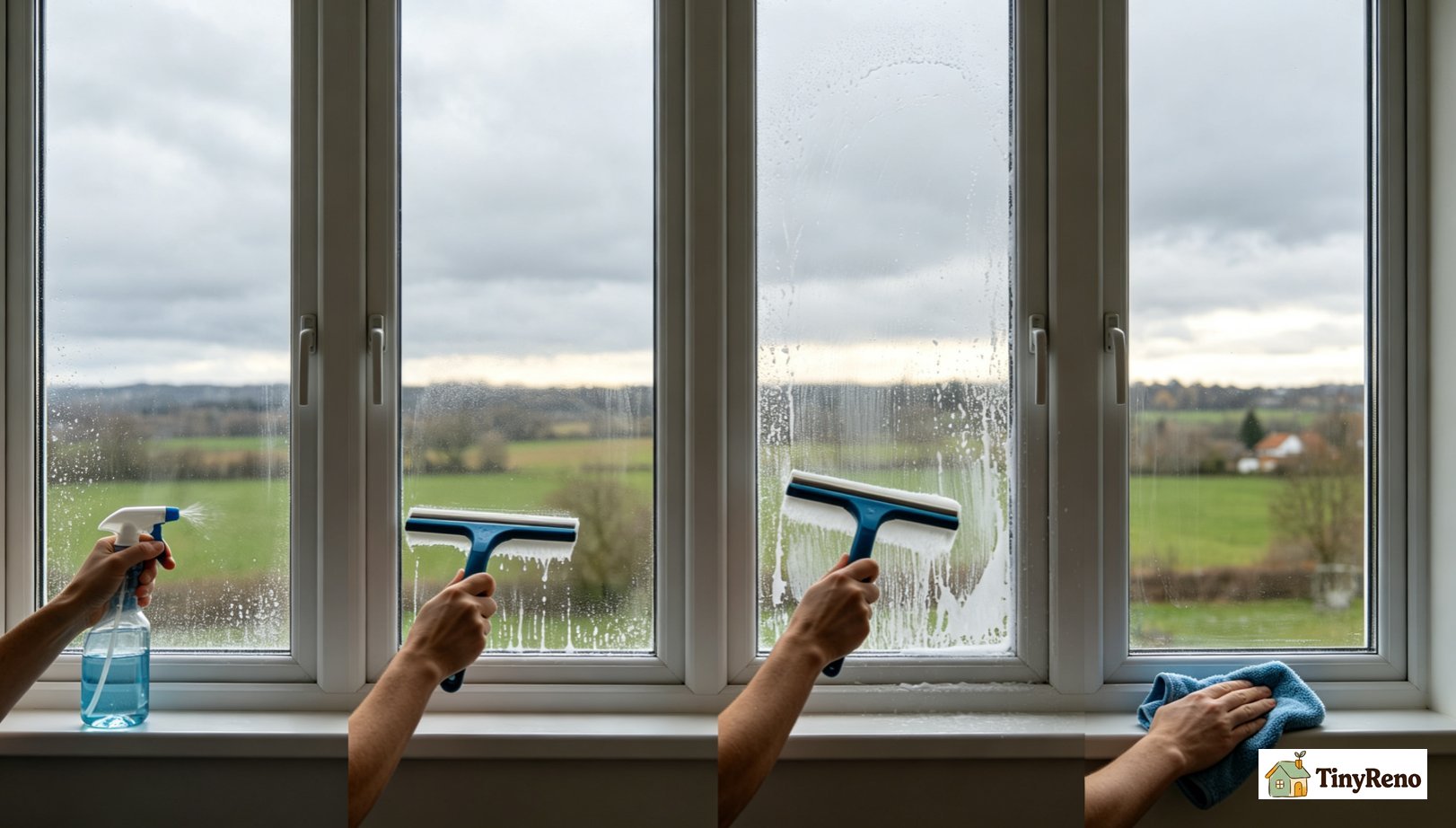
Step one is timing. The window should be cleaned on an overcast day or in the early morning or late afternoon, when the sun is not directly hitting the window. The reason is that direct sun heats the glass, and the heat causes the cleaning solution to evaporate before the squeegee can remove it. The evaporation leaves a residue, and the residue is what creates the streaks. An overcast day, early morning, or late afternoon gives the cleaning solution 5 to 10 minutes of working time, and the 5 to 10 minutes is enough for the solution to dissolve the dirt and grime without evaporating. The timing is the difference between streak-free glass and streaky glass, and the timing is the step that most people skip.
Step two is pre-wet. The window should be sprayed with the cleaning solution, and the solution should be left on the glass for 30 to 60 seconds before the squeegee touches the glass. The 30 to 60 seconds is the dwell time, and the dwell time gives the solution time to dissolve the dirt. A window that is squeegeed immediately after spraying has streaks because the dirt is still on the glass, and the squeegee just moves the dirt around. A window that is squeegeed after 30 to 60 seconds of dwell time has no streaks because the dirt has been dissolved, and the squeegee removes the dirt and the solution together. The dwell time is the difference between streak-free glass and streaky glass, and the dwell time is the step that most people skip.
Step three is squeegee top to bottom. The squeegee should start at the top of the window and work down to the bottom, with each pass overlapping the previous pass by about 1/4 inch. The overlap ensures that no spot is missed, and the top-to-bottom direction ensures that the water runs down, not sideways. A squeegee that works sideways leaves streaks at the edges, and a squeegee that works in a circular motion leaves streaks at the start and end of each circle. The top-to-bottom direction is the direction that professional window cleaners use, and the direction is the difference between streak-free glass and streaky glass.
Step four is microfiber wipe. The edges of the window should be wiped with a clean microfiber cloth after the squeegee is done. The microfiber cloth removes the small amount of solution that the squeegee leaves at the edges, and the microfiber cloth absorbs the solution without leaving lint. The microfiber cloth should be clean and dry, and the cloth should be replaced every 2 to 3 windows. A cloth that has been used on 10 windows is dirty, and the dirt on the cloth is what creates the streaks at the edges. The same logic applies to water stains on the wall — the right tool for the right step, and the tool has to be clean to do the job.
The 3 Solutions I Tested (And the 1 That Made It Worse)
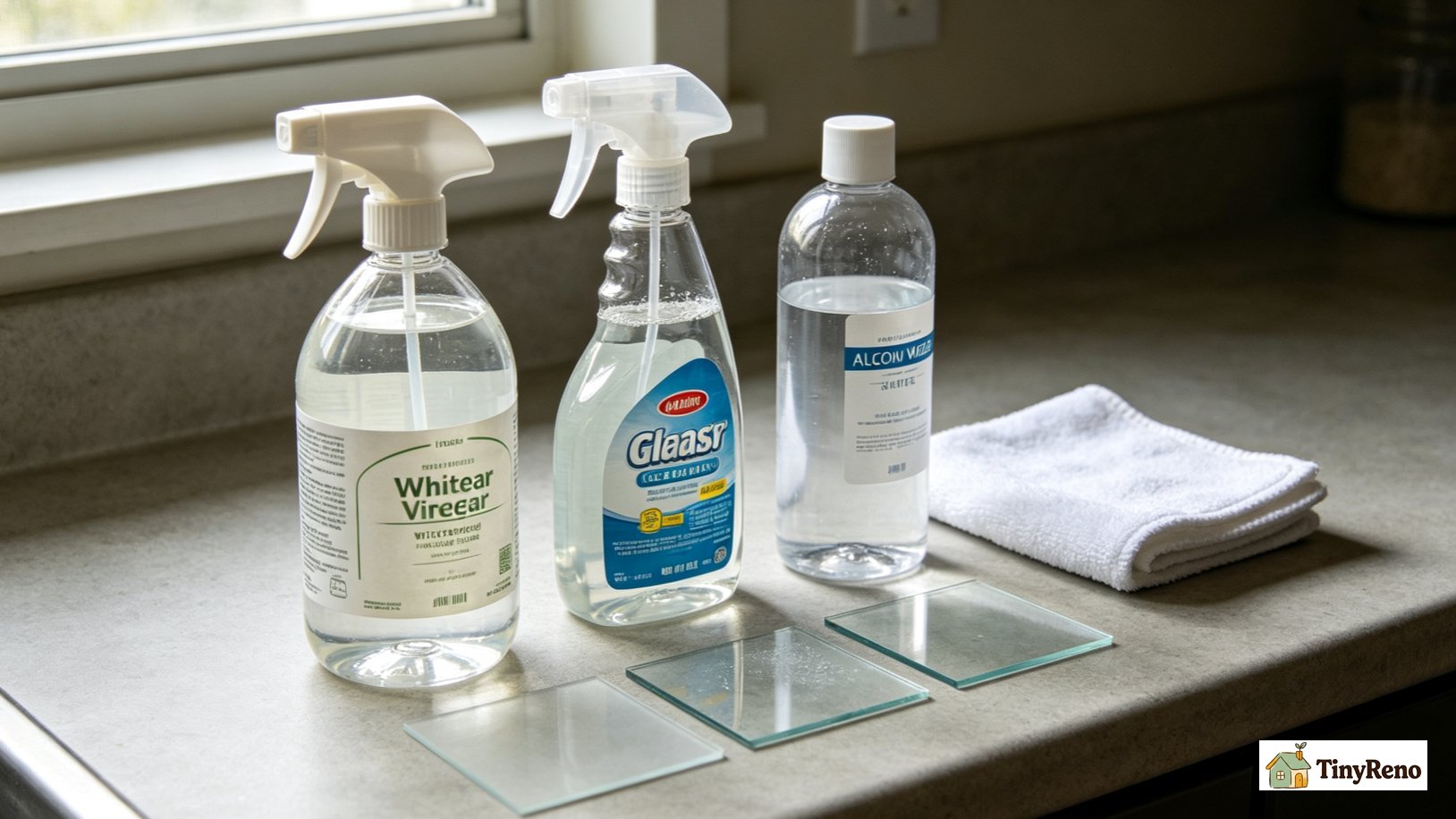
Solution one is the vinegar and water mix. The mix is 1 part white vinegar to 4 parts water, and the mix is the cheapest streak-free solution. The cost is $0.50 per window, and the cost is the lowest of the three solutions. The vinegar mix works on most windows, and the mix is safe for all window types. The downside is that the vinegar smell lingers for 10 to 15 minutes after the cleaning, and the smell is unpleasant for some people. The fix is to open the window for 5 minutes after the cleaning, and the smell dissipates.
Solution two is the commercial glass cleaner. The most common is Windex or a generic equivalent, and the cleaner is a $3 to $5 spray bottle. The commercial cleaner works on most windows, and the cleaner is faster than the vinegar mix because the cleaner doesn't need dwell time. The downside is that Some commercial cleaners leave a residue on the glass, and the residue attracts dust. It depends on the formula. The dust on the residue is what creates the streaks a week after the cleaning. The commercial cleaner is the right answer for a quick touch-up, but the cleaner is not the right answer for a deep clean.
Solution three is the alcohol and water mix. The mix is 1 part rubbing alcohol to 4 parts water, and the mix is the streak-free solution that dries the fastest. The alcohol mix is the right answer for a cold day, when the vinegar mix and the commercial cleaner take too long to dry. The cost is $1 per window, and the cost is the middle of the three solutions. The downside is that the alcohol smell lingers for 5 to 10 minutes, and the smell is stronger than the vinegar smell. The fix is to open the window for 2 to 3 minutes after the cleaning, and the smell dissipates.
The 1 solution that made it worse is the dish soap mix. The dish soap mix is 1 teaspoon dish soap per gallon of water, and the mix is what most people try first because the soap is in the kitchen. The dish soap leaves a film on the glass. The film can be removed with vinegar, but until it's removed, it attracts dust and creates streaks. The film is what creates the streaks a day after the cleaning, and the streaks are worse than the streaks from no cleaning at all. The fix is to never use dish soap on windows, and the fix is to use one of the three solutions above.
The 1 Tool to Skip (Newspaper, towels)
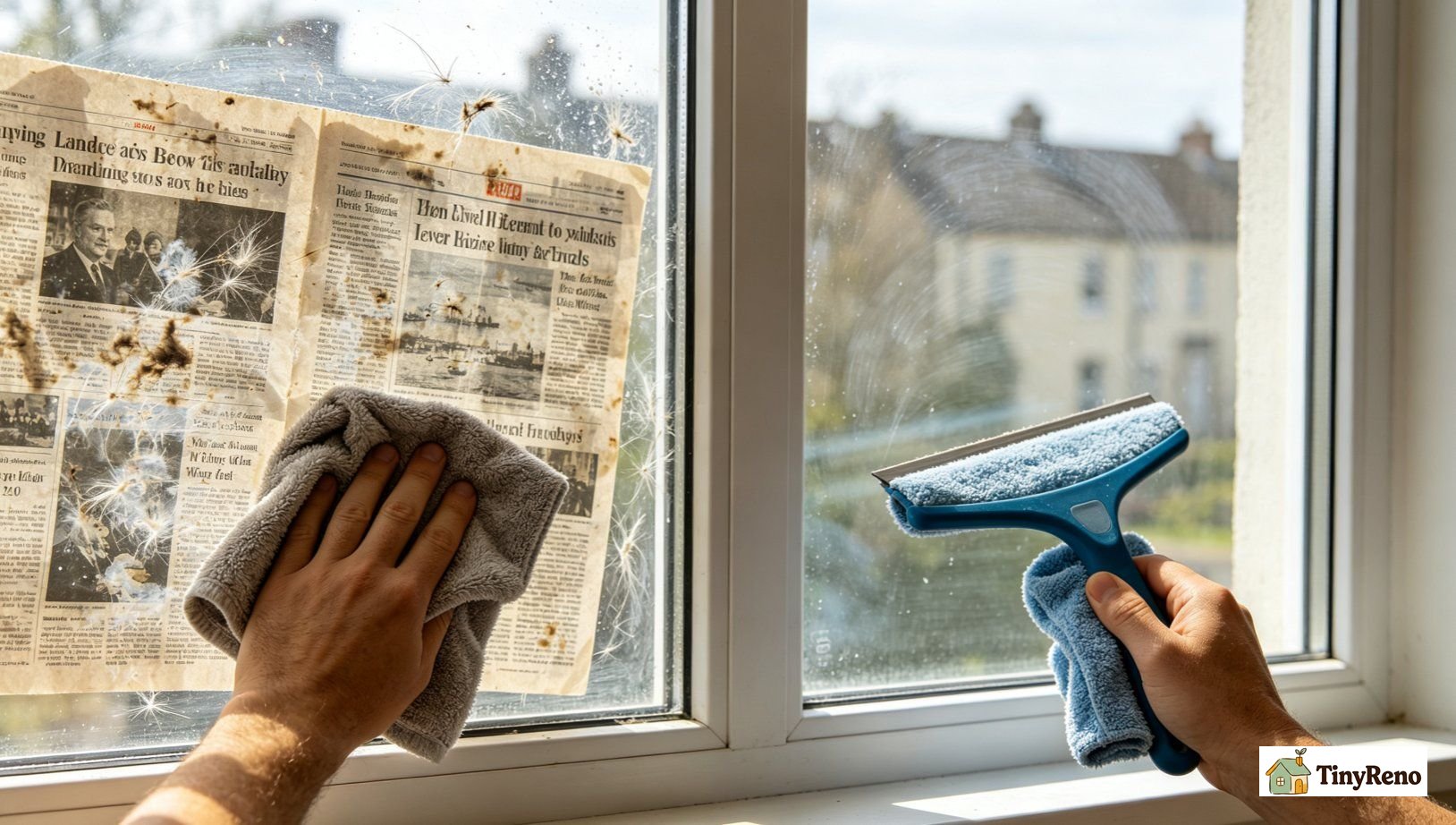
The 1 tool to skip is newspaper. Newspaper was the traditional window cleaning tool, and the tool is what most people picture when they think about window cleaning. The newspaper works for a single cleaning, and the newspaper leaves a streak-free finish that looks impressive. The downside is that the newspaper leaves ink on the glass, and the ink is invisible at first but becomes visible over time. The ink also gets on the window frame, and the ink is hard to remove. A renter who uses newspaper to clean the windows will have ink-stained frames at move-out, and the ink stain is a $20 to $50 deduction from the security deposit.
The 1 tool to skip is also the household towel. The household towel is what most people use to wipe the edges of the window after the squeegee, and the towel is convenient because it's already in the kitchen. The towel leaves lint on the glass, and the lint is what creates the small white spots that look like dust. The lint is also hard to remove once it's on the glass, and the fix is to clean the window again with a microfiber cloth. The microfiber cloth costs $5 for a 6-pack, and the microfiber is reusable for 6 to 12 months. The same advice applies to door handle repair — the right tool for the right job, and the right job sometimes means buying a $5 tool instead of using a $0 tool.
The microfiber cloth is the one tool that makes the biggest difference. The microfiber cloth is a synthetic cloth made of polyester and polyamide fibers, and the fibers are split into strands that are 1/100th the diameter of a human hair. The split fibers create a surface area that is much larger than a regular cloth, and the surface area absorbs 7 to 8 times its weight in liquid. The microfiber cloth is also lint-free, and the lint-free property is what creates the streak-free finish. The microfiber cloth costs $5 for a 6-pack, and the microfiber cloth is the best cloth for window cleaning. An old cotton t-shirt can work in a pinch, but it leaves more lint than microfiber.
The 3 Streak Sources I Finally Identified
Streak source one is hard water. Hard water is water that has a high mineral content, and the minerals (calcium and magnesium) are left behind when the water evaporates. The minerals are what create the streaks, and the minerals are not removed by the cleaning solution. The fix is to use distilled water instead of tap water for the cleaning solution. The distilled water costs $0.50 per gallon, and the distilled water doesn't leave minerals on the glass. A renter in a hard water area should use distilled water for the cleaning solution. Hard water is common in the Southwest and parts of the Midwest, but it can also show up in older buildings anywhere. If you see white spots on your glass after cleaning, your water is probably hard.
Streak source two is the sun. The sun heats the glass, and the heat causes the cleaning solution to evaporate before the squeegee can remove it. The evaporation leaves a residue, and the residue is what creates the streaks. The fix is to clean the window on an overcast day or in the early morning or late afternoon, when the sun is not directly hitting the window. The timing is the difference between streak-free glass and streaky glass, and the timing is the step that most people skip.
Streak source three is a dirty microfiber cloth. A microfiber cloth that has been used on 10 windows has dirt in the fibers, and the dirt is what creates the streaks. The fix is to replace the cloth every 2 to 3 windows, and the fix is to wash the cloth after every 5 to 10 windows. The cloth washing is a regular laundry cycle with no fabric softener, and the fabric softener coats the fibers and reduces the absorbency. A renter who doesn't wash the cloth has streaks, and the streaks are not removable without replacing the cloth.
If You Have Hard Water (The 30-Second Pre-Fix)
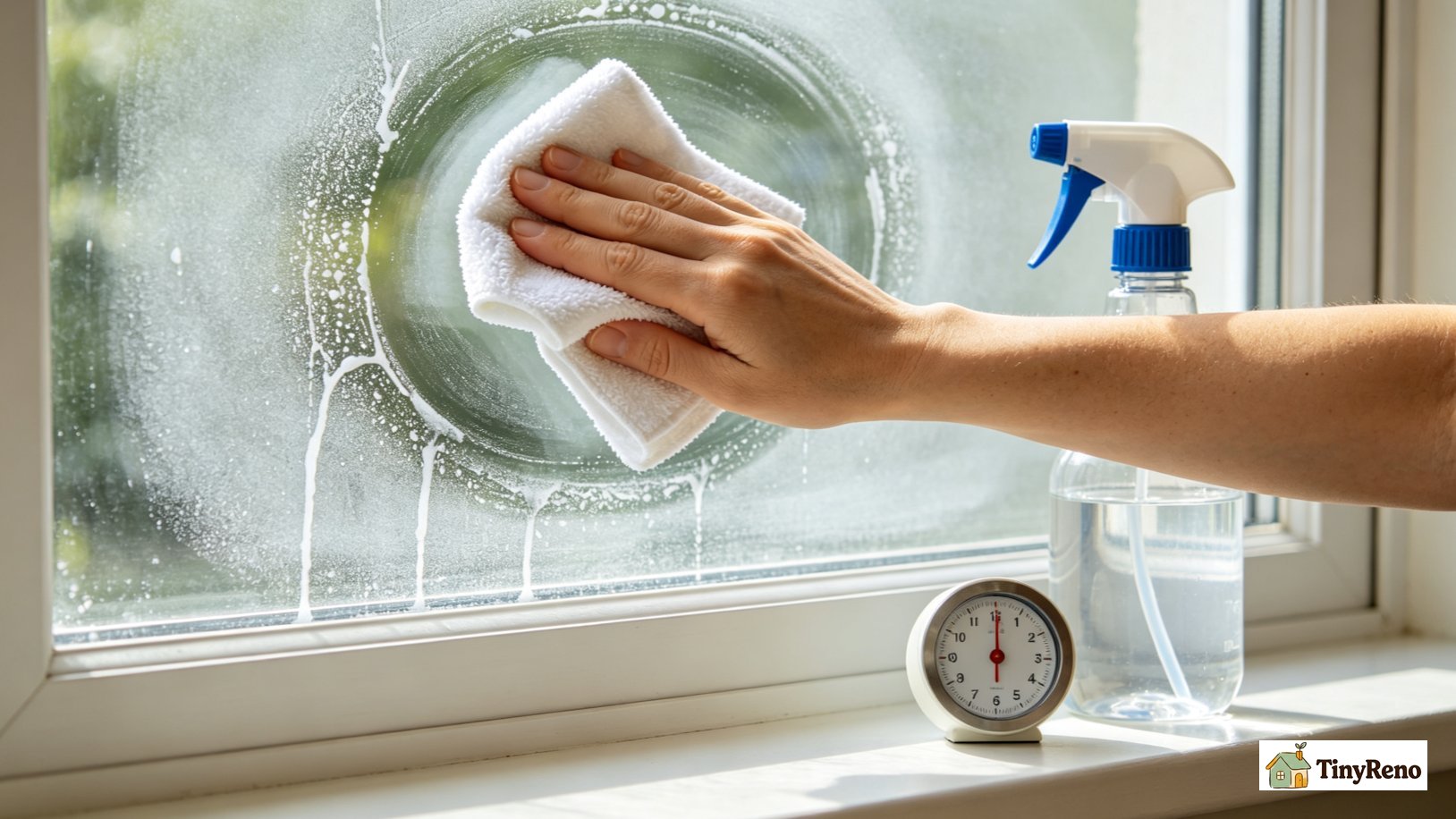
The 30-second pre-fix is the simplest part of how to clean window glass without streaks, and it is wiping the window with a cloth dampened with distilled white vinegar before the cleaning solution. The vinegar dissolves the mineral deposits, and the dissolved minerals are removed by the cleaning solution. The pre-fix takes 30 seconds per window, and the pre-fix is the difference between streak-free glass and streaky glass in a hard water area. The pre-fix is the cheapest fix for hard water streaks, and the pre-fix costs $0.50 per window in distilled vinegar.
If the hard water streaks are stubborn, the renter can use a 50/50 mix of distilled white vinegar and water, and the mix is left on the glass for 2 to 3 minutes before the squeegee. The 2 to 3 minutes is the dwell time, and the dwell time is the difference between streak-free glass and streaky glass. The mix is more aggressive than the standard 1-to-4 mix, and the mix is the right answer for windows that have not been cleaned in 6 months or more.
The 1 thing to do if the hard water streaks are still there after the cleaning is to check the squeegee blade. A squeegee blade that has a nick or a chip in the rubber will leave streaks, and the streaks are usually in a straight line. The fix is to replace the blade, and the blade costs $3 to $5 for a 12-inch replacement. The blade should be replaced every 6 to 12 months, and the blade is the part of the squeegee that wears out. The frame and the handle of the squeegee last for years, but the rubber blade is a consumable. The same advice applies to sliding door guide repairs — the consumable parts wear out first, and the consumable parts are the cheapest to replace.


Discussion (0)
Sign in to join the discussion