

Residential window cleaning service was the category I assumed was one thing until I called three different companies for quotes and got three different prices, three different scopes, and three different answers to the question "is this safe for the windows I have in my apartment." The first quote was $40 for "all windows, interior and exterior." The second was $120 for "what you can see from the street." The third was $280 for "interior and exterior with screen cleaning and sill wipe-down." The first quote was an independent operator with a ladder and a squeegee. The second was a franchise that sends a 2-person crew with a water-fed pole. The third was a handyman who also does gutter cleaning and power washing. What follows is the 3 types of residential window cleaning service I've used across four apartments over the past six years, and what I learned about which one is right for which situation, the 4 signs you should hire instead of doing it yourself, the 1 type to skip, and the 1 renter hack that saves $40 to $80 a year when the service is overpriced for what you need.
The 3 Service Types (And What Each Costs)
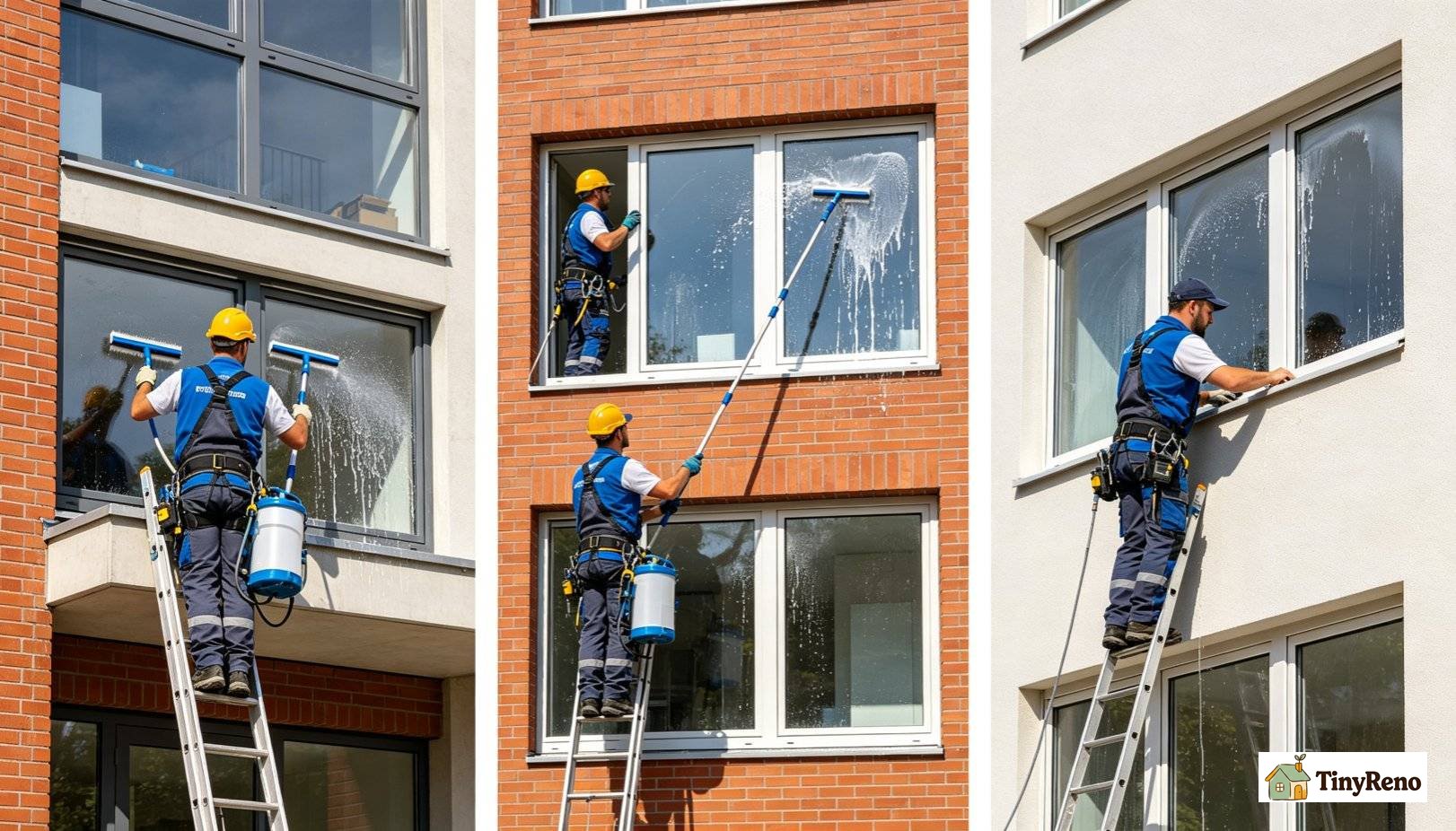
Type one is the independent operator. This is a one-person business, usually with a single ladder, a squeegee, a bucket, and a microfiber cloth. The independent operator works alone or with one helper, and the operator's price is the lowest of the three types. The typical cost is $3 to $6 per window for interior cleaning, and $4 to $8 per window for exterior cleaning, with a minimum service call of $40 to $80. The independent residential window cleaning service is the right answer for a 4-window apartment with reachable windows on the first or second floor. The independent operator is not the right answer for a 3-story townhouse or an apartment with windows that require a ladder on the second floor — the independent operator doesn't carry insurance, and the insurance gap is the renter's responsibility if the operator falls on the property.
Type two is the franchise. This is a national or regional chain that sends a 2-person crew with a water-fed pole, a purified water system, and a truck-mounted generator. The franchise's price is the middle of the three types. The typical cost is $8 to $15 per window for interior and exterior, with a minimum service call of $120 to $200. The franchise is the right answer for a 2-story or 3-story home, a multi-window apartment, or a property where the operator needs to reach windows above the first floor without a ladder. The water-fed pole is a 40-foot telescoping pole that delivers purified water to a brush at the top, and the brush scrubs the window as the water runs down. The purified water dries without spots, so the windows don't need to be squeegeed. The franchise's process is faster than the independent operator's process, and the franchise's process is also more expensive because the equipment costs $5,000 to $10,000.
Type three is the handyman or generalist. This is a service that offers window cleaning as one of several services, usually including gutter cleaning, power washing, painting, and general handyman work. The handyman's price is the highest of the three types for window cleaning specifically, but the handyman may be cheaper if you bundle the window cleaning with another service. The typical cost is $10 to $20 per window for interior and exterior, with a minimum service call of $150 to $300. The handyman is the right answer for a renter who needs multiple services in one visit, or a renter who wants one person to handle the entire exterior of the apartment. The handyman is not the right answer for window cleaning alone, because the handyman's window cleaning process is usually the same as the independent operator's process, but the handyman charges 2 to 3 times the price.
The 4 Signs You Should Hire (And the 1 Time You Shouldn't)
Sign one: the windows are above the first floor and you don't have a ladder. A 2-story window is 12 to 16 feet off the ground, and a 3-story window is 24 to 30 feet off the ground. A regular household ladder doesn't reach these heights, and an extension ladder is a 2-person job that requires setup on a sloped or uneven surface. A fall from a second-story window is a serious injury and can be fatal, especially if you land on a hard surface. A fall from a third-story window is even more dangerous. The exact risk depends on how you land, but the point is that window cleaning above the first floor is not worth doing yourself with a household ladder. The cost of a service call is $80 to $200. The cost of a fall is much higher than that.
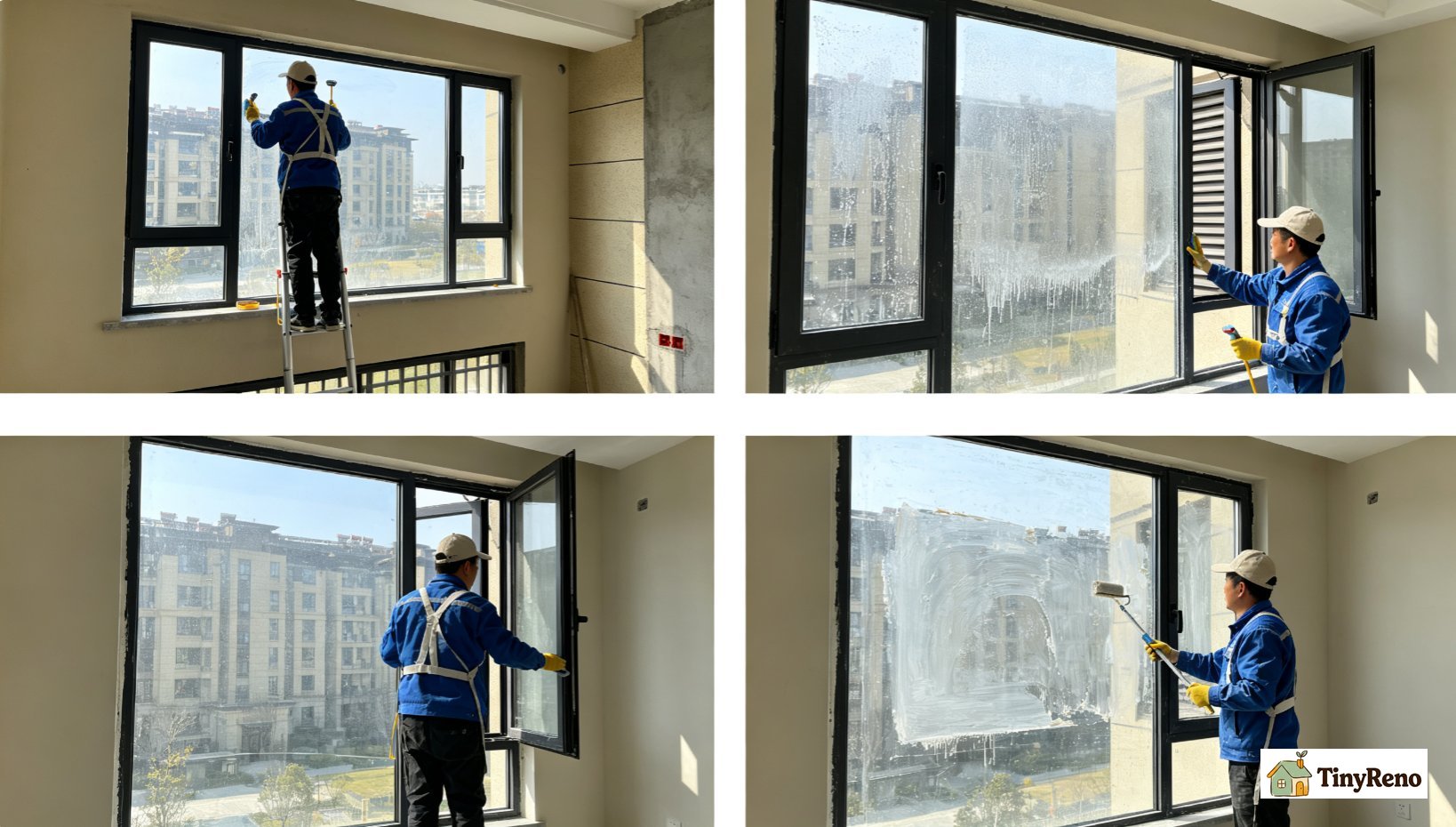
Sign two: the windows have hard water stains that don't come off with vinegar. Hard water stains are mineral deposits that have bonded to the glass, and the bond is permanent unless the glass is polished with a cerium oxide compound. Cerium oxide is a $30 powder that requires a polishing wheel, and the polishing takes 20 to 40 minutes per window. The cost of buying the cerium oxide and the polishing wheel is $50 to $80, and the time is 2 to 4 hours for a multi-window apartment. A service that specializes in hard water stain removal will charge $8 to $15 per window for the cerium oxide polish, and the total cost is usually less than the DIY route for a renter who doesn't already own the equipment. The same logic applies to water stains on the wall — the right tool for the right stain matters more than the effort you put in.
Sign three: the windows have construction debris, paint overspray, or silicone sealant that needs to be scraped. Construction debris is the kind of stain that requires a razor blade scraper and a steady hand, and the razor blade scraper will scratch the glass if the blade is angled wrong. A service that does post-construction window cleaning has industrial scrapers and trained operators, and the service is the right answer for windows that have been damaged during a renovation. The cost is $15 to $25 per window, and the time is 30 to 60 minutes per window. A renter who tries to scrape construction debris with a household razor blade will scratch the glass within 5 minutes, and the scratched glass is a $200 to $400 replacement.
Sign four: the lease or move-out inspection requires professionally cleaned windows. Some leases require professional window cleaning at move-out, and the requirement is usually stated in the move-out clause. A renter who doesn't hire a service for the move-out inspection loses the security deposit, and the deposit is usually $500 to $2,000. The cost of the service is $80 to $200, and the cost of losing the deposit is the rest of the deposit. The math is again straightforward.
The time you shouldn't hire is when you can reach the windows safely from the ground or from a step stool, and the glass just has dust, fingerprints, or light streaks. If you can reach the window without a ladder, and the dirt comes off with a squeegee and a microfiber cloth, you don't need a service. A dusty window takes 5 minutes per side to clean, and the cost of the materials is $2 for a bottle of vinegar and a microfiber cloth. A service call for a 4-window first-floor apartment is $80 to $120, and the savings is $78 to $118 for 20 minutes of your own time. The same advice applies to spackle versus caulk — the right tool for the right job, and the right job sometimes means doing it yourself.
The Renter's Angle: What to Ask the Landlord
The lease usually determines who pays for window cleaning. Most leases don't mention window cleaning at all. The general rule is that the renter is responsible for keeping the interior clean, and the landlord is responsible for the building's exterior. But window cleaning falls in a gray area. If the exterior windows are dirty from the weather or from a building-wide issue, that's usually on the landlord. If the interior windows are dirty from normal use, that's usually on the renter. Before you hire anyone, read your lease and email your landlord to ask who's responsible. The split is fair when the windows are reachable from the first floor, but the split is unfair when the windows are above the first floor. A renter shouldn't be expected to clean a 3-story window from the inside, and a renter shouldn't be expected to pay $200 for a service that the landlord should pay for.
The 3 questions to ask the landlord before hiring. First, ask "is window cleaning included in the lease?" If the answer is yes, the landlord pays, and the renter doesn't need to hire. Second, ask "is the service for above-first-floor windows included?" If the answer is no, the renter can negotiate — the renter can offer to pay for a 4-window service in exchange for a $50 rent reduction, or the renter can offer to clean the interior windows in exchange for the landlord paying for the exterior service. Third, ask "does the building have a service contract that I can join?" Some buildings have a window cleaning contract that covers all units, and the per-unit cost is much lower than a single-unit service call.
The renter hack that saves $80 is to negotiate the service into the lease renewal. If the lease is up for renewal in 6 months, the renter can ask the landlord to add window cleaning to the lease as a building service, with the cost split between the landlord and the renter. The landlord usually agrees because the building-wide contract is cheaper than the per-unit service, and the renter usually gets a lower per-service cost than a single-unit call. The negotiation takes 10 minutes, and the savings is $40 to $80 per year.
The 1 Service Type to Skip (And the 1 Renter Hack That Works)
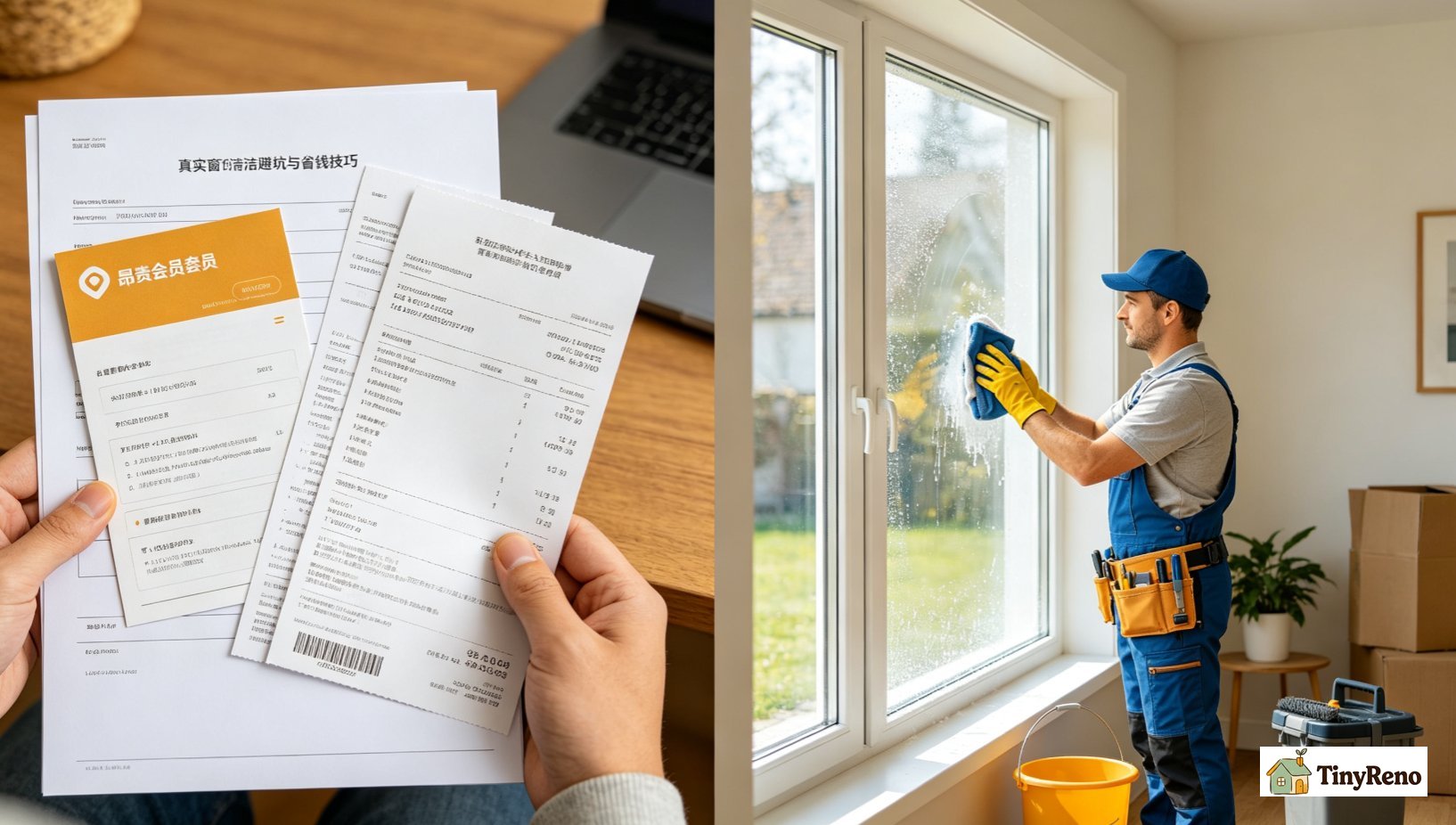
The 1 service type to skip is the franchise that sells a "lifetime warranty" or "membership" for window cleaning. The franchise charges $300 to $500 for the membership, and the membership includes 2 to 4 cleanings per year. The math doesn't work for a renter who'll be in the apartment for 2 to 3 years — the renter would pay $1,000 to $2,000 over the membership period, and the per-cleaning cost is $50 to $125, which is the same as a single-unit service call. The membership makes sense if you're going to stay in the same place for several years and you use the service regularly. For a renter who might move in two or three years, the membership usually isn't worth it — but it depends on the price and what it includes. If the per-cleaning cost is the same as a single-service call and the membership also gets you priority scheduling during the busy season, it might be worth it. Do the math for your specific situation.
The 1 renter hack that works is to book the service in the spring or fall, when the franchise and the independent operator are slower. The slow season prices are 20 to 30 percent lower than the peak season (summer and the week before Thanksgiving), and the slow season windows are easier to book. A renter who books in March or October gets the same service for $60 instead of $90, and the renter gets a 2-week window instead of a 6-week wait. The same advice applies to door handle repair — the off-season price is the right price for a renter who has flexibility.
One renter-to-renter warning. Some franchises have their own employees; others subcontract to local operators. Some handymen do the work themselves; others subcontract. It depends on the company. Before you hire a franchise or a handyman, ask who will actually be doing the work and whether that person is an employee or a subcontractor. If it's a subcontractor, you can sometimes find the same operator directly through a local referral or a neighborhood Facebook group and save the markup. But not every company works this way, and not every operator is available for direct booking.
If You Hire (The 5 Questions to Ask Before Signing)
Question one: is the operator insured, and what does the insurance cover? The insurance should cover property damage and personal injury, and the certificate of insurance should be provided before the work starts. A renter who hires an uninsured operator is liable for any damage the operator causes, and the damage can be a $500 to $2,000 window replacement or a $5,000 medical bill if the operator is injured on the property.
Question two: what's the scope, and is screen cleaning and sill wipe-down included? The scope should be in writing, and the scope should specify which windows are interior, which are exterior, and whether the screens and sills are included. A renter who doesn't get the scope in writing is at risk of being charged extra for the screens and sills, and the extra is usually $2 to $5 per window.
Question three: what's the cancellation policy, and is the deposit refundable? The cancellation policy should be in writing, and the policy should specify a 24-hour or 48-hour cancellation window. A renter who cancels outside the policy window loses the deposit, and the deposit is usually 20 to 50 percent of the service cost.
Question four: what cleaning solution is used, and is it safe for tinted or coated windows? Some cleaning solutions are ammonia-based, and ammonia damages window tint and Low-E coatings. A renter with tinted or coated windows should ask for a non-ammonia solution, and the solution should be in the scope. A renter who doesn't ask is at risk of having the tint or coating damaged, and the damage is a $100 to $300 per window re-tint cost.
Question five: what's the drying time, and can the windows be touched during the drying time? The drying time for purified water is 5 to 10 minutes, and the drying time for squeegee cleaning is 2 to 5 minutes. The windows should not be touched during the drying time, because touching the window leaves fingerprints that have to be cleaned again. A renter who doesn't ask about the drying time may touch the windows and have to call the service back, and the callback is usually a $20 to $40 fee.


Discussion (0)
Sign in to join the discussion