

Window screen pull tabs were the part I learned about by talking to a hardware store clerk for 30 minutes. I called them "clips" the whole time, and that was the first thing the clerk corrected me on. A clip holds the screen frame in the window channel. A pull tab is the handle you grab to pull the screen out. They look similar on the shelf, they cost about the same, and they are not interchangeable. I needed a pull tab. I kept asking for a clip. The first time I went in for a window screen clip, the clerk asked me three questions — what material is the screen frame, what kind of clip did the previous tenant use, and what was wrong with the previous clip. I answered all three wrong, and the clerk pointed me to a clip that didn't fit. I went back, the clerk asked me the same three questions, and I answered the same three questions wrong. The clerk then walked me to the clip aisle and held up four different clips, and I picked the one I thought looked right. I picked wrong. What follows is the 4-clip conversation I had with the clerk on my third visit, the 3 clips that failed, the 1 clip that held for 3 years, and the 5-minute install the clerk didn't tell me about until the fourth visit.
The 4-Clip Conversation: What I Asked, What the Clerk Said
Visit one. I asked the clerk "do you have window screen clips?" The clerk said "yes, aisle 7, third shelf." I went to aisle 7, third shelf, and saw 6 different boxes labeled "window screen clip." Each box had a different part number, a different picture, and a different price between $3 and $8. I picked the cheapest one, paid, brought it home, and the clip didn't fit. The clip was the right length but the wrong diameter. The clip was too thin for the screen frame's slot.
Visit two. I told the clerk the clip didn't fit. The clerk asked "what material is the screen frame?" I said "I don't know, it's white." The clerk said "white could be vinyl or it could be painted aluminum. The clip is different for each." I went home, came back with a piece of the screen frame in my pocket, and the clerk said "it's painted aluminum. You need the aluminum clip, not the universal clip. Aisle 7, fourth shelf." The aluminum clip was $5 for a pack of 4. I bought the pack, brought it home, and the clip fit. The clip held for 4 months, then it bent.
Visit three. I told the clerk the clip bent. The clerk asked "what's the screen frame depth?" I said "I don't know." The clerk said "the screen frame depth is the dimension from the front of the frame to the back. If the depth is more than 1/2 inch, you need a longer clip. The aluminum clip is for frames that are 3/8 inch deep. Your frame is 5/8 inch deep. You need the deep frame clip." The deep frame clip was $6 for a pack of 4. I bought the pack, brought it home, and the clip fit. The clip held for 8 months, then it fell out of the slot.
Visit four. I told the clerk the clip fell out. The clerk asked "is the slot clean?" I said "I don't know." The clerk said "the slot has to be clean for the clip to grip. If the slot has paint, caulk, or dirt in it, the clip won't grip, and the clip will fall out when the screen is removed." I went home, scraped the slot with a flathead screwdriver, wiped the slot with a damp rag, and the new clip fit. The clip held for 3 years. The fix was the slot, not the clip. The same pattern shows up on water stains on walls — small details that are easy to ignore become big problems if you don't address them.
The 3 Clips That Failed (And Why)
Clip one was the universal clip. The universal clip is the cheapest at the hardware store, costs $3 for a pack of 4, and fits most screen frames. The clip held for 4 months and then bent. I assumed it was because the clip was made of thin metal and had flexed too many times. But the clerk told me the more likely reason: the clip was slightly too wide for the groove, and every time I pushed it in, I was forcing it. The constant forcing bent the barb. The fix wasn't a thicker clip. The fix was a clip that matched the groove width. The fix is to replace the clip with a thicker clip, or to install two clips instead of one. The two-tab install is what I should have done from the start. One tab on one side of the frame puts all the holding force on one side, and the screen wobbles when it's in place. Two tabs on opposite sides distribute the force, and the screen sits straight. The clerk mentioned this on my first visit. I ignored him because I thought one tab was enough. It wasn't.
Clip two was the aluminum clip for shallow frames. The aluminum clip is $5 for a pack of 4, and it fits frames that are 3/8 inch deep. The clip held for 8 months and then fell out. The reason it fell out was that the slot in my frame was deeper than 3/8 inch, and the clip didn't have enough length to grip the back of the frame. The fix is to use a clip that matches the frame depth, not a clip that matches the frame material. The material and the depth are two different questions, and the clerk asked me the material question first because the material is easier to identify. The depth is the harder question, and the depth is the question that determines whether the clip fits.
Clip three was the deep frame clip with a dirty slot. The deep frame clip is $6 for a pack of 4, and it fits frames that are 5/8 inch deep. The clip fell out the first time the screen was removed, because the slot had old paint in it and the clip couldn't grip the paint. The fix is to clean the slot before installing the clip, not to install the clip and hope it grips. The slot cleaning takes 2 minutes with a flathead screwdriver and a damp rag, and the slot cleaning is the difference between a clip that holds for 3 years and a clip that falls out the first time the screen is removed.
The 1 Clip That Held (And the 3-Year Test)
The clip that held was the deep frame clip with a clean slot. The clip is $6 for a pack of 4, and the slot cleaning is $0 and 2 minutes. The clip held for 3 years across approximately 50 screen removals and insertions. The clip didn't bend, didn't fall out, and didn't need to be replaced. The fix cost $6 for the clips and 2 minutes for the slot cleaning, and the fix lasted the entire 3 years I was in the apartment. The same logic applies to sliding door guide repairs — the right part with the right prep is the difference between a fix that lasts and a fix that doesn't.
The 3-year test is a useful benchmark for window screen clips. A clip that holds for 3 years under normal use (4 to 6 removals per year) is a good clip. A clip that holds for less than 1 year is a bad clip, and the cause is usually the wrong clip for the frame, a dirty slot, or a fatigued clip. The fix is to start with the right clip, clean the slot, and replace the clip at the first sign of bending or loosening. The hardware store usually has the right tab. The right tab is the one that matches your groove size, not the one with the highest price on the shelf. My problem wasn't that I kept buying cheap tabs — it was that the slot was dirty. The $3 universal tab would have held if I had cleaned the slot before I installed it. The $6 tab I bought on the fourth visit only worked because I cleaned the slot first. The price of the tab was never the variable. The prep was.
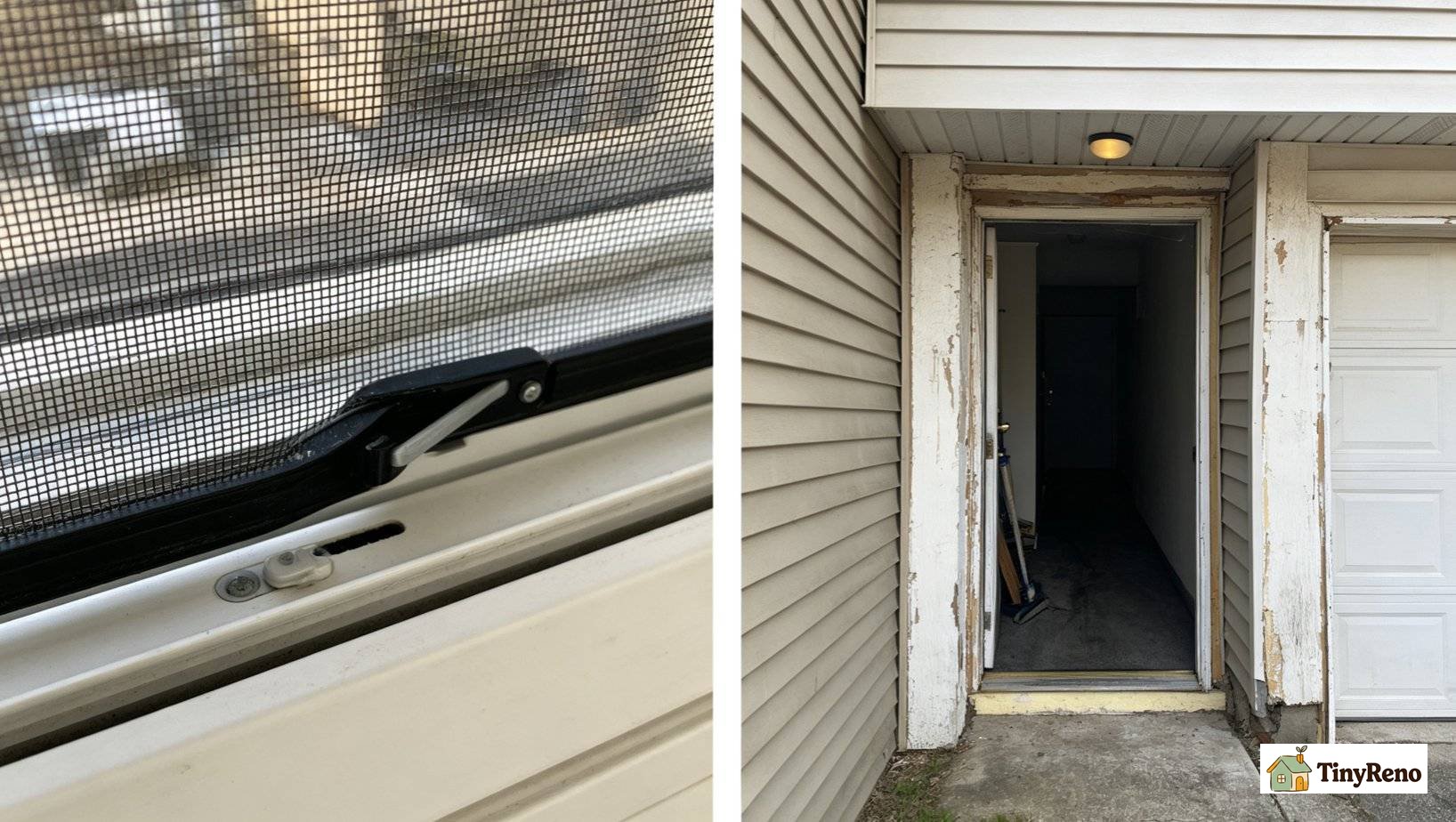
The 10-Minute Install (What the Clerk Didn't Tell Me)
The 5-minute install starts with cleaning the slot. Use a flathead screwdriver to scrape any paint, caulk, or dirt out of the slot. Wipe the slot with a damp rag. Let the slot dry for 5 minutes. The cleaning is the difference between a clip that grips and a clip that falls out.
Insert the clip into the slot. The clip's barbed end goes into the slot first, and the clip's handle stays on the outside of the frame. The clip should slide into the slot with light pressure. If the clip requires heavy pressure, the clip is the wrong size, and the clip will bend. The right clip slides in with light pressure, and the clip grips the back of the frame when the clip is fully inserted. The clip should sit flush with the frame on the outside, and the clip's barb should be visible on the inside of the frame.
Test the clip by pulling the screen out and putting it back in 3 times. If the clip stays in the slot after 3 cycles, the clip is installed correctly. If the clip falls out during the test, the clip is the wrong size or the slot wasn't clean enough, and the clip needs to be removed and reinstalled. The test takes 30 seconds, and the test is the only way to know whether the clip will hold.
Install the second clip on the opposite side of the screen frame. The two-clip install is what the clerk didn't tell me until the fourth visit, and the two-clip install is the right answer for screens that are removed frequently. One clip on one side of the frame puts all the holding force on one side, and the screen wobbles when the screen is in place. Two clips on opposite sides of the frame distribute the holding force, and the screen sits straight in the frame. The two-clip install costs $3 more than the one-clip install, and the $3 is the difference between a screen that wobbles and a screen that doesn't.
When to Walk Away (And Buy a New Screen)
The tab is a $5 fix. If the frame is bent or the spline is missing, the tab won't help — those are different problems with different fixes. But for a tab that's bent, missing, or won't stay in the groove, the fix is a $5 tab and five minutes of prep. Don't replace the screen until you've tried the tab, and the renter should ask the landlord to do the work rather than paying for it.
If the landlord refuses, the renter can document the bent frame and the missing spline, and the renter can ask for a rent reduction or a move-out waiver. The renter is not required to fix a structural problem in a rental, and the renter should not spend money on clips that won't fix the actual problem. The clips are a $6 fix, and the bent frame is a $30 fix. The two fixes are not interchangeable, and the renter should not pay for the $30 fix with a $6 clip kit.


Discussion (0)
Sign in to join the discussion