

AC vent leaking water was the problem that finally got me to learn what was behind the ceiling. The first time it happened, in my second apartment, I put a pot under the drip and figured I'd deal with it after work. By the time I got home, the pot was full, the ceiling around the vent was sagging about a quarter inch, and there was a brown ring the size of a dinner plate spreading outward from the vent cover. The repair cost $340 — half of which was the painter, the other half the drywaller — and The landlord took it out of my security deposit because the lease said ventilation was my responsibility and the leak was technically condensation, not plumbing. That was a $340 lesson in reading the lease. But not every AC leak is the tenant's responsibility. If the cause is a disconnected duct, an uninsulated duct in the attic, or a refrigerant leak, that's the landlord's job — those are building systems, not tenant maintenance. The lease language matters, and so does the cause. The second time it happened, in my fourth apartment, I knew the five things that cause it and which one was the ceiling-rotter that I needed to escalate in the first 24 hours.
The 5-Cause Decision Tree (Ranked by Urgency)
An AC vent leaking water is one of five things, and the difference between a 10-minute fix and a ceiling replacement is correctly identifying which one in the first 10 seconds. The five causes, in order of how urgently you need to escalate, are: condensation on a cold supply vent in humid air, a disconnected or kinked flexible duct above the ceiling, a clogged condensate drain line on the air handler, an uninsulated duct running through a hot attic, and a leaking refrigerant line at the indoor coil. The first is a renter fix. The second and third are usually a renter-and-landlord conversation. The fourth and fifth are the landlord's job in the first 24 hours, full stop.
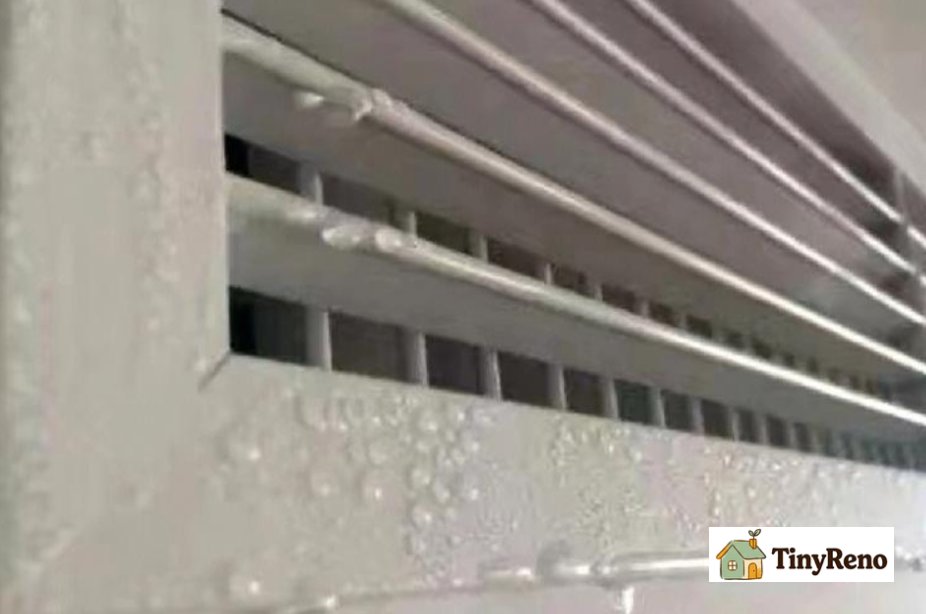
The first diagnostic question is where the water is coming from. If the water is only on the vent cover itself and the cover feels cool to the touch, the cause is most likely condensation. If the water is coming from above the cover — dripping through the slots or running down the side of the vent — the cause is one of the other four. If you see water in both places, start with the assumption that it's coming from above: water running down the duct can pool on the cover and look like condensation, and you need to figure out which one before you do anything else. The difference matters because the first is cosmetic and the second can be a ceiling emergency that gets worse by the hour.
The second diagnostic question is whether the air handler (the indoor unit, usually in a closet or attic) is running when the leak happens. If the leak only happens when the AC is on, you can rule out a roof leak and a supply-line leak from upstairs, which means the source is in the AC system itself. If the leak happens whether the AC is on or off, you are dealing with a roof leak or a plumbing leak that happens to be pooling on top of the vent cover, and you need the landlord and a plumber, not a YouTube video.
How I Diagnosed Each in My 3 Apartments
Apartment two, the brown-ring disaster. The vent cover was dry to the touch. The water was coming from above the cover and dripping through the slots. The AC was running at the time. The air handler was in a hall closet two rooms over. I opened the closet, found a half-inch of standing water in the condensate pan, and the float switch was supposed to shut the AC off when the pan filled but it had failed. This is the most common renter scenario — the float switch is a $14 part that fails every 5-7 years, and most landlords never test it. The fix is to vacuum out the pan with a wet/dry vac, replace the $14 float switch, and you're done. The damage to the ceiling was already done by the time I found it.
Apartment three, the leak that turned out to be a duct issue. The vent cover was dry. The water was coming from above. The AC was running. The air handler was in the attic. I went up to the attic (with the landlord's permission, in writing) and found that the flexible duct connecting the air handler to the ceiling vent had disconnected at the ceiling box, and condensation was forming on the uninsulated duct and dripping down through the gap. The fix was to reconnect the duct with a $6 foil tape and add an insulation sleeve around the duct. Total cost was about $25, split with the landlord. The same diagnosis pattern shows up on unclogging a tub drain — the symptom is at the fixture, the cause is upstream.the cause is one of the other four
Apartment four, the leak that taught me the 24-hour rule. The vent cover was wet. The water was beading on the cover itself, not coming from above. The AC was running. The vent was a supply vent on an interior wall, not a return vent, and the duct ran through the attic. I cleaned the cover, watched for 30 minutes, and the beads came back. The duct was uninsulated in the attic, and on a 95-degree day, the cold air inside the duct was condensing on the outside of the duct, and the water was running down the duct and pooling on the vent cover. The fix is insulation around the duct in the attic, which is the landlord's job because the attic is not a tenant-accessible space in most leases. I gave the landlord 48 hours to fix it. He took 11 days, and the ceiling developed the brown ring again. I learned two things: identify this cause in the first 24 hours, and document the leak with a photo and a timestamped text to the landlord so the deposit conversation at move-out goes your way.
The 3 Fixes Renters Can Do (And the 2 That Need the Landlord)
Renter fix one: the condensation-on-the-cover scenario. The vent cover is wet, the air around the vent feels humid, and the AC is running. Wipe the cover with a dry rag, set the AC to "auto" instead of "on" (so the blower cycles off between cooling cycles), and lower the thermostat 2 degrees to reduce the temperature differential. If the leak stops, you've confirmed the diagnosis. The longer-term fix is to ask the landlord to add insulation around the duct in the attic, but the short-term fix is the thermostat change.
Renter fix two: the clogged condensate drain line. The air handler is in a closet you can access, and you can see a small PVC pipe with a cap on it near the base of the air handler. The cap unscrews by hand. If you have a wet/dry vac, you can put it on the opening for 15-20 seconds to try to clear a loose clog. But be careful — too much suction on an old pipe can pull a joint apart and turn a slow drain into a leak. If the pipe feels loose or the clog doesn't clear in one pass, stop and call the landlord. And check your lease first: some leases classify any work on the HVAC system, including the drain line, as landlord-only. if you own a wet/dry vac or borrow one.
Renter fix three: the vent cover that's just loose. Sometimes an AC vent leaking water is just a vent cover that isn't seated properly, and the condensation that forms on the inside of the duct is leaking through the gap between the cover and the ceiling. Push the cover up into the ceiling until it clicks, or tighten the two screws on the sides of the cover. If the cover sits flush with the ceiling and the leak stops, the fix took 30 seconds and $0.
Landlord fix one: the disconnected or kinked flexible duct in the attic. You can't reach this without going into the attic, and most leases forbid tenant access to the attic. The landlord needs to send a tech to reconnect or replace the duct. Time to fix: 1-2 hours. Cost: $100-200.
Landlord fix two: the refrigerant line leak. This is the one that needs the landlord in the first 24 hours. The symptom is an AC that isn't cooling as well as it used to, sometimes a faint hissing sound from the air handler, and ice forming on the indoor coil. If the coil ices up and then melts, water can drip from the vent — but that water is condensation, not refrigerant. The refrigerant itself doesn't turn into water. If you see ice on the coil, that's a refrigerant or airflow problem, and it needs an HVAC tech. The refrigerant line leak is a sealed system that only an HVAC tech should touch, and the refrigerant itself is regulated. If this is the cause, every hour of delay is refrigerant loss and compressor damage. Call the landlord before you finish reading this paragraph.
When to Call the Landlord (And When to Call a Plumber Instead)
Call the landlord in the first 24 hours if the water is coming from above the vent cover rather than beading on the cover itself. That's the diagnostic that separates "I can fix this in 5 minutes" from "this is going to rot my ceiling if I wait." The landlord has 24-48 hours in most leases to address active water intrusion, and an AC vent leaking water qualifies. Document the leak with a photo, send the photo to the landlord by text or email with a timestamp, and keep the message thread for the move-out negotiation. This is the renter-to-renter advice that no property manager will give you: the documentation matters more than the repair.
Call a plumber, not the landlord, if the water is leaking whether the AC is on or off. That means the AC system is not the cause, and the cause is upstream — a supply line from a bathroom above, a drain line from a kitchen above, or a roof leak that's pooling on the vapor barrier and finding the vent as the lowest point. A plumber can diagnose in 30 minutes what a landlord will spend three visits failing to diagnose, and the plumber's report is the kind of document that wins a small-claims deposit case without you having to show up.
The 24-hour triage if it's already dripping: put a pot or a baking sheet under the drip, set the AC to "off" at the thermostat, and put a box fan pointing at the wet ceiling to dry it as fast as possible. The wet ceiling is the loss — every hour it stays wet is another hour the drywall is softening and the mold is colonizing. The fan is more important than the pot. A dry ceiling in 12 hours is the difference between a $50 paint patch and a $400 drywall replacement. If the leak is the refrigerant line, the AC needs to stay off until the landlord's tech arrives. If the leak is anything else, you can run the AC on fan-only (no cooling) to keep air moving while you wait.
The longer you wait on an AC leak, the more expensive it gets. A wet ceiling that dries in 12 hours is a paint patch. A wet ceiling that stays wet for a week is a drywall replacement. Figure out whether the water is coming from above or beading on the cover, escalate the landlord-fix causes within 24 hours, and handle the renter fixes with a rag and a thermostat.


Discussion (0)
Sign in to join the discussion