

Brown stains on window sill. My aunt Nora has lived in the same prewar two-bedroom in Somerville for thirty-one years. Her living room window faces a street that gets plowed in winter but never salted. Her window sill has a brown stain about four inches long and half an inch wide. The stain has been there for as long as she can remember. It looks like rust. She's tried to clean it three times. She's tried vinegar, baking soda paste, magic eraser, and a commercial rust remover. None of them worked. The stain is still there. She assumed it was rust from the iron nails that hold the sill in place. She's been assuming this for thirty years. Last fall, she asked me to come look at it because the stain had started getting bigger. I went over with a 4x magnifying glass, a spray bottle of water, and a paper towel. The diagnosis took about three minutes. The stain was not rust. The stain was tannin from leaves that had been collecting against the sill for decades, leaching tannins into the wood every time it rained. The fix was a 50-cent bottle of oxalic acid and 20 minutes of scrubbing. The stain disappeared. My aunt's thirty-year-old mystery stain disappeared in twenty minutes because she had the wrong cause.
The brown stain on a window sill is one of those problems that everyone assumes is one thing and is actually one of four things. The four causes are rust, mold, water damage, and tannin. The fix is completely different for each. Cleaning the wrong cause wastes your time and can make the stain worse. The cleaning product that removes rust will spread mold. The cleaning product that removes mold will set tannin deeper into the wood. The cleaning product that removes tannin will damage the wood finish. The cost of getting it wrong is not just your time — it's the chance that the stain becomes permanent because you used the wrong product.
I've cleaned brown stains off three different window sills over the past six months. One was rust. One was mold. One was tannin. The fix for each was a different product and a different technique. Here's the 1 test that tells you which cause you you have, the fix that works for each, and the 1 mistake that makes the stain permanent.
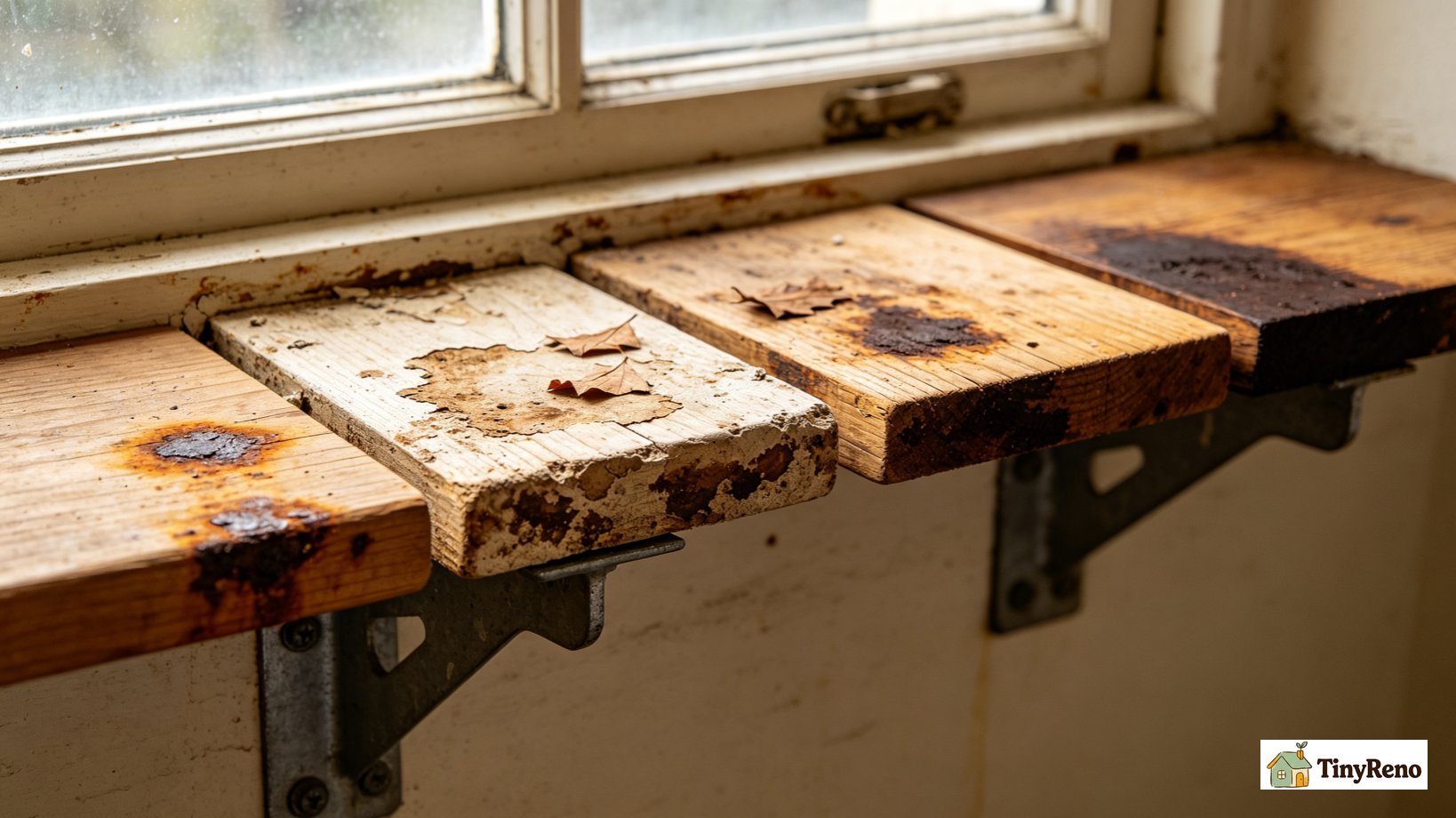
The 3 window sills I cleaned (and which cause each stain turned out to be)
Sill one, my aunt Nora's living room: brown stain about four inches long, half an inch wide, located directly below where a decorative iron nail holds the sill in place. The stain had been there for thirty years. The stain was the same brown color as the nail. Every cleaning product my aunt tried was designed to remove rust. None of them worked. The actual cause was tannin from oak leaves that had been collecting against the sill every fall for three decades. The tannins had leached into the wood along the same path the water took when it ran down the sill. The iron nail happened to be in the path. The stain color was a coincidence.
Sill two, my friend Pablo's kitchen in Brighton: brown stain about six inches wide, with irregular edges, located near the corner of the sill where the window meets the wall. The stain had appeared about three weeks earlier, after a week of heavy rain. Pablo tried to clean it with a magic eraser. The stain came off partially but came back within a few days. The actual cause was mold. The mold had grown because water had been getting into the corner joint between the sill and the wall, and the corner joint had a small gap that Pablo had never sealed. The gap was allowing water to wick into the wood and stay there, creating the conditions for mold to grow.
Sill three, my upstairs neighbor Kara's bedroom: brown stain about the size of a dime, located directly under a metal window frame bracket. The stain had appeared about a year earlier, after a contractor had installed a new air conditioner unit in the window. The contractor had scratched the metal bracket against the sill during installation. The actual cause was rust from the scratch on the metal bracket. The metal was bleeding rust onto the wood every time it rained, and the rust was staining the wood in a pattern that followed the scratch.
Three sills, three brown stains on window sill from three different causes. The products that worked for one would have made the others worse. The product that worked for Nora's tannin stain would have made Pablo's mold worse. The product that worked for Pablo's mold would have set Nora's tannin stain permanently. The product that worked for Kara's rust stain would have done nothing for the other two.
The 1 test that tells you which cause you have
The test is simple. Spray a small amount of water on the stain. Wait 30 seconds. Wipe it off with a white paper towel. Look at the paper towel.
If the paper towel comes away with a brown or reddish-brown color and the stain looks slightly lighter, the cause is rust. The water has dissolved a small amount of the rust and transferred it to the paper towel. This is a positive test for rust. The cause is iron or steel somewhere above or beside the stain, and the rust is bleeding onto the wood.
If the paper towel comes away with no color change and the stain looks the same, the cause is one of three things. To distinguish among them, you need a second test. Spray a small amount of household bleach (the regular chlorine bleach you have under the kitchen sink) on the stain. Wait 60 seconds. Wipe it off with a white paper towel. Look at the stain.
If the stain is significantly lighter after the bleach, the cause is mold. Bleach kills mold and lightens the visible stain. The mold might come back if the underlying moisture problem isn't fixed, but the bleach test tells you the cause was biological.
If the stain looks the same after the bleach, the cause is either water damage or tannin. To distinguish between these two, you need a third test. Mix a paste of baking soda and water (about 3 parts baking soda to 1 part water). Apply the paste to the stain. Wait 10 minutes. Wipe it off with a damp cloth. Look at the stain.
If the stain is lighter after the baking soda paste, the cause is tannin. Baking soda is mildly alkaline and tannin stains respond to alkaline cleaners. Tannin comes from leaves, bark, and other plant materials. The stain is from water carrying the tannin into the wood.
If the stain looks the same after the baking soda paste, the cause is water damage. Water damage on a window sill usually looks like a dark, irregular patch that has softened the wood surface. The water got into the wood, sat there, and caused the wood fibers to swell and darken. The stain is permanent in the sense that you can't clean it off — you can only sand it off and refinish the wood.
The three tests together take about 10 minutes and cost $0 to $2 in supplies. The tests tell you which of the four causes you have, which tells you which product to use, which tells you whether your cleaning is going to work or going to make the brown stains on window sill permanent.
The fix that worked for each cause (and the 1 mistake that ruins each)
Fix for rust: use a commercial rust remover that contains oxalic acid. The most common product is a powder called Bartender's Friend or a similar oxalic-acid-based cleaner. Mix the powder with water to make a paste. Apply the paste to the stain. Wait 10 minutes. Scrub gently with a soft brush. Wipe clean. Repeat if necessary. The oxalic acid converts the rust to a soluble form that can be wiped away. Once the rust stain is removed, the fix is to stop the source — usually a metal bracket or nail that's bleeding rust. Paint the metal bracket with a rust-inhibiting primer or replace the metal with a plastic or stainless steel version. The mistake that ruins this fix is using vinegar or lemon juice, which are also acidic but don't work as well on wood. The mistake is also using a chlorine bleach, which sets the rust deeper into the wood fibers.
Fix for mold: kill the mold with bleach and fix the moisture source. Mix a solution of 1 part bleach to 10 parts water. Apply the solution to the stain with a sponge or spray bottle. Let it sit for 10 minutes. Scrub gently. Wipe clean. Repeat if necessary. Once the mold is killed and the stain is removed, the fix is to address the moisture source. The most common moisture source is a gap in the caulk joint between the sill and the wall. Remove the old caulk, clean the joint, and apply new caulk designed for exterior or interior use as appropriate. The mistake that ruins this fix is using vinegar instead of bleach. Vinegar is a mild acid that kills some mold but doesn't kill all of it, and the surviving mold will regrow within a few weeks. The mistake is also painting over the mold without killing it first — the mold will grow through the paint.
Fix for tannin: use an oxalic acid solution or a commercial tannin remover designed for wood. Oxalic acid is sold at hardware stores as wood bleach. Mix the crystals with warm water according to the package directions — and wear nitrile gloves and safety glasses while you do it. Oxalic acid powder is toxic if inhaled and irritating to skin and eyes. Keep the window open while you work. If it touches your skin, rinse with cold water for 15 minutes. If it gets in your eyes, flush and call a doctor. It's naturally occurring in rhubarb and spinach, but that doesn't make the concentrated powder safe to handle barehanded. Apply the solution to the stain. Let it sit for 15 to 20 minutes. Scrub gently with a soft brush. Wipe clean. Repeat if necessary. Once the tannin is removed, the fix is to prevent future tannin staining by sealing the wood with an exterior-grade sealer or paint. Tannin comes from leaves and other plant materials that collect against the sill. Sealing the wood prevents the tannin from penetrating. The mistake that ruins this fix is using a household bleach. Chlorine bleach reacts with tannin to create a darker stain that's even harder to remove. The mistake is also using an oil-based stain or sealer without first removing the tannin — the tannin will bleed through the oil-based finish.
Fix for water damage: if the wood feels soft or spongy, the fibers are damaged and sanding is the only option. If the wood feels solid but the stain is dark and won't lift with baking soda or oxalic acid, try oxalic acid before you sand. Water damage and tannin staining are often the same process at different stages — water carries tannin into the wood, and the stain that's left can respond to oxalic acid even when it looks like permanent water damage. Sand only when the wood itself has changed texture, not just color. The fix is to sand the affected area with 120-grit sandpaper, working in the direction of the wood grain. Sand until the stain is gone or until you hit bare wood. Wipe the dust clean. Refinish the sanded area with the same stain, sealer, or paint that was on the rest of the sill. The mistake that ruins this fix is using a wood cleaner to try to remove water damage. No cleaner will remove it. You have to sand it. The mistake is also sanding too aggressively and creating a depression in the wood. Use light pressure and check your progress frequently.
Why the wrong fix makes the stain permanent
The wrong fix makes the stain permanent because of the chemistry. Chlorine bleach reacts with tannin to create a darker compound that's harder to remove than the original tannin stain. Chlorine bleach reacts with iron in rust to create iron oxide compounds that bond more strongly to wood fibers. Vinegar reacts with concrete and grout to create calcium acetate that's almost impossible to remove. The wrong product can also drive the stain deeper into the wood fibers, especially if you scrub aggressively. The combination of the wrong product and aggressive scrubbing is the most common way a brown stain on a window sill becomes permanent.
The fix for a permanent stain — a stain that's been made worse by the wrong product — is sanding and refinishing. The sanding removes the stained wood. The refinishing protects the new wood surface. The cost is about $20 to $40 in supplies and 2 to 4 hours of work for a typical window sill. The cost is also a permanent change to the appearance of the sill — the sanded area may not match the surrounding wood perfectly, even with the same stain.
The way to avoid the permanent stain is to run the 1 test first. The test takes 10 minutes. The test tells you which cause you have. The cause tells you which product to use. The product tells you whether your cleaning is going to work. If the test says mold, use bleach. If the test says tannin, use oxalic acid. If the test says rust, use an oxalic acid-based rust remover. If the test says water damage, don't try to clean it — sand it. The wrong product is the only thing that makes brown stains on window sill permanent. The right product makes them go away.
What I'd actually do if a brown stain appeared on my sill tomorrow
If a brown stain appeared on one of my window sills tomorrow, I would run the spray test first. Water on the stain, 30 seconds, white paper towel. If the towel comes away brown, I know it's rust. If the towel comes away clean, I run the bleach test. Bleach on the stain, 60 seconds, paper towel. If the stain lightens significantly, I know it's mold. If the stain doesn't change, I run the baking soda test. Baking soda paste, 10 minutes, wipe. If the stain lightens, I know it's tannin. If the stain doesn't change, I know it's water damage.
The whole diagnostic process takes 15 to 20 minutes and costs less than $5 in supplies. The diagnostic tells me which of the four causes I have. The cause tells me which product to use. The product removes the stain or, in the case of water damage, tells me to sand and refinish.
For my aunt Nora's thirty-year-old stain, the diagnostic took three minutes once I was looking with the right framing. The cause was tannin. The product was oxalic acid. The stain came out in twenty minutes. My aunt had been living with the stain for thirty years because none of the products she tried were strong enough for what was on the sill. She tried baking soda, which should have lightened a pure tannin stain. It didn't. That tells me her stain was probably more than tannin — likely tannin that had soaked deep into the wood over decades, or tannin layered on top of old water damage. Oxalic acid removed it where baking soda failed, but I can't say for certain that the stain was pure tannin. What I can say is that the wrong product wasted thirty years of her time, and the right product — whatever the exact cause — took twenty minutes. The right product removed it on the first try.
If you have a brown stain on a window sill, run the test before you clean. The test is faster than the wrong cleaning. The test is cheaper than the wrong cleaning. The test is the only thing standing between you and a permanent stain that's actually a removable one.


Discussion (0)
Sign in to join the discussion