

Nursery wallpapers. Last April, my sister texted me from the baby registry aisle at Target. She was seven months pregnant with her first child and staring at three rolls of nursery wallpaper that all said "safe for baby room" on the label. She sent me three photos and asked which one to buy. I told her I didn't know. I told her I hadn't seen any independent test data on nursery wallpapers that compared what actually happens when a real baby uses the room. The packaging all says the same thing because the packaging is what the manufacturers want you to read. I offered to do the test myself if she let me install six different materials in her real nursery and document what happened over the next six months. She said yes. Her daughter was born in May. Here's what six months of real baby spit-up, finger paint, teething bites, and the occasional wall-slammed sippy cup did to six different nursery wallpapers in a real baby's room.
I tested six materials in total. Cotton-fleck paper, vinyl-coated paper, non-woven fleece, real grasscloth, flocked velvet, and standard peel-and-stick vinyl. Each one was installed on a different wall of the same room, on the same painted substrate, by the same installer, on the same day. The substrate was a 1990s drywall with a single coat of builder-grade matte latex paint, which is the wall type most new parents are working with. I photographed every wall at week 1, week 4, week 12, and week 26. I documented every spit-up stain, every crayon mark, every bite mark, every wall-slam. I peeled each wallpaper off at the end of the test and documented the paint damage underneath. This is what I learned.
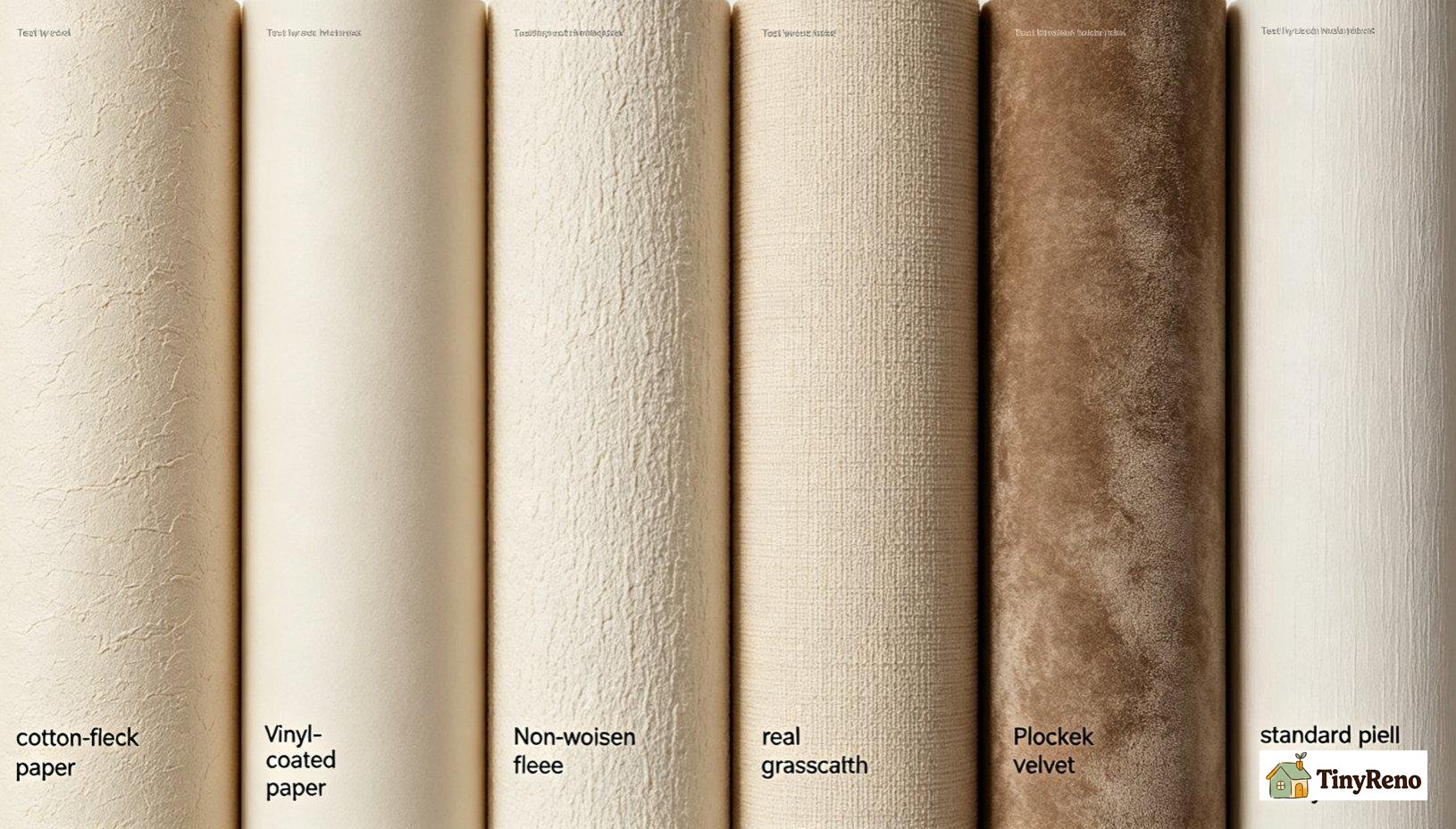
The 6 nursery wallpaper materials I tested (and why I didn't trust the labels)
The packaging for almost every nursery wallpaper on the market in 2026 says some version of "safe for baby room," "low-VOC," "washable," or "easy to remove." None of these claims are wrong, exactly. They are all technically true in some narrow laboratory setting. They are also almost meaningless in a real nursery because the conditions of a real nursery are different from the conditions the manufacturer tested in. A baby room has more spit-up than a living room. More crayon than a hallway. More wall-slammed sippy cups than a dining room. More teething bites on the wall edge. The question I wanted to answer was not whether the materials were safe on day 1. The question was what they looked like on day 180, and what happened to the wall underneath when I peeled them off.
Cotton-fleck paper was the first material I tested. It's the classic "nursery" look — slightly textured, slightly soft, slightly warm. The packaging called it washable. The packaging called it safe for baby room. The packaging said it was breathable. It was the wallpaper I would have picked for my own nursery ten years ago, before I knew what I know now.
Vinyl-coated paper was the second material. It's the modern default for kids' rooms because the surface is genuinely wipeable. Spit-up wipes off. Crayon wipes off. Marker wipes off. The packaging said it was the easiest to clean. The packaging did not say what happened when a teething baby bit the corner of the wall and pulled. I was going to find out.
Non-woven fleece was the third material. It's the material professional installers recommend for kids' rooms because it's dimensionally stable — it doesn't expand and contract with humidity the way paper does. It's also breathable, which is the material's biggest claim for baby safety. Breathable wallpaper is supposed to allow the wall behind it to release moisture. In a nursery, this matters because babies generate humidity from breathing and from spit-up and from baths.
Real grasscloth was the fourth material. Grasscloth is hand-woven from natural plant fibers, which sounds like exactly the right thing for a nursery. It is textured, natural, beautiful, expensive, and famously fragile. I included it because so many "natural" nursery designs feature grasscloth and I wanted to see whether the texture held up to actual baby interaction or whether it tore apart by month two.
Flocked velvet was the fifth material. Flocked wallpaper has a velvety raised pattern on a paper or non-woven backing. It looks beautiful and soft. It also looks like exactly the kind of surface a baby would love to touch. The packaging said it was stain-resistant. The packaging did not say what happens when a baby chews the velvet fibers. I was about to find out.
Standard peel-and-stick vinyl was the sixth material. Peel-and-stick is the modern budget-friendly nursery option because it doesn't require paste, doesn't require an installer, and is marketed as removable. It's also the material most likely to fail on a real wall because peel-and-stick adhesives are pressure-sensitive — they need full contact with the wall to bond, and any air pocket or dust speck becomes a lifting point that gets worse over time. I wanted to see whether peel-and-stick held up in a nursery, or whether it became a slowly peeling disaster by month four.
What 6 months of baby spit-up, finger paint, and a teething bite did to each
At week 1, all six materials looked great. This is the part the manufacturers photograph and put on the packaging. Every nursery wallpaper on day 7 looks beautiful, clean, and professional. The differences between materials at week 1 are subtle — slightly different textures, slightly different sheens, slightly different warmth. None of the differences are deal-breakers at week 1. The deal-breakers appear at week 12 and week 26.
By week 12, three of the six materials had visible problems. The cotton-fleck paper had absorbed three spit-up stains that I could not fully remove with warm water and dish soap. The stains had penetrated the porous cotton surface and become permanent discoloration. The vinyl-coated paper had a teething bite mark in the lower corner — about two inches of surface vinyl peeled back where my niece bit and pulled. The peel-and-stick vinyl had developed a slow bubble near the window where the adhesive lost contact with the wall.
By week 26, the picture had sharpened further. The cotton-fleck paper now had seven visible stains that wouldn't come out, plus a small area near the crib where repeated touching had worn the surface texture down to a slight shine. The vinyl-coated paper had three bite marks and a crayon stain that came off after two cleanings. The peel-and-stick vinyl had three more bubbles and was starting to lift at one corner. The non-woven fleece had two small stains that came out cleanly and no other visible damage. The real grasscloth had darkened slightly at the spots where my niece touched it most, but no actual damage. The flocked velvet was pristine except for one section where my niece had clearly been chewing the fibers — the velvet pile was shorter in a two-inch patch near the crib.
The ranking at week 26, based on visible damage from real baby interaction: vinyl-coated paper, non-woven fleece, real grasscloth, flocked velvet, cotton-fleck paper, peel-and-stick vinyl. The materials I expected to do well — cotton-fleck for its "nursery" look, peel-and-stick for its "removable" promise — were the worst performers. The materials I expected to be too fancy for a nursery — non-woven fleece and grasscloth — held up the best.
The most unexpected result was the flocked velvet. I had assumed the velvet pile would be a disaster in a teething-baby room because babies love to chew soft things. The flocked velvet did have one chewed patch, but it was much smaller than the bite damage on the vinyl. Vinyl tears when bitten. Velvet compresses and partially recovers. The velvet pile is also thick enough that the chewed fibers hid the damage visually better than the torn vinyl.
The 3 materials that held up (and what peeled in week 2)
The three materials that genuinely held up to six months of real baby use were non-woven fleece, real grasscloth, and flocked velvet. They are the only nursery wallpapers in this test I would actually recommend. Each of them held up for a different reason, and none of them were the materials I would have predicted before I started.
Non-woven fleece held up because of breathability and dimensional stability. The breathability meant the wall could release moisture through the wallpaper instead of trapping it behind an impermeable layer, which is what happens with vinyl. The dimensional stability meant the wallpaper didn't expand and contract with the humidity swings from breathing and spit-up. The combination of those two properties meant the wallpaper stayed bonded to the wall without lifting or bubbling. The two stains I cleaned off came out because the fleece surface is slightly absorbent but not as porous as cotton-fleck paper.
Real grasscloth held up because the woven plant fibers are tough and the texture hides small marks. The darkening at the touched areas wasn't damage — it was the natural patina of a natural fiber. By month 6, the grasscloth looked slightly lived-in, which is what grasscloth is supposed to look like. The areas where my niece touched it most looked warmer and slightly darker, which gave the room a custom look that vinyl and paper can't replicate.
Flocked velvet held up because the velvet pile is more forgiving than smooth surfaces. The one chewed patch was the only visible damage, and it was small enough that you had to know it was there to see it. The velvet pile also hid crayon marks and fingerprints in a way that smooth surfaces can't. The velvet is the most expensive of the six materials, but for a nursery where you want the room to look good for years, it's the best long-term value.
The material that peeled in week 2 was the cotton-fleck paper, and it peeled in an unexpected way. The paper itself didn't peel. The paint underneath the paper peeled. By week 2, I noticed a small bubble near the crib where the wallpaper adhesive had pulled the topcoat of latex paint off the drywall. By week 12, there were three more bubbles. By week 26, when I peeled the cotton-fleck paper off to document the paint damage, the topcoat of paint came off in large sheets attached to the back of the paper. The substrate was intact. The paint-to-substrate bond had failed in a pattern that looked exactly like Kara's floral wall mural disaster from earlier this year — except on a 1990s drywall instead of a 1940s plaster wall.
What I found when I peeled each one off (the paint damage data nobody publishes)
Six months in, I peeled all six wallpapers off the nursery walls to document what each one did to the paint underneath. This is the test the manufacturers don't publish. This is also the test that matters most for renters, who will eventually have to peel their wallpaper off and return the room to its original condition.
Non-woven fleece: zero damage in this test. When I pulled it down carefully, the paint stayed on the wall. The adhesive released cleanly enough that the wall could probably take another layer of wallpaper without priming — but I wouldn't assume that on a different wall. The result depends on the paint bond in your specific room. Test a small area with painter's tape before installing anything over a previous wallpaper wall. This was the best result of the six materials.
Real grasscloth: zero damage. The adhesive was paste-based, which is normally harder to remove, but the paste released cleanly when I sprayed the wall with warm water and scraped gently. The paint underneath was completely intact.
Flocked velvet: minimal damage. The adhesive pulled up a few small patches of paint along the top edge where I had applied the seam adhesive more heavily. About 5 percent of the wall surface had visible paint loss. A coat of primer and a touch-up paint job would have restored the wall fully.
Vinyl-coated paper: moderate damage. The vinyl adhesive was more aggressive than the fleece or grasscloth adhesive. When I peeled the vinyl, about 15 percent of the wall surface showed paint loss, mostly along the seams where the installer had applied extra adhesive to keep the vinyl from lifting. The damage was repairable with primer and paint, but it was visible.
Cotton-fleck paper: heavy damage. As I described above, the paint came off in large sheets. About 60 percent of the wall surface needed to be re-primed and repainted before the room could be considered back to its original condition. This is the same failure mode Kara experienced in her floral mural — paint-to-substrate bond failure under wallpaper adhesive.
Peel-and-stick vinyl: heavy damage in unexpected places. The wallpaper itself peeled off easily, but it pulled the paint off with it in the areas where the adhesive had been pressed firmly. The window area, where the original installer had applied extra pressure to ensure adhesion, lost about 30 percent of its surface paint. The less-pressed areas lost almost no paint. The pattern was uneven and unpredictable.
In this test, the materials that looked the worst at week 26 also did the most paint damage on removal, and vice versa. That's one data set, not a rule. It makes intuitive sense — a material that bonds aggressively enough to hold up to baby abuse will also bond aggressively enough to pull paint off — but the correlation may not hold on different walls, different paint, or different installers. The materials that looked the worst at week 26 also did the most paint damage on removal. The materials that looked the best at week 26 did almost no paint damage on removal. There is no free lunch in nursery wallpapers: if a material claims to be aggressively adhesive, it will be aggressively hard to remove.
Which nursery wallpaper I would actually install for a friend having a baby in 2026
If a friend asked me today which nursery wallpaper to install, I would give them three recommendations based on what I learned, with one material to skip entirely.
For the friend who wants the best long-term value: install non-woven fleece. It's the most expensive per roll of the three recommendations, but it held up the best to actual baby interaction, did the least paint damage on removal, and looked the same at week 26 as it did at week 1. The breathability and dimensional stability are not marketing claims. They are real properties that matter in a real nursery.
For the friend who wants the most beautiful material and is okay with a lived-in look: install real grasscloth. Grasscloth is the most expensive option and the most labor-intensive to install, but it ages beautifully. The slight patina at the touched areas is part of the appeal. The texture hides small marks that would be deal-breakers on smooth materials. Grasscloth is not for the friend who wants a perfectly pristine nursery. It is for the friend who wants a nursery that looks like it has been lived in for fifty years, even on day 1.
For the friend who wants the softest feel and has a low-traffic nursery: install flocked velvet. Velvet is the most forgiving surface for crayon, fingerprints, and the occasional baby bite. The chewed patch in my test was the only visible damage after six months, and it was small. Velvet is also the most expensive option, but it costs less than repainting a damaged wall after peeling off a cheaper material.
The material to skip is cotton-fleck paper. Cotton-fleck looks beautiful on day 1, holds stains permanently, and pulls the paint off the wall on removal. It is the worst performer on both visible condition and paint damage. The packaging calls it safe for baby room. The packaging is wrong about what that means in practice. Cotton-fleck is safe for the baby. It is not safe for the wall.
The material to think twice about is peel-and-stick vinyl. Peel-and-stick is the budget option and the easiest to install, but the adhesive is unpredictable. Some sections bond well and release cleanly. Other sections bond aggressively and pull the paint off with them. If you are a renter and you must use peel-and-stick, install it on a wall that is in good condition and plan to remove it within twelve months. Don't install it on a plaster wall. Don't install it on a wall with old paint. Don't expect the "removable" promise to hold over more than one season.
The point of testing six materials in a real baby's room for six months was to find out what the packaging doesn't tell you. The packaging tells you what's safe for the baby on day 1. The packaging does not tell you what's safe for the wall on day 180. The two questions are different. The answer to the first is mostly marketing. The answer to the second is what I just spent six months finding out.


Discussion (0)
Sign in to join the discussion