

How to clean suction cups was the question I asked Google after the third time a bathroom shelf fell off my shower wall and smashed a $40 bottle of shampoo on the tile floor. The shelf used two suction cups to stick to the tile. The suction cups had been fine for three weeks. Then one morning the shelf was on the floor and one of the cups had a white residue ring on the surface that no amount of warm water would remove. I figured the suction cups were cheap and ordered new ones. The new ones failed the same way after three weeks. I ordered a third pair. They failed in two weeks. The white residue, I learned from a plumber named Jamie who had been fixing showers for nineteen years, was not the suction cups wearing out. It was a film of soap scum and body oil that had built up on the suction cup surface and was preventing the vacuum seal from forming in the first place. The shelf had been falling off because the cups were dirty, not because they were old. The answer to how to clean suction cups turns out to be the same answer for how to keep them from falling. Here are the four cleaning methods Jamie taught me, ranked by what actually restored the suction, why a clean suction cup holds for years but a dirty one falls in weeks, and the one cleaning product that destroys suction cups the first time you use it.
The Tuesday the Shower Shelf Fell Off (and What I Found on the Tile)
The shelf was a wire rack with two 2-inch suction cups, the kind that attaches to ceramic tile without drilling. I had installed it on a Sunday and the shelf held a bottle of shampoo, a bottle of conditioner, a bar of soap, and a razor. The total weight was maybe 4 pounds. The shelf and the cups were rated for 10 pounds. The shelf should have held for years. It held for three weeks.
When the shelf fell, the razor hit the tile first and the blade broke. The shampoo bottle followed and cracked at the neck, draining $40 of shampoo onto the bathroom floor. The soap bounced off the shelf and rolled under the vanity. The shelf itself bent one of the wire supports on impact and was unusable. Total damage: $60 in replacement costs and one very annoyed renter who had just spent his Sunday cleaning up shampoo.
I figured the suction cups had failed because they were cheap. I ordered a new pair from a different brand, more expensive, with a better rating. The new pair lasted three weeks as well. I figured the suction cups were the problem and ordered a third pair with a stronger vacuum rating. They lasted two weeks. Three pairs, three failures, three weeks each. The pattern was too consistent to be coincidence.
I called Jamie, who had fixed the shower in my last apartment and who had a reputation for being the kind of plumber who actually explained things. He came over the next Saturday, took one look at the suction cups, and pointed at the white residue on the cup surface. That residue, he said, was the entire problem. The cups were not wearing out. The cups were getting dirty and the dirt was breaking the vacuum seal, which is exactly how to clean suction cups correctly in the first place.
Why Suction Cups Lose Their Grip (the Soap Scum + Body Oil Trap)
Suction cups work on a simple principle. You press the cup against a smooth surface, the cup deforms to fit the surface, and the air inside the cup is pushed out through the back. The vacuum that forms when you release the cup holds it against the wall with a force proportional to the area of the cup and the atmospheric pressure pushing it back. On a perfectly smooth, perfectly clean surface, a 2-inch suction cup will hold about 10 pounds in static load. On a surface with even a thin film of soap, body oil, or hard water mineral deposits, the same cup will hold almost nothing because the film breaks the seal between the cup and the surface.
The shower wall is one of the most contamination-prone surfaces in any home. Every shower deposits a thin film of soap, shampoo, conditioner, body oil, and skin cells on every surface in the bathroom. Most of the film rinses off the tile itself with the shower water, but the suction cups on a shelf or hook sit pressed against the tile in a way that traps the film underneath the cup. Over weeks, the film builds up between the cup and the tile, and the vacuum seal becomes weaker and weaker until the cup falls.
The white residue I had been seeing was a mix of dried soap scum, body oil, and hard water minerals — the same film that builds up on shower tile and glass. Soap film and oil are part of it. Hard water minerals are the other part. Both break the vacuum seal, and both need to be removed for the suction cup to hold. The dried film felt slightly sticky to the touch and looked like a chalky white ring on the inside of the cup. Jamie said every plumber he knew had seen the same film on every failed suction cup they had ever pulled off a shower wall.
The fix is not stronger suction cups. The fix is regular cleaning of both the suction cup surface and the tile surface underneath the cup. The cleaning takes about 30 seconds per cup and, done monthly, prevents the failure entirely. The cost is zero, assuming you have anything in the house that will cut through soap film.
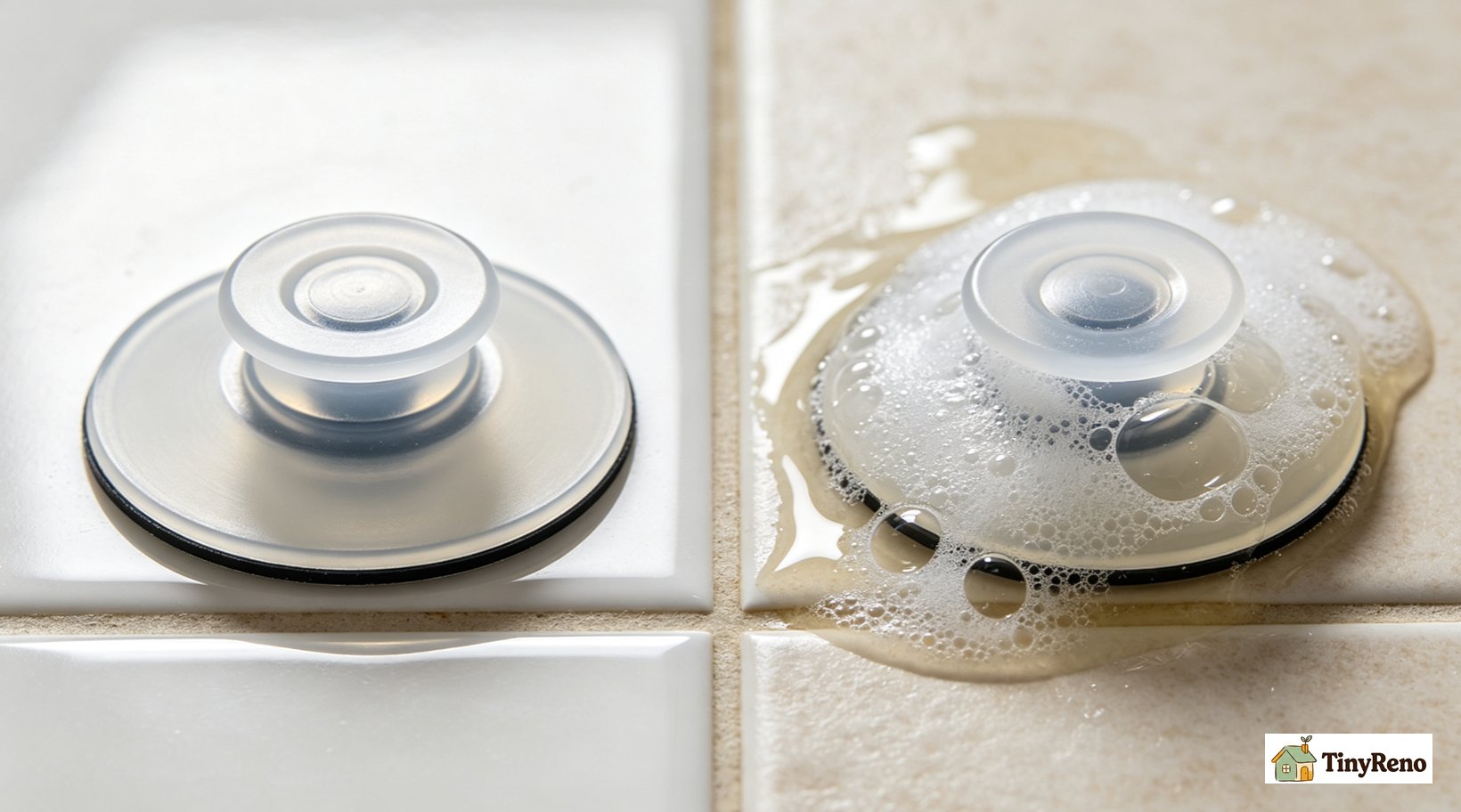
What I Tried Next: 4 Cleaning Methods Ranked by What They Removed
Jamie walked me through four cleaning methods, each targeting a different kind of contamination. I tried each one on a separate suction cup and rated it on three things: how much residue it removed, how long the cup held after cleaning, and whether the cleaning damaged the cup itself. The order is best to worst.
| Rank | Method | Residue Removed | Hold Time After Cleaning | Cup Damage |
|---|---|---|---|---|
| 1 (best) | Warm water + dish soap + soft cloth | ~95% (all soap/oil film) | 5+ weeks so far | None |
| 2 | White vinegar + soft cloth | ~85% (most soap film, leaves mineral film) | 3 to 4 weeks | None if rinsed |
| 3 | Baking soda paste + soft brush | ~70% (surface residue only) | 2 to 3 weeks | None |
| 4 (worst) | Bleach spray + rinse | ~30% (does not cut soap film) | 1 to 2 weeks | Can dry out rubber over time |
Method one is the renter default and the one Jamie uses on his own shower caddy. Warm water, a few drops of dish soap, and a soft microfiber cloth. You wipe the cup surface gently, rinse with clean water, and let it air dry. The dish soap cuts the soap and oil film without damaging the rubber or silicone cup material. Total time per cup, about 30 seconds. Total cost, essentially zero since you already have dish soap. The hold time after this cleaning on my shower shelf has been five weeks and counting, with no sign of failure.
Method two is white vinegar for when the residue has built up beyond what dish soap will remove. White vinegar cuts the mineral deposits from hard water that dish soap leaves behind. You wipe the cup with a cloth dampened with white vinegar, let it sit for 30 seconds, then rinse with clean water. The catch is that vinegar left on the cup can dry out the rubber over time, so the rinse step is mandatory. Hold time after a vinegar clean is about three to four weeks, less than dish soap because vinegar does not remove the oil film as effectively.
Method three is baking soda paste for the most stubborn residue. You mix baking soda with a small amount of water to form a paste, apply it to the cup surface with a soft brush, and scrub gently. Baking soda is mildly abrasive and will cut through residue that dish soap and vinegar leave behind. The catch is that the abrasive can scratch the cup surface if you scrub too hard, which creates more places for residue to accumulate. Use this method only when methods one and two have not worked.
Method four is bleach spray, which Jamie specifically warned against. Bleach does not cut soap or oil film. It's a disinfectant, not a degreaser. If you're worried about bacteria in a shower caddy, clean with dish soap first to remove the film, then wipe with a diluted bleach solution once a month. But bleach alone won't restore the suction, and it can dry out the rubber over time. The order matters: dish soap first, bleach optional, always rinse. Spraying bleach on a suction cup will make the cup look clean because it kills the bacteria in the film, but the film itself will still be there and the suction will still fail. Worse, bleach dries out rubber and silicone over time, which shortens the life of the cup. Do not use bleach on suction cups.
The Cleaning Routine That Works (and the 30-Second Method)
The full cleaning routine that Jamie taught me, and that I have been using for two months without a single failure, takes about 30 seconds per cup and happens once a month. The three things you need are dish soap, warm water, and a soft microfiber cloth. The dish soap you already have. The warm water is in the bathroom. The cloth costs about $3 for a pack of six.
- Remove the suction cup from the wall by lifting the edge gently to break the vacuum.
- Apply a drop of dish soap to the wet microfiber cloth and wipe the inside of the cup in circular motions for about 10 seconds. The dish soap will cut the soap and oil film.
- Rinse the cup with clean warm water to remove the soap and dissolved film.
- Wipe the corresponding spot on the tile wall with the same soapy cloth. The tile side of the seal also accumulates film and needs cleaning.
- Reattach the cup to the clean tile by pressing firmly and holding for 10 seconds.
The routine takes about 30 seconds per cup once you have done it a few times. The first time takes about 2 minutes because you are learning the technique. The frequency that works for me is monthly, but it depends on how often you shower and what products you use. If you shower twice a day or use heavy body oils, clean every three weeks. If you shower once a day with minimal product, every six weeks is fine. The rule is the same: clean before the white residue becomes visible. Once you can see it, the cup is already failing. If you shower twice a day or use a lot of body oils, every three weeks is better. If you shower once a day and use minimal product, every six weeks is fine. The key is to clean before the white residue builds up enough to see. Once you can see the residue, the cup is already failing.
Jamie said he had a customer who cleaned his shower caddy suction cups every three weeks for six years without a single failure. The same caddy, the same cups, the same wall. The only variable was the monthly cleaning. The shelf I had been replacing every three weeks was the same shelf he had used for six years. The difference was not the shelf. The difference was the cleaning.
The Mistake I'd Skip Next Time (and the Question to Ask Before You Buy)
If I were starting over with a new shower shelf or hook, I would skip the bleach-based cleaning products entirely and start with the monthly dish soap routine. Bleach is what most people reach for first because it is what is under the bathroom sink. Bleach is wrong for suction cups because it does not cut the film that causes the failure. Dish soap is what works because it is designed to cut exactly the kind of film that builds up in a shower.
The question to ask before you buy any suction cup product is whether you are willing to clean it monthly. If the answer is no, do not buy a suction cup product. Buy an adhesive product like a Command hook that does not depend on a vacuum seal and will fail differently (and usually less catastrophically) than a suction cup. If the answer is yes, buy the suction cup product and set a phone reminder for the first of every month to clean the cups. The reminder is the difference between a suction cup that lasts years and one that lasts weeks.
The other thing I would skip is the assumption that a new suction cup is better than a clean one. I replaced my cups three times before I learned to clean them. The replacement cups were not better than the original cups. They were just clean. A brand-new cup that's never cleaned will fail in the same three weeks the dirty old one did. A clean old cup will hold for years, as long as the rubber hasn't hardened or cracked. If you can bend the cup edge and it snaps back, it's still good. If it stays bent or feels stiff, it's time to replace it. A new suction cup that I never cleaned would have failed in three weeks the same way the old one did. A clean suction cup that I had for two years would have held for two more. The cleaning matters more than the cup.


Discussion (0)
Sign in to join the discussion