

Spackle vs caulk is the question I get asked every time I help a friend patch something before moving out of an apartment, and every time I give the same answer: it depends on what you're patching, what it's made of, and whether the patch needs to be rigid or flexible. The two products look similar in the tub — both are white, both come in small containers, both dry to a paintable finish. But not every caulk is paintable. Silicone caulk doesn't take paint. When you buy caulk for a rental repair, look for a tube labeled “paintable” or “latex caulk” — usually the cheapest option in the aisle. — but they do completely different things, and using the wrong one is the single most common reason renter patches fail inspection.
I learned this the hard way in my second apartment. I had a small gap between the baseboard and the floor that I filled with spackle because it was the only tub I had. It looked great for two months. Then winter came, the heating system cycled on, and the baseboard expanded and contracted a few times. The spackle, which is rigid when cured, cracked along the entire length of the gap. By the time I moved out, the gap was full of cracked spackle chunks that the landlord pointed out during the inspection.
The fix would have been caulk. Caulk is flexible. It moves with the wood as it expands and contracts with temperature and humidity. Spackle is rigid. It doesn't move at all. If you put spackle somewhere that needs to flex, it will crack. If you put caulk somewhere that needs to be rigid, it will dent and compress.
Here's how I decide which one to use, and when.
For most renter repairs, the spackle vs caulk decision comes down to one question. If you're patching a hole in a flat surface, use spackle. If you're sealing a gap between two surfaces, use caulk. That's the working rule. The five places below are the specific cases where this rule matters most.
Five places where the answer is obviously spackle
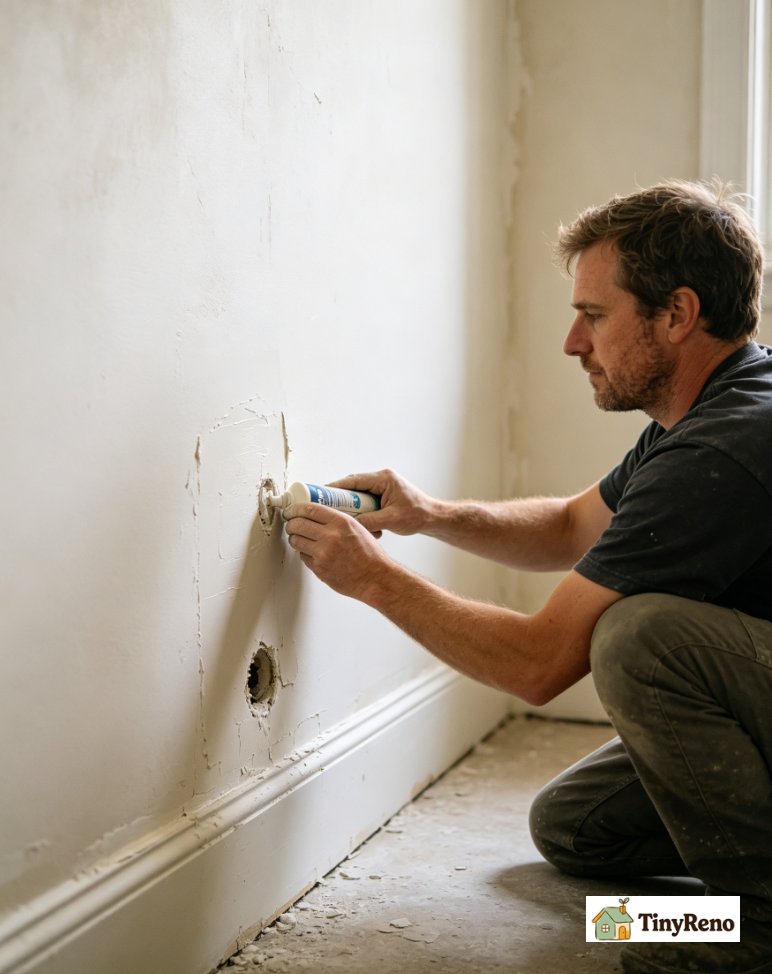
There are five situations where spackle is the right answer, and using caulk would be a mistake.
Nail holes in drywall. When you pull a picture hanger out of a drywall wall, you leave a small round hole about the diameter of a pencil. Spackle fills that hole, hardens rigid, sands flush, and takes paint. Caulk would shrink into the hole, stay flexible, and look slightly indented even after painting.
Small dings and dents in drywall. When a doorknob hits a wall and leaves a shallow dent, or a kid throws a toy and chips the paint, spackle is the right repair. Press it in, let it dry, sand it flush, paint. Caulk would be too soft and would never sand flat.
Gouges in baseboards or trim from furniture. If a chair hits a baseboard and leaves a small chip or gouge, spackle fills the missing wood. Sand it, prime it, paint it. Caulk would compress every time something brushed against the baseboard.
Holes in drywall from anchors. When you pull a screw anchor out of drywall, the hole is bigger than a nail hole and often has crumbling drywall around the edge. Spackle fills it cleanly. Caulk would just sit in the hole and never harden properly because the hole is too deep for caulk's skin-dry surface.
Cracks in drywall that don't move. Hairline cracks from settling that stay the same width over months are fine with spackle. If the crack widens or shrinks with the seasons — you can tell by marking the ends with a pencil and checking in a month — use a paintable latex caulk instead. Spackle in a moving crack always reopens, but the typical settled crack is fine with spackle.
Five places where the answer is obviously caulk
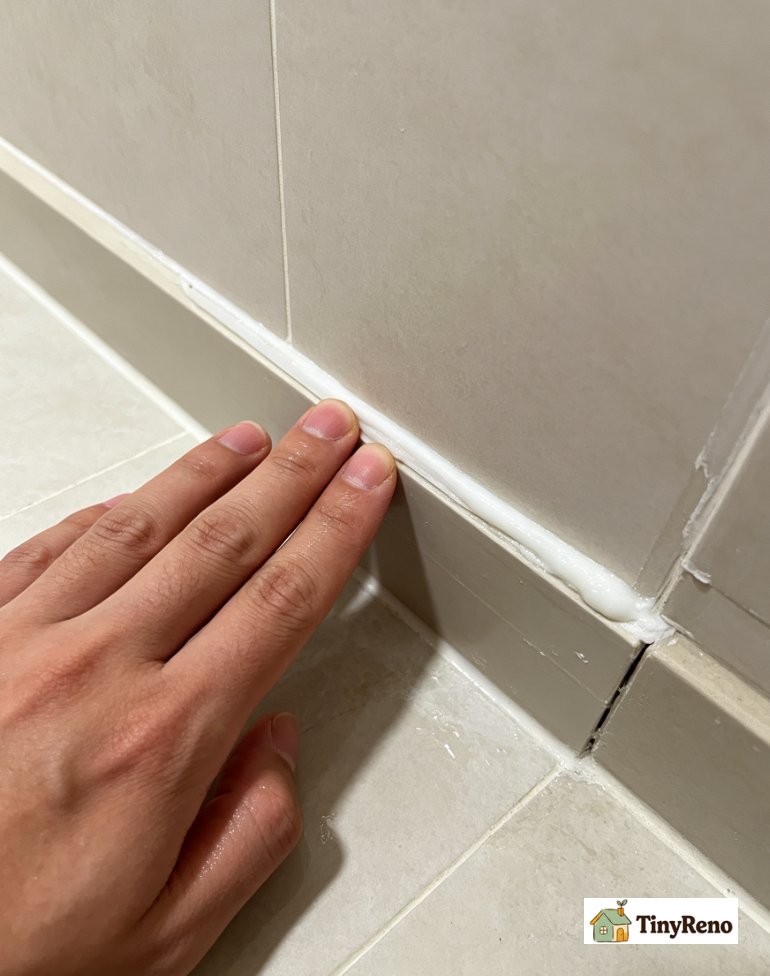
There are five situations where caulk is the right answer, and using spackle would be a mistake.
The gap between baseboard and floor. This is the one I got wrong. The baseboard expands and contracts slightly with humidity and temperature, and the floor does too. The gap between them moves. Caulk moves with it. Spackle cracks.
The gap between a bathtub and the tile surround. Water gets behind this gap every time someone showers, and the tub flexes slightly when you step into it. Caulk stays flexible and waterproof. Spackle would crack and let water behind it, which leads to mold.
The seam where two pieces of trim meet at a corner. Inside corners of baseboards, window casings, and door casings all have a small seam where the two pieces of trim meet. The seam moves slightly as the house settles. Caulk seals the seam and moves with it. Spackle would crack along the seam within a year.
Around window and door frames. The gap between a window frame and the drywall surrounding it is usually filled with caulk, not spackle, because the window frame expands and contracts more than the wall as the temperature changes. Caulk keeps the air seal intact. Spackle would crack.
The seam where a countertop meets a backsplash. The countertop expands and contracts with humidity and heat from cooking. The backsplash doesn't. The seam moves. Caulk seals it. Spackle cracks within weeks.
The two situations where it actually matters
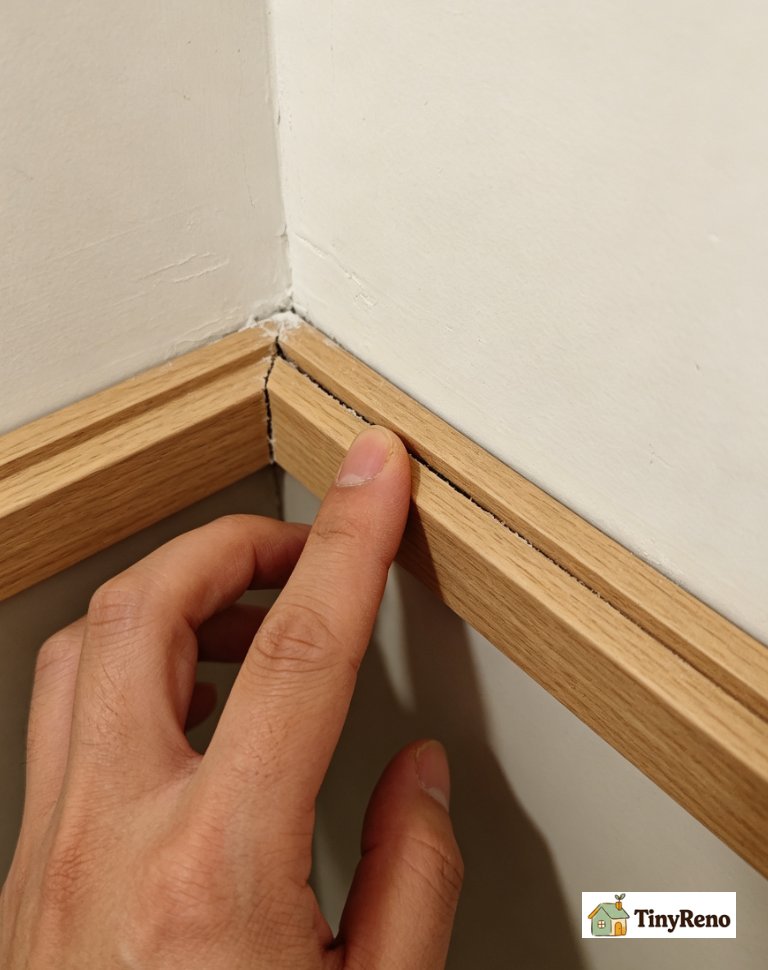
There are two places where I see people make the wrong choice most often, and where the difference between spackle vs caulk actually determines whether the repair holds.
The first is the gap between a baseboard and the wall behind it. Most people assume this is a rigid gap that needs rigid filler, so they use spackle. The baseboard is wood. The wall is drywall. Both expand and contract slightly with humidity. The seam between them moves more than you'd think. Spackle cracks along this gap within six months in any climate that has a real winter. Use caulk. Paintable latex caulk in a small tube, run a bead along the seam, smooth it with a wet finger, paint it the next day.
The second is the gap between two pieces of trim where one is glued to the wall and the other is nailed. The seam between a door casing and the drywall return around the door looks rigid, but the door casing moves every time someone opens and closes the door. Use caulk. The bead of caulk fills the seam and stays flexible.
How to tell if the gap moves
If you're not sure whether a gap needs rigid or flexible filler, watch it for a week. If the gap is the same width on a cold morning and a warm afternoon, you can use either spackle or caulk. If the gap changes width — even by a millimeter — as the temperature or humidity changes, use caulk. Spackle in a moving gap always fails. Caulk in a static gap is fine but slightly more expensive.
There's one more test. Press the surrounding material with your finger. If the material flexes — the baseboard moves slightly when you push on it, the trim rocks a tiny bit when you press on it — use caulk. If the material is rigid and doesn't move when you push on it, you can use either.
A renter's quick reference
One more thing: before you patch anything, check your lease. Some landlords specify which products they want used for repairs. A few even ask for a particular brand. A quick email before you buy anything is cheaper than a redo after the inspection.
For move-out inspections, here are the three most common repairs and what to use.
Baseboard-to-floor gap: caulk. Always. Even if the gap looks rigid, it moves more than you'd think, and the landlord will see the cracked spackle during the inspection.
Nail holes in the wall: spackle. The wall doesn't move, the spackle is rigid, and the patch will hold through the inspection.
Trim corner seams: caulk. The corner is two pieces of trim meeting, the seam moves slightly, and the caulk keeps the air seal clean.
When in doubt, caulk for anything that involves a corner or a seam between two pieces of material, and spackle for anything that involves a hole or a dent in a flat surface. That's the rule I've used for fifteen years and four apartments, and it's kept me from losing part of my security deposit every time.
The two products do different jobs. The trick is matching the product to the gap. Spackle vs caulk is not about which is better, it's about which one moves when the gap moves.


Discussion (0)
Sign in to join the discussion