

Black spots on wall showed up in four different rentals I've lived in, and every single time I assumed it was the same thing. It wasn't. The first time, in a garden-level studio in Brooklyn, I spent three days scrubbing with bleach and watched the spots come back darker. That was my first mistake — bleach can kill surface mold, but it doesn't reach the roots in drywall or plaster, and the water in the bleach just feeds what's left behind. The landlord finally sent a contractor who took one look at the basement-side wall and said the word "rising damp" — and explained that no amount of surface cleaning would fix water coming up through the foundation. The second time, the spots were from a rusty nail bleeding through the paint. The third time, they were mildew from a bathroom vent I never ran. The fourth time, they were grease splatter from a stove I thought was far enough from the wall.
That's the trap with black spots on wall. They all look the same — dark, irregular, somewhere between a dime and a fist in size — but the cause changes the fix completely. Paint over mold and you'll trap moisture. Paint over a nail rust and you'll watch the stain bleed through the new paint within a week. Paint over grease and the new paint will peel. Knowing which one you have takes about five minutes per spot, and saves you from painting over a problem that comes back.
The six causes I keep finding (and how to tell them apart)
In four rentals and a dozen friends' apartments I've helped diagnose, the black spots came down to six causes. Some are common, some are rare, but they each have a tell.
If you just want the short version: cold + damp = mold from water. Cold + dry = mildew from air. Room temp + tacky = grease. Room temp + bumpy = rusted nail. If it comes off with a magic eraser, it was scuff. If rubbing alcohol picks up color, it's ink.
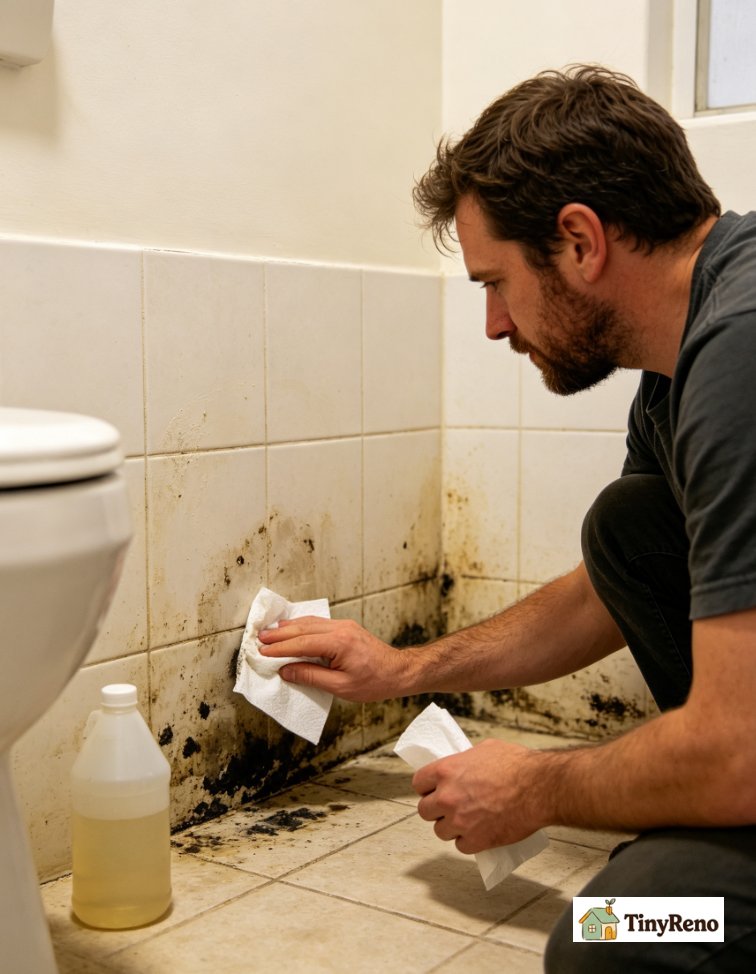
Mold from active moisture. These spots are fuzzy, sometimes greenish-black, and they show up in clusters near the floor, near windows, or on bathroom ceilings. The wall behind them will feel cold and slightly damp. Press a paper towel against one for ten seconds — if it comes away with even a faint moisture ring, you have active water. I had this in the Brooklyn studio. The cause was a cracked foundation on the basement side, and the fix was exterior excavation plus interior sealing, which the landlord paid for because it was a habitability issue, not a cleaning issue. One more place mold hides in rentals: behind wallpaper. If a painted or papered wall has a soft, puffy area that doesn't match the surrounding surface, don't press on it too hard — that could be paper holding a patch of weakened drywall together. Note it, photograph it, and bring it to the landlord. This is not a spot-clean situation.
Mildew from humidity, not leaks. Same look as mold but the wall is dry. These spots appear in bathrooms with no exhaust fan, in bedrooms with no air circulation, and in any room where a humidifier runs 24/7. The fix is to address the humidity — run a vent fan during every shower, open windows for 15 minutes daily, and wipe the spots with a 1:1 vinegar-water solution to remove surface mildew, and then fix the humidity. Vinegar will knock back light mildew, but it won't solve a recurring moisture problem, and it won't do much for mold that's already embedded in the paint film. Don't paint over them. The mildew will grow right through the new paint within a month.
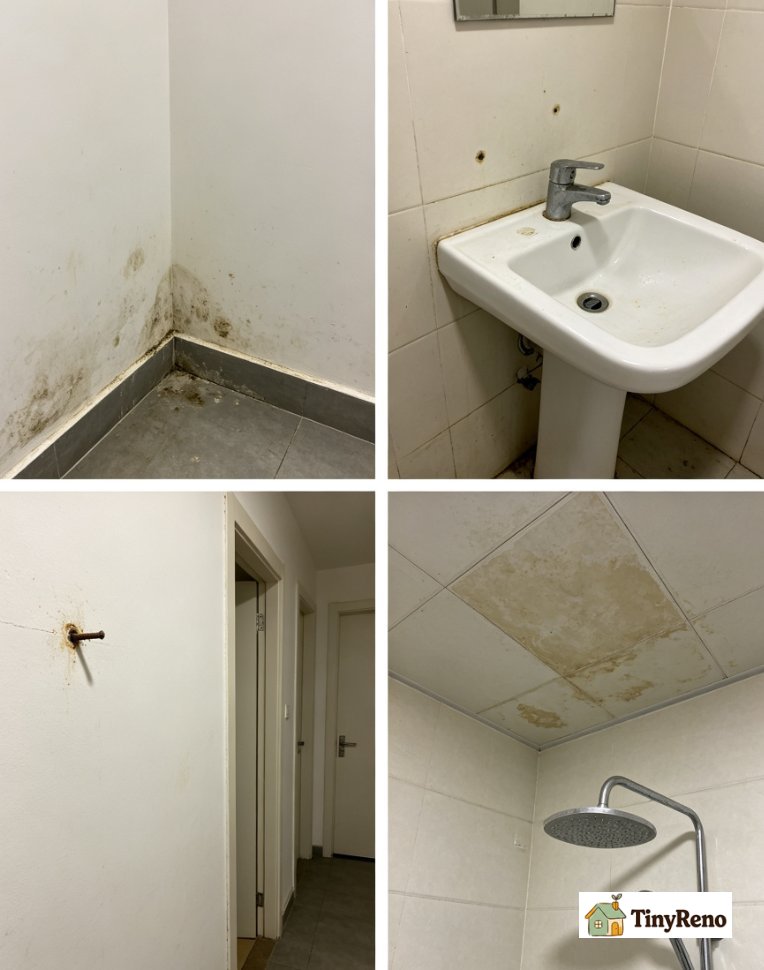
Rust bleeding from a nail or screw. This one looks different if you know what to look for. The spot has a small dark center — the nail head — with a brownish-orange halo spreading outward, like a tiny bullseye. Press your fingertip against the spot: if you can feel a bump, that's the nail head. I had this in my current rental's hallway. A previous tenant had hung a heavy mirror with nails that went into the plaster, and years later the nails rusted and bled through the paint. The fix is to countersink the nail a quarter inch below the surface with a nail set, fill the hole with wood filler (not spackle — spackle doesn't seal rust), prime with a stain-blocking primer like Zinsser BIN, then repaint. If you just paint over it, the rust stain comes back through in three weeks.
Grease from cooking. Greasy black spots show up behind stoves, especially the wall directly behind the burner and the wall 12 inches to either side. They feel slightly tacky to the touch, even after cleaning. The fix is to wash the wall with a degreaser (Dawn dish soap works, TSP works better), let it dry overnight, then paint with a kitchen-and-bath paint that has grease resistance built in. I had this in a fourth-floor walk-up where the previous tenant apparently never turned on the range hood.
Scuff marks from furniture or doors. These aren't really "black" — they're dark gray smudges that come off with a magic eraser. They show up behind door swings, behind chairs, and along the wall behind the bed's headboard. The fix is to wash the wall, prime any exposed drywall with a quick-dry primer, and touch up the paint. Don't sand first — modern flat paints don't need sanding for touch-up.
Ink or marker, including from kids. Sharpie, ballpoint pen, and crayon leave spots that look greasy but won't come off with degreaser. Rub the spot with rubbing alcohol on a cotton ball — if the cotton picks up color, it's ink. The fix is to paint over it with two coats, since ink bleeds through one coat of regular paint.
Four renters, four walls, four different fixes
The point isn't just to list causes — it's to show how the same-looking problem takes a different fix depending on the cause. Here's how it played out for four people I helped in the last two years.
Daniel called me about black spots on wall behind his bed. He'd painted over them twice and watched them come back. I went over, pressed my hand on the wall, and felt cold air coming through a hairline crack near the baseboard. The spots were mold from air leaking in around an unsealed baseboard. We sealed the baseboard with clear caulk, ran a dehumidifier for a week, and the spots haven't come back in eight months.
Marcus texted me a photo of three black spots clustered above his kitchen sink. He was about to paint over them. I asked one question: does the wall feel cold there? He said yes. I told him not to paint — those were mildew from humidity, and painting over them would trap moisture and make it worse. He wiped them with vinegar, started running his bathroom vent during dishes, and they're gone.
Lila sent me a photo of a single black spot on her hallway wall that had come back through two coats of paint. I asked her to press on it. She said she could feel a small bump. I told her it was a nail head rusting. She countersank the nail with a nail set, filled it with wood filler, primed with Zinsser, repainted, and it's been clean for a year.
Jessica asked about black spots on the ceiling above her shower. She was renting and the landlord said it was her problem to clean. I told her it was a ventilation problem, not a cleaning problem, and she should ask the landlord to install a proper exhaust fan or repair the existing one. The landlord did, the spots dried up, and Jessica didn't lose part of her security deposit over a fix that wasn't her responsibility.
What to do when you don't know
If you can't tell what kind of spot you have, here's the order I'd investigate. Check the location first — spots near water sources (sinks, tubs, exterior walls, basement-level floors) are usually moisture-related. Spots at nail-head height or along stud lines are usually rust or scuffs. Spots behind stoves are usually grease. Then do the touch test: cold and damp means moisture; cold and dry means humidity; room temperature and slightly tacky means grease; room temperature and bumpy means nail rust. Then do the paper towel test for moisture. Then try the magic eraser — if it comes off, it was scuff.
If you've done all that and still don't know, take a clear photo and post it to a renter subreddit or send it to me. Don't paint first. Painting over a black spot without diagnosing it is the single most common reason renters lose part of their security deposit — the landlord sees the new paint over a problem and assumes you tried to hide it.
Black spots on wall look like one problem. They're usually three or four problems wearing the same coat. Five minutes of diagnosis saves you the cost of repainting the wrong fix.


Discussion (0)
Sign in to join the discussion