

Can you put wallpaper over wallpaper came up in a phone call with my sister last March. She had just signed a lease on a one-bedroom in Lisbon, walked in with a steamer, and realized the previous tenant had glued a butter-yellow floral paper straight onto crumbling plaster. She asked me the question with the kind of voice that means she's already decided she wants to do it but wants me to say it's fine. I told her it depends, hung up, and spent the rest of the week writing her a checklist on the back of an envelope.
Four apartments later — three rentals, one inherited unit my aunt left me — I've watched the wallpaper-over-wallpaper question play out in five different rooms. Some walls took the new paper cleanly and held it for two years. Some walls rejected the new paper within a month and pulled chunks of the old paper with it. The difference was never the new paper. The difference was the wall underneath. Once you know what to look at, the decision takes about ten minutes per wall and saves you a hundred dollars in either wasted paste or a weekend of steaming.
What the new wallpaper actually sticks to (and why this matters)
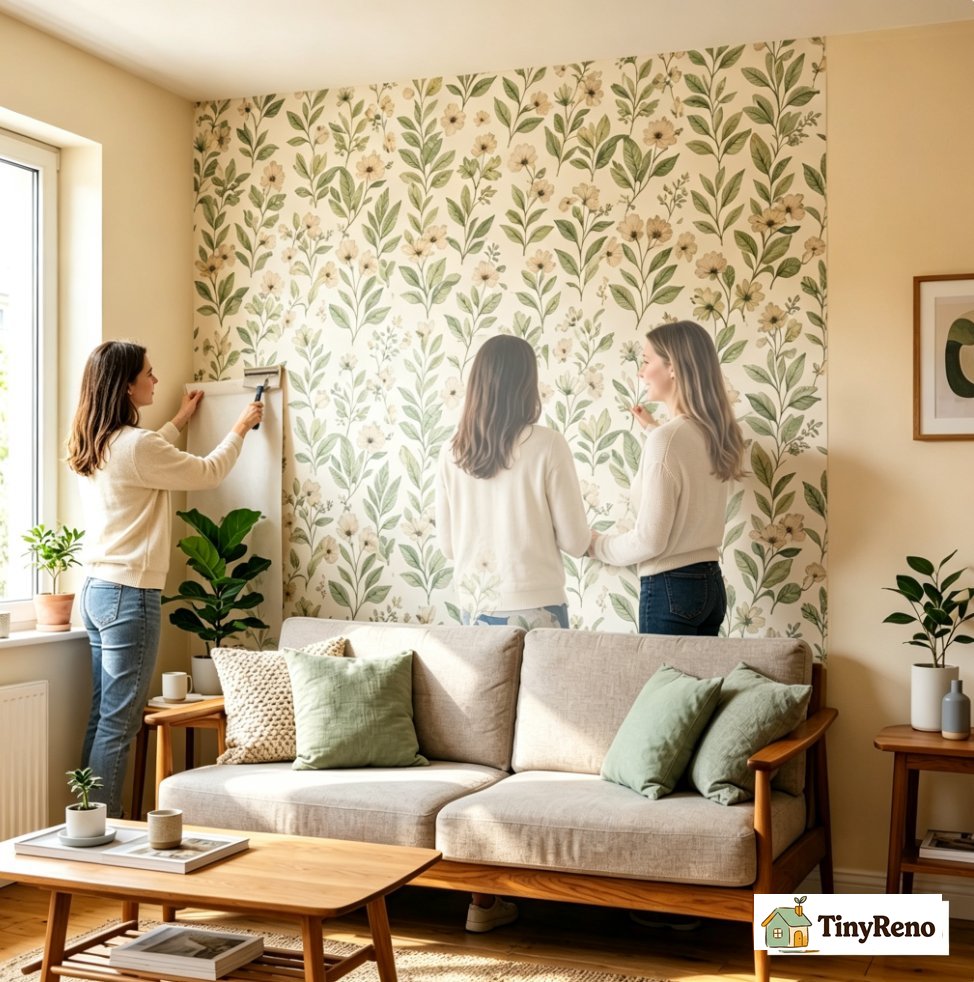
When you put wallpaper over wallpaper, the paste doesn't bond to your wall. It bonds to the top layer of the old paper. So the question "can you put wallpaper over wallpaper" is really asking whether the old layer is strong enough, smooth enough, and chemically compatible enough to act as your new substrate. Most of the time the old layer is fine. A small number of times it isn't, and you'll only find out by checking three things.
I learned this the hard way in my second rental when I tried to put wallpaper over wallpaper without checking the substrate. I skim-coated over the worst seams on a 1960s plaster wall, hung a thick grasscloth over the existing beige paper, and felt very clever for about six weeks. Then a humid week came in and the grasscloth started to bubble along every seam. When I pulled the corner back, the old beige paper came with it — it had been held on by a thin coat of old paste that turned to mush the moment moisture got in. I had to strip the whole wall and start over. The grasscloth was $240. The lesson was free.
Three walls where can you put wallpaper over wallpaper (and three where you can't)
There are three wall conditions where I've reliably hung new paper over old without problems. None of them are about the new paper being "good" — they're all about the old layer being a stable surface.
Flat, painted-over wallpaper. If the old paper was painted with a matte or eggshell interior paint, it's often a solid base — but not automatically. Check for lifting seams and loose corners first. The paint may have sealed the seams, but moisture trapped underneath can still loosen the paper from the plaster. My aunt's dining room was like this — a 1980s striped paper that someone had painted over twice before she inherited it. I hung a modern botanical print over it six years ago and it's still flat on the wall.
Recently installed, well-adhered wallpaper. If the old paper went up within the last five years, has no lifting corners, and passes the tape test (press a strip of masking tape firmly onto it, yank it off, and see if any paper comes with it), it's almost always a fine base. The glue is still active, the seams are tight, and there's no moisture damage underneath.
Sealed vinyl or solid vinyl wallpaper. Sealed vinyl or solid vinyl wallpaper. Vinyl-faced papers are essentially a plastic sheet, and new paste doesn't grip plastic well. A light scuff with 150-grit sandpaper helps, but the goal is to dull the surface, not cut through it. If your wallpaper is a thin vinyl, skip the sanding entirely and test a small area with paste first. If it slides, you'll need a wallpaper primer instead. I did this in a rental kitchen over a busy fruit-print vinyl and the new paper held through two tenants.
Four walls where can you put wallpaper over wallpaper (and shouldn't)
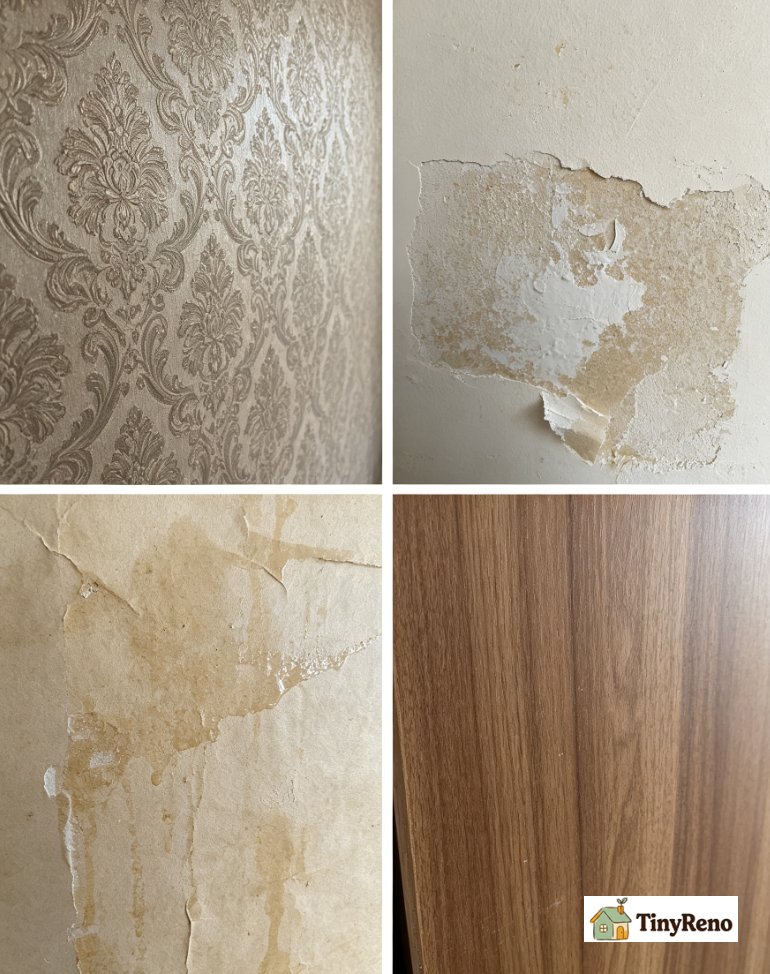
There are four wall conditions where I will not put new paper over old, no matter how much the renter wants to save time. Each one has cost me either a weekend or a roll of new paper at least once.
Textured or heavily embossed wallpaper. Anything with a deep texture — grasscloth, blown vinyl, the lumpy stuff from the 70s that looks like popcorn — will telegraph through the new paper. The new paper will look fine until it dries, then every bump from underneath will show as a shadow. My sister learned this on the butter-yellow floral: the texture was so deep that even after I skim-coated three times, you could still see the flower outlines ghosting through the new print.
Old peel-and-stick residue. If the previous tenant used peel-and-stick paper and pulled it off but left the adhesive backing, new paper will stick to the gummy residue and then peel off in sheets within weeks. I watched this happen in my third rental — the bathroom had three layers of peel-and-stick history and the new paper lasted exactly one steam shower.
Anywhere there's been water damage. Bathrooms, exterior walls with condensation issues, walls under windows that sweat in winter. Even if the old paper looks fine, the paste underneath has likely weakened. New paper will hold for a while, then a humid week will take it down.
Wood paneling or anything with a sealed wood surface. Old wood-paneled walls from mid-century apartments were often sealed with polyurethane. New wallpaper paste will not bond to polyurethane at all. I tried once in a 1962 rental and the new paper slid down the wall overnight like a window shade.
One more variable worth naming: heat. A wall that gets direct sunlight every afternoon can heat up enough that the old paste dries out and releases. I've seen wallpaper separate on a south-facing wall even without any moisture problem. If the wall gets hours of direct sun, the old paper needs to be in better shape than it would on a cooler interior wall.
The ten-minute check before you commit
Before you buy a single roll, spend ten minutes on each wall doing these checks. I've turned down wallpapering jobs halfway through because the wall failed check three.
First, run your hand across the surface. If you feel any grit, texture, or looseness, that's a no. Second, check all four corners and the seams around outlets — if any corner lifts with a fingernail, the whole sheet will eventually lift. Third, do the tape test I mentioned earlier. Fourth, look at the bottom three feet of the wall near the floor for any discoloration — yellow or brown staining means moisture has been in that wall and the paste is compromised. Fifth, smell the wall. Old paste that's gone bad smells faintly sweet and sour, like a damp basement. If you smell it, strip the wall.
If you pass all five, you're probably fine. If you fail any of them, you have two real options: either strip the old paper entirely (which is what I do for any wall that fails the check) or hire someone to do it. Don't try to half-solve it with primer — primer over wallpaper is a band-aid that fails within a year.
The wall you can paper over vs the wall you can't
If the wall passes the five checks, you're good. Putting up new paper is faster, cheaper, and less destructive than stripping the old layer first. So if you can put wallpaper over wallpaper safely, do it. If it fails any of the checks, strip first. The half-measures — primer, extra paste, scoring the surface — all buy you six to twelve months at best, and then you're doing the job twice.
My sister ended up stripping her butter-yellow floral wall over a long weekend with a steamer and a putty knife. It took her about eight hours per wall. The new botanical print went up the following weekend and has held perfectly since. She called me last week to say she's doing the bedroom next, and asked me the same question about the bedroom. I told her it depends. Then I sent her this article.


Discussion (0)
Sign in to join the discussion