

Can you apply oil based paint over latex paint was the question I asked the hardware store clerk after a weekend of staring at my kitchen cabinets. The previous tenant had painted them white latex. I wanted them navy blue, in oil-based enamel, because every cabinet-painting tutorial I'd read said oil enamel wears better. The clerk shook his head. "It might work. It might not. The label says latex over oil, not oil over latex." I bought both cans anyway. Here's what I learned.
The question isn't really whether oil paint can sit on top of latex paint. It's whether the two paints will bond to each other and stay that way for the years a renter needs them to. The answer depends on five questions most people skip. Get any of them wrong and you get peeling, chipping, or the dreaded yellow tint that oil paint develops over latex.
Question 1: How Old Is the Latex Paint Underneath?
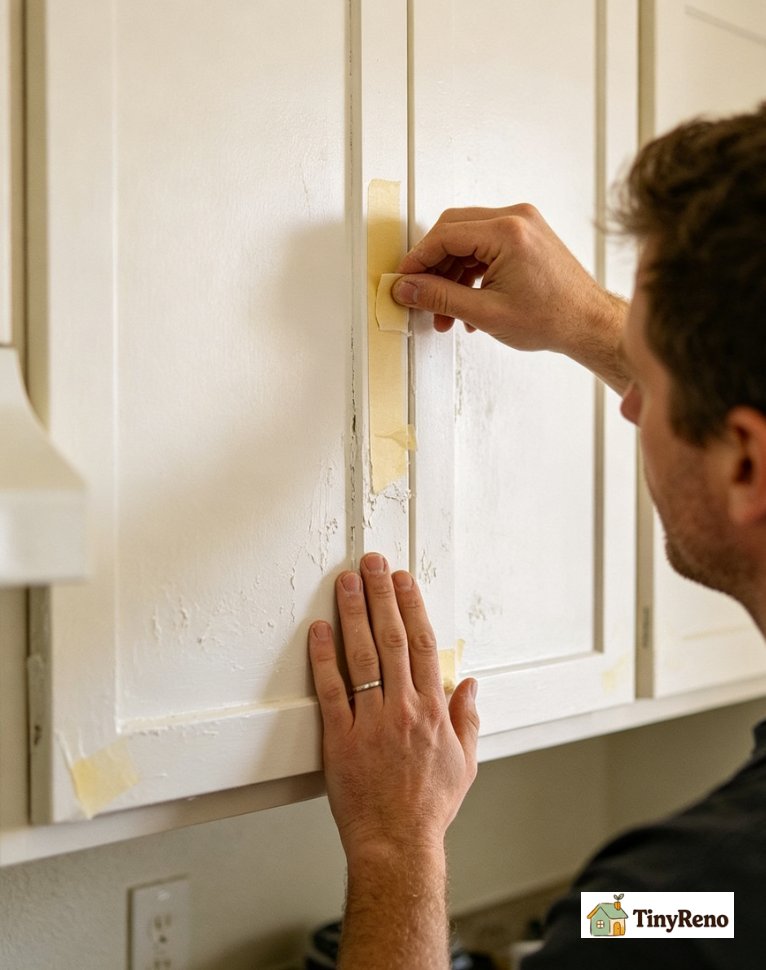
The age of the existing latex paint matters more than the brand. Latex paint cures in two stages. The first stage — surface dry — happens in hours. The second stage — full cure, where the paint reaches its final hardness and adhesion — takes two to four weeks. Latex paint that hasn't fully cured is still soft, still off-gassing, still chemically settling.
If the latex paint is less than four weeks old, oil paint over it will fail. The oil paint forms a skin on the surface while the latex underneath is still soft. The latex continues to cure under the oil skin, and as it moves, it pulls away from the oil layer above. Within weeks, the oil paint starts to crack and peel.
If the latex paint is more than four weeks old, you're probably safe to proceed — but test before you commit. Press a piece of masking tape firmly against the latex, then rip it off. If latex comes up on the tape, the paint isn't cured enough. If the tape comes up clean, the paint is cured and ready for the next step.
The kitchen cabinets in my apartment had been painted two years before I moved in. They were fully cured. The tape test came up clean. That was the first of the five questions I got right.
Question 2: Is the Latex Paint Clean and Sound?
Latex paint that's peeling, chipping, or flaking will reject any paint you put over it. Oil paint over failed latex is just oil paint waiting to fall off the wall. The bond between the two layers is only as strong as the bond between the latex and the surface underneath.
This is where most DIY oil-over-latex jobs fail. The painter skips the prep because the latex looks intact from a distance. Up close, the latex has hairline cracks, soft spots, or contamination from kitchen grease that the eye doesn't see.
The check is simple. Run your hand over the latex. If it feels chalky, rough, or powdery, it's failing — even if it looks intact. If it feels smooth and solid, it's sound. If you find soft spots or chips, scrape them off with a putty knife and feather the edges with sandpaper before proceeding.
My cabinets passed this check. The latex had aged into a hard, slightly glossy surface. It felt like the paint was actually part of the wood now, not a film on top. That's the texture you want before putting oil over latex.
Question 3: Are You Covering a Big Area or a Small One?
The size of the project changes the risk. A small area — a door frame, a single wall, a piece of trim — can be tested and monitored easily. A large area — whole cabinets, an entire room, a long stretch of baseboard — multiplies every risk and makes mistakes visible.
For small areas, the answer to can you apply oil based paint over latex paint is usually yes, with prep. For large areas, the answer is more nuanced. A large flat surface of latex will expand and contract slightly with temperature and humidity. Oil paint on top doesn't move the same way. Over months, the two layers can delaminate — separate — even if the bond seemed strong on day one.
This is why cabinet refinishers usually sand the existing latex to scuff it, then apply a bonding primer, then apply the oil enamel. The scuffing gives the primer a mechanical tooth to grip. The primer gives the oil enamel a chemical tooth to grip. The two-step system handles the differential movement between latex and oil.
For my cabinets, I went with the bonding primer approach because the area was large and the consequences of failure were visible. A small touch-up on a door frame wouldn't need the same investment.
Question 4: Did You Use a Bonding Primer?
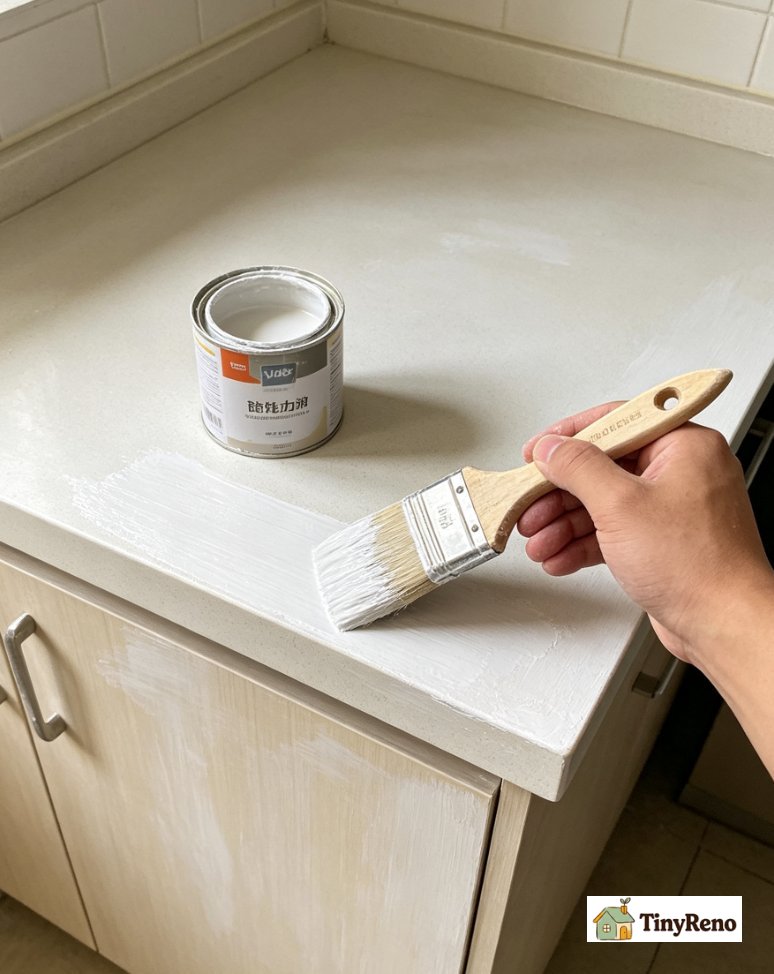
Bonding primer is the missing step in most DIY oil-over-latex projects. It's a special primer formulated to stick to surfaces that other paints struggle with — glossy paint, laminate, glass, ceramic tile, oil paint, latex paint. It's sold under names like "Bonding Primer," "Stain Blocker," "Multi-Surface Primer," and a dozen brand-specific names. The active ingredient is usually a high-tack acrylic or shellac.
Without bonding primer, oil paint over latex is held in place only by the surface tension between the two paints. The latex is slightly absorbent and slightly rough at the microscopic level. The oil paint grabs onto those imperfections. But the bond is weak. With temperature swings, humidity changes, or physical contact, the oil paint can release.
With bonding primer, the bond becomes chemical, not mechanical. The primer soaks into the latex and creates an interlocking layer. The oil paint then bonds to the primer instead of the latex. Two chemical bonds are stronger than one mechanical bond.
I used a shellac-based bonding primer on the cabinets. Two coats. The first coat went on thin and disappeared into the latex. The second coat went on thicker and formed a visible film. The oil enamel went on top of the second coat. After two years in a kitchen — heat, steam, the occasional splash — the paint hasn't cracked, peeled, or yellowed.
Question 5: Are You OK With the Risk?
Before anything else, if this is a rental, check your lease. Some leases classify repainting cabinets or walls as a modification, even if you're improving the surface. A quick email to the landlord with your plan is cheap insurance against a move-out dispute.
Even with all four questions answered correctly, can you apply oil based paint over latex paint still carries risk. The risk is small — under 10% failure rate with proper prep and bonding primer — but it's not zero. The failure mode, when it happens, is usually the oil paint lifting away from the latex in patches, especially at edges and high-contact areas. You might also see alligatoring or cracking where the two layers moved differently with temperature and humidity. The latex underneath may stay intact; the oil on top is what gives way.
For a renter, the question is whether the risk is worth taking on someone else's property. If you're repainting a room you'll live in for two years and then leave, the risk is yours to absorb. If you're painting cabinets for a landlord, the landlord is taking the risk — but they're also paying for the paint.
I went ahead because the cabinets were mine to live with for two years. If the oil paint failed, I'd deal with the peeling. If it succeeded, the cabinets would look better and last longer. The bonding primer cost me $24 and added one day to the project. The risk was small, the cost was modest, and the upside was worth it.
The honest answer to can you apply oil based paint over latex paint is: yes, with prep. The full answer is: yes, with prep, on cured latex, on sound latex, on small areas or with proper primer on large areas, and only if you're willing to accept the small risk of failure.
The Short Version

If the latex is more than four weeks old and still sound, oil paint over it can work. Scuff the surface with 220-grit sandpaper. Apply one to two coats of bonding primer. Apply the oil enamel. Let each coat cure fully before the next.
If the latex is fresh, peeling, or in a high-moisture area, the safer move is to strip the latex back to bare substrate and start over. That takes longer, costs more, and is the only way to guarantee a long-lasting bond.
For a small renter project — a door frame, a single wall, a piece of furniture — the prep and primer approach takes an afternoon and produces a finish that holds up. For a large project — whole cabinets, full rooms — consider whether latex over the existing latex is the simpler renter choice. It might not be as durable as oil enamel, but it's also not as risky.
If you're not married to the idea of traditional oil enamel, this is the moment to consider a cabinet-grade water-based alkyd like Benjamin Moore Advance or Sherwin-Williams ProClassic. It gives you the hard, smooth finish of oil with the simpler cleanup and lighter smell of latex. For most rental cabinets, it's the easier answer.
Can you apply oil based paint over latex paint on a wall? Yes, if the latex is fully cured (4+ weeks old), sound (not peeling), and you use a bonding primer. The bond between oil and latex is mechanical without primer, chemical with primer. The primer approach is the only one I trust for a wall surface that will get touched, cleaned, or bumped.
What happens if you put oil paint over latex without primer? The oil paint will look fine for weeks or months, then start to crack and peel in sheets. The failure shows up around high-contact areas first — door frames, light switches, edges. Once the peeling starts, it's hard to stop because the latex below has now been disturbed.
Can you apply latex paint over oil based paint? Yes, latex over oil is more forgiving than oil over latex. The label on most latex paint cans explicitly says it can go over oil-based paint that's been primed or scuffed. Oil over latex requires more caution because the two paint chemistries are less compatible.
How long should oil paint cure before adding a second coat? Oil paint's recoat window is shorter than most people expect. In normal conditions, you'll want the second coat on within 16 to 24 hours. After that, the first coat may have cured enough that the second coat won't bond well without sanding. In cool or humid conditions, check the can for the exact recoat window — it's often longer, not shorter. The paint should feel dry to the touch but not fully hardened when you recoat. The full cure is two to four weeks — handle gently during that window.
Is there a latex paint that looks like oil enamel? Yes, modern 100% acrylic latex paints in semi-gloss or gloss sheens mimic the hard, scrubbable finish of oil enamel. Brands like Benjamin Moore Advance and Sherwin-Williams Duration are formulated for cabinets and trim and don't have the yellowing issue of oil enamel. For a renter, latex over existing latex is usually the simpler choice.
What I'd Do Differently Now
After two kitchen cabinet projects and one bathroom vanity project with oil over latex, my honest recommendation is to skip the oil enamel unless you have a specific reason for it. The bonding primer adds a step, the cure time is longer, the smell is stronger, and the cleanup needs solvents. Latex enamel — specifically the cabinet-grade acrylic latex — gives you 80% of the durability with half the work.
The oil enamel still has a place: high-traffic doors, exterior surfaces, anywhere you need the hardest possible finish. For most renter projects, the latex enamel is the better choice.
If you do go with oil over latex — for the finish, the tradition, or the specific look you want — the five questions in this article are the framework. Answer all five correctly and you'll get a finish that lasts years. Answer any of them wrong and you'll be repainting in months.


Discussion (0)
Sign in to join the discussion