

How to keep a door from closing was the question I asked my downstairs neighbor at 11 p.m. on a Tuesday, after I watched the bathroom door swing shut behind me and lock my cat inside. The latch had a habit of catching on a slight slope in the door frame, which meant every push or draft turned into a closed-and-latched door. The cat was fine. My nerves were not.
The problem is more common than people think, especially in older apartments. The door frame shifts a few millimeters over decades, the hinge screws loosen, the building settles, and suddenly a door that worked fine for years starts swinging shut on its own. The answer to how to keep a door from closing depends on what's actually causing it. Six renter-tested fixes, in order of how cheap and reversible they are. Six renter-tested fixes, in order of how cheap and reversible they are.
Why Doors Start Closing by Themselves
A door that swings shut on its own is doing exactly what physics tells it to. The hinge pin is not perfectly vertical — either the door frame is slightly out of plumb, or the hinges are angled, or both. Gravity pulls the door toward whichever side of the frame is lower. If that side also has the latch, the door swings shut. If the latch side is on the higher side, the door swings open.
Most apartment doors close because the latch-side hinge is lower than the hinge-side. The fix is to either raise the latch-side hinge, lower the hinge-side, or change the geometry of the door swing. Each fix has a different skill level and a different cost.
The cheapest renter-friendly fix is a door stop. The most permanent is a hinge adjustment. The fastest is a rolled-up towel at the base. I'll go through all six in order, but the question to ask yourself first is whether you want to fix the door or just live with the behavior.
Fix 1: The Rolled Towel (Free, 30 Seconds)
If you need the door to stay open right now, roll a bath towel and wedge it under the door's leading edge. The friction is enough to stop most doors from swinging shut. This is what I did the night my cat got locked in. It works for hours. It looks ridiculous.
The towel fix has three problems. It looks like clutter. It collects dust under the door. It can stain carpet if you forget to pull it up before stepping on it. I kept a rolled towel under the bathroom door for two weeks before I moved on to something more permanent. The cat survived.
This is the only fix that costs zero and requires no installation. It's also the only fix your landlord definitely won't complain about, because nothing is attached to the door or the frame.
Fix 2: The Spring Door Stop ($4, 60 Seconds)
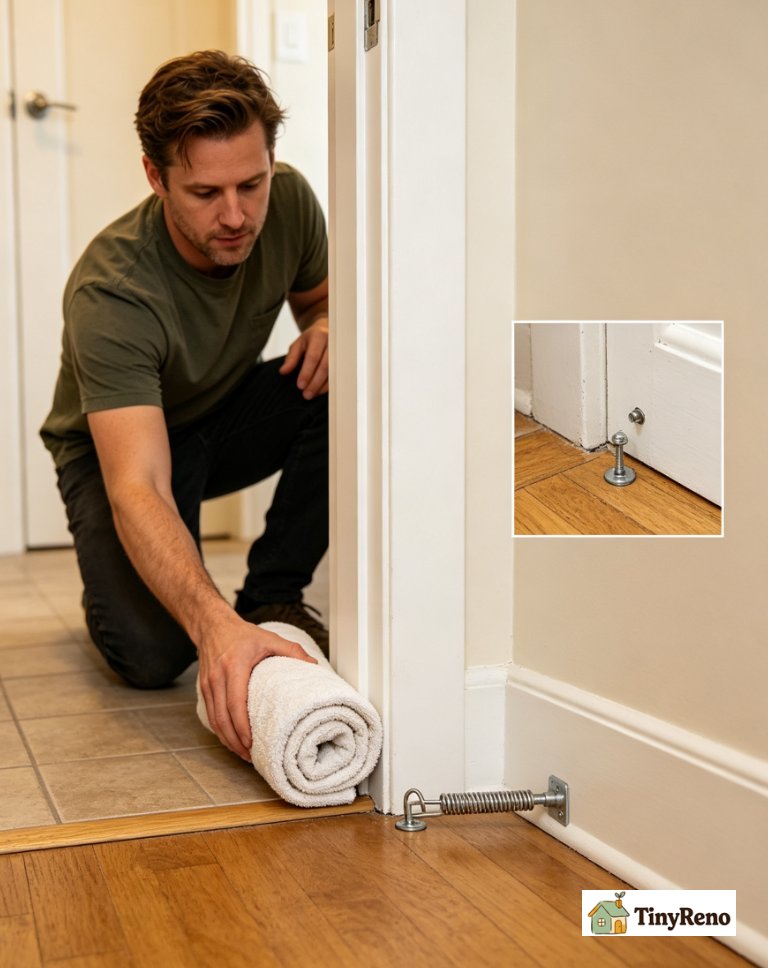
A spring door stop is a small metal post with a rubber tip. You screw it into the baseboard where the door would otherwise hit the wall. The door hits the spring instead of the wall, and the spring's tension holds the door open at any angle you choose.
The trick is positioning. The spring needs to be where the door's handle or leading edge hits the wall when fully open. Most doors open to about 90 or 100 degrees. Place the spring about 2 inches in from where the door's edge meets the baseboard at full open. The door pushes against the spring as it opens and the spring compresses just enough to keep the door from rebounding.
What I learned the hard way: cheap spring stops bend within a month. Spend the extra $2 for the all-metal version. The plastic-bodied springs snap at the base after about six weeks of use.
The hole left by the spring stop is small — about 1/8 inch — and easy to fill with a dab of spackle when you move out. Most landlords don't flag this as damage. If yours does, the spackle fills it in two minutes.
Fix 3: The Over-the-Door Hook with Elastic ($6, 2 Minutes)
If the door has a habit of latching shut, an over-the-door hook with a piece of elastic can hold the latch out of the strike plate. You hook one end of the elastic over the door's top edge and the other end over the knob. The elastic keeps the knob pulled slightly away from the frame, so the latch can't engage.
This works, but it looks hacky. Anyone walking into the room sees a piece of elastic stretched across the door. I used it for two weeks in a sublet where I couldn't drill anything, then took it down because I couldn't stand how it looked.
The elastic also wears out. A door that swings shut 20 times a day cycles the elastic 20 times a day. After about six weeks, the elastic stretches and the latch starts catching again. Replace the elastic every two months if you go this route.
This fix is good for renters who can't make any holes and don't mind the look. It's bad for anyone who wants the door to actually look normal.
Fix 4: The Door Wedge ($3, 10 Seconds)
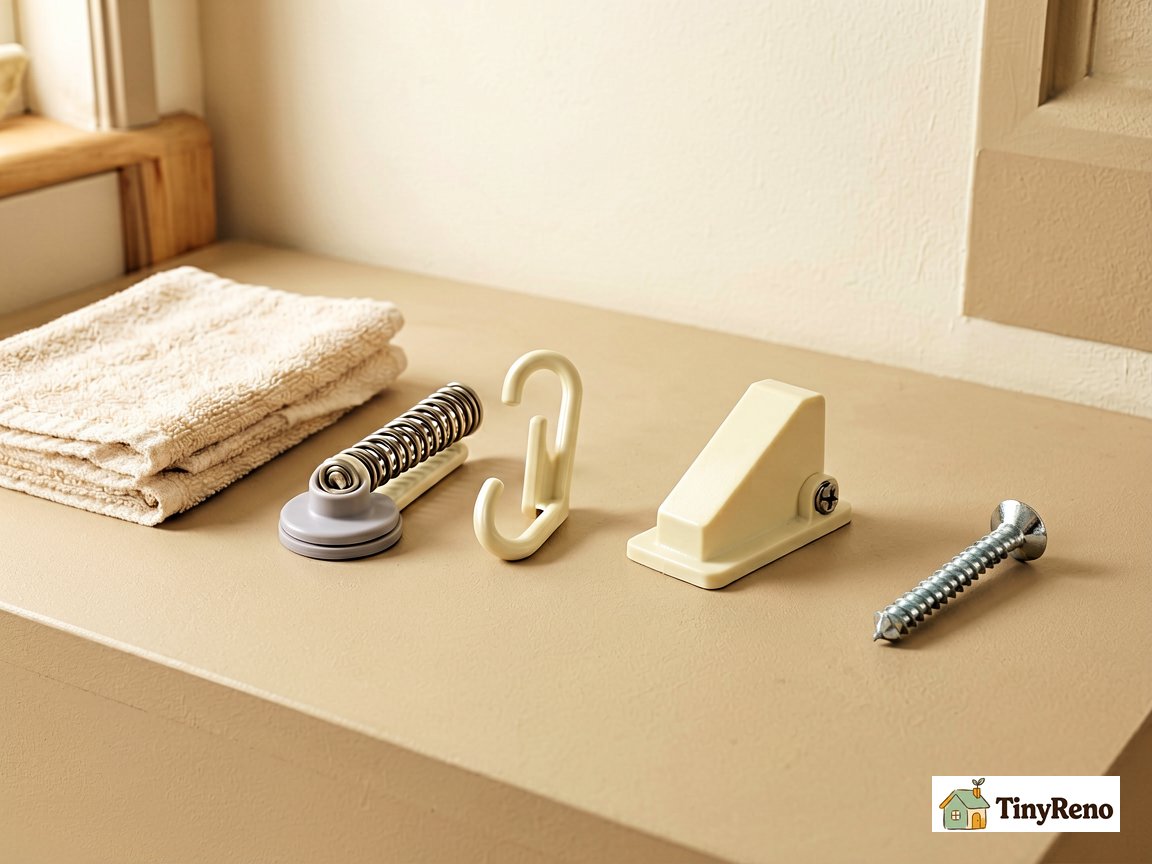
A door wedge — a small rubber or wooden triangle — sits at the base of the door and holds it open. It's the classic fix for hotel rooms, and it works just as well in apartments. Drop it in place when you want the door open, kick it out when you want it closed.
The cheapest rubber wedges are $3 at any hardware store. They hold a door open against light drafts. They don't hold a door open against a hard swing. If your door has enough momentum to close and latch, a wedge alone won't hold it.
For heavier doors, get a spring-loaded wedge. These have a small lever you step on to compress the wedge into the gap between the door and the floor. The compression holds the door against a hard swing. Cost: $10. They look like small tripods on the floor.
The wedge leaves no marks on the floor or the door. It's fully reversible. The landlord sees a wedge, not a hole.
Fix 5: The Hinge Shim ($0 to $5, 5 Minutes)
If you can identify which hinge is causing the problem, a hinge shim fixes the geometry without drilling new holes. The shim is a thin piece of cardboard or specialized hinge shim stock that goes behind one of the hinge leaves. It pushes the door slightly toward the opposite side of the frame.
To find the problem hinge, close the door slowly and watch which side of the frame it leans toward. The hinge on the side it leans toward is the lower hinge. Adding a shim behind the opposite hinge raises that side, balancing the door.
I tried this with a piece of cardboard from a cereal box cut to hinge size. It worked, but only for two weeks before the cardboard compressed and the door started swinging shut again. Cardboard isn't stiff enough for long-term shimming. A real hinge shim — made of brass or stiff plastic — costs about $5 for a 4-pack and lasts indefinitely.
The shim goes behind the hinge leaf, between the hinge and the door frame. You unscrew the hinge, slide the shim in, screw the hinge back. Five minutes with a Phillips screwdriver. No new holes. The hinge covers the shim when the door is closed, so no one sees it.
Fix 6: The Hinge Adjustment ($0, 10 Minutes)
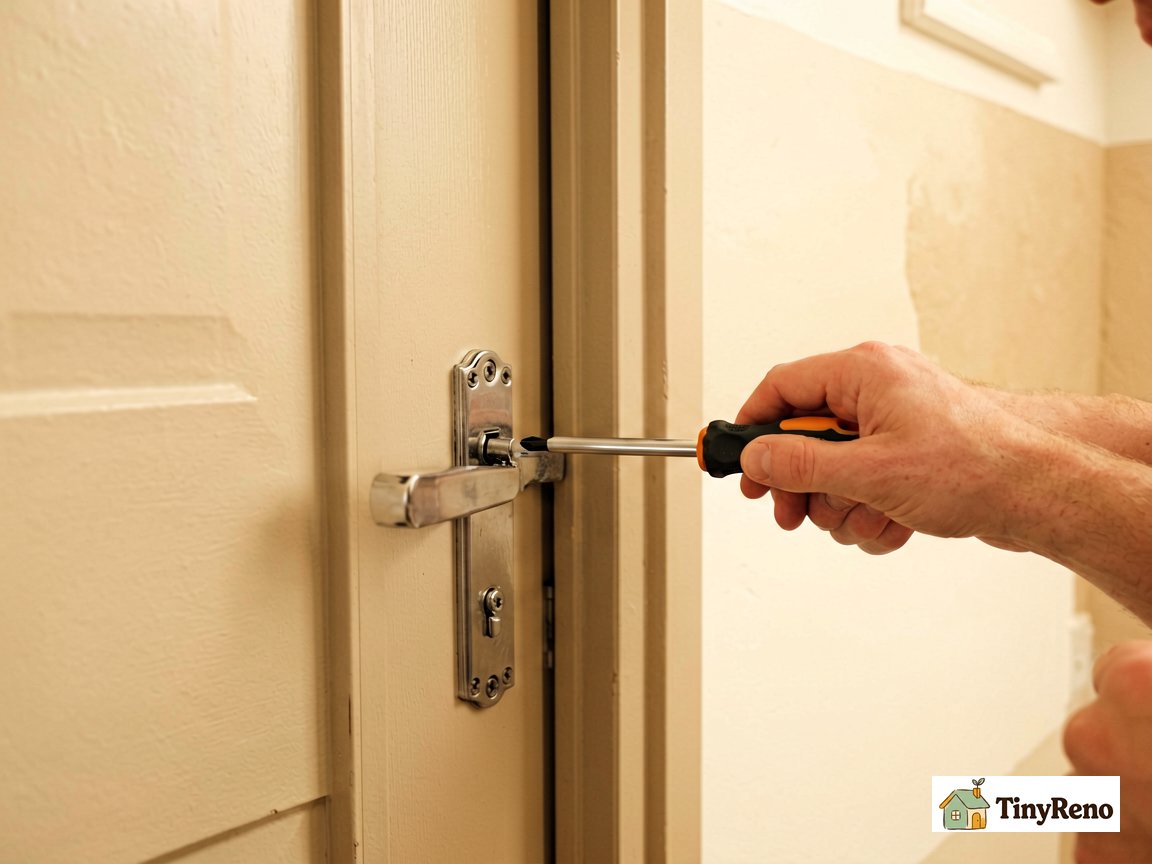
Before you touch any hinge screws, check your lease. Some leases prohibit tenant repairs on doors, and a stripped hinge hole can become a landlord dispute. If you're not sure, ask the landlord to send maintenance. The adjustment takes them five minutes, and it keeps the repair on their side of the agreement.
This is the most permanent renter fix, and it costs nothing. Most doors have a single screw in each hinge that's accessible for adjustment. On some interior doors, one of the three screws on each hinge leaf is a depth-adjustment screw. It's usually the middle one, but not always. If yours doesn't have a visible adjustment screw, skip this method and go straight to shims. If you back it out half a turn, the hinge leaf moves slightly, changing the door's angle.
This is the renter's equivalent of a door realignment. It doesn't fix everything, but it fixes the most common cause of self-closing doors: a hinge that's slightly too deep.
I learned this from a handyman who fixed my apartment's bathroom door in five minutes during a routine visit. He backed out the top hinge middle screw half a turn, and the door stopped swinging shut. The fix lasted the rest of my lease.
The risk is over-tightening when you put the door back together. If you crank the screws down too hard, you strip the wood in the door frame, and the hinge won't hold. Hand-tight is enough. If the screw doesn't bite, back it out, put a toothpick in the hole with wood glue, snap it off flush, and re-drive the screw.
What I Actually Did Across Five Apartments
The pattern that emerged from five leases:
- Studio with cats → towel under the door, then door stop after a week
- One-bedroom with a drafty bathroom → spring door stop at the base
- Two-bedroom with a self-latching front door → hinge shim on the middle hinge
- Sublet where I couldn't drill → over-the-door elastic for the first month, then asked the landlord to fix
- Current apartment with a slightly slanted bedroom door → hinge adjustment by the maintenance team, no charge
Each fix had a different cost, a different skill level, and a different look. None of them required a drill, except the spring stop, and that one hole is small enough to spackle in two minutes at move-out.
If you're still searching for how to keep a door from closing and none of the above matched your situation, the answer is almost always one of these six, and your specific door just needs the right match.
Why does my door keep closing by itself? The door frame is slightly out of plumb, or the hinges are angled so the door's weight pulls it toward the latch side. Gravity closes the door because the latch-side hinge is lower than the hinge-side.
How do you keep a door from closing without drilling?
If you can't drill anything into the wall or baseboard — which is the case in some sublets and lease-restricted apartments — the cleanest fix is a door wedge. A door wedge is a small rubber or wooden triangle that sits on the floor between the door and the frame. No holes. No tools. No marks on the floor. The wedge holds the door open against light drafts and most casual bumps.
The catch with wedges is heavier doors. A door with enough momentum to swing shut and latch won't be held by a $3 rubber wedge. For heavier doors, the spring-loaded wedge (with a foot pedal that compresses the wedge into the floor gap) is the answer. Cost: $10. Reversible to zero. Holds a door open against a hard swing.
If a wedge doesn't work and you can't drill, the next best answer is to ask the landlord. Most landlords will fix a self-closing door within a week because it's a habitability issue. Don't spend weeks rigging elastic solutions when a five-minute hinge adjustment by the maintenance team is free.
Can I use a doorstop instead of a door wedge? A doorstop is mounted on the wall or baseboard. A door wedge sits on the floor between the door and the frame. Door wedges are better for renters because they leave no holes in walls.
What's the easiest way to keep a door open for a cat? Spring door stop at the base, set to about 80 degrees open. The door stays open against light drafts and most cat nudges. Cost: $4. Time to install: one minute.
The Fix I'd Reach for First
If I had to pick one fix for any apartment with a self-closing door, it would be the hinge adjustment. Back out the middle screw on the top hinge by half a turn. Test the door. If it still swings shut, back it out another quarter turn. Repeat until the door stays where you put it. Total cost: $0. Total time: 5 minutes. Total landlord upset: zero, because no holes are made.
If the hinge adjustment doesn't hold, the next fix is a hinge shim. After that, a spring stop. The towel and the elastic are temporary measures while you figure out which fix is permanent — and how to keep a door from closing once and for all.
My downstairs neighbor on the cat-lock night eventually put a door wedge at the base of her bedroom door. It worked for three years until she moved out. The deposit came back in full.


Discussion (0)
Sign in to join the discussion