

Body cooling mat is one of those product categories where the listing photos look identical and the prices range from $15 to $300 with no obvious reason for the spread. Last August my window AC died on a Tuesday and the landlord couldn't get a replacement until the following Wednesday. That's ten days in a top-floor apartment with afternoon sun on the west windows. I bought four different cooling mats during those ten days and learned more about the category than any product review I could have read.
The short version: gel mats work, but not for the reason you think. Bamboo mats are overrated. PCM mats are the future if you can afford them. And the most expensive mat I tested was the least useful. Here's what I actually learned.
Why My Apartment Was the Perfect Test Lab
A studio or one-bedroom apartment with no central air and one window unit is the worst-case scenario for any cooling product. The room gains heat from three sources: sunlight through the windows (especially west-facing), heat from the kitchen when you cook, and your own body heat. A window AC handles the first two and most of the third. Without it, your body heat becomes the dominant heat source overnight — and that's where a cooling mat earns its keep.
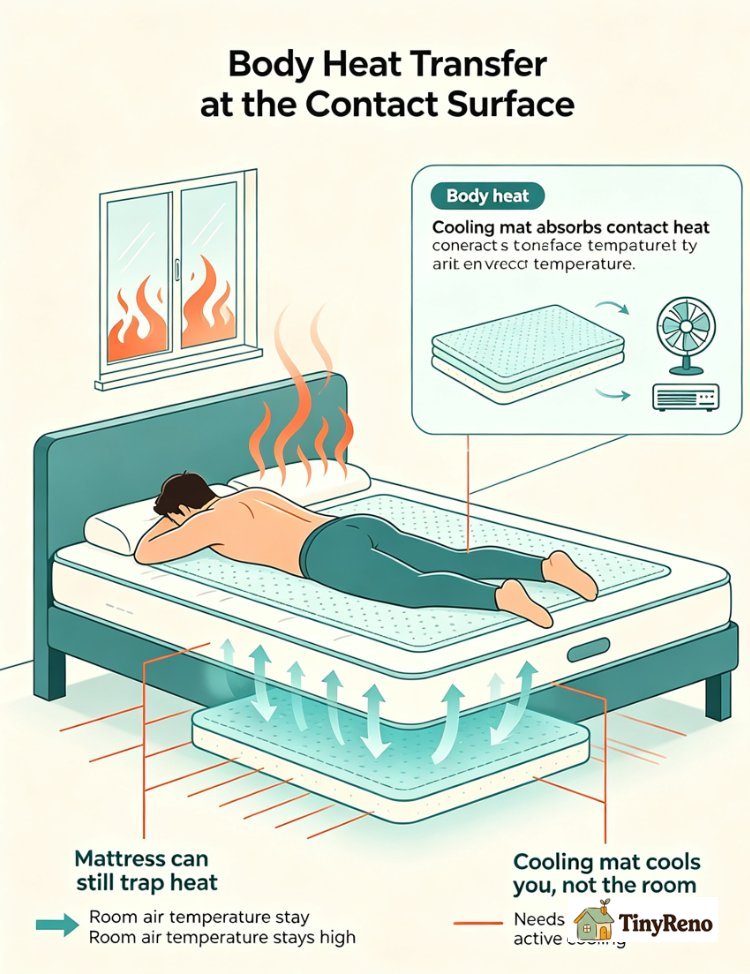
The human body releases about 60 to 80 watts of heat while sleeping. In a 12-by-12 room, that's enough to raise the ambient temperature by 1 to 2 degrees over eight hours. A cooling mat pulls that heat away from your body's contact surface — your back, hips, shoulders, calves — and dumps it into the mattress or the air. The result is that your skin temperature drops 2 to 4 degrees, which is the threshold where your brain stops triggering wake-up signals to cool you down.
That's the mechanism. Now for what actually works.
The 4 Types of Body Cooling Mat (And What Each One Does Best)
One caveat before the comparison: I tested these during a specific ten-day August heat wave in a west-facing top-floor apartment. Your results may differ if you're in a cooler or drier climate, or if you have working AC and are just trying to sleep cooler.
I tested these on the same mattress, same sheets, same week. Two of them I kept. Two I returned.
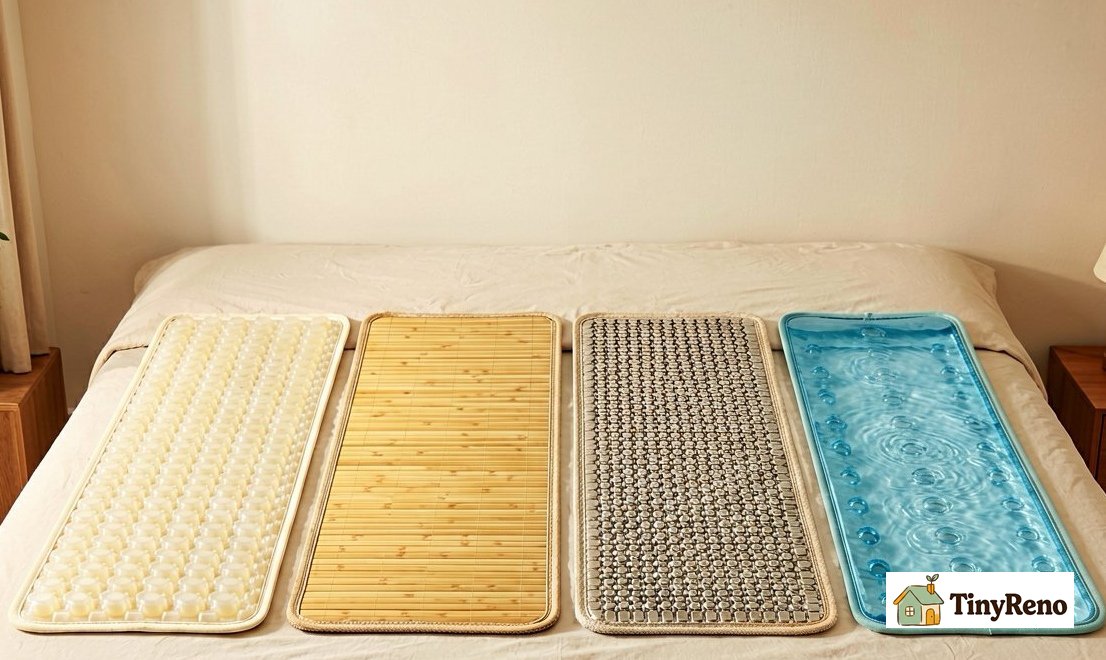
1. Gel cooling mat ($25–$60): A foam pad with gel pockets sewn into the top layer. The gel absorbs body heat and feels cool to the touch for the first 20 to 40 minutes, then warms to body temperature. Once warm, it doesn't cool anymore — it just stops heating you up further.
2. Bamboo mat ($30–$80): Woven bamboo slats on a fabric backing. Lays on top of the mattress. The bamboo is breathable but doesn't actually cool — it just doesn't trap heat the way a foam mattress topper does. The "cooling" sensation is mostly the absence of foam against your body.
3. PCM (phase-change material) mat ($150–$300): A pad filled with microencapsulated paraffin or salt hydrates that absorb heat at a specific temperature (usually 28°C / 82°F) and release it back when the ambient temperature drops below that threshold. This is the technology used in medical cooling pads and high-end mattress toppers.
4. Water-circulating mat ($200–$400): A pad with internal channels connected to a small pump and reservoir. Cold water circulates through the pad. Plugs into the wall. Adjustable temperature.
| # | Type | Cool Feel | Sustained Cooling | Maintenance | Best For |
|---|---|---|---|---|---|
| 1 | Gel mat | Strong (first 30 min) | Poor | None | Hot flashes, short naps |
| 2 | Bamboo mat | Mild | None | Wipe clean | People who overheat mildly, hate foam feel |
| 3 | PCM mat | Moderate (consistent) | Excellent | None | Chronic hot sleepers, year-round use |
| 4 | Water-circulating mat | Strong (variable) | Excellent | Refill water weekly | Severe night sweats, medical needs |
The gel mat is what most people buy first because it's cheapest and the initial cool feel is dramatic. The bamboo mat is what people buy when they want "natural" without understanding that bamboo doesn't cool — it just breathes. The PCM mat is what people end up keeping when they realize cooling is a sustained property, not a one-time sensation. The water-circulating mat is overkill unless you have a specific medical need.
What a Cooling Mat Won't Do (The Honest Limitations)
Before you spend $50 to $300, here's what a cooling mat cannot fix:
It won't cool the room. A cooling mat cools the contact surface — your back, your side, your hip. It does not lower the air temperature. If your bedroom is 85°F, you'll still feel warm on any part of you not touching the mat. A cooling mat is not a substitute for a fan, an AC, or open windows.
It won't help if your mattress is the problem. A memory foam mattress retains body heat. A cooling mat on top of memory foam is fighting the foam, not working with it. If your mattress is foam and you're a hot sleeper, the cooling mat is a band-aid. The real fix is a mattress with internal cooling channels (like the Brooklyn Aurora or the Tempur-Breeze) or a latex mattress.
It won't survive a heat wave alone. During a 95°F week, the mat warms to body temperature within an hour and stays there. You need to combine it with active cooling (fan or AC) for any meaningful relief. The mat is a supplement, not a primary system.
It won't help with humidity. Cooling mats don't dehumidify. If your bedroom is humid, you'll still wake up clammy. A cooling mat solves temperature, not moisture. For humid climates, you need a dehumidifier in addition.
Setup: How to Use a Body Cooling Mat in a Small Apartment
In a studio or one-bedroom, a cooling mat goes between the mattress and the fitted sheet, like a wedge pillow. The mat needs to be in direct contact with your skin to work fully. A fitted sheet over the mat is fine. A thick blanket or mattress protector between you and the mat is not — it traps warm air and cuts the effect noticeably.
For a queen bed: a queen-size cooling mat covers about a third of the bed width (the sleeping-area strip). If you share the bed, either get two twin-size mats or accept that only one side stays cool.
For renters: most cooling mats are 1 to 2 inches thick. They change the feel of your bed slightly. If your landlord's mattress is already low-profile, the added height might make the bed feel awkward. Try it for a week before deciding.
A cooling mat also needs to breathe. Don't cover it with a waterproof mattress protector — the protector blocks the heat-transfer mechanism. Use a breathable cotton protector instead.
The Real Question: When Is a Cooling Mat Worth the Money?
A cooling mat is worth it if:
- You sleep hot but your bedroom temperature is reasonable (under 78°F).
- You have a foam mattress that traps heat and you can't replace it.
- You experience night sweats and need consistent skin temperature control.
- You live somewhere with mild summers and no AC, and want a low-energy supplement.
A cooling mat is not worth it if:
- Your bedroom is over 82°F most nights. You need active cooling first.
- You have a latex or hybrid mattress that already breathes.
- You expect it to replace an AC. It won't.
For my no-AC ten-day stretch, the gel mat got me through the first three nights when temperatures were under 80°F. By day five, when the heat wave hit 95°F, the gel mat was useless and I was running a box fan pointed at a wet sheet. The PCM mat arrived on day seven and was noticeably better — but it still wasn't enough alone. I needed both the fan and the mat.
If you're budgeting for one product under $100, get the PCM mat. If you can stretch to $200, get the PCM mat and a box fan. If you can stretch to $400, get the water-circulating mat — but think of it as a targeted supplement, not an AC replacement. It cools your skin directly, which can make a hot bedroom survivable, but it will not lower the room temperature or handle humidity.
Do body cooling mats actually work? Yes — they lower skin temperature at the contact surface by 2 to 4°F, which is enough to reduce wake-up signals from heat. They don't cool the air. Effectiveness depends on the type (gel is short-lived, PCM is sustained) and on combining them with air circulation.
How long does a gel cooling mat stay cool? Most gel mats feel cool for 20 to 40 minutes after you lie down, then warm to body temperature and stop cooling. To reset, the gel needs a colder environment than itself. In a warm bedroom — especially one above 80°F — the gel may never fully release heat. Some gel mats recover a little if you hang them in front of a fan or in a cool room, but overnight, in the same hot room, they're usually a one-way ride.
Can you use a cooling mat with a memory foam mattress? Yes, but it's a band-aid. Memory foam traps heat, and a cooling mat on top fights the foam. A better solution is a latex or hybrid mattress with internal cooling channels. If you're renting and can't replace the mattress, the cooling mat is the cheapest fix available.
Are body cooling mats safe to sleep on all night? Yes. Gel mats, PCM mats, and bamboo mats are passive and safe. Water-circulating mats are also safe but require the pump to run all night, which adds a small hum to the room and uses about as much electricity as a laptop.
The Ten-Day Verdict
I survived the no-AC stretch. The cooling mat was one of three things that helped — the others were a box fan pointed at a damp sheet, and closing the west-facing curtains by 2 p.m. None of the three alone was enough. Together, they got me to the replacement AC.
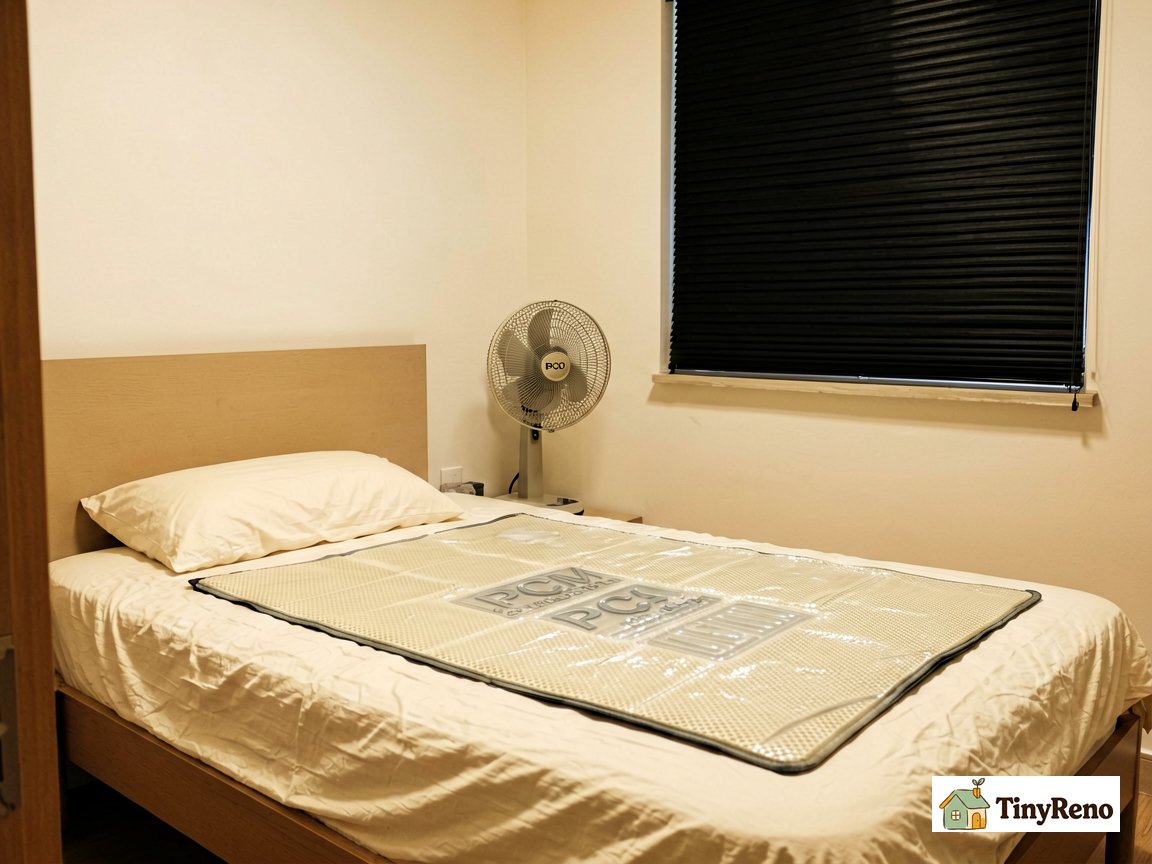
If you're a renter without central air and you can't replace your window unit, plan for a combination: a PCM cooling mat for direct contact, a box fan for air movement, and blackout curtains for blocking afternoon sun. The mat alone will leave you frustrated on the hottest nights. The fan alone will leave you damp with sweat. The combination actually works.


Discussion (0)
Sign in to join the discussion