

How to use a wedge pillow is the question I asked myself the night I brought mine home, set it on the bed, stared at it, and realized I had absolutely no plan. The product page showed a woman sleeping peacefully at a 45-degree angle. The reality was a foam triangle taking up half the bed and my partner asking, very calmly, "where am I supposed to go."
That was eighteen months ago. Since then I've used a wedge for leg circulation, for upper-body reading support, for acid reflux after late dinners, for propping up a sick cat who needed to breathe easier, and once — briefly — as a laptop stand when my desk chair broke. Most of those uses were improvised. A few were brilliant. One was a complete waste.
If you've bought a wedge pillow, or you're thinking about it, here's the honest breakdown of every setup that actually works in a real bedroom, not a product photo.
The Setup Most People Try First (And Why It Feels Wrong)
The standard advice — put the wedge under your knees, lie on your back, sleep — sounds simple. It isn't. There are four reasons it fails on night one:
- The angle is steeper than you expect. Foam wedges feel like a small incline when you sit on the edge of the bed and press your hand down. When you lie back with your full weight, your calves slide down the slope and end up flat on the mattress below the wedge. The wedge ends up under your ankles, not your knees.
- Your pillow fights the wedge. A standard sleeping pillow behind your head pushes your shoulders forward. Combined with elevated knees, your lower back ends up in a slight arch. Most people feel this as "my back hurts" by 4 a.m.
- Your partner hates the geometry. A 22-inch wedge eats roughly a third of a queen bed. Two people can't share comfortably with the wedge flat across the bed.
- You don't know which way the slope goes. A wedge has a "short side" and a "long side." The long side is the slope. The short side is the base. Most people lay it flat with no slope direction in mind, and end up with a foam rectangle that does nothing.
The fix for all four is the same: slide the wedge under the fitted sheet between the mattress and the sheet, with the slope running away from your head. Your calves should rest on the high end (closer to your head), and your heels should hang off the back edge (further from your head). If that feels upside-down, it's not — you're just used to sleeping flat.
Setup 1: Leg Elevation (The One Most People Actually Buy It For)
Slide the wedge under your fitted sheet, slope running away from your head. Lie on your back. Your calves should rest fully on the slope, knees slightly bent over the high end, heels off the back edge.
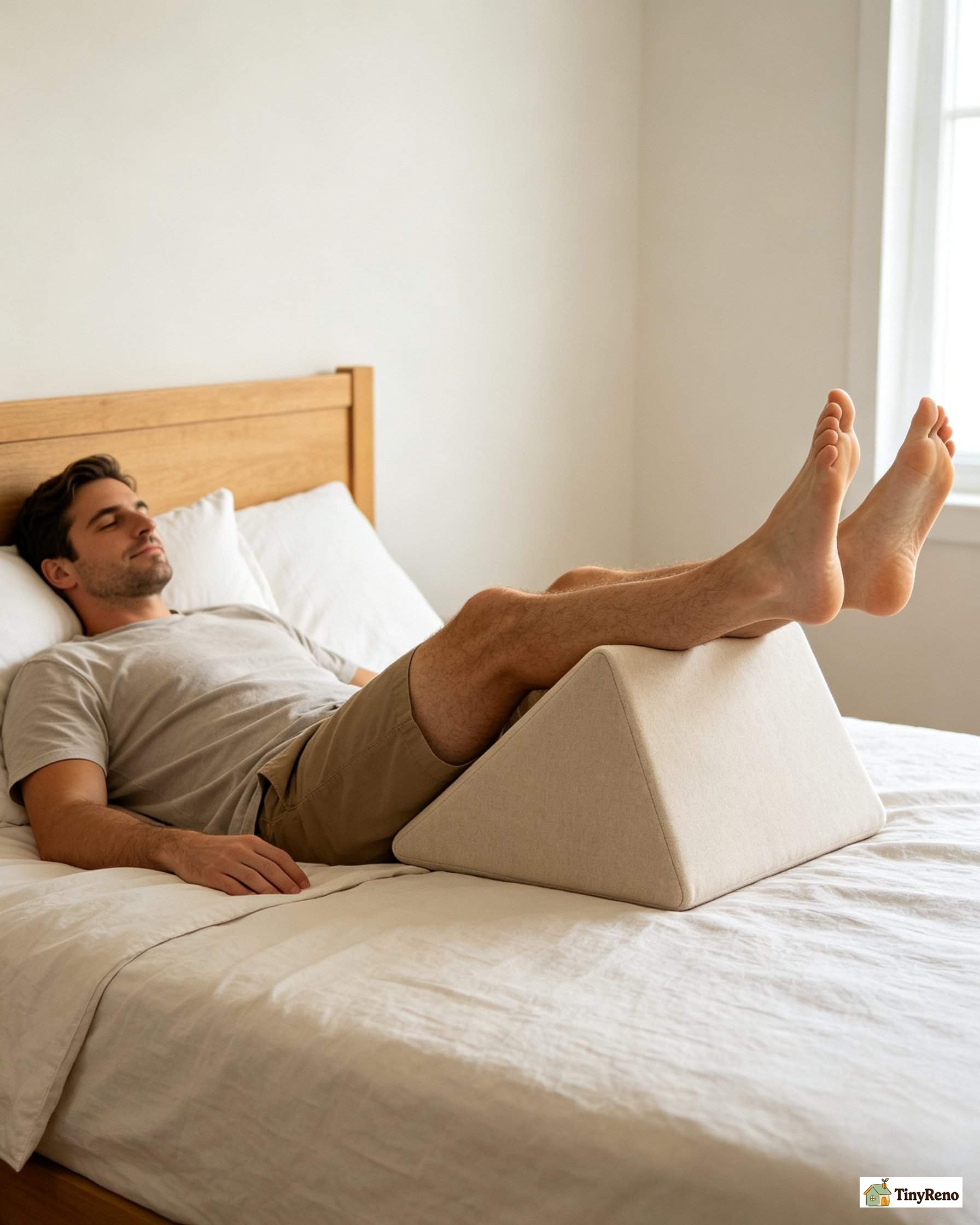
This is the canonical use, and it works. The first thing you'll notice is that your lower back relaxes — the slight arch from lying flat disappears because the wedge has shortened the distance between your knees and hips. The second thing you'll notice is the circulation shift. Your feet will feel cooler within ten minutes, which means blood is moving instead of pooling.
For renters: this is the wedge's most compatible use with a shared bed. Keep it on your side, under your fitted sheet. Your partner won't feel it unless they're a restless sleeper who rolls into your territory.
Setup 2: Upper-Body Incline (For Reading, Acid Reflux, and Congestion)
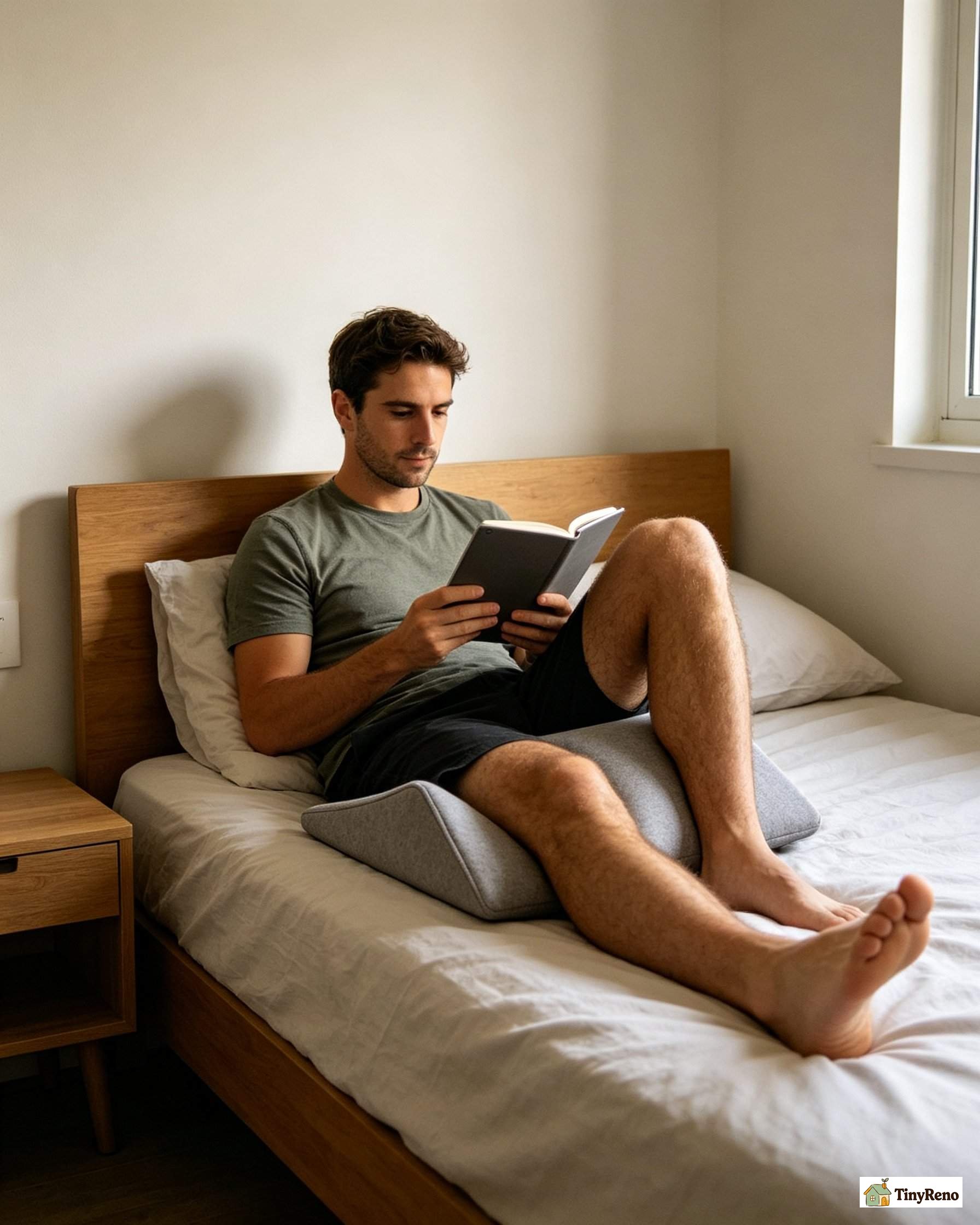
Flip the wedge so the slope runs toward your head, with the high end behind your back. You sit slightly reclined, supported from your lumbar spine up. This is the wedge-as-reading-pillow use, and it's also the standard medical setup for acid reflux or post-nasal drip.
The trick most people miss: layer a regular pillow on top of the wedge's high end. The wedge alone puts your head at an awkward angle — your chin tucks down. A pillow on top raises your head just enough to level your gaze forward. The combined height should keep your ears over your shoulders and your knees slightly bent.
In my 480-square-foot apartment, this is the only setup that lets me read in bed without the headboard digging into my back. I keep a wedge permanently propped at the head of the bed for this — it doubles as a back support when I'm sitting up to work.
Setup 3: Side-Sleeping Elevation (The One Product Photos Never Show)
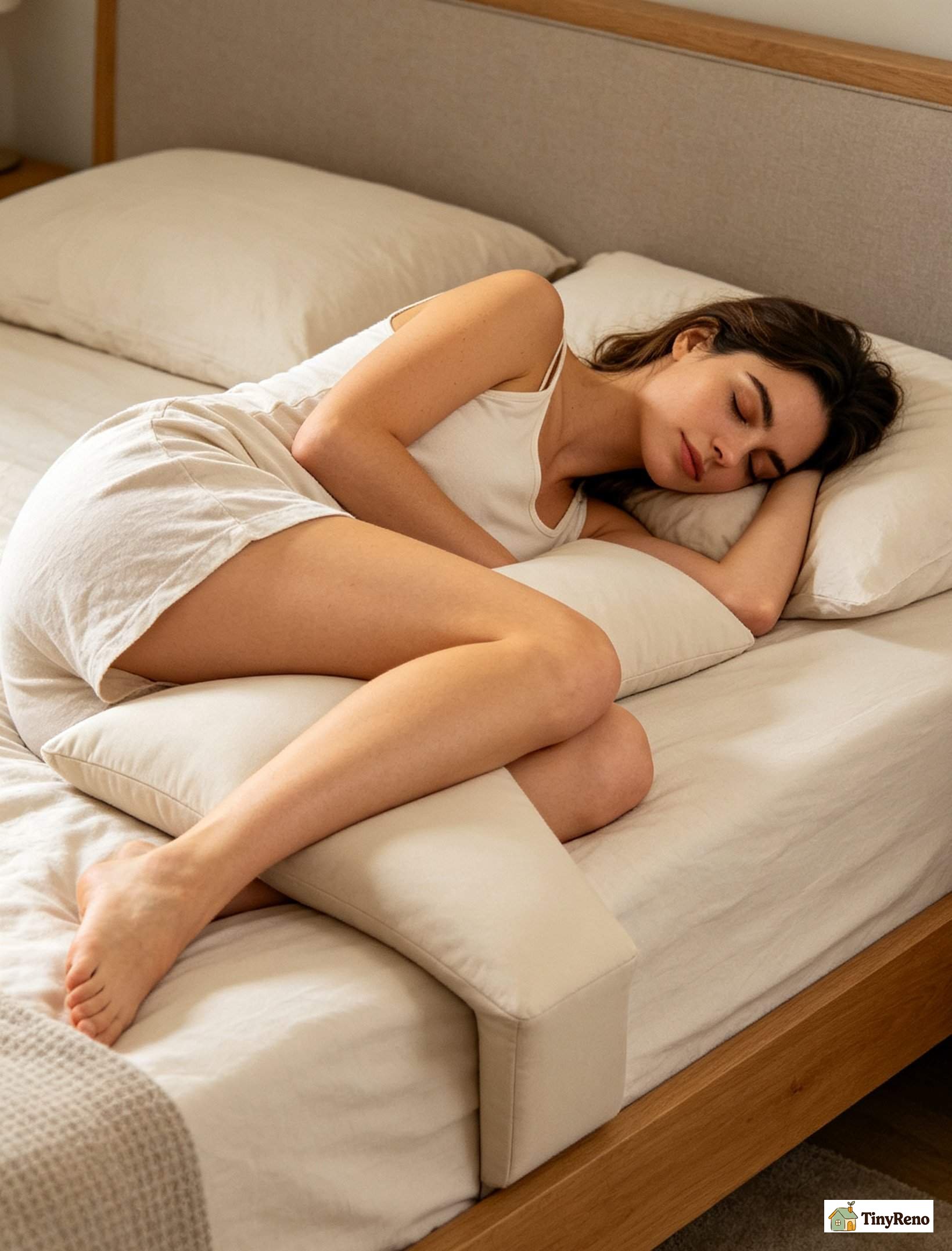
Side sleepers have it hardest with wedges. A wedge under your knees doesn't work for side sleeping — your top leg slides down the slope and the wedge ends up under your bottom leg only.
The workaround: rotate the wedge 90 degrees so the slope runs along the bed, perpendicular to the mattress. Lie on your side. Your bottom knee rests on the high end (closer to your armpit), and your top leg drapes over the slope. Your heels stay near the mattress.
This takes three nights to feel normal. On night one, you'll wake up because the wedge shifted. On night two, you'll wake up because the angle feels unfamiliar. By night three, your body has accepted the geometry and your lower back stops complaining.
If you share the bed, this is the only setup where two people can use two wedges without collision. Each person's wedge is on their own side, perpendicular to the mattress.
Setup 4: Post-Workout or Post-Flight Recovery
If you've been on a long flight or done a heavy leg day, a steeper wedge (45 degrees) for the first 30 to 60 minutes after activity is more aggressive than the standard 30-degree wedge. The fluid shift is faster, and the angle is high enough that you can't really fall asleep on it — which is the point. You elevate, you read, you don't sleep.
For renters without a bathtub: this is the closest substitute for a post-workout ice bath. The wedge does for your legs what an ice bath does for muscle inflammation, just through different physiology. Pair with a cold pack on the joint if you have one.
Setup 5: Bed-Too-Small Compromise (Studio Apartment Hack)
In a studio or a tight one-bedroom, the bed often doubles as the couch. A wedge permanently under the fitted sheet makes the bed useless as a daytime lounging surface. The compromise: keep the wedge out during the day, lean it against the wall behind the bed as a back support, and slide it under the fitted sheet only at night.
It takes about 90 seconds to set up and break down. The trade-off is that you'll never have a wedge that's "just there" — you have to commit to doing it nightly. I did this for three months in a 380-square-foot studio. The inconvenience was real but acceptable, especially compared to the alternative of waking up with swollen ankles.
Setup 6: The One That Didn't Work
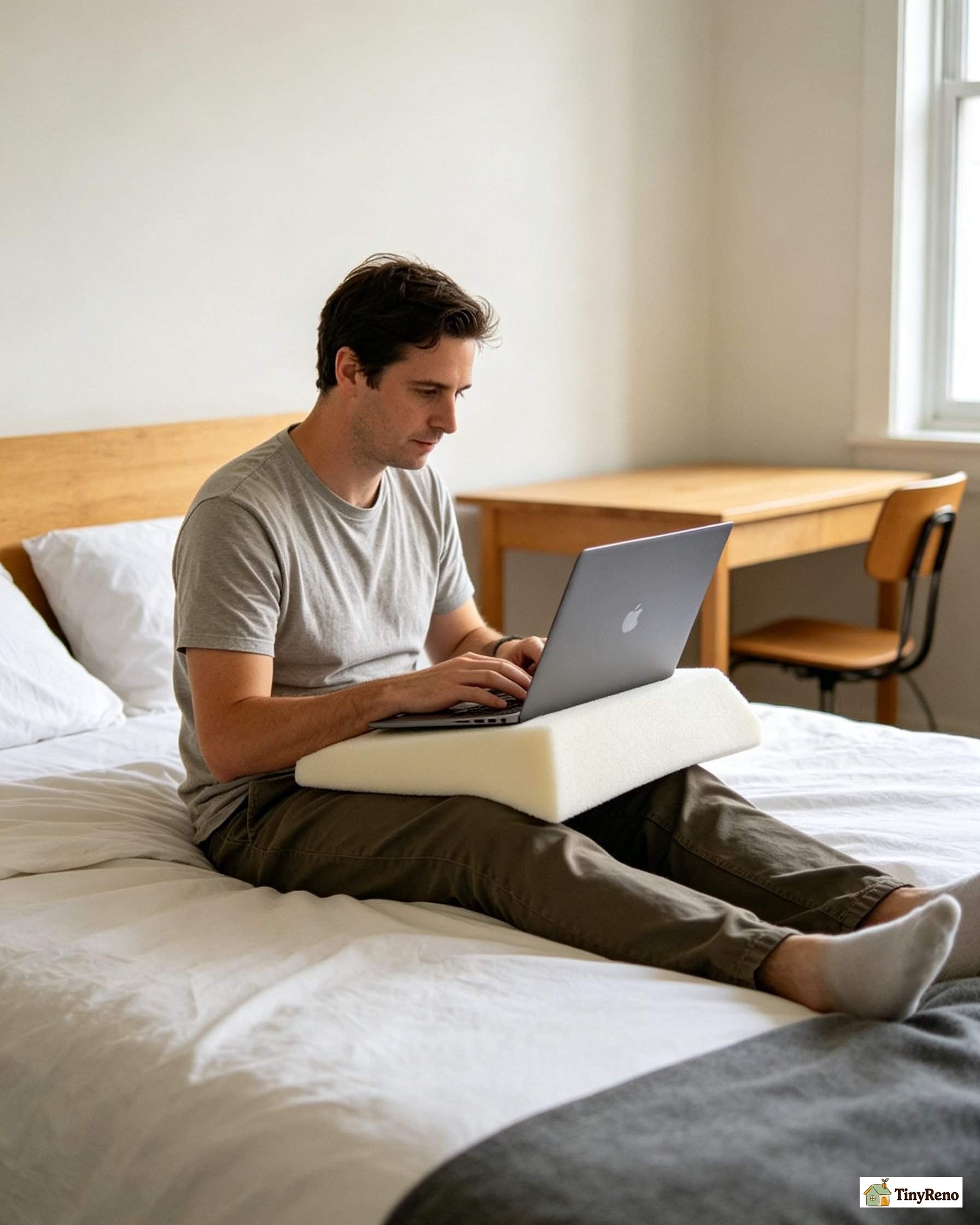
I tried using a wedge as a laptop stand while working from bed. The angle was almost right, the foam held the laptop stably, and for about twelve minutes it felt like a brilliant hack. Then my wrists started hurting because the keyboard was too high relative to where my elbows could rest, and within twenty minutes I had a neck ache from looking down at the screen.

A wedge is not an ergonomic laptop stand. A lap desk is not a wedge. Don't try to combine them. I gave up on this after two days and went back to a proper desk chair.
How to use a wedge pillow for acid reflux? Incline the upper body to roughly 30 degrees. The slope should run from your lower back up to behind your head, with the high end at your shoulders. Add a regular pillow on top of the wedge's high end to level your head so your chin doesn't tuck. Eat dinner at least three hours before lying down.
How to use a wedge pillow for back pain? For lower back relief: place the wedge under your knees while lying on your back. The slope shortens the distance between knees and hips, which relaxes the lumbar curve. For upper back tension: use the wedge as a back support while sitting up, slope facing your lower back.
Can you sleep on your side with a wedge pillow? Yes — rotate the wedge 90 degrees so the slope runs along the bed, not across it. Your bottom knee rests on the high end, top leg drapes over. Takes 2–3 nights to feel normal.
How long does it take to get used to sleeping on a wedge pillow? Most people adjust in 2 to 4 nights. The first night feels unstable because your body is used to a flat reference. By night three, your proprioception has recalibrated and the angle feels natural.
What's Worth Keeping and What to Skip
After eighteen months, here's the truth: the leg elevation setup is the only one most renters need. The reading-pillow use is a nice bonus. The side-sleeping setup works but takes adjustment. The other three are situational.
If you're buying a wedge for one specific reason, buy it for that reason and ignore the rest. The worst thing you can do is buy a wedge expecting it to do five things and then return it because it didn't do the fifth one as well as a dedicated tool would.
That was the long version of how to use a wedge pillow — the short version is: pick the angle, slide it under the fitted sheet, and give yourself three nights. The body learns the geometry faster than you'd expect.


Discussion (0)
Sign in to join the discussion