

Wedge pillows for legs weren't on my radar until my legs started aching at 2 a.m. — the kind of deep, restless throb that wakes you up and won't let you back to sleep. I was six months into a 480-square-foot one-bedroom, working a desk job from the dining-table-as-desk, and I'd convinced myself the throbbing was just "standing all day catching up with me." It wasn't. It was gravity, fluid pooling, and a mattress that sat lower than the chair I'd been sitting in. I didn't know it yet, but a wedge pillow for legs was about to become the cheapest thing in my bedroom and the most used.
That first night with the wedge — a 22-dollar foam triangle off a marketplace listing — I fell asleep in eleven minutes. The ache didn't vanish, but it stopped being the loudest thing in the room. Six months later, after trying four more wedges, lending two to friends, and watching my downstairs neighbor buy the wrong one twice, I have a much clearer picture of what works, what doesn't, and which mistakes cost me actual sleep.
This is the guide I wish I'd had before I started.
Why Wedge Pillows for Legs Work (The Circulation Thing Your Doctor Is Too Tired to Explain)
The first time my doctor mentioned "elevation," she said it like it was a single thing. Lift your legs. Put a pillow under your knees. Done. That's technically correct the way "drink water" is technically correct — it skips every useful detail.
What a wedge pillow actually does is create a slope. Blood that has been fighting gravity all day to return from your feet gets an inclined ramp. On a flat bed, your feet are roughly at heart level — so blood has to climb a small hill. On a wedge set at 30 or 45 degrees, your feet are now above your heart, and gravity reverses its job. It pulls fluid back up your legs instead of letting it pool.
The Mayo Clinic's page on leg elevation is the simplest version of the science I've found. The practical effect for a renter is this: if your legs feel heavy or visibly puffy by evening, a wedge will reduce both before you notice your alarm going off.
What it won't do: it won't cure varicose veins, won't replace compression socks on long flights, and won't fix the chair you sit in for nine hours. A wedge is a nighttime tool, not a posture overhaul.
The 5 Wedge Pillows for Legs I'd Actually Buy Again
I tested these in the same bed, same sheets, same week. I rotated them every other night so I could compare back-to-back. Three of them I kept. Two I gave away.
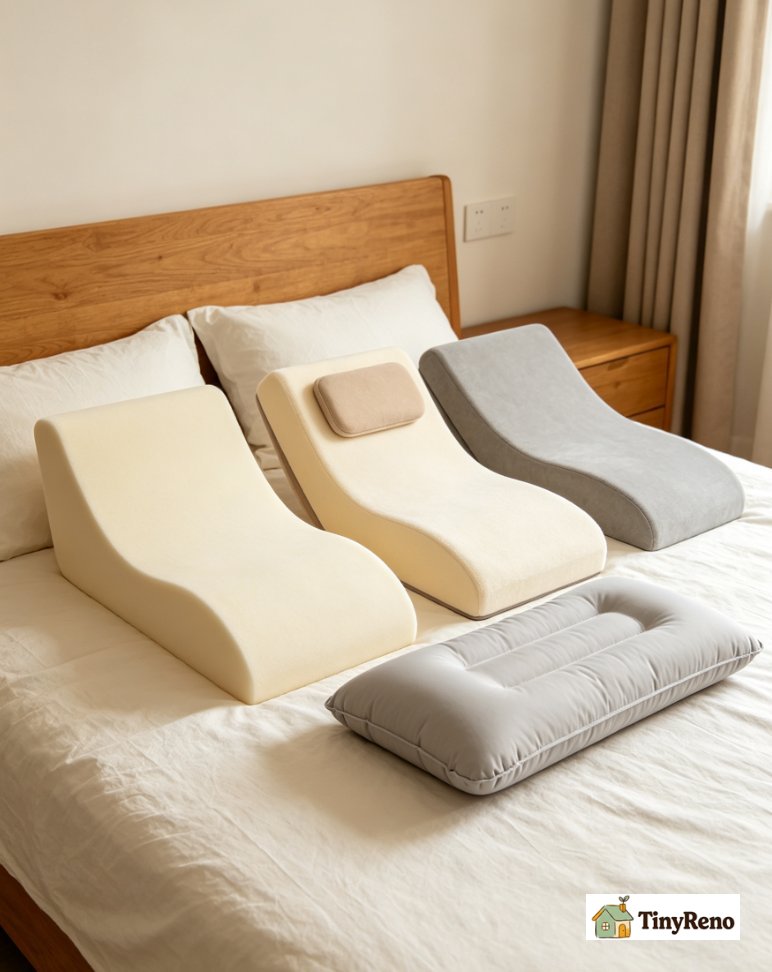
| # | Type | Angle | Best For | Gotcha |
|---|---|---|---|---|
| 1 | Standard foam wedge, 22" long | 30° | Side sleepers who shift | Too short for tall users (over 5'10") |
| 2 | Tall foam wedge, 24" long | 45° | Back sleepers, post-workout | Steep — feels like sitting in bed the first night |
| 3 | Adjustable wedge with bolsters | 20–40° | Shared bed, partners with different needs | Bolster slides if you don't strap it |
| 4 | Memory foam top + foam base | 30° | Hot sleepers (less heat retention) | Heaviest to move for cleaning |
| 5 | Inflatable wedge | Variable | Travel, occasional use | Loses air over 3–4 weeks; pump annoyingly loud |
The 22-inch standard wedge (Type 1) is the one most renters will be happy with. It slides under the fitted sheet, doesn't dominate the bed, and works whether you sleep on your back or side. If you share the bed, look at Type 3 — the adjustable wedge — because you can collapse your side down flat and leave your partner's elevated.
The 3 Mistakes I Made (Save Your First Forty Dollars)
I bought the wrong wedge three times. Here's what I wish someone had said out loud.
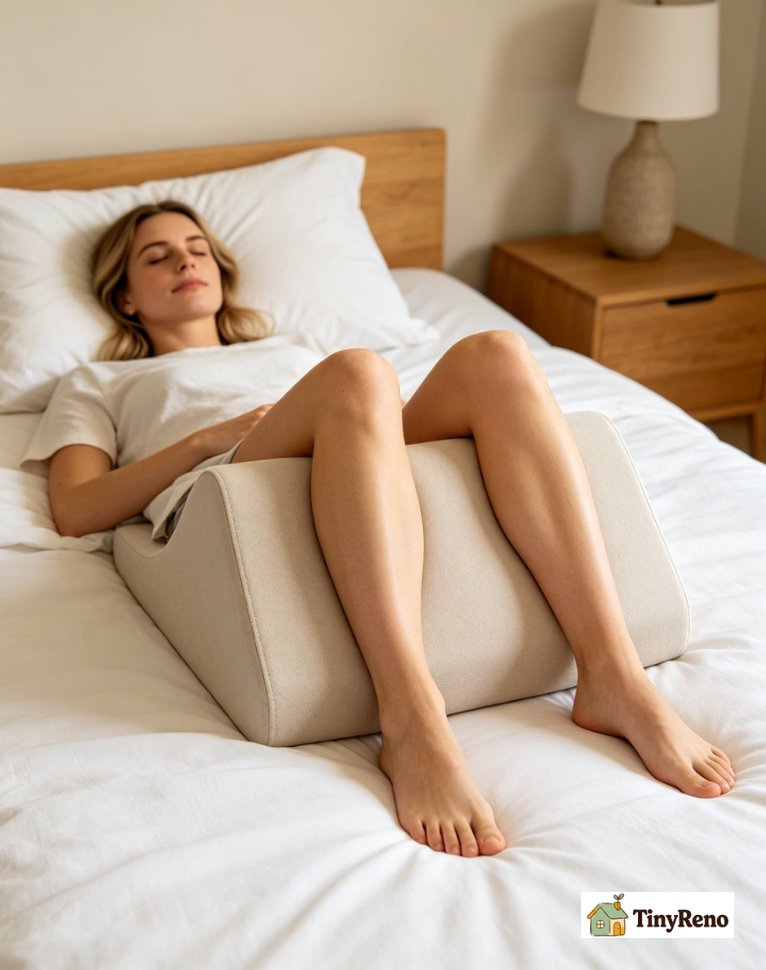
Mistake 1: Going too steep too fast. A 45-degree wedge sounds aggressive, and on night one it feels like you're sitting upright reading a book. Your body needs two or three nights to accept the angle. Start at 30 degrees. If that doesn't feel like enough after a week, go steeper — but don't start steep.
Mistake 2: Buying "memory foam" without checking density. A 5-pound density foam holds its slope for three years. A 2-pound density foam (the cheap stuff on big marketplace listings) flattens in eight months. The listing won't tell you the density. The product photo won't tell you the density. You have to email the seller and ask, or weigh the wedge yourself. If a 24-inch wedge weighs under 4 pounds, it's the soft foam, and you'll be back on Amazon in eight months.
Mistake 3: Putting the wedge on top of the fitted sheet. The fitted sheet grips the mattress, not the wedge. When you shift in your sleep, the wedge shifts with you — usually away from you. Slide the wedge under the fitted sheet, between the sheet and the mattress. It'll feel like it's part of the bed.
How to Actually Sleep on One (Without Waking Up With a Sore Back)
One thing nobody warned me about: if the wedge is too high or too low for your spine, you can trade leg relief for back soreness. Start with just your lower legs on the wedge, not your whole thigh, and keep your lower back on the mattress. If you wake up with a stiff lower back, the wedge is either too steep or too far under you.
The first question everyone asks after they buy a wedge is: do I sleep on my back or my side?
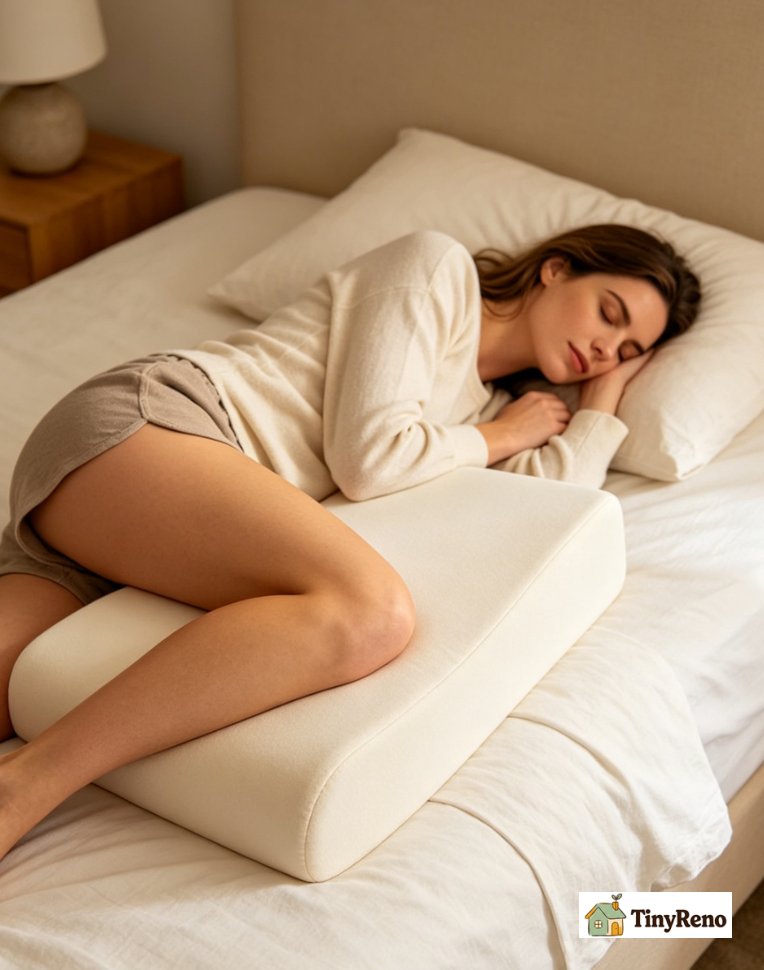
Back sleepers: easy. Center your calves on the wedge, knees slightly bent over the high end. Your heels should hang off the back edge — that's correct, not weird.
Side sleepers: try the wedge under your bottom knee, not your whole leg. Lay it so the high end supports your knee and the slope runs down toward the foot of the bed. It's not as secure as the back-sleeping position, but it's stable enough once you settle. If it feels tippy, switch to a smaller knee wedge instead of a full leg wedge. The first night will feel unstable. By night three it won't.
Stomach sleepers: a wedge is genuinely not for you. The angle forces your lumbar spine into extension, which is the opposite of what your stomach-sleeping posture already does. You'll wake up sore. If you must elevate, use a flat pillow under your shins only — not a wedge.
I learned the stomach-sleeper thing the hard way. My partner flipped to her stomach on night two with the wedge under the fitted sheet, woke up at 4 a.m. complaining her "lower back felt like it had been bent backward." She went back to the flat pillow that night. The wedge went on my side.
Care, Cleaning, and What to Do When You Move
A foam wedge is one of the few bedroom items you can't just throw in a washing machine. Here's what works:
- Spot clean with a damp cloth and a tiny drop of dish soap. Wipe, don't soak. Foam absorbs water slowly and releases it slowly — soaked foam grows mildew inside the cover.
- Use a removable cover if yours didn't come with one. A standard zippered pillowcase in queen size fits most 22-inch wedges. Replace the cover when you move.
- Air it out every two weeks. Pull back the bedding for an hour. Foam off-gases more in humid bedrooms than dry ones, and airing prevents the smell from becoming permanent.
- Don't store it compressed. If you fold it for a move, the foam loses shape. Move it flat, or stand it on its side in the moving box.
Renters specifically: when you move out, the wedge goes with you. It's not attached to the apartment. Most landlords won't even notice it under the fitted sheet.
What angle wedge pillow is best for legs? A 30-degree wedge is the most versatile — works for back and side sleepers, doesn't feel like sitting up. A 45-degree wedge is steeper and better for post-workout or visibly swollen legs, but takes 2–3 nights to adjust to.
How long should you elevate your legs on a wedge pillow? Most people sleep through the night on one — that's 6 to 9 hours. If you can't sleep on it all night, start with 30 minutes after dinner and build up. The elevation works cumulatively, not in single sessions.
Are wedge pillows for legs actually good for circulation? Yes, in the sense that gravity-assisted venous return is real and measurable. They won't fix vein disease or replace compression therapy, but for everyday pooling from sitting or standing, the angle is the simplest fix available.
The Real Question: Is This the Cheapest Upgrade in Your Bedroom?
For under thirty dollars, a wedge pillow for legs is the cheapest, most reversible upgrade I've made in any apartment I've rented. It doesn't need installation, doesn't leave holes, doesn't violate a lease, and folds into a moving box. If your legs feel heavy by evening, you owe yourself one night on a wedge before you buy anything else.
Mine lives under my fitted sheet. I forget it's there until the rare night I sleep without it — and that's when I notice the difference.


Discussion (0)
Sign in to join the discussion