

The water stain on wall the morning I moved into my first apartment was a faint yellow circle on the living room ceiling. I assumed it was a shadow from the overhead light fixture. By the second week, the circle had grown to the size of a dinner plate. By the third week, the paint was starting to bubble. By the fourth week, my upstairs neighbor knocked on my door to ask if I had a leak.
I didn't have a leak. The upstairs neighbor didn't either. The leak was two floors up — a corroded supply line in a bathroom that had been leaking for what the plumber later estimated as three to six months. The water had been pooling in the floor joists between the third floor and the second floor, slowly working its way down through the plaster, soaking the lath, and arriving in my ceiling as a faint yellow circle that grew over four weeks.
This is the guide I wish I'd had in week one — a water stain on wall timeline that tells you what each stage of a water stain means, how urgent it actually is, and what to do in the next ten minutes versus the next ten days. Most water stains are not emergencies. Some are. Knowing which kind you have is the difference between a ten-minute photo-and-email to your landlord and a ten-thousand-dollar ceiling collapse.
The first forty-eight hours: what a fresh water stain looks like
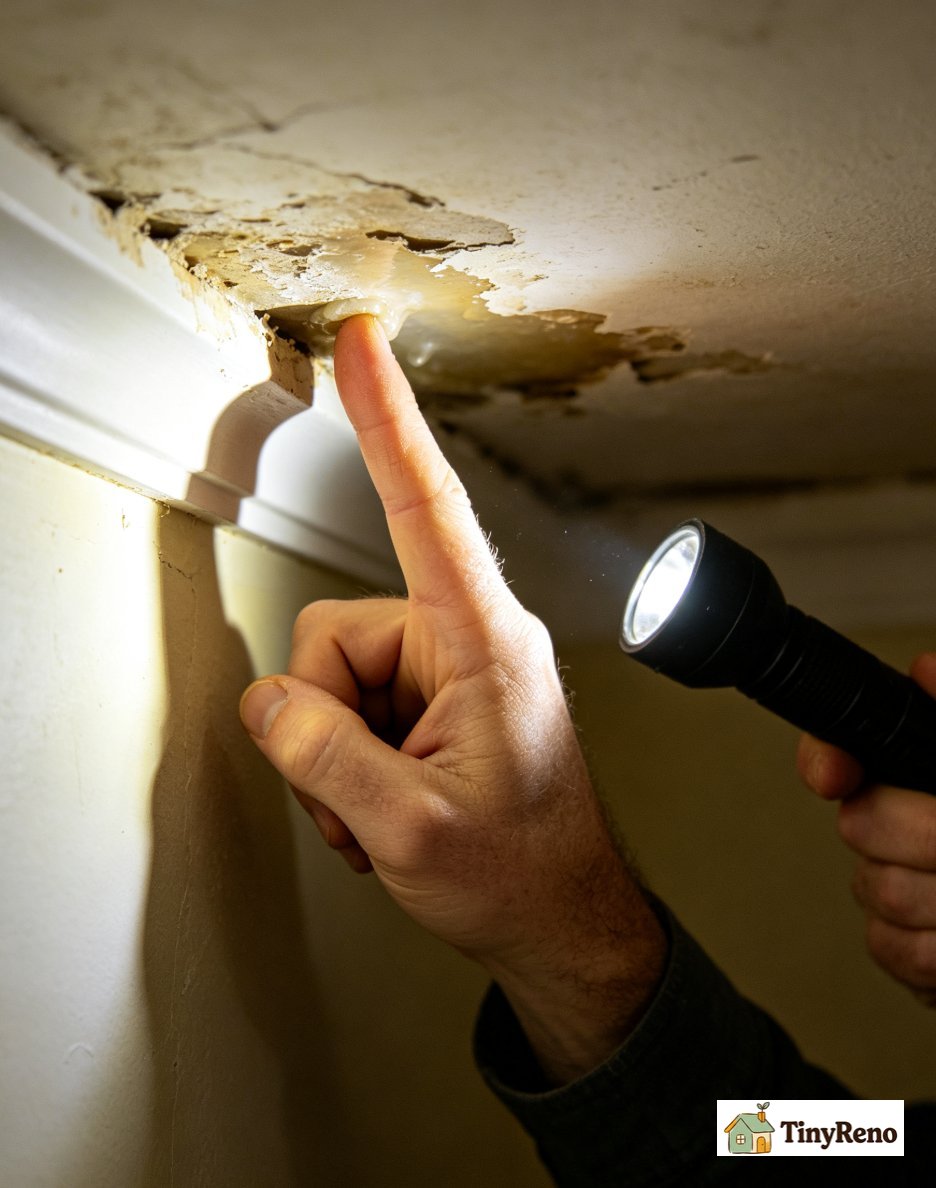
The timeline I'm about to give you isn't a calendar. It's a set of stages based on how the stain looks and feels, not how many days have passed. A stain can move through the stages faster or slower depending on the leak volume, the wall material, and how humid your apartment is. Use the descriptions to identify what you're looking at, not to count days on a calendar.
A fresh water stain — one that's still actively wet — looks like a dark patch on the ceiling or wall, often with a defined edge where the water has stopped spreading. If you touch it, the surface feels cool or damp. The color is usually brown or yellow-brown, not the bright yellow of an older stain. There may be a small drip at the lowest point of the stain, or a faint dripping sound you can only hear at night when the apartment is quiet.
If the stain is still wet, the source of the water is still active. The stain didn't appear from nothing — it's the visible end of a longer water path. The water is coming from somewhere: the apartment above, a pipe inside the wall, a roof leak, an overflowing fixture, or a failed caulk joint in a shower or tub surround. The stain is the symptom. The leak is the disease.
The first thing to do in the first forty-eight hours is not to fix the stain. It's to document the stain. Take a photo with a timestamp. Send it to your landlord by email with the subject line "Active water stain — please advise." Keep a copy. If the landlord doesn't respond within twenty-four hours, send a second email. If the landlord still doesn't respond within forty-eight hours and the stain is growing, dripping, or spreading, that's a sign the leak is active and serious. In most cities, an active leak that affects your ceiling or walls is a habitability concern, but the exact response time the landlord is required to meet varies by state and city. Call your tenant hotline to confirm the rule where you live.
For an active stain that is dripping, leaking, or growing in real time, the next move is to put a bucket under the drip and to call your landlord's emergency line. Most leases have an emergency contact clause for exactly this situation. If your landlord doesn't have an emergency line, call your city's tenant hotline or the building superintendent. A water stain that's growing in real time is not a weekend fix. It's an emergency.
The two-week mark: what a settling water stain looks like
A water stain that has stopped growing — that is, the leak has been fixed and the surface has dried — looks different from a fresh stain. The color fades from dark brown to a light tan or yellow. The surface feels dry to the touch. There may be a slight texture difference where the paint has blistered and then dried flat. The stain has a defined edge but no active dripping.
A settling water stain is what most renters actually see. The upstairs leak was fixed last month. The plumber came and went. The stain is the only remaining evidence. The landlord may or may not have mentioned it in the repair notice. You may or may not have noticed it during the repair. Now you're three weeks into your lease and there's a yellow patch on your ceiling that wasn't there when you moved in.
The settling stain is the stage where you start to wonder whether to call it out. Most renters don't, because the leak was fixed, the apartment feels dry, and the stain is just cosmetic. But a water stain on wall that was caused by an active leak is the landlord's responsibility to repair — not because of the stain, but because of the leak that caused it. The stain is evidence that the leak happened. The repair is evidence that the leak is fixed. The cosmetic patch is evidence that the landlord has finished the job.
The right move at the two-week mark is to email your landlord and ask when the water stain on wall will be repainted. Take a new photo with a fresh timestamp. Reference the original email about the active stain. If the landlord says they'll send someone to repaint, ask for a date. If they don't respond within a week, send a follow-up. The documentation you build now is the documentation that protects your deposit at move-out.
The three-month mark: what an old water stain looks like
An old water stain on wall — one that's been on the ceiling for three months or more — looks faded. The brown has lightened to a yellow-tan that almost matches the surrounding ceiling. The texture is usually smooth unless the original paint blistered. There's no moisture, no active drip, no defined edge. The stain is more of a discoloration than a damage pattern.
This is the stage where most water stains end up. The leak was fixed in week one. The landlord said they'd send someone to repaint. The painter never came. The stain is now part of the apartment's character. You're not sure whether to bring it up again or let it go.
The right move at the three-month mark depends on whether you're planning to stay. If you're staying through the end of your lease, the stain will be on the move-out inspection form whether you mention it now or not. If you don't mention it now, the move-out inspector will notice it and assume you caused it. If you mention it now, the landlord may still not repaint, but you'll have the documentation that says the stain was there.
If you're moving out within the next month, the stain is a deposit-deduction risk. The cleanest move is to ask the landlord one more time, in writing, to address the stain before the move-out inspection. If they don't, you have two options. You can paint over the stain yourself with a stain-blocking primer and a matching ceiling paint. Budget closer to $30 to $40 for a small repair once you include primer, paint, a small roller, and masking tape. It's still cheaper than a deposit deduction, but don't start until you've checked your lease's painting clause — or you can accept the deduction on the move-out inspection and document the pre-existing condition.
Painting over a water stain yourself is the simpler path for most people. The catch is that the landlord may consider self-painting a modification that requires permission. For a small ceiling stain, the modification is invisible. For a large wall stain that requires repainting an entire wall, the modification is visible. Read your lease for the painting clause before you decide.
The six-month mark: when the water stain means something more
A water stain that's been sitting for a long time — whether that's a few weeks or several months, depending on how much water got in — is no longer just a cosmetic stain. If enough moisture reached the drywall or plaster, mold can start growing behind the paint long before you see anything on the surface. — and for the broader renter toolkit that covers which drywall repairs are renter-friendly and which ones are landlord calls, the renter repair walkthrough sorts the categories I keep coming back to. The water that caused it may have damaged the drywall or plaster behind the paint. The stain may be hiding a soft spot, a paint that's no longer bonded to the wall, or a developing mold problem behind the paint film.
The test is simple: press your thumb against the stain. If the wall feels firm and cool, the drywall is intact and the stain is just a paint discoloration. If the wall feels soft, spongy, or gives slightly under pressure, the drywall has been damaged and needs to be replaced. A soft spot is a landlord repair, not a renter repair.
The second test is smell. A water stain that has been dry for six months should not smell. If it smells musty, moldy, or earthy, there is mold growing behind the paint. Mold behind a water stain is a habitability issue in every U.S. state and most countries. Email your landlord with the photo, the smell description, and the request for a mold inspection. Don't try to clean or paint over suspected mold yourself — that can release spores into the air and make the problem worse.
For the renter who has been living with a stain that's now soft or smells, the situation has crossed from cosmetic to structural. The landlord is responsible for the drywall replacement. You are responsible for documenting the change so you can't be charged for it at move-out. The documentation chain is the same as for any other habitability issue — photo with timestamp, email to landlord, follow-up email if no response within a week, escalation to city inspector if no response within a month.
What I'd actually do, summarized
If you're looking at a water stain on your ceiling or wall right now, here's the decision tree in one paragraph. If the stain is wet, document it and call your landlord's emergency line. If the stain is dry and under three months old, email your landlord asking when it will be repainted. If the stain is dry and over three months old, decide whether to paint over it yourself with stain-blocking primer or to add it to the move-out inspection record. If the wall feels soft or the stain smells musty, escalate to a habitability complaint.
The water stain itself is never the issue. The water that caused it is the issue, and the repair that addressed the water is the solution. The stain is the paper trail. For related move-out documentation strategy that keeps pre-existing damage out of your deposit charges, the deposit protection walkthrough walks through the chain of emails and photos that protects you when the landlord tries to charge for damage you didn't cause. And for the broader renter toolkit that covers the small repairs you can do yourself and the ones that are landlord calls, the renter repair walkthrough sorts the categories I keep coming back to.


Discussion (0)
Sign in to join the discussion