

Long door hinge screws. That's what solved my sagging bedroom door. Three months into my lease, the door started catching on the carpet. I oiled the hinges, tightened the screws, sanded the door edge. Nothing helped. The screws holding the top hinge were slowly pulling out of the frame, and the one-inch screws that came with the hinge had run out of wood to bite into.
The fix wasn't a longer screw, technically. The fix was a longer screw plus the realization that most sagging door problems aren't door problems at all — they're long door hinge screws problems. The screws that come with most hinges are one inch long. They bite into the soft pine of the door frame. They don't reach the wall stud behind it. Three-inch screws, driven into the same holes, will often reach the framing behind the door frame. The exact length needed depends on how thick the frame is and how wide the gap is between the frame and the stud. In some rentals, 2.5 inches is enough. In others, you need 3.5 inches. The only way to know is to remove the old screw and probe the hole with a nail or a thin screwdriver to feel for solid wood behind the frame. The stud is what holds the weight. The hinge plate is just the connector.
I've since talked to four other renters in my building about the same issue. Each one had a slightly different door and a slightly different version of the same fix — and the through-line in every story was the longer screw.
Wendy's French door: when one hinge carries the whole weight
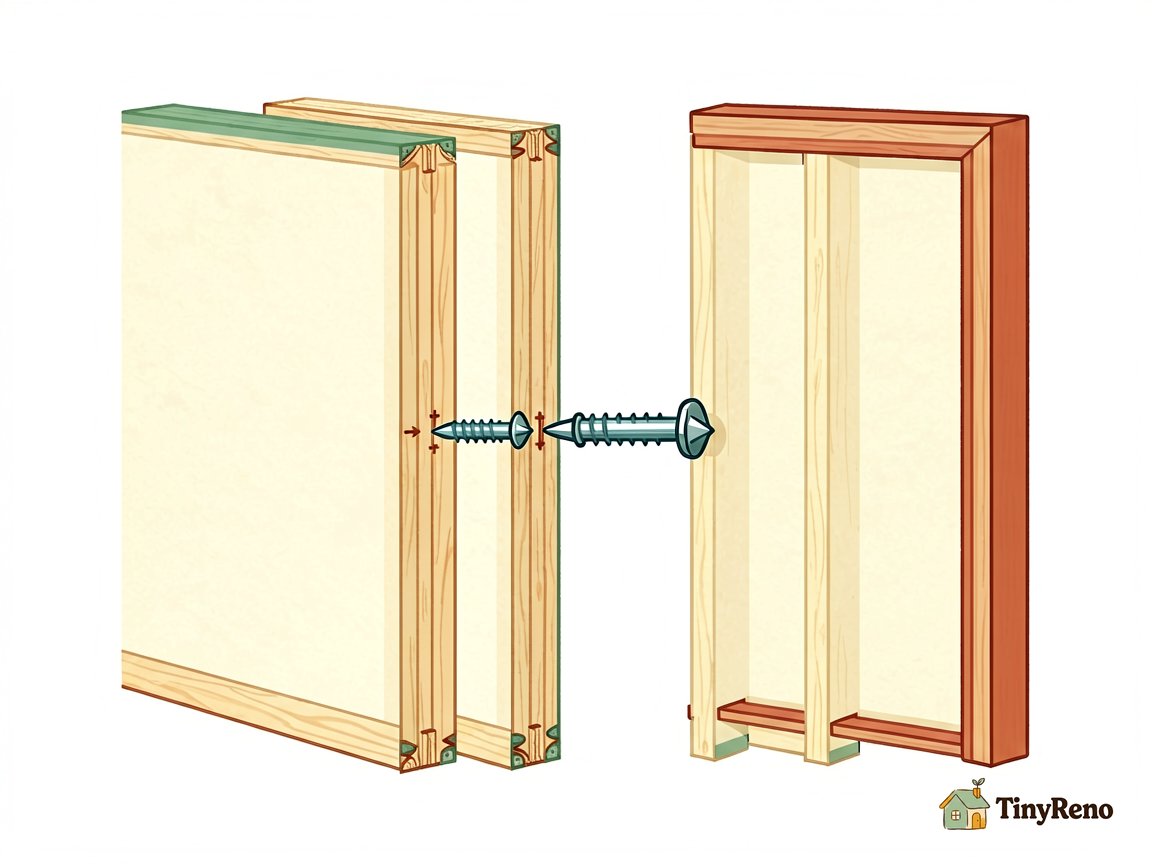
Wendy lives in the unit below me with her partner. They have a set of double French doors between their living room and the bedroom — two narrow doors that meet in the middle, each one about two feet wide. The doors themselves are light, hollow-core, the kind that come pre-hung in most 1980s-era rentals. They started sagging the same week she moved in. By the time she mentioned it to me, the top corners of both doors dragged so badly she had to lift each door by the handle to latch it.
The French doors have two hinges each. The top hinge on each door carries about seventy percent of the weight, because that's where the door pivots when you open it. The original one-inch screws had pulled out of the soft pine frame by about an eighth of an inch each. Every opening of the door pulled them out a little more. Within a year, the top corner of each door had dropped about a quarter inch below where it should have been.
She bought a box of three-inch zinc wood screws at the hardware store for four dollars. She removed the top hinge on each door, drove three-inch long door hinge screws into the same holes, and put the hinge back. The screws reached the wall stud behind the frame. The doors stopped sagging that afternoon. The whole project took her forty minutes because French doors are fiddly: both doors meet in the middle, so if one sags, the other tends to follow. She had a friend hold each door in place while she worked on the hinges, which added a few minutes per side. But the actual screw swap — remove hinge plate, drive longer screws, reinstall — is exactly the same as any other door.
Her takeaway: longer screws aren't just for sagging doors. They're the right screw to use when the door frame is soft, the hinges are old, or the door gets used a lot.
Jorge's garage-entry door: when the stud is missing
Jorge's apartment has a side door that opens from the kitchen into an attached garage — a converted interior door in a 1960s building. The door had been sagging since before he moved in. He figured the hinges were bad. He replaced the hinges twice in the first six months. The new hinges sagged just as fast as the old ones.
The actual problem turned out to be that the door frame in his garage entry wasn't framed into a stud the way the rest of the doors in his apartment were. The previous tenant had hung a heavy mirror on the wall above the door years earlier, and at some point the installer had cut the stud behind the door frame to run electrical. The frame was nailed into the drywall, not into anything solid. No matter how long the screws were, they weren't going to bite into a stud that wasn't there.
His solution wasn't elegant. He managed to wedge a piece of two-by-four into the garage wall behind the door frame, pushing it up against the drywall from the other side, and drove his three-inch screws through the frame and into the two-by-four. The two-by-four acted as a backing plate, not a true stud — it gave the screws something solid to bite into, but the whole assembly was still only as strong as whatever was holding the two-by-four in place. It worked for his door, which is a light interior door that doesn't get daily use. I wouldn't recommend this as a permanent fix for a heavy door or one that gets slammed regularly. The door stopped sagging. It cost him nine dollars in lumber and another three in screws. His landlord never knew.
This is the rare case where longer screws alone aren't enough. If your door is sagging and the frame feels hollow when you knock on it, you may need to add backing behind the frame before the screws have anything to hold onto.
Esther's kitchen door: when humidity is the real culprit
Esther's kitchen door sags only in the summer. From October to April the door closes cleanly. From May to September, the top corner drags on the carpet by about an eighth of an inch. She's lived in the apartment for nine years and has watched the pattern repeat every year. The door itself is solid wood, not hollow core, which made it heavier than most interior doors. The humidity in her kitchen — steam from cooking, dishwashers running, no exhaust fan that actually vents outside — was making the wood of the door frame swell and contract seasonally.
The screws in her top hinge pulled out a fraction of a millimeter every summer, then bit back in over the winter. After nine summers of that, the screws had lost enough grip that the door was sagging even in the dry months.
She did two things. First, she replaced the top hinge screws with three-inch long door hinge screws, which reached the stud and held. Second, she started running her exhaust fan for thirty minutes after every time she cooked — not to dry the air, but to vent the steam that was making the wood swell in the first place. The door stopped sagging. She's been on the same hinge screws for two years now.
If your door only sags in certain seasons, the screws are probably only part of the problem. The other part is whatever is making the wood move. The longer screws will hold the door up; the seasonal sag will keep coming back until you address the humidity.
My bedroom door: the straight version of the same fix
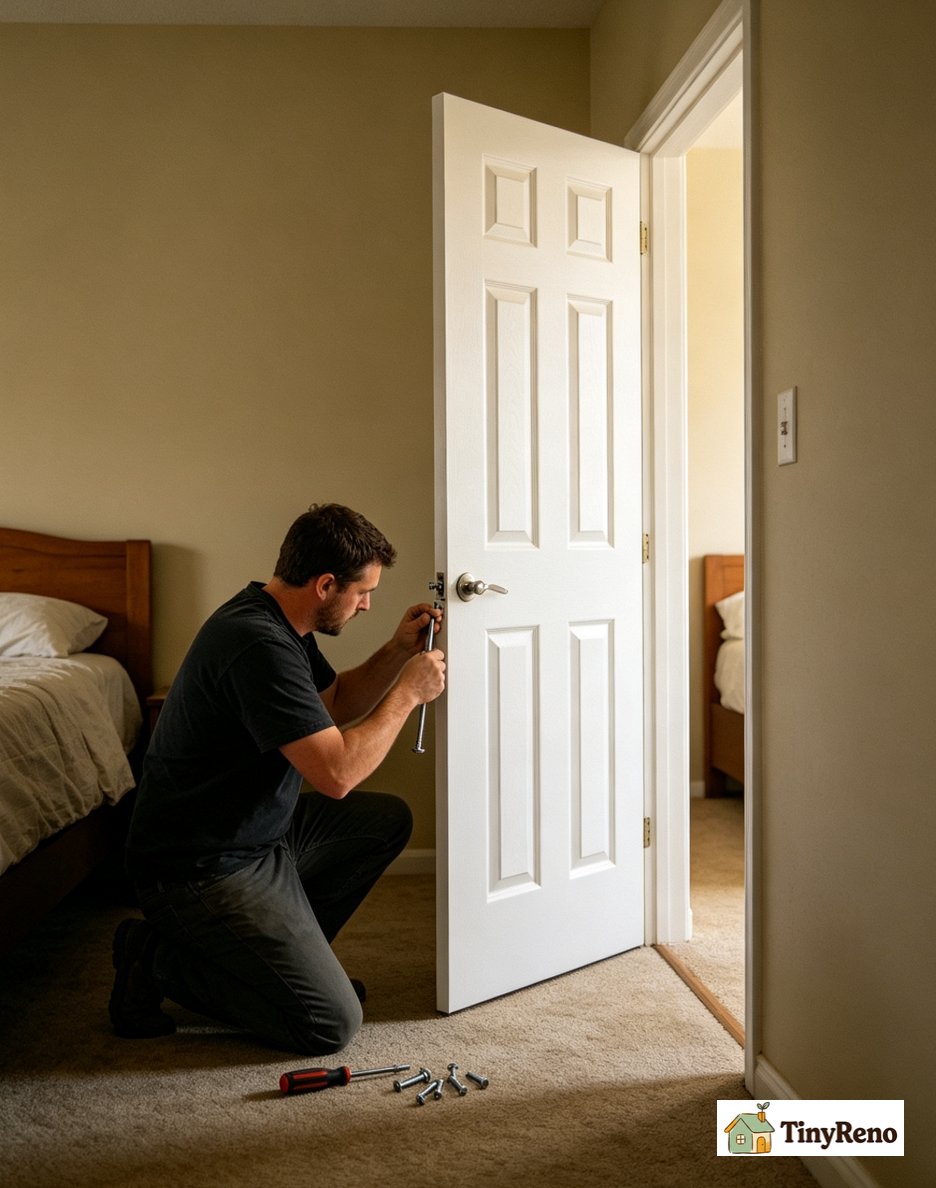
For my own bedroom door — solid core, soft pine frame, no garage, no French doors, no humidity issue — the fix was the simplest version of what everyone else had done. I removed the top hinge, kept the same one-inch screws in the door itself, and drove three-inch long door hinge screws into the frame only. The longer screws reached the wall stud behind the frame. The shorter screws stayed in the door because the door is solid wood and doesn't need the extra grip.
Total cost: three dollars for a four-pack of three-inch zinc wood screws. Total time: under five minutes. The door has stayed put for two years. The latch catches cleanly. The top corner no longer drags.
The pattern across all four of us — me, Wendy, Jorge, Esther — was that the longer screws did the work that the original screws couldn't. The shorter screws that come with the hinge are designed to hold the hinge plate against the door. They're not designed to anchor the hinge to the wall. If you're anchoring to a soft pine frame with no stud behind it, the screws will eventually pull out. If you're anchoring through the frame into the stud, the screws will hold as long as the door does.
For most interior doors in most rentals, the right screw is the longer one. If your door is heavier than usual, or the frame is unusually soft, or the door is sagging seasonally, you'll want to combine the longer screws with one of the other fixes above. But the screws come first. Everything else assumes the screws have held.
For the cabinet version of the same problem — sagging cabinet doors where the hinge screws have pulled out of the particleboard — the cabinet hinge trick uses the same packing approach. And if the door frame itself has split rather than the screws pulling out, the door frame repair walkthrough covers how to patch it without losing your deposit.


Discussion (0)
Sign in to join the discussion