

A handicap shower seat turned my rental shower from a fall waiting to happen into something my mother could use safely 11 weeks after her knee replacement. Why does the shower feel like the most dangerous room in the apartment when you're recovering from surgery, when you're over 70, when you have a balance issue? Because the shower floor is the only floor in the house that's meant to be slippery. It's the one room where the landlord hasn't installed a grab bar by default. It's the one room where the only solid surface is the wall tile, and grabbing the wall tile mid-fall usually means pulling a muscle on the way down. The handicap shower seat is the cheapest way to take the shower floor out of the standing position, and the question of which seat fits your rental is the one most buyers don't ask until they're at the hardware store.
I asked my mother's physical therapist that question in November, after her knee replacement, when she started needing a place to sit during her shower at my apartment. The therapist's answer was a list of seven questions to answer before picking a seat. I went through each one, bought the wrong seat the first time, returned it, bought the right seat the second time, and I'll walk you through the same seven questions here so you don't waste a trip to the store.
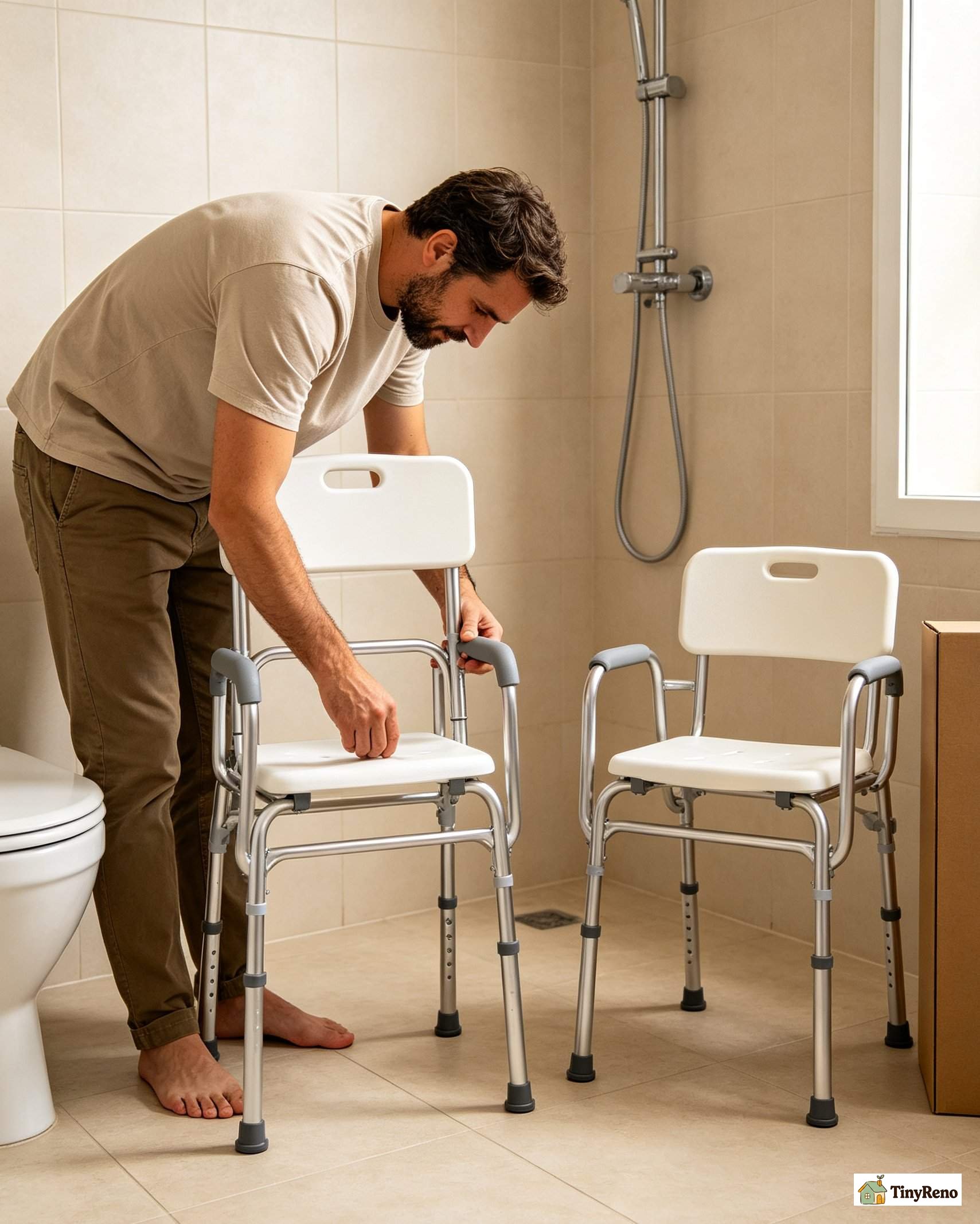
Question 1: How Much Weight Does the Seat Need to Hold?
The seats at the medical supply store and the seats at the hardware store are not the same products. Medical supply store seats are rated for 300 to 400 pounds and cost between $50 and $150. Hardware store seats are rated for 220 to 250 pounds and cost between $25 and $45. The price difference is real but the weight difference is the actual safety spec.
For a 5'4" adult recovering from surgery, the 250-pound hardware store seat is enough. For a 6'2" adult over 250 pounds, it isn't. The seat flexes under load, the legs bow outward, and the user feels like they're about to fall even when they're not. That feeling is the wrong feeling to have in a shower.
The weight rating is on the box. If it isn't on the box, the rating isn't tested. Walk away from any seat without a printed weight capacity.
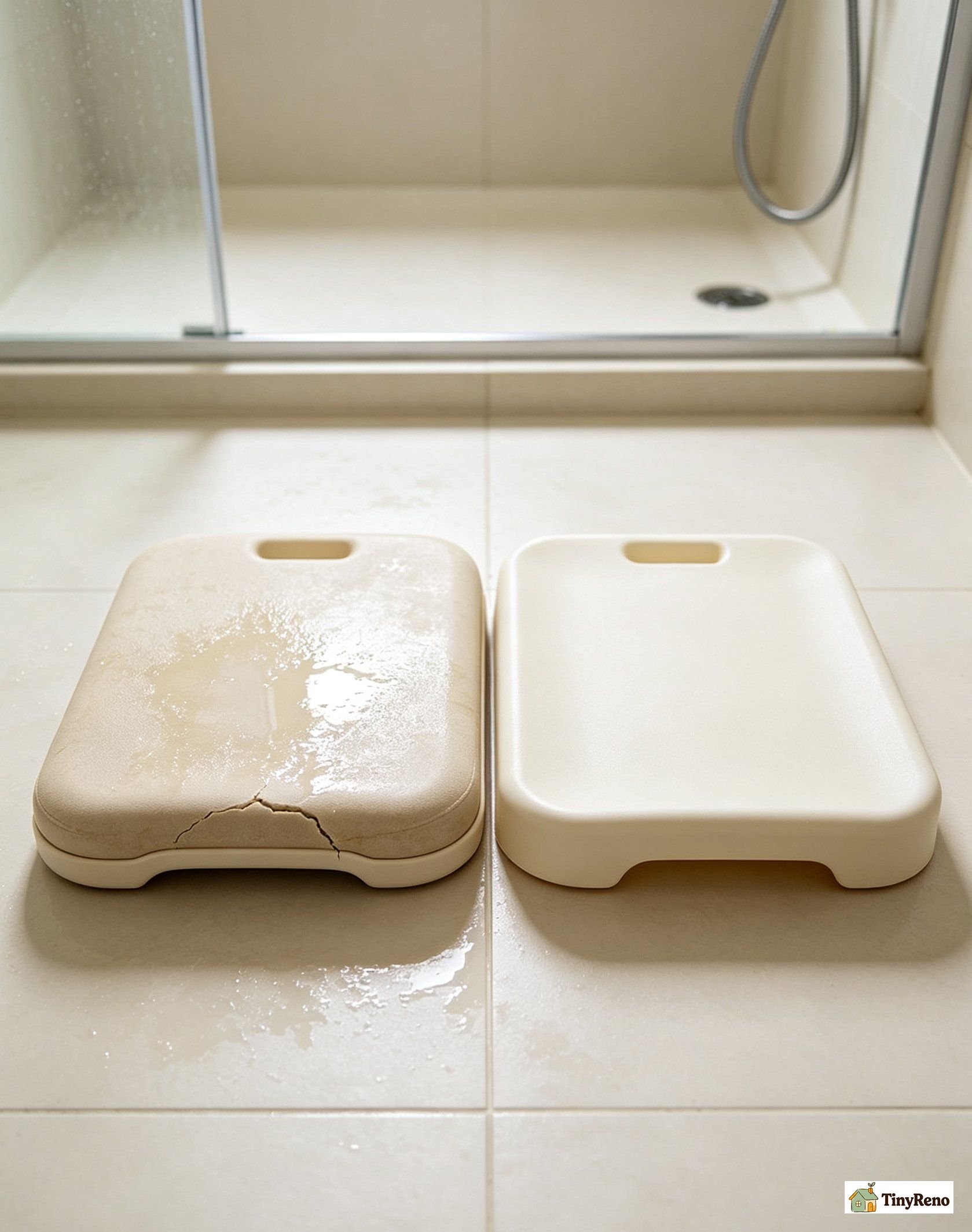
Question 2: Padded Seat or Hard Plastic?
Padded seats feel more comfortable for the first 10 minutes of a shower. After that, the padding absorbs water, holds it against the user's skin, and creates a cold damp feeling that the user can't get dry from by sitting on a towel afterward. The padding also degrates after about six months of daily shower use — it cracks, peels, and looks unsanitary.
Hard plastic seats feel cold for the first 30 seconds. After that, the shower water warms them up and they feel neutral for the rest of the shower. They dry in 5 minutes under a towel or by air. They last for years without degrading.
For a short-term rental situation (under six months), either works. For a longer stay, hard plastic wins on hygiene. The therapist's recommendation was hard plastic for everyone unless the user has pressure-sore issues, in which case the medical-grade padded seat with a separate waterproof cover is the right answer.
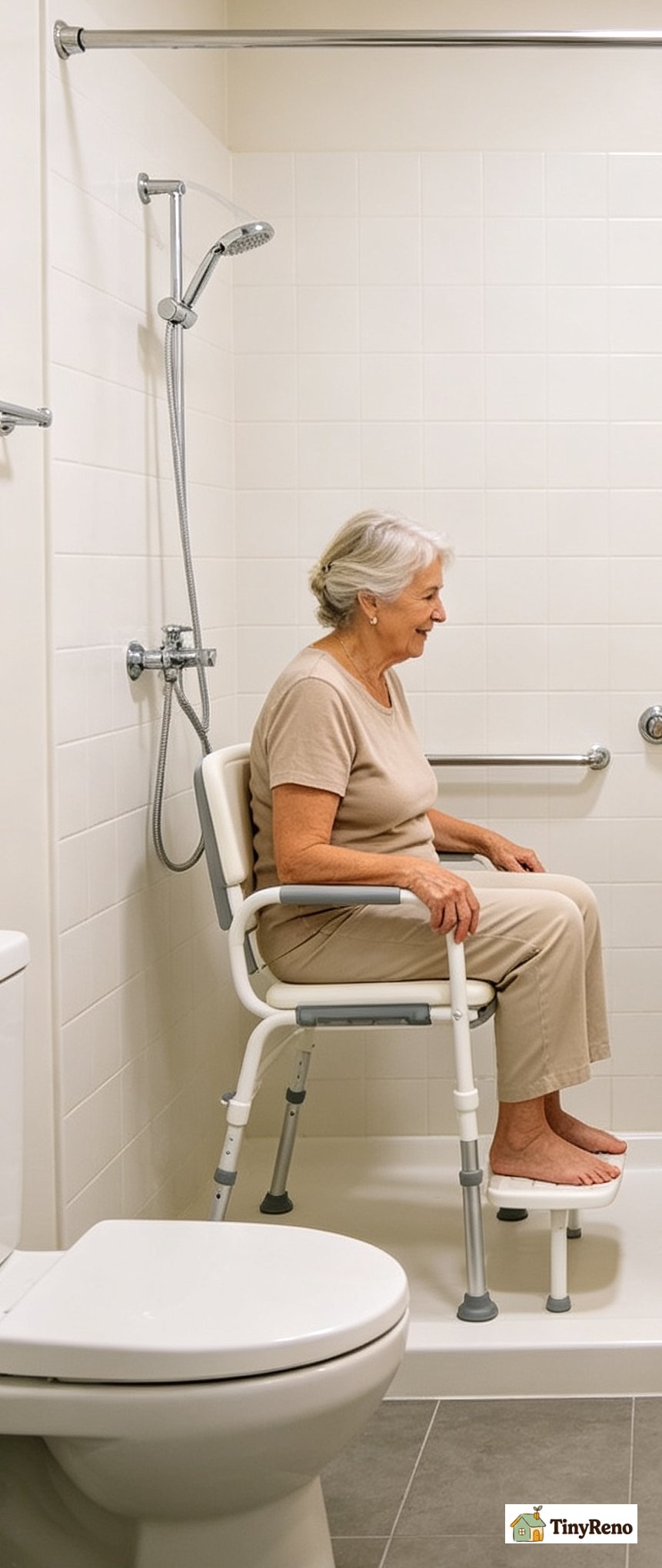
Question 3: Does It Need a Backrest?
A backrest is the difference between a $40 seat and a $90 seat. A backrest matters for users who can't hold their torso upright without support — post-surgery, late-stage balance issues, or any neurological condition that affects trunk control. A backrest is overkill for users who can sit upright but need to keep weight off their knees or feet.
For my mother in week three of her knee recovery, the seat with a backrest was correct. By week seven, the backrest was in the way because she could lean forward to wash her hair without needing to support her torso. By week eleven, she was standing in the shower again and the seat was in the closet.
The wrong way to decide is to buy the backrest version because it sounds safer. The right way is to ask the user: "Can you sit upright on a stool for 10 minutes without grabbing anything?" If yes, skip the backrest. If no, get the backrest.
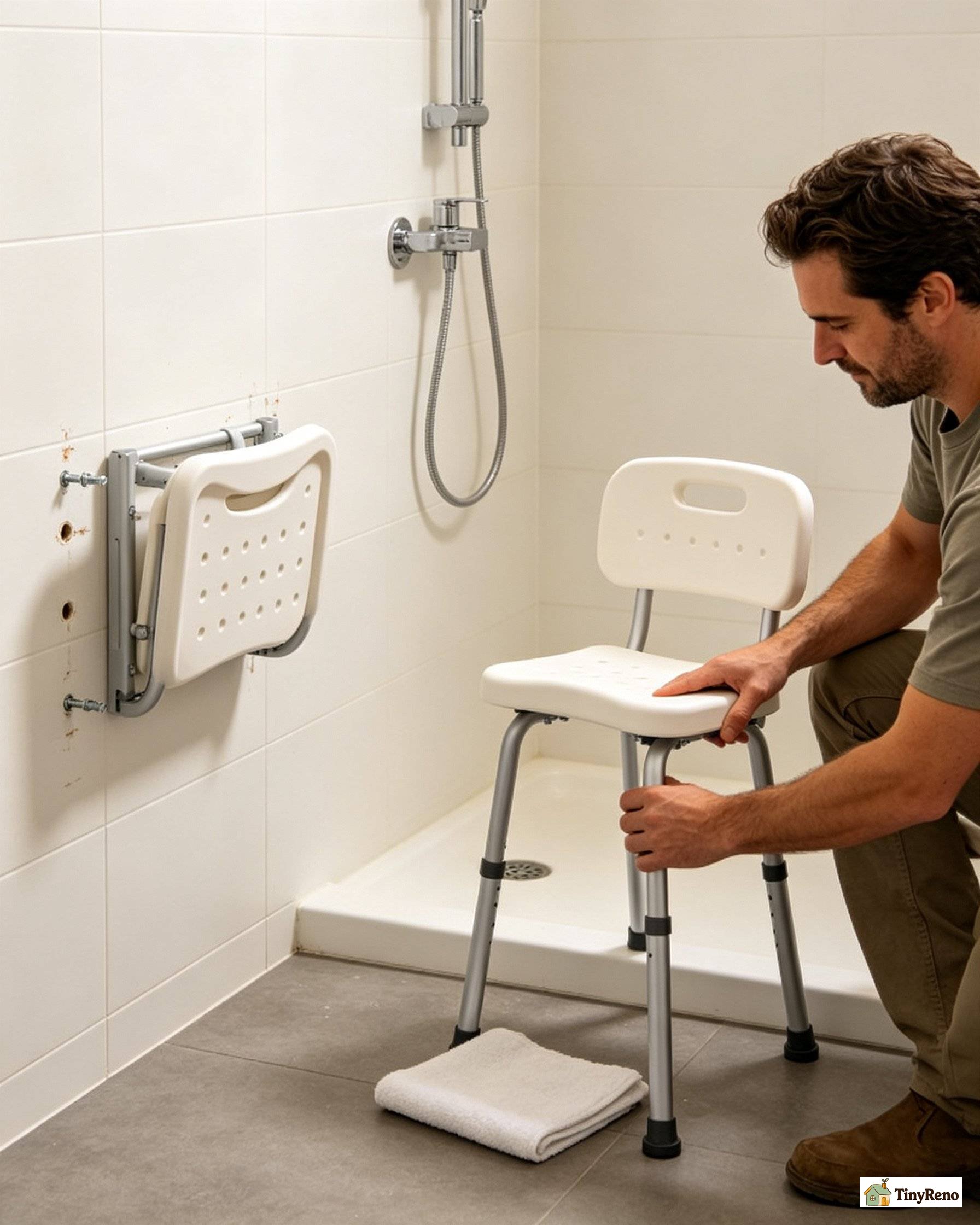
Question 4: Wall-Mounted, Leg-Supported, or Both?
Wall-mounted handicap shower seats fold up against the wall when not in use. They require four to six screws drilled into the wall tile or the wall studs behind the tile. For a renter, that's a permanent modification the landlord will see at move-out.
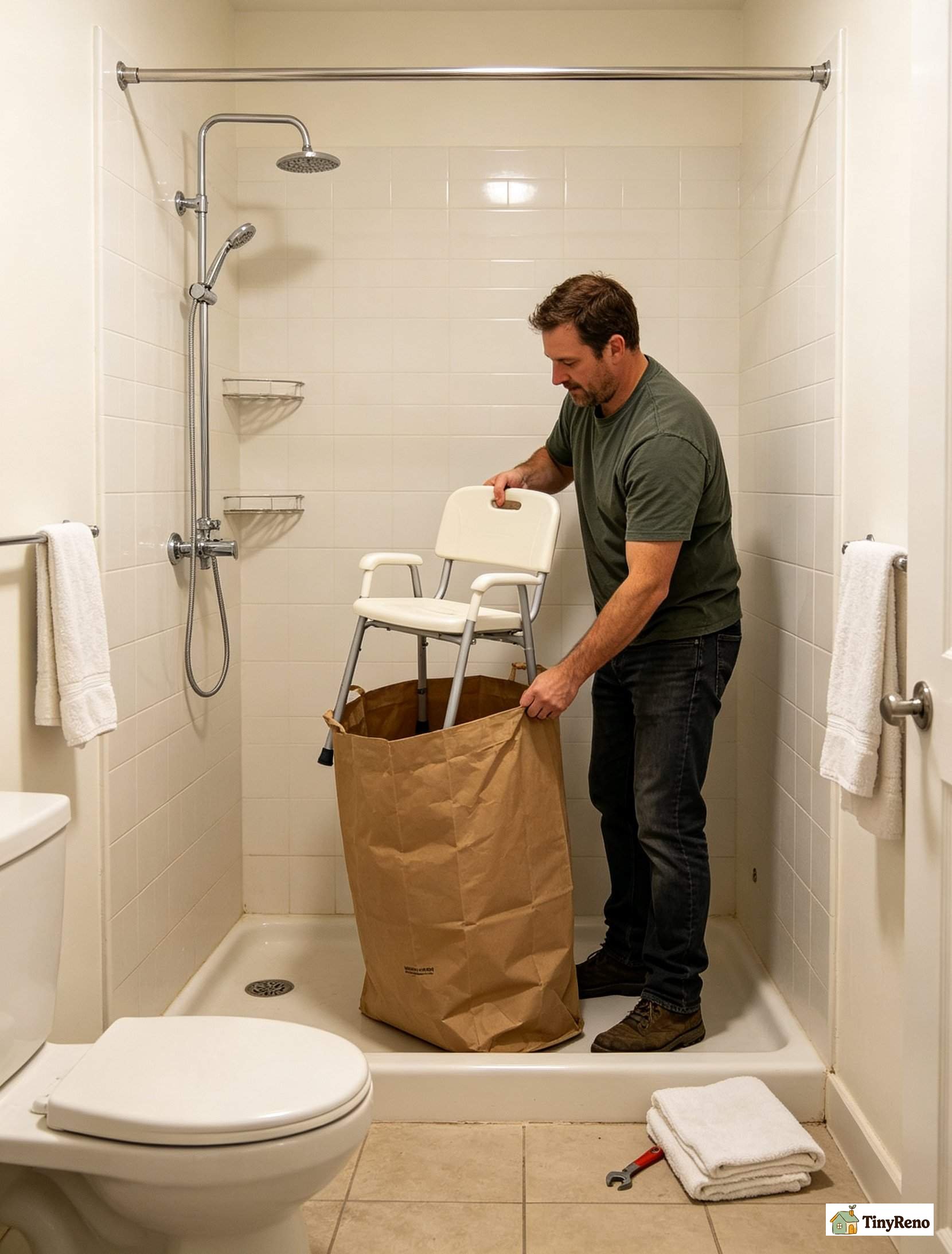
Leg-supported seats stand on four legs inside the shower. No drilling. They sit on the shower floor like a stool. They don't fold up — they stay where you put them. For a renter, this is the only viable option.
The compromise: a leg-supported seat with arms that the user can grip while sitting down and standing up. The arms add 4 inches to the seat width but provide the same push-up support that wall-mounted grab bars would. This is what I bought for my mother — a Drive Medical seat from a medical supply store, $78 with arms, no backrest, 300-pound capacity, leg-supported only.
The leg-supported seats have one failure mode I want to flag. If the shower floor has a steep slope toward the drain, the seat's legs don't all touch the floor at the same height. The seat rocks. The user feels unstable. Test the floor with a level before you buy. Most apartment shower floors are flat enough that the legs work all, but the 1990s apartment where my mother stayed had a 1-inch slope toward the drain that I had to shim with a folded washcloth under the front-left leg.
Question 5: How Wide Is the Shower?
A handicap shower seat with arms is typically 22 to 24 inches wide. A standard apartment shower is 36 inches wide at the curb, narrowing to 32 inches at the back wall. The seat fits, but the user has 6 to 8 inches of clearance on each side when seated. That's enough to wash but not enough to transfer from a wheelchair.
If the shower is under 32 inches wide, a seat with arms won't fit comfortably. Skip the arms. The 18-inch-wide seat without arms fits in any shower wider than 24 inches.
Measure your shower from wall to wall at the back of the curb (where the seat will sit). If the width is under 28 inches, consider a corner seat that mounts across the back corner of the shower. Corner seats have a triangular footprint that fits where rectangular seats don't. They cost more ($80 to $120) and the user has to sit facing diagonally, but they work in showers where nothing else does.
Question 6: Will the Landlord Care?
A shower seat that sits on four legs on the shower floor is not a modification. It's a fixture, like a bath mat or a shower caddy. The landlord's move-out inspection won't notice it unless the user leaves it behind when they move out.
If you remove it when you move out, there's nothing to notice. The shower floor is the same as it was when you moved in. No holes, no scratches, no residue.
If you leave it behind, the landlord's inspector will note it on the move-out form as "personal property left in unit." Some landlords charge a removal fee. Some don't. Most will simply ask you to come back for it or donate it.
For my mother, the seat lived in the shower for 11 weeks. I removed it the weekend she went back to her own place. It went into her car. The landlord's annual inspection three weeks later found the shower floor in its original state. Deposit returned in full.
Question 7: Does It Need to Be Renter-Remable After Every Shower?
If you share the shower with another person who doesn't need the seat, you might want to remove the seat between uses so it doesn't take up the floor space. A handicap shower seat without a backrest weighs between 5 and 8 pounds. Lifting it out takes 5 seconds. Setting it back in takes 5 seconds.
If the seat stays in the shower full-time, it's invisible to anyone not using it. The other person steps around it. The floor under it stays clean because the seat doesn't move. The water drains normally around the legs.
- Weight capacity (250+ pounds)
- Padded or hard plastic
- Backrest or no backrest
- Wall-mounted or leg-supported
- Shower width (24+ inches)
- Landlord concerns
- Daily removal or permanent install
The seven questions for picking a handicap shower seat are: weight capacity, padded or hard, backrest or no backrest, wall-mounted or leg-supported, shower width, landlord concerns, daily removal or permanent. The first three pick the product. The fourth and fifth pick the install method. The sixth and seventh pick whether you to bring it back when you move.
My mother used the seat for 11 weeks, three to four showers per week. The seat cost $78, weighed 7 pounds, fit through every doorway in my apartment, and left no trace when it left. The therapist's seven questions are the same seven questions any renter should ask before buying one.


Discussion (0)
Sign in to join the discussion