

How to unclog a tub without calling your landlord is, most Tuesday nights, a 20-minute fix. My bathtub backed up at 9pm last winter, and I learned this the hard way: 2 inches of standing water, a roommate asking why the floor was wet, and $150 in plumber quotes that I did not want to pay. This is the actual ladder I climbed that night, in the order I climbed it, plus the three specific moments where I should have stopped and called my landlord instead. If your tub drains slow or not at all, start at step 1, work your way down, and skip anything that does not move the water.
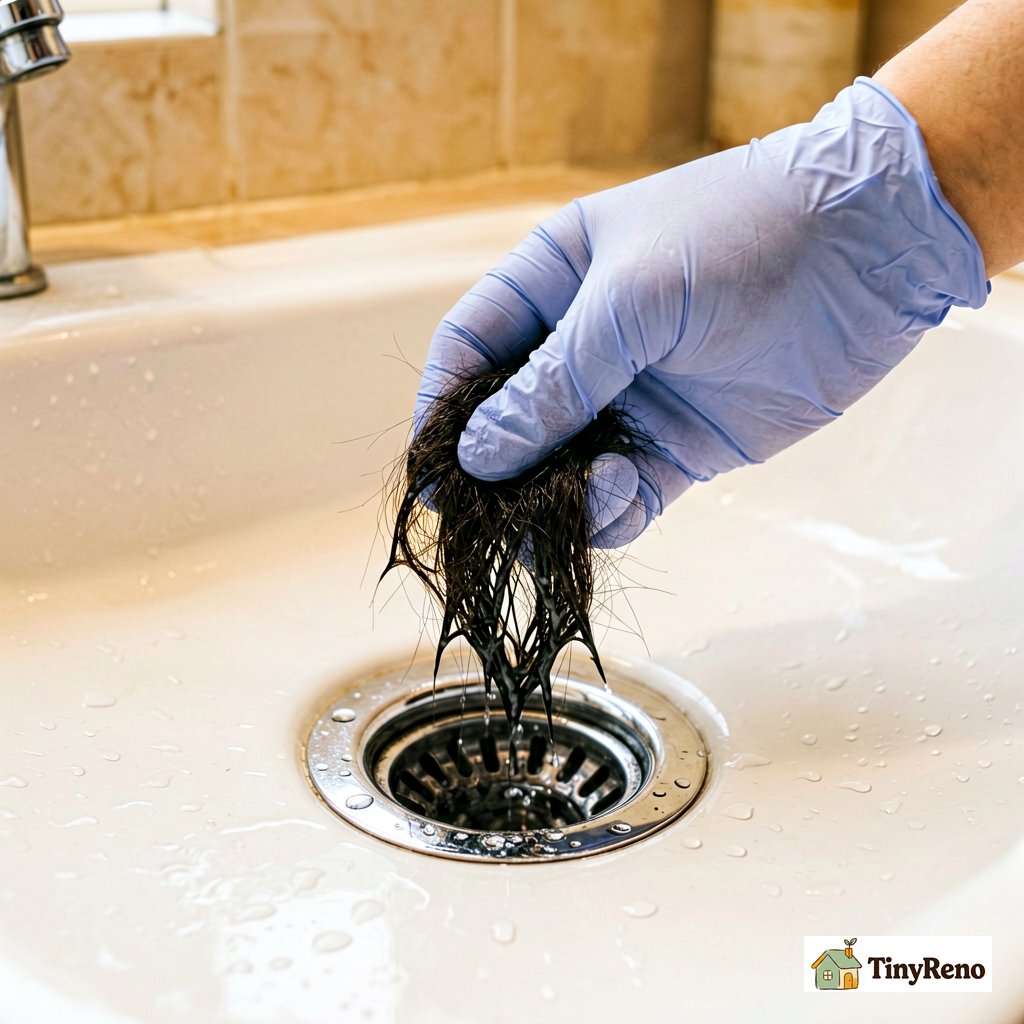
The Tuesday Night My Tub Stopped Draining at 9pm
I came home from work, dropped my bag on the bathroom floor, and saw the water. The tub had maybe 2 inches sitting in it, grey around the edges, and the shower I took that morning had clearly never gone anywhere. My roommate, Carla, knocked on the door and asked, very calmly, why the hallway rug was wet. The rug was not wet yet. The water was about to make it wet.
I pulled the drain cover off with a flathead screwdriver. Underneath was a black, slimy rope of hair about the size of my thumb, knotted around the crossbar. I pulled it out with my fingers. The water level did not move.
That was the first lesson. The hair you can see is rarely the hair that is clogging. The clog is usually 6 to 12 inches down the pipe, past the crossbar, where the cross-section narrows. The plunger trick, the snake trick, the baking soda trick — none of them will reach down there unless you do them right. I learned how to unclog a tub that night, but I also learned that 95% of the advice online is for the wrong kind of clog.
Baking Soda and Vinegar: The Pinterest Myth I Tried 3 Times
Before I tell you what worked, here is what did not. The single most common tip on YouTube and Pinterest for a slow tub is baking soda and vinegar: half a cup of baking soda, then a cup of vinegar, then a kettle of boiling water, then wait 30 minutes. I tried this. I tried it three times in a row. The water fizzed. The bathroom smelled like a middle school science fair. The clog did not move.
The reason baking soda and vinegar do not work on tub clogs is chemistry. The reaction produces carbon dioxide and sodium acetate — both of which dissolve in water and do almost nothing to a hair clog. The reaction is great for soap residue on a porcelain surface. It is essentially useless for hair caught in a P-trap.
If your tub clog is soap-scum related, the fizz will help. If it is hair (and 95% of renter tub clogs are hair), you are wasting 30 minutes per round. I burned an hour and a half that Tuesday night before I gave up on Pinterest and walked to the dollar store.
If you want a deeper dive on why most chemical-free drain advice falls flat, our no-chemical drain guide walks through the actual mechanics of P-trap clogs.
What Actually Works: Boiling Water + Dish Soap + Plunger in Sequence
The fix that finally worked was not one trick. It was three tricks in the right order, with 60 seconds of waiting between each one. Total time from start to draining tub: about 15 minutes. Total cost: $4 for a new plunger, plus whatever dish soap you already have.
Here is the sequence, exactly as I did it that Tuesday night:
- Boil 3 gallons of water. Use a stockpot, two kettles, whatever you have. The water needs to be at a rolling boil when you pour it. Cool water does not soften soap and grease the way boiling water does.
- Squirt 2 tablespoons of dish soap directly into the drain. Let it sit for 2 minutes. The dish soap (Dawn is the standard, but any degreasing dish soap works) is going to lubricate the clog and start breaking down the soap-and-hair paste holding it together.
- Slowly pour the boiling water down the drain. Pour it in two or three pulses, not all at once. You want the water to push through the clog, not just sit on top of it.
- Seal the overflow drain with a wet rag. This is the step most YouTube videos skip. The overflow is the small hole a few inches below the tub rim, usually chrome or plastic, with a faceplate. If you do not seal it, the plunger pushes air back through the overflow and the clog stays put.
- Plunge 15 to 20 times with a $4 dollar-store plunger. Use a standard cup plunger (not a flange plunger — those are for toilets). Push down firmly, pull up sharply, keep the cup submerged. After 15 to 20 strokes, yank the plunger off the drain on the last pull. You should hear a glug and see the water drop.
After about fifteen strokes with the plunger, I heard a low glug and the water started moving — first slowly, then all at once. The water drained in about 90 seconds. What I didn't know at the time was whether the clog was mostly soap paste with some hair mixed in, or a solid hairball. Looking back, the fact that the plunger worked suggests it was the first one. A solid hairball would have needed the snake. But that night, the water went down, and that was all I cared about. Carla stopped knocking. The hallway rug stayed dry. Total plumber quote I avoided: $150 for a 30-minute service call that would have done the same thing.
That night is the reason I now know how to unclog a tub in 15 minutes flat — and the reason I never want to repeat it.
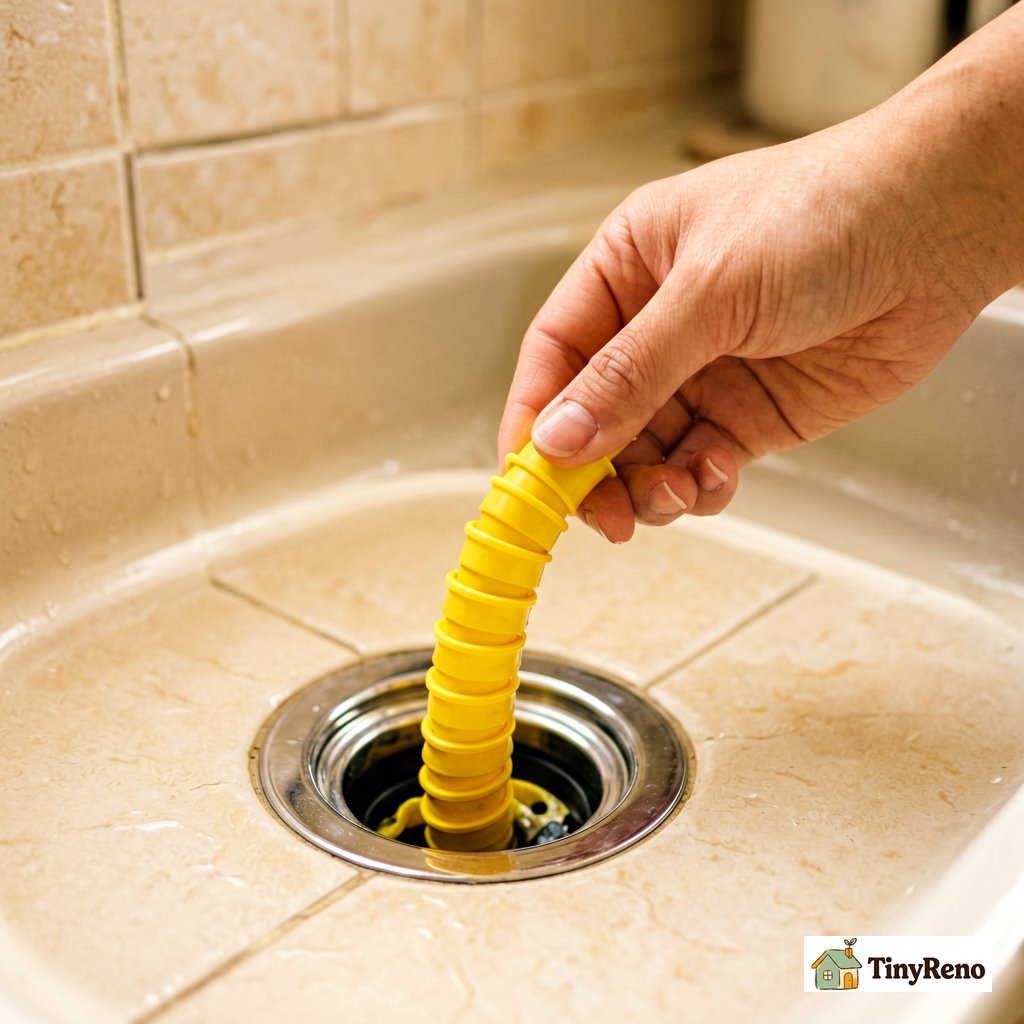
When the Plunger Fails: The $8 Drain Snake That Saved My $150 Plumbing Bill
The plunger trick works for about 80% of renter tub clogs. The other 20% are deep hair clogs past the P-trap, usually 2 to 4 feet down. For those, you need a plastic drain snake. I bought mine at Home Depot for $8. It is a yellow plastic handle with 3 feet of coiled plastic cable that looks like a flexible zip tie.
Here is how to use it without making the clog worse:
- Remove the overflow faceplate. Unscrew the two screws holding the chrome plate over the overflow hole. Pull the plate and the attached lever out. This gives you straight-line access to the trap.
- Feed the snake cable into the overflow opening. Push it slowly, turning the handle clockwise as you go. You will feel resistance when you hit the clog.
- Keep turning, do not force. When you hit resistance, crank the handle. The coiled tip will grab the hair and either break it up or wind it around the cable.
- Pull the snake out slowly. The hair clump will usually come out attached to the cable. My first one came out looking like a wet tennis ball made of dreadlocks. It is disgusting. It is also the entire clog.
- Run hot water for 2 minutes to flush. This clears any loose hair or soap paste you broke up but did not pull out.
If you want a comparison of snake types and when each one is worth the money, our kitchen sink renter fix guide covers the same $8-vs-$30 snake decision for kitchen drains.
When You Should Stop Trying and Call Your Landlord Instead
I tried to fix my own clog three times before I gave up and called my landlord. That is the wrong order. Here are the three red flags that mean you should email or call maintenance first, plunger in hand or not:
- Water backs up into the shower when you run the bathroom sink. This means the clog is in the main stack, not your tub. No amount of plunging will fix a stack clog. Maintenance has a snake that is 25 feet long. Yours is 3 feet.
- Multiple drains are slow at the same time. If your tub, sink, and toilet are all gurgling, the problem is the building drain, not your tub. Call maintenance.
- You smell sewer gas coming from the drain even after it is unclogged. A dry P-trap or a cracked vent can let sewer gas into the bathroom. Our drain odor fixes guide covers the dry-trap fix, but if the smell persists for more than 48 hours after running water, it is a vent issue and maintenance needs to handle it.
For everything else — the slow tub, the standing water, the hair rope you can almost see — the $4 plunger and $8 snake ladder will fix it in under 30 minutes. If your plunger strategy is solid but other plumbing is acting up, the 10-minute toilet fix guide covers the same renter-quick-fix approach for toilets.
That Tuesday night, the water is gone, the rug stayed dry, and the $4 plunger is still leaning against the cabinet door nine months later, untouched except for the one time my roommate needed it. The tub still drains in under a minute after every shower. I have not had to call maintenance for a clog since.


Discussion (0)
Sign in to join the discussion