

The first time I considered a tile and grout cleaner machine was a Saturday in Bushwick when my downstairs neighbor Melissa rolled a commercial Bissell up the stairs to her apartment and parked it in the hallway to wait for me to come down. She asked if I wanted to use it on my bathroom floor before she returned it to her cousin who worked at a cleaning company in Manhattan. I had been scrubbing the same grout lines with a toothbrush and OxiClean for about three months at that point, and the floor looked exactly the same as the day I moved in. I said yes, mostly out of curiosity. Within fifteen minutes the machine had done what three months of toothbrush work had not. The grout went from dingy gray-brown to the original off-white it must have been when the building was first built. I sat on the bathroom floor and just stared at it for a minute, because I genuinely could not believe it was the same tile.
I borrowed the machine again the next month and the month after that, until Melissa's cousin stopped lending it because someone at the company had finally noticed it walking out the door. After that I went back to the toothbrush, then upgraded to a stiff handheld brush, then eventually bought my own smaller machine for about $80 on Amazon. That was five years ago. I have used my own machine in four different apartments and helped at least eight friends clean their grout with it. None of them have gone back to the toothbrush either.
What a Tile and Grout Cleaner Machine Actually Does
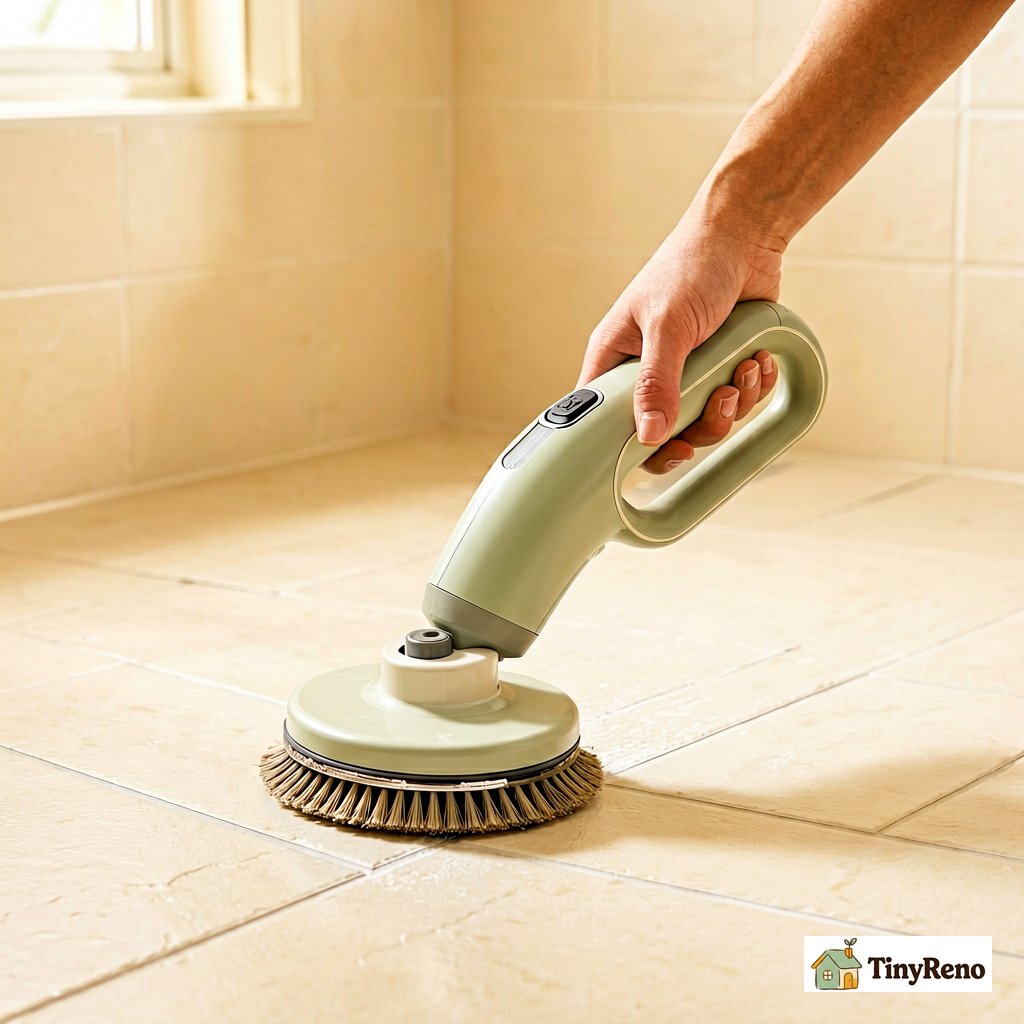
A tile and grout cleaner machine is a rotating brush that applies cleaning solution under pressure and lifts the dirt out of the porous grout. The brush spins at a few hundred RPM and the bristles are stiff enough to get into the texture of the grout without scratching the tile face. The cleaning solution is usually heated, which helps break down the body oils and soap residue that build up in bathroom and kitchen grout over time.
The reason the toothbrush does not work the way the machine does is mostly about consistency of pressure and brush speed. A toothbrush can do an okay job on a small area if you spend twenty minutes on it, but the brush speed is slow, the bristle stiffness varies, and you cannot keep steady pressure for more than a few minutes without your hand cramping. The machine does all three at once and keeps doing them for as long as you let it run.
For most renter bathrooms, the difference between a toothbrush clean and a machine clean is the difference between making the grout look about 30 percent better and making it look about 90 percent better. The toothbrush removes the surface grime. The machine removes the surface grime plus the embedded grime that has been building up in the grout pores since the last deep clean. If you have ever rented an apartment where the bathroom floor looked like someone had walked through a puddle of coffee and never cleaned it up, that is what unmaintained grout looks like, and a machine is the only practical way to get back to clean.
The Machines That Are Worth Considering
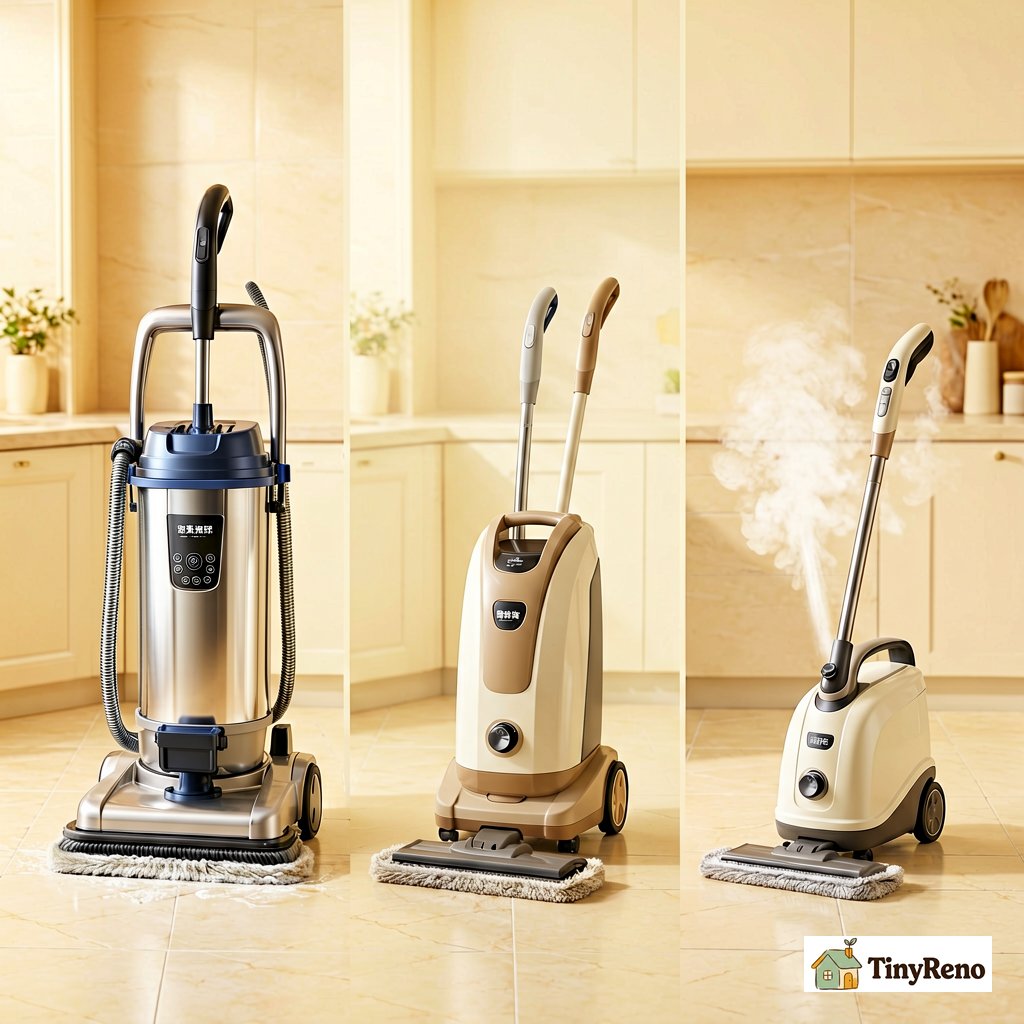
There are three categories of tile and grout cleaner machine on the market. The first is the heavy commercial grade that the cleaning company Melissa's cousin worked with used — these are the ones that weigh thirty pounds and have heated solution tanks and cost $400 to $800 new. These are overkill for a renter and hard to store. Most people who buy these for home use regret it within a year because they use it three times and then it sits in a closet for the rest of its life.
The second category is the mid-size home machine, which is what I bought. Brands like Bissell, Hoover, and Oreck make these. They weigh eight to fifteen pounds, have a single rotating brush head, and cost $80 to $150. The brush is usually motorized with one speed setting. The solution tank holds about half a gallon. These are the right tool for most renters because they are small enough to store in a hall closet or under a bed, light enough to carry up stairs, and effective enough that a single pass on a typical bathroom floor takes 30 to 45 minutes.
The third category is the steam-only machine. These are smaller, lighter, and use just water heated to steam temperature instead of a cleaning solution. They cost $40 to $100 and work well on light grout that does not have years of buildup. For a renter moving into a clean apartment and wanting to maintain it, the steam machine is a good choice. For a renter moving into a long-uncleaned apartment where the grout has years of embedded grime, the mid-size solution machine is the right call. Steam does not have the chemical action to break down old buildup the way a cleaning solution does.
How to Use the Machine Without Damaging Anything
The biggest mistake people make with a tile and grout cleaner machine is leaving the brush head in one spot too long. The spinning brush will actually start to wear down the grout if you park it. You want to keep the brush moving in slow overlapping passes, the same way you would mow a lawn. One pass per row, then move down half a brush width and come back. Going too fast means you do not get the dirt out. Going too slow or staying in one spot means you start eroding the grout.
The second mistake is using too much cleaning solution. Most machines have a trigger or a flow adjustment that controls how much solution comes out. You want a thin even flow, not a stream. Too much solution just makes a mess and takes longer to dry. The solution is doing the chemical work, but the brush is doing the mechanical work. The right ratio is about one trigger pull per square foot of grout line.
The third mistake is using the wrong cleaning solution. Some solutions are acidic and will etch certain types of natural stone tile. The solution that comes with the machine is usually safe for ceramic and porcelain tile, but if your bathroom has marble, travertine, or other natural stone, you need a pH-neutral solution. The machine itself is fine on natural stone — it is the solution that does the damage.
What the Machine Does Not Help With
A tile and grout cleaner machine does not fix cracked or missing grout. If the grout lines have cracks wider than a hairline, or if chunks of grout have fallen out, you need to repair the grout first and then deep clean. The machine is for cleaning existing grout, not for repairing damaged grout. I learned this the hard way in my third apartment, where the grout had cracked in three places by the shower drain. I ran the machine over those cracks hoping it would smooth them out. It did not. It just made the cracks cleaner and more visible. I had to repair the grout in those three spots before the machine did any good anywhere else in the bathroom.
The machine also does not fix discoloration from mineral deposits. If your grout is yellow or orange from iron in the water, no amount of cleaning will return it to white. The mineral has actually stained the grout and the color is permanent. You can slow further discoloration by sealing the grout after cleaning, but you cannot reverse what has already happened. The only fix for mineral-stained grout is to remove and replace it, which is a much bigger project than a machine clean.
The machine also does not fix mold that has gotten into the grout. Surface mold will come off with a machine clean and the right mold-killing solution. Mold that has penetrated into the grout — which you can tell because the dark color does not come off with cleaning — needs to be treated with a mold killer and then sealed. The machine will not penetrate that deep.
How Often to Use the Machine
For a renter bathroom with normal use, once a year is enough for the machine clean. Twice a year is overkill for most situations. Once every two years is too long and the grout will start to look dingy before the next clean. I run mine every spring, around April, which is also when I open the windows for the first time and notice how the bathroom floor looks. It is a good reminder cycle.
For a kitchen floor, where the grout is exposed to cooking grease and food spills, twice a year is better. The kitchen grout also benefits from being sealed after cleaning, which slows the rate at which grease penetrates. Most renter kitchens have unsealed grout, and that is part of why kitchen grout looks worse than bathroom grout for the same amount of use.
The cleaning between machine sessions is just a regular mop or sweep. You do not need the machine for routine cleaning. The machine is for the deep clean once or twice a year, not for the weekly mop. Most renters I know who own a machine use it twice a year or less. The machine is the reset, not the maintenance.
What to Do With the Machine After the Clean
After you finish the bathroom floor with the tile and grout cleaner machine, the grout lines are clean but unprotected. The pores in the grout are open and will start collecting dirt again immediately. The fix is to seal the grout with a penetrating grout sealer. The sealer soaks into the pores and creates a barrier that slows how fast dirt gets back in. A single bottle of sealer costs about $10 and covers an entire bathroom floor.
Applying the sealer is a five-minute job. You brush it on with the applicator bottle, let it soak for ten minutes, wipe off the excess with a clean rag, and let it dry for two hours before anyone walks on it. The sealer is invisible once dry and does not change the appearance of the grout. The benefit shows up the next time you clean — the grout comes back to clean much faster because the dirt is sitting on top of the sealer rather than embedded in the grout.
I still have my Bissell from five years ago, parked in the hall closet of my current apartment. It has been to four apartments and probably two hundred bathroom floors. The brush head has been replaced twice. The motor still works fine. Melissa moved to Jersey last year and I bought my own machine about three months after she stopped lending hers. I do not think about toothbrushes anymore.


Discussion (0)
Sign in to join the discussion