

The first time I tried to figure out if a 20 cast iron pan was right for my kitchen was a Sunday morning in Bushwick when I was staring at three cast iron skillets on a shelf at the flea market on Knickerbocker Ave. The vendor wanted fifteen dollars each, twenty-five for the larger ones, and I had a small apartment with a four-burner stove that already had a kettle and a Dutch oven taking up half the cooktop. I bought the small one — the twelve-inch, which is what most people mean when they say a regular cast iron skillet. It took me about three years to realize that the size I actually wanted was the 20 cm cast iron pan, also called the eight-inch, and that the cast iron sizing labels I had been using for my whole adult life were not particularly useful.
Cast iron pan sizes are listed in two systems depending on where the pan is made — inches in the US and centimeters in Europe and Asia. A 20 cm cast iron pan is the European way of saying eight-inch. The number on the bottom of the pan or in the product description tells you the diameter of the cooking surface, which is what determines whether the pan will fit your burners, your oven, and the kind of meals you cook. The size matters more than any other feature because once you buy a 20 cast iron pan you are typically keeping it for twenty years, so getting the size right on the first try saves a lot of frustration.
What 20 cm Means and What It Is Good For
A 20 cm cast iron pan is eight inches measured across the inside of the top rim. The cooking surface is slightly smaller because the walls angle inward — usually about seven inches of flat cooking area. That is enough for one large chicken breast, two eggs, a single steak, or a portion of vegetables for one to two people. It is the smallest standard cast iron size and the right choice for renters cooking for one or two, working with limited burner space, or building out a starter cast iron collection.
For comparison, the most common US cast iron sizes are 8 inch (20 cm), 10 inch (25 cm), and 12 inch (30 cm). A 12 inch skillet is what most people picture when they think cast iron — the iconic Lodge skillet, big enough for a full pound of bacon or four pork chops. But a 12 inch pan is too big for most renter kitchens in practice. It weighs about eight pounds empty, takes up a full burner, and does not fit in a standard renter oven alongside anything else. The 20 cm pan is the practical everyday workhorse for one or two people.
The 20 cm pan is also the right size for the most common cast iron cooking tasks. Searing one or two portions of protein, frying eggs for breakfast, making a small pan of cornbread, toasting spices, cooking a single portion of pasta sauce — all of these fit comfortably in the 20 cm pan. What it does not do well is feed a family of four without cooking in batches, which is a real limitation but one most renters are willing to accept in exchange for the storage and handling benefits.
How 20 cm Fits on Your Burners
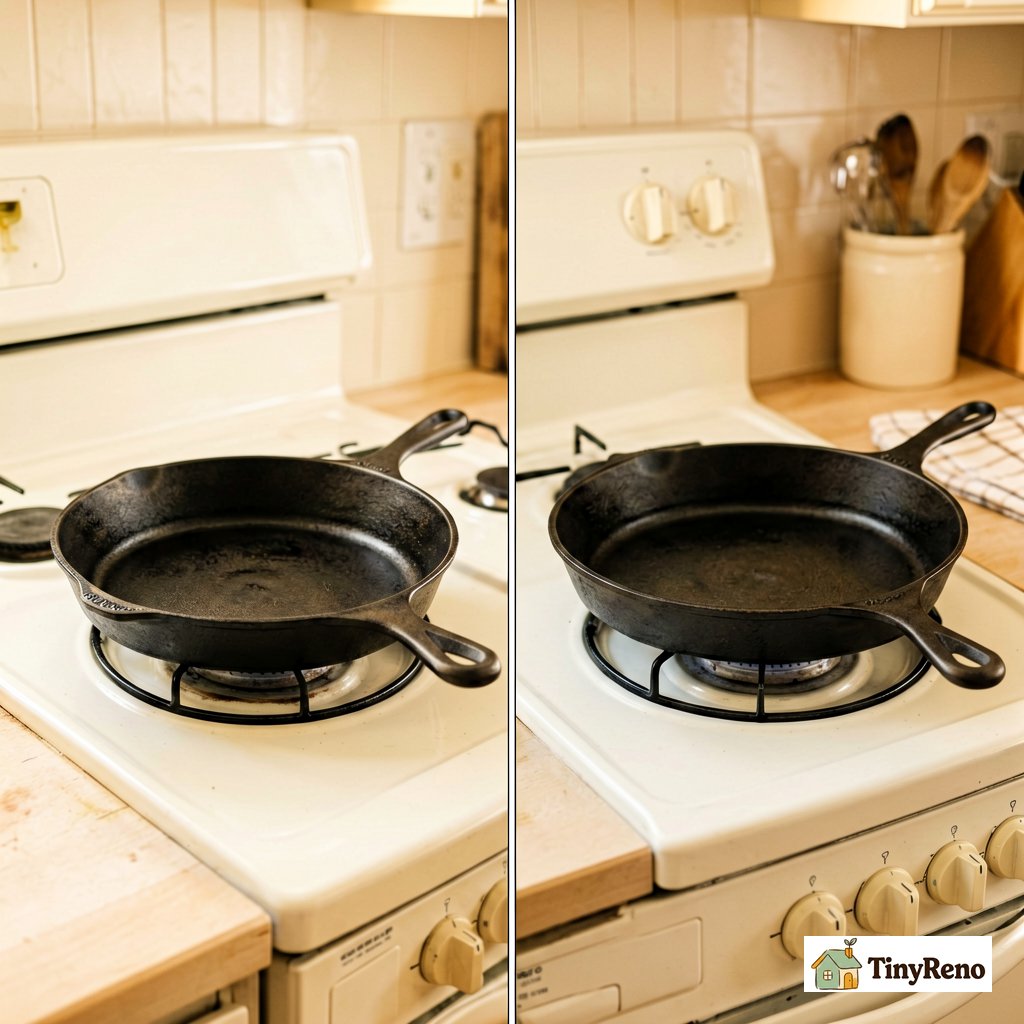
The 20 cm cast iron pan fits comfortably on a standard six-inch burner with about a half inch of overhang on each side. On a standard eight-inch burner — which is what most apartment stoves have, including the four-burner Bushwick stove where I learned this lesson with the 20 cm cast iron pan eventually replacing the 12 inch — the pan sits with two to three inches of burner showing all the way around. This matters because the heat distribution on a cast iron pan is better when the burner matches the pan size closely. A pan that is much smaller than the burner has hot spots near the center where the flame is concentrated. A pan that is much larger than the burner has cold zones around the edges.
The 20 cm pan is in the sweet spot for most renter stove configurations. It heats evenly on a six-inch burner, and it heats acceptably on an eight-inch burner with the caveat that you will get more heat in the center than at the edges. The 12 inch pan does not heat evenly on a six-inch burner at all — the edges stay cool while the center scorches. This is one of the reasons I eventually replaced my 12 inch Lodge with a 20 cm pan. The 12 inch was unusable on my Bushwick apartment stove.
If your apartment has a small European-style two-burner cooktop or an induction cooktop with overlapping heating zones, the 20 cm pan is even more important. Induction cooktops need the pan base to match a heating zone, and most renter induction zones are 16 to 18 cm. A 20 cm pan works on most of them. A 12 inch pan does not.
One workaround for the hot center on a big burner: preheat the pan slowly on medium-low for a few extra minutes before turning the heat up. Cast iron holds heat well, so the whole cooking surface eventually comes up to temperature even if the direct flame is only hitting the center. The 20 cm pan is forgiving in a way the 12 inch isn't — the center gets hot first, but the edges catch up. On a 12 inch pan over a small burner, the outer three inches never really get there.
How 20 cm Fits in Your Oven
A 20 cm cast iron pan fits in any standard renter oven, including the smallest apartment-sized wall ovens. The handle on most cast iron pans is about 20 cm long, so the total length of the pan including handle is about 40 cm. Even the smallest apartment wall ovens are usually 20 to 24 inches wide inside — roughly 50 to 60 cm — so the 20 cm pan with its 20 cm handle fits with room to spare. A 12 inch pan with its longer handle and wider body is a much tighter fit, especially if the oven also holds a baking sheet or a Dutch oven. The 12 inch pan with its longer handle takes up closer to 55 cm of total length and is much harder to fit alongside anything else in the oven.
This matters for any recipe that requires starting on the stovetop and finishing in the oven — the most common application for cast iron. Searing a steak and then transferring the pan to a 400 degree oven for eight minutes. Starting a frittata on the burner and finishing under the broiler. Toasting breadcrumbs in cast iron and then using the same pan to keep them warm in a low oven. All of these are easier with a 20 cm pan because the pan fits without needing to pull out the other rack or rearrange everything else in the oven.
What the Pan Actually Weighs Empty
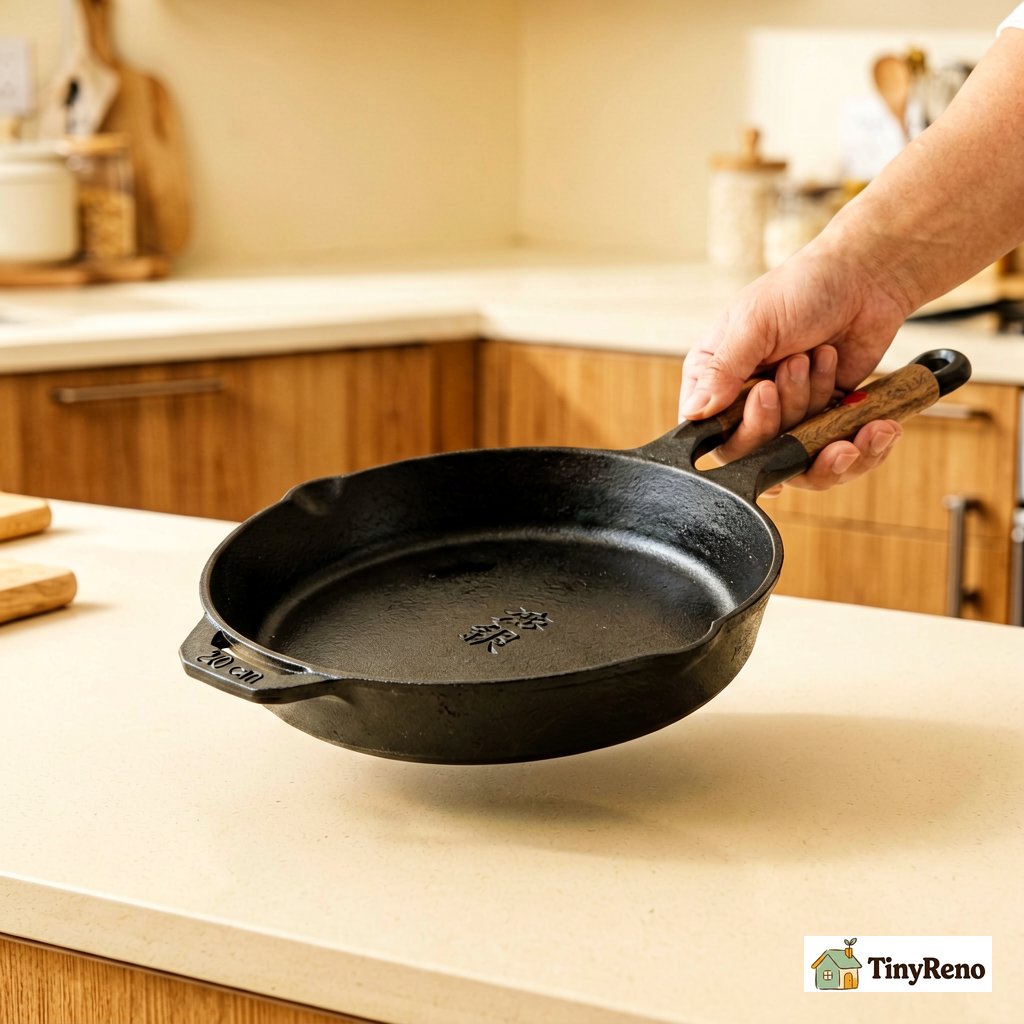
A 20 cast iron pan weighs about four pounds empty. A 12 inch cast iron pan weighs about eight pounds. The four pound difference matters when you are picking up the pan with one hand to flip an egg or to drain off grease. It matters when you are carrying the pan from the stove to the sink. It matters when you are lifting the pan out of a hot oven with an oven mitt on.
For renters with smaller hands or any kind of wrist or grip issue, the four pound pan is the practical upper limit. I have helped two older friends downsize from 12 inch to 20 cm cast iron for this exact reason, and both said they would never go back. The eight pound pan is too heavy for daily use unless you have a strong grip and a sturdy stove setup.
The four pound weight is also why the 20 cm pan is a reasonable renter purchase even though you should treat it like a long-term investment. If you have to move, the pan goes in a box with the rest of your kitchen gear. If you have to store it temporarily on top of the fridge or in a lower cabinet, four pounds is light enough to handle without straining. The eight pound pan is harder to store and harder to move.
When You Want the Bigger Size Instead
The 12 inch cast iron pan is the right choice when you regularly cook for three or more people, when you have a large enough burner and a sturdy enough stove to handle the heat distribution issues, and when you have the storage space for an eight pound pan. A family of four eating eggs at breakfast, for instance, needs the 12 inch pan. So does a household that does Sunday meal prep in cast iron — searing a full pound of ground beef, roasting a tray of vegetables, anything where batch cooking saves time during the week.
For most renters cooking for one or two, the 20 cm pan covers 90 percent of what you would use the bigger pan for, just with smaller batches. If you find yourself constantly cooking in two batches because the 20 cm pan is too small, you have answered your own question about whether to upgrade. If you rarely hit that limit, the smaller pan is the right call.
There is also the option of buying both — a 20 cm pan for daily use and a 12 inch pan for the weekend batch cooking. This is what I do now in my current apartment. The 20 cm pan lives on the stove most of the time and gets used four or five nights a week. The 12 inch pan lives in the cabinet and comes out maybe twice a month for larger meals. Total weight and storage is manageable. Total versatility is much higher than either pan alone.
How to Pick the Specific 20 cm Pan
Most major cast iron brands make a 20 cm pan. Lodge, Smithey, Field Company, and the European makers like Le Creuset and Staub all have an eight-inch option. For a renter who wants to buy once and use for twenty years, the brand matters less than the weight and the surface finish. Pick the pan up before you buy if possible. The four pound weight should feel balanced — not too heavy in the handle, not too light in the base. The cooking surface should be smooth to the touch with no obvious rough spots or casting defects.
For pre-seasoned 20 cast iron pan, the Lodge 8 inch skillet is the budget option at about $20 to $25. It is heavier than some competitors and has a rougher surface texture out of the box. For a smoother surface out of the box and slightly lighter weight, the Field Company No. 8 is about $80. The Smithey No. 8 is around $100 and has the smoothest cooking surface of any cast iron I have used. For renters who want the pan to last a lifetime and cook eggs without a major seasoning project, the Smithey or Field Company is worth the premium over the Lodge.
Whatever you buy, the size is the part you cannot change later. You can always sand down a rough Lodge surface, you can always reseason a pan that loses its finish, but a pan that is too small or too large for your stove, your oven, and your cooking style is just wrong forever. I still have that twelve-inch Lodge from the Bushwick flea market. It sits on top of the fridge in my current apartment, lid on, untouched except for the once-a-year oil wipe. I never use it. The 20 cm pan on the stove gets used four or five nights a week. The twelve-inch was the lesson, and the 20 cast iron pan is the answer.


Discussion (0)
Sign in to join the discussion