

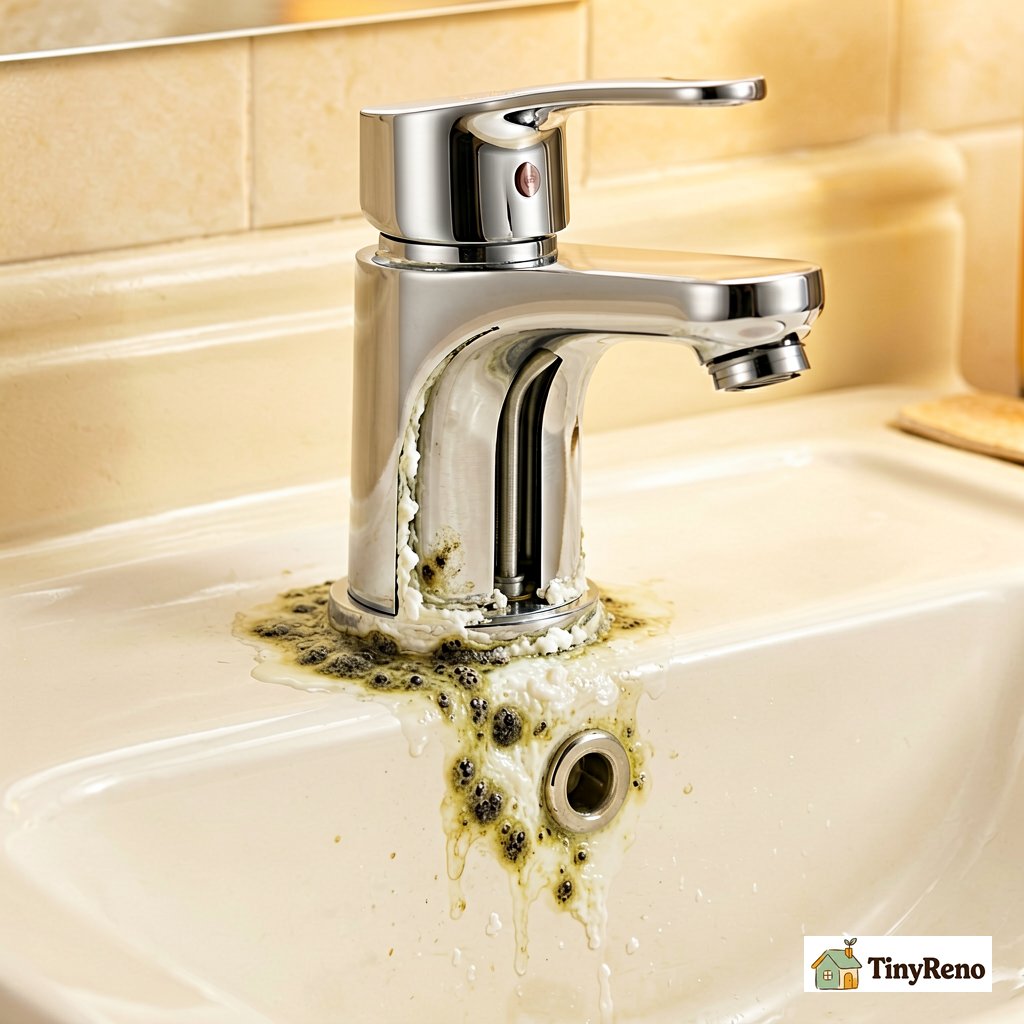
The first time I dealt with mold on faucet was in a Sunnyside apartment where the bathroom faucet had a black ring around the base that came back every two weeks no matter how often I scrubbed it. I tried bleach, vinegar, baking soda paste, and one of those mold-removal sprays from the grocery store. The black ring disappeared for a few days and then came back, and within a month it had spread to the handle and the spout. I lived with it for about six months before I figured out what was actually going on. The moment of clarity came when I pulled back the old caulk around the faucet base and saw what was underneath. The black ring I'd been scrubbing at was just the tip of the colony. The rest of it was hidden in the seam, eating the caulk from the inside. That's when I understood: this wasn't a cleaning problem. It was a caulk problem.
What I learned from that apartment is that mold on faucet is one of those problems that looks like a cleaning issue but is actually a moisture issue. The black ring is not coming back because you are not cleaning hard enough. It is coming back because there is a constant source of moisture feeding the mold colony, and no amount of surface cleaning will fix that. You have to find the moisture source and address it, or the mold will keep coming back no matter what you do.
Why Faucets Get Moldy
Mold needs three things to grow: moisture, organic matter, and time. Faucets provide all three in ways that are not obvious. The moisture comes from the constant splash zone — every time you turn on the faucet, water splashes onto the base, the handle, and the surrounding sink or counter. The organic matter comes from soap scum, skin cells, and any other biological material that gets deposited on the faucet during normal use. The time is provided by the fact that the faucet stays in place for months or years.
What most people do not realize is that the visible black ring is just the part of the colony that has grown out beyond the caulk line. The actual mold colony is much larger, and most of it is hidden underneath the faucet base or inside the caulk seam where the faucet meets the counter or sink. When you scrub the visible black ring, you are removing the surface growth but leaving the colony intact. The colony regrows the visible part within days.
This is why the problem keeps coming back. You are not failing to clean it — you are cleaning the wrong part of it. The visible mold is a symptom, and the actual colony is underneath. To fix the problem permanently, you have to either get rid of the colony underneath or remove the conditions that allow it to keep growing.
The two common scenarios in rentals are slightly different. In a bathroom sink, the faucet sits in a caulk seam between the faucet base and the porcelain sink. In a kitchen sink, the faucet sits in a caulk seam between the base and the stainless steel or composite sink. In both cases the caulk seam is where the moisture gets trapped and where the mold colony grows.
The Two-Stage Fix
The first stage is killing the visible mold and as much of the hidden colony as you can reach. The second stage is removing the caulk, treating the area underneath, and re-caulking. The first stage alone will give you a few weeks of relief but the mold will come back. The second stage is the permanent fix.
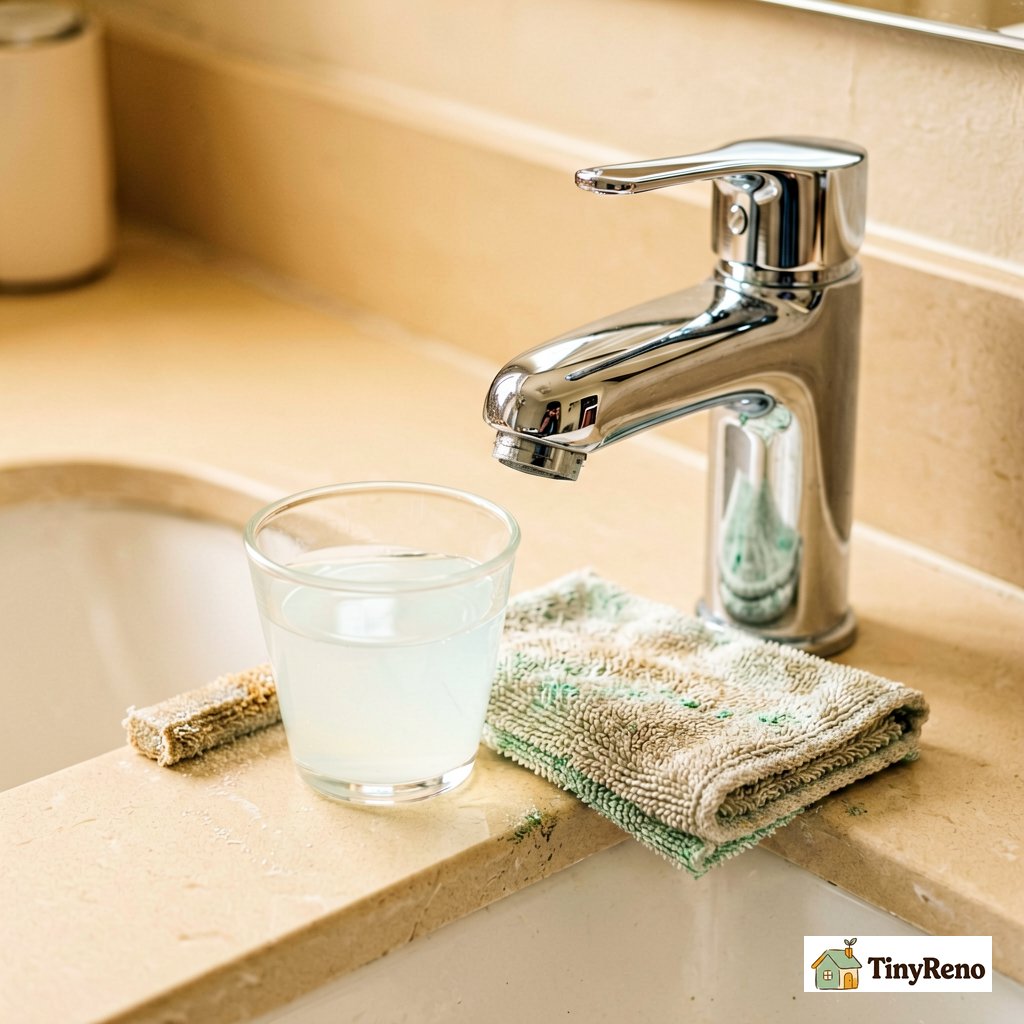
For stage one, dilute bleach is the most effective thing you can use at home for the surface you can see. Mix one tablespoon of bleach in one cup of water, apply with a soft cloth or paper towel to all the visible mold, and let it sit for ten minutes. But understand its limit: bleach kills what it touches. It doesn't penetrate into the caulk seam where the real colony lives. That's why this stage only buys you a few weeks. The permanent fix is stage two. Wipe clean with a damp cloth and let it air dry. Do this once a day for three days in a row to get the visible growth fully under control. You will see the black ring disappear and stay away for a few weeks.
For the area underneath the faucet handle or around the spout where you cannot easily reach, soak a paper towel or a small cloth in the bleach solution, wrap it around the affected area, and leave it for twenty minutes. The bleach will wick into the gaps and kill the mold it touches. This is not a permanent fix but it is the most thorough cleaning you can do without taking the faucet apart.
If the mold is on the faucet finish itself — chrome, brushed nickel, matte black — do not use anything abrasive to scrub it. Soft cloth and the bleach solution only. Abrasive cleaners will scratch the finish, and scratched finishes hold mold better than smooth ones because the scratches give the spores more surface area to grip. This is one of the cases where the gentler approach is the longer-lasting one.
When to Redo the Caulk
If the mold keeps coming back more than two weeks after the bleach treatment, the colony underneath the caulk is too well established for surface cleaning to reach. The fix is to remove the caulk around the faucet base, treat the area underneath with bleach or a dedicated mold killer, let it dry completely, and apply new caulk.
Removing old caulk is the part most renters are afraid of. It is actually not that hard. The tool you want is a plastic caulk removal tool, which costs about $3 at any hardware store. The plastic will not scratch the sink or the counter the way a metal putty knife will. Slide the tip under the edge of the old caulk and work it along the seam. Most of the old caulk comes off in long strips once you get under one edge.
For stubborn spots where the old caulk has hardened, a razor scraper held at a low angle works. Be careful with the razor on a porcelain sink — the blade can cut into the surface and leave permanent marks. On a stainless steel or composite sink it is fine. For the small seam around a faucet base, you can usually get most of the caulk out with the plastic tool and a little patience.
Once the caulk is removed, you will see what is underneath. Often there is visible black mold on the sink or counter surface where the caulk was hiding it. Treat the whole area with the bleach solution and let it dry for at least 24 hours. The mold needs moisture to grow, and the 24-hour dry time breaks the cycle. After the area is fully dry, apply new caulk — use 100 percent silicone labeled kitchen-and-bath or tub-and-tile. Better yet, look for a version that says "mold-resistant" or "with Microban" on the label. It costs a dollar or two more, but it has an additive that slows mold growth in the first place. A small tube costs about $6 to $8 and covers one faucet.
Preventing the Mold From Coming Back
The new caulk alone will not prevent the mold from eventually coming back if the moisture conditions stay the same. You need to change the conditions, and the main thing you can change is how much water stays around the faucet base after use.
The single biggest habit is wiping down the faucet and the area around the base after every use. A small microfiber cloth kept next to the sink takes about ten seconds per use. The cloth absorbs the splash water that would otherwise sit around the base and feed the mold colony. I have used this habit for two years in my current apartment and the mold has not come back since I redid the caulk.
The second habit is improving ventilation. Mold grows fastest in humid, poorly ventilated bathrooms. If your bathroom has a fan, run it during every shower and for twenty minutes after. If your bathroom does not have a fan, leave the door open after every shower and crack a window if possible. Lower humidity means slower mold growth, which means longer time between cleanings.
The third habit is weekly maintenance. Once a week, wipe the faucet base and handle with the dilute bleach solution — but only on chrome, stainless, or porcelain. If your faucet is brushed nickel or matte black, skip the bleach and use white vinegar instead. Bleach can dull those finishes over time. The vinegar is slightly less effective at killing mold, but it won't harm the finish. The weekly treatment plus the daily wipe-down is enough to keep the mold on faucet from being a recurring problem in most bathrooms.
When to Call the Landlord
In a rental, the caulk around the faucet is usually the landlord's responsibility. Most leases put bathroom caulking under landlord maintenance because a failed caulk job can lead to water damage. If the caulk around your faucet is visibly failed — peeling, cracked, missing chunks, or showing black mold underneath — that is a habitability issue and worth reporting in writing.
That said, the surface mold on faucet that is the actual cleaning issue is something you can handle yourself with the bleach treatment and the daily wipe-down habit. If the mold keeps coming back despite both, it is probably a caulk issue and worth raising with the landlord. The landlord should arrange for the caulk to be replaced, and a good property management company will do this within a week of being notified.
For apartments where the bathroom fan does not work or where the bathroom has no window, the mold problem may be structural. A bathroom with no ventilation will always have humidity issues, and you cannot fix that with a microfiber cloth. This is a habitability issue that the landlord should address — either by installing a fan or by other remediation. Document the ventilation problem and the mold problem together when you report it.
When the Mold Is Not Actually Black Mold
One thing worth mentioning before you panic about mold on faucet being black mold — the black stuff that grows on faucets and in showers is almost never the toxic black mold (Stachybotrys chartarum) that you read about in the news. Toxic black mold grows on cellulose-based building materials like drywall and wood, not on porcelain or chrome or silicone caulk. The black stuff on your faucet is a different species entirely, usually Cladosporium or similar, which is unpleasant but not toxic in the way the news stories describe.
This is not to say you should ignore it — the smell is unpleasant and the appearance is ugly, and a heavy mold colony can trigger allergic reactions in sensitive people. But the actual health risk from ordinary shower and faucet mold is low for most adults, and the cleaning methods in this article are sufficient to handle it without professional remediation in almost all cases.
If someone in your household has a compromised immune system or severe mold allergies, take the problem more seriously and ask the landlord for a professional assessment. Otherwise, the bleach treatment, the caulk redo if needed, and the daily wipe-down habit are enough to keep the mold on faucet from being a recurring issue in your rental.


Discussion (0)
Sign in to join the discussion