

The first time I dealt with a smell coming from shower drain was a Friday night in Astoria when my partner's parents were coming for dinner an hour after I got home. I had cleaned the bathroom that morning and everything was spotless, but about twenty minutes before they arrived a smell started coming up from the shower drain that I can only describe as rotten eggs mixed with wet dog. I tried every quick fix I could think of in forty-five minutes — bleach, baking soda, boiling water, essential oils sprayed into the drain, lighting matches — nothing worked for more than a few minutes. My partner's mother used the bathroom twice during dinner and I am still not sure whether she mentioned the smell or was just being polite.
That was the night I learned that the question of why a shower drain smells is almost always one of three causes, and that two of them have a fifteen-minute fix that costs less than five dollars. The third cause is a plumbing issue that needs a professional, but it is rare. For most renters the answer is biofilm in the drain or a dry P-trap, both of which you can handle yourself with no special tools.
Why Shower Drains Smell in the First Place
Shower drains smell because of gases — usually hydrogen sulfide, which has that rotten-egg smell, or various organic compounds produced by bacteria. Both gases come from somewhere, and figuring out where is the first step. The gases can come from the drain itself (biofilm in the pipe or the drain throat), from the P-trap (the U-shaped pipe section under the drain), or from further down the line (a venting issue or a problem in the building's main stack). For most renters the first two are by far the most common.
Biofilm is the same thing that causes black sludge in sink drains. It is a colony of bacteria and other microorganisms that grows on the inside of pipes where moisture and organic matter accumulate. The bacteria break down the organic matter and produce gases as a byproduct. The gases rise up through the drain and into your bathroom. Biofilm is not a health hazard in the way the name sounds — it is just bacteria living their lives in your drain — but the smell is unpleasant.
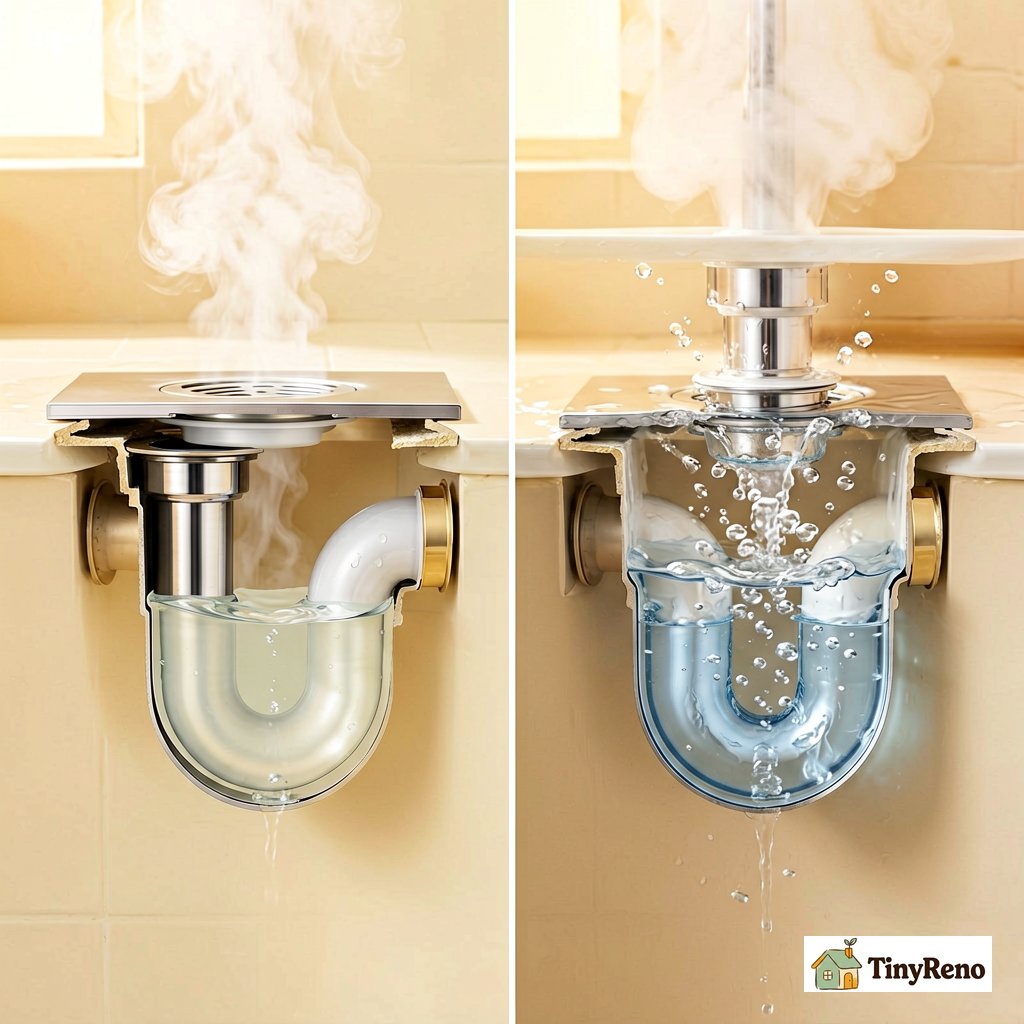
A dry P-trap is simpler. The P-trap is the U-shaped bend in the pipe under every sink and shower. It is designed to hold a small amount of water at all times, and that water acts as a seal that prevents sewer gas from coming up through the drain. If the P-trap dries out — usually because the shower has not been used for a while — the seal is broken and sewer gas comes straight up. This is why guest bathrooms and rarely used basement showers often smell worse than the master bath.
The third cause is venting. Modern plumbing has vent pipes that allow air into the system so the P-trap seal does not get siphoned out every time water flows down. If a vent is blocked or was never installed properly, the P-trap can lose its seal even with regular use. This is rare in newer buildings but happens in older ones. You cannot fix this yourself and need a plumber.
The Quick Diagnostic
Before you pour anything down the drain, do the timing test. Has the shower been used in the last 24 hours? If yes, the P-trap should have water in it, so the smell is probably biofilm. If no, the P-trap may have dried out and the smell is probably sewer gas from an unsealed trap. The fix is different for each one, so this test saves you time.
The next diagnostic is the smell itself. Biofilm gases tend to be earthy and sour, with a slight mildew note — similar to the smell of a wet towel left in a gym bag. Sewer gas from a dry P-trap or venting issue is sharper, more chemical, with that classic rotten-egg smell of hydrogen sulfide. If the smell is the second one, the answer to the smell coming from shower drain is almost always a dry trap, and the fix is two minutes.
If you want to confirm before fixing, run water in the shower for thirty seconds and see what happens. If the smell disappears within five minutes of running water and stays away for a few hours, the P-trap was dry and the running water refilled it. If the smell comes back within an hour of running water, the issue is biofilm in the drain, not the trap.
If the smell gets worse when you run water rather than better, you have a venting issue or a partial blockage downstream. The water going down is creating a pressure imbalance that pulls sewer gas up through the trap or through other drains in the bathroom. This is the rare case where you need a plumber.
Fixing a Dry P-Trap
If the diagnostic suggests a dry P-trap, the fix is to run water. That is the entire fix. Run the shower for one to two minutes at normal flow. The water fills the P-trap and recreates the seal. The smell should disappear within a few minutes and stay gone as long as the shower is used every couple of weeks.
For a guest bathroom that only gets used once a month, you can either commit to running the shower for a minute every two weeks as maintenance, Or you can put a very thin layer of mineral oil on top of the water in the P-trap. The oil floats on the water and slows evaporation significantly. Use no more than a teaspoon — the goal is a film, not a pour. Too much oil can accumulate in the trap and attract lint, which creates a different problem down the line. This is a renter trick I picked up from a maintenance person in my second New York apartment. It is not a permanent fix but it extends the time between refills from two weeks to about two months.
If the smell comes back within hours of running water, the P-trap is not the issue. Move on to the biofilm fix.
Fixing Biofilm in the Drain
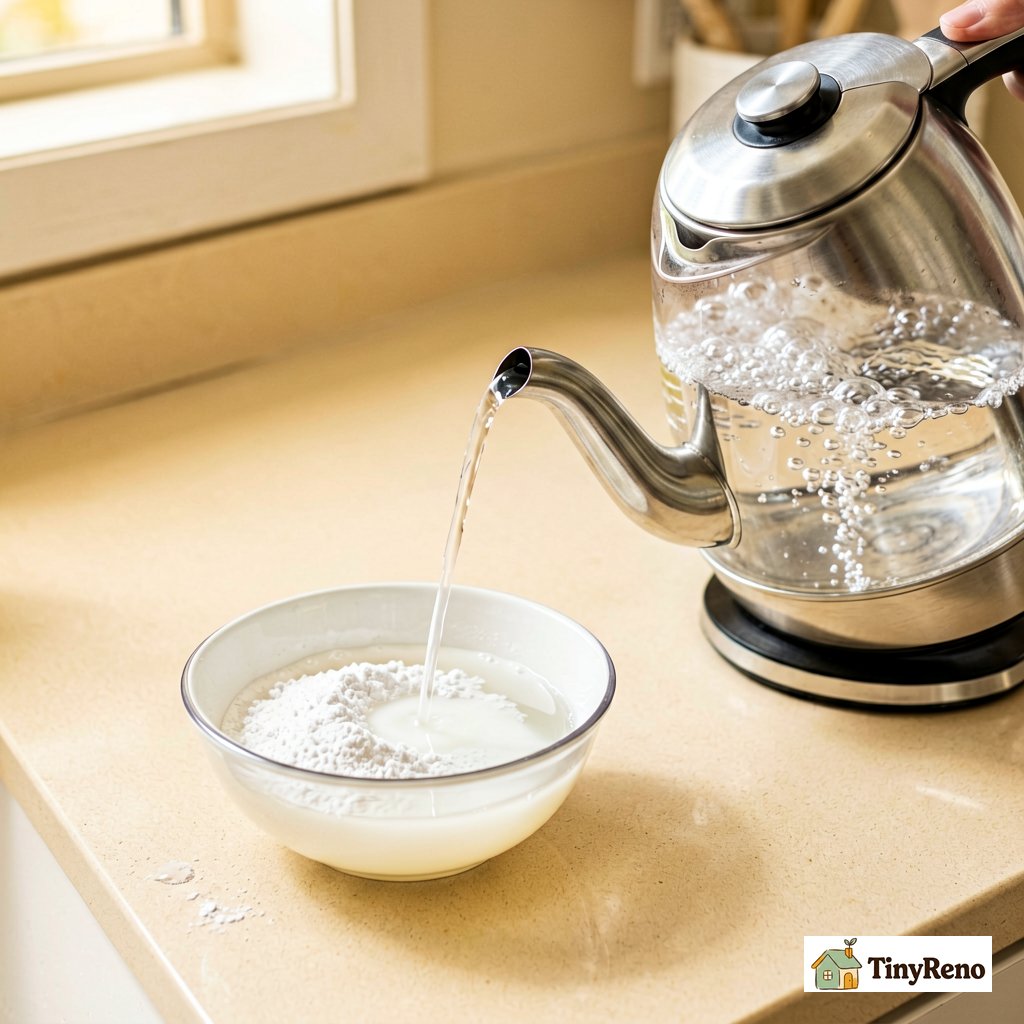
For biofilm, the cleaning method is the same as for black sludge in sinks. Pour half a cup of baking soda down the drain, then slowly pour half a cup of white vinegar after it. Let it fizz for fifteen minutes, then flush with a full kettle of boiling water. Repeat once a week for a month, then once a month for maintenance. This breaks down the biofilm and the smell goes away within a day or two of starting the treatment.
The baking soda and vinegar method is the right first step because it's gentle on the pipes and does a decent job breaking down loose biofilm. It's not a deep-cleaning solution — for a heavy buildup you may need an enzyme-based pipe cleaner — but for a regular shower drain with a mild smell, it's usually enough if you repeat it weekly for a month. Stronger drain cleaners often use lye or sulfuric acid, which work but can damage older pipes and are dangerous to handle. If you have PVC pipes (most modern apartments) the harsh chemicals are not necessary. If you have older metal pipes, the harsh chemicals can corrode the joints and cause leaks that are much worse than the smell was.
For the visible parts of the drain — the strainer, the stopper, the throat of the drain — wipe down with a dilute bleach solution after the baking soda flush. One tablespoon of bleach in one cup of water, applied with a soft cloth, left for five minutes, then wiped clean. This kills the biofilm on the parts you can reach and gets the smell out faster than the pipe treatment alone.
The single biggest mistake people make is using a drain cleaner that masks the smell without killing the bacteria. Air fresheners, essential oils, and bleach alone just cover up the symptom. The bacteria keep producing gases and the smell comes back within hours. The baking soda and vinegar approach actually breaks down the biofilm colony, which is why it takes a few treatments to fully eliminate the smell.
What About the Stinky Hair Clump
Most shower drains also have a hair clump somewhere in the throat of the drain or just below it. The hair clump holds water and creates a perfect environment for biofilm growth. Even if you clear the biofilm with the baking soda treatment, the hair clump will re-seed the bacteria within a few weeks.
To remove the hair clump, you need to physically get at it. Some shower drains have a removable stopper or strainer — unscrew it, pull out the hair, wipe clean, reassemble. Other drains have a small plastic or metal insert that catches hair — pull it out with needle-nose pliers, wipe clean, drop back in. If your drain has neither, you can buy a plastic drain hair removal tool for about three dollars at any hardware store. It is a long flexible plastic stick with small barbs that you push down the drain and pull back up.
The hair clump itself is not dangerous but it is disgusting and it makes the biofilm problem much worse. Removing it once will reduce the smell significantly even without any other treatment. I do this every three months in my own shower as maintenance.
When It Is Actually a Plumbing Problem
The smell coming from shower drain that needs a plumber is the one that gets worse when you run water rather than better, or that comes from multiple drains in the bathroom at the same time. Both of these point to a venting issue or a partial blockage in the main stack — problems that are not in your shower drain at all but further down the line.
In a rental, this is a landlord problem. Document the smell with photos of any visible backup and emails to the landlord. In most cities habitability law covers plumbing issues that affect daily use, and a persistent sewer smell qualifies. If the landlord does not respond, your local tenant union or legal aid organization can help.
The good news is that this is rare. In twelve years of renting I have had the smell problem about fifteen times across five different apartments, and fourteen of those were biofilm plus a hair clump. The fix was always the baking soda and vinegar treatment plus pulling the hair out. The one time it was a venting issue, the landlord had a plumber out within two days and the problem was a blocked vent stack on the roof. The plumber was up there for forty-five minutes and the smell was gone the same day.
The One-Time Setup That Prevents Most of It
Once you have cleared the smell, the maintenance to keep it from coming back takes about ten minutes a month. Run hot water through the shower drain for thirty seconds after your last shower of the day — this keeps the biofilm from settling. Once a week, pour a kettle of boiling water down the drain. Once a month, do the baking soda and vinegar flush.
For a guest bathroom or any shower that does not get used for a while, run the water for a minute every two weeks to keep the P-trap filled. If you are going on a long trip, run the shower for a minute before you leave and once when you get back.
That is the entire maintenance plan. Ten minutes a month keeps the smell coming from shower drain from being a recurring problem, and the first time it does come back you will know exactly what kind it is and how to fix it in fifteen minutes for less than five dollars.


Discussion (0)
Sign in to join the discussion