

I bought my first set of french steak knives at a flea market in Williamsburg when I was twenty-four and just getting into cooking. The vendor told me they were "Laguiole style" and cost sixty dollars for a set of six. They had the wood handles, the curved shape, the little bee on the bolster. I used them twice a week for two years and they were the best knives I owned. Then I bought a second set from a big box store that looked identical and lasted about four months before the handles loosened and the blades went dull. I spent the next two years thinking french steak knives were overpriced nonsense.
The truth is somewhere in the middle. There is a real difference between good french steak knives and bad ones, and most of what you find in regular stores falls into the second category. The cheap ones have stamped blades and hollow handles. The good ones have forged blades and full tangs. The price difference is two to three times. The lifespan difference is closer to ten times. If you are buying a set to use in a rental for the next three to five years, it is worth knowing which is which before you spend the money.
What French Steak Knives Actually Are
The classic curved-blade steak knife is one of the older designs in western cutlery, going back to the late 1800s in the Laguiole region of southern France. The defining feature is the long, narrow, slightly curved blade with a sharp point and a serrated edge. The handle is usually wood or horn, often with a decorative bolster and the famous little bee or clover emblem on the side. The handle shape is rounded and fits the hand in a way a standard wood-handled knife does not.
The serrated edge is the part that does the work. A good one has sharp, well-defined serrations that slice through a medium-rare ribeye without dragging or tearing. A bad one has shallow serrations that look pretty on the table but require sawing motion to cut anything, which makes the meat lose its juice and ends up with shredded edges instead of a clean cut.
What you are paying for in what you are paying for in a quality set is the steel, the serration precision, and the construction of the handle. A forged blade holds its edge longer than a stamped blade because the steel is denser and the grain runs through the metal in one direction. A full tang — where the steel runs from the tip of the blade all the way through the handle — keeps the handle from loosening over time. Hollow handle knives look fine for the first year and then the handle starts to wobble and the blade falls out.
The Three Tiers You Will Find
There are roughly three price tiers when you shop for french steak knives, and each one targets a different buyer. The first tier is the $20 to $40 set of four to six knives. These are mostly imports with stamped blades, hollow or partial tangs, and wood or composite handles. The serrations are stamped, not ground. They look fine on the table and they will get you through a year of weekend dinners. They are the set I bought from the big box store and the one that fell apart in four months.
The second tier is the $80 to $200 set of six knives. This is where french steak knives start to make sense as a long-term purchase. The blades are usually forged, the handles are real wood or composite with a full tang, and the serrations are ground rather than stamped. The Laguiole-style sets in this range from companies like Jean Dubost, Opinel, and a handful of smaller French makers are the sweet spot for a renter kitchen. Six knives for $120 will last ten years if you hand wash them.
The third tier is the $250 and up set, often sold by specialty cutlery shops or directly from French makers. These are heirloom pieces. The blades are often high-carbon steel, which can hold a keener edge than the mid-tier stainless, but it also rusts faster if you don't dry it immediately after washing. For a renter who might forget to dry a knife one night, the mid-tier stainless is the safer choice, even if it needs slightly more frequent honing. The handles are often exotic wood, horn, or bone. They are objectively better knives but the price jump is significant and the lifespan is similar to the mid-tier for a renter who uses them twice a month. If you are buying a wedding gift for someone who will own a house someday, this tier makes sense. If you are renting for the foreseeable future, save the $200 difference.
How to Tell Quality Before You Buy
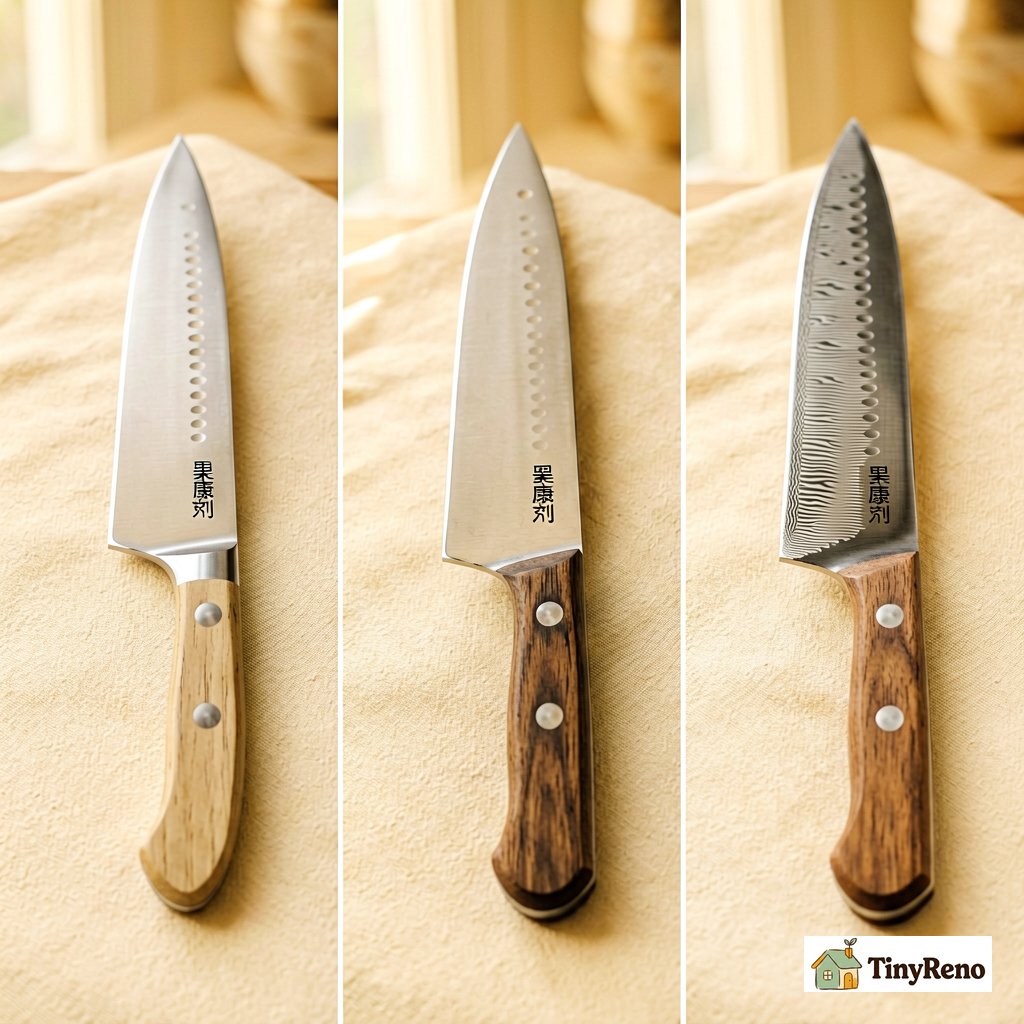
The honest answer is that you cannot tell a quality steak knife from a cheap one by looking at the box. The marketing copy is similar across all three tiers and the photos always show beautiful tables with golden roast beef. You have to look at the knife itself, and the things that matter are weight, balance, and the feel of the serrations.
Pick the knife up by the handle. A good french steak knife has a noticeable weight at the front of the blade — that is the full tang working. A cheap one feels light, almost hollow, because the blade is thin stamped steel and the handle is hollow too. The balance point should be about an inch in front of the bolster. If the balance point is in the middle of the handle, the knife will feel tip-heavy when you cut and you will compensate by gripping harder, which makes the cut less precise.
Run your thumb along the serrations. They should feel sharp and well-defined. A good ground serration catches your skin and slightly resists as you slide across. A stamped serration feels smooth in comparison, almost decorative. If you can run your thumb along the edge without feeling any texture, the serrations are too shallow to cut steak properly and the knife is going to disappoint you within a month.
Look at how the handle attaches to the blade. On a full-tang knife, you can see the steel running through the handle and out the back, usually with two or three rivets visible. On a partial-tang knife, the blade ends inside the handle and the handle is held on by glue and a single bolt. On a hollow-handle knife, the handle is two pieces of material glued together with the blade sandwiched between. If you cannot see any rivets, the knife is partial or hollow tang and it will not last.
What I Actually Use
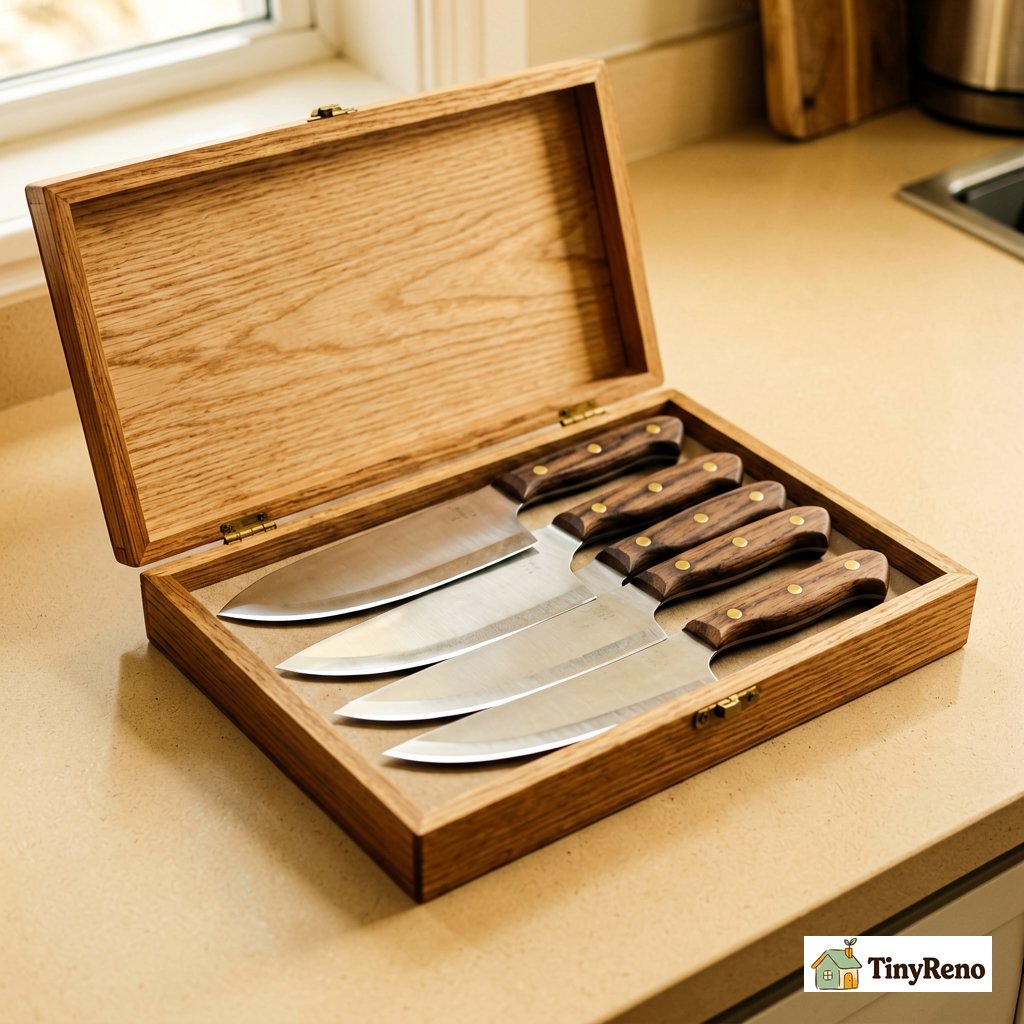
I have gone through about five sets in twelve years of renting. The first flea market set held up until I lost two knives in a move. The big box store set died in four months. Then I bought a Jean Dubost set from a kitchen store in SoHo for about $130 — six knives, real wood handles, full tang. That set is now nine years old and going strong. The serrations are still sharp, the handles have not loosened, and they look better than the day I bought them because the wood has darkened with age.
I wash them by hand, dry them immediately, and store them in the box they came in. The box is the part most people skip — a wood presentation box with felt lining is not just for show. It keeps the blades from rubbing against each other in a drawer, which would dull the serrations over time. If you buy a good set without a box, get a wooden drawer organizer or knife roll. Do not just throw them in a drawer with the rest of your utensils.
The one thing I wish I had known earlier is that I do not need six steak knives for two people. Most home cooks use steak knives twice a month at most — when they are actually cooking steak at home. The rest of the time the knives sit in the drawer. A four-knife mid-tier set is plenty for most renters, and you will use the same knives you buy today for a decade if you take care of them. The extra two knives in a six-set just go missing over time, in my experience.
When Cheap Beats Expensive
There is one situation where cheap french steak knives are the right call. If you are hosting a dinner party for eight or ten people and you do not have enough knives to set the table, a $25 set of six disposable-looking-but-actually-functional steak knives is a reasonable buy. They will not last more than a year, but they will get you through the party and the next few dinners, and you can replace them with a better set when you find one you like.
I keep one of these cheap sets in a closet for the rare large dinner. The knives are stamped and the handles are plastic but they cut steak well enough. They go in the dishwasher because they are not worth hand-washing. When one of them gets a wobbly handle or a chipped tip, I throw it out and replace the whole set. The math works out to about $25 a year for a service I use maybe three times a year.
The mistake is buying the cheap set as your primary steak knives and then wondering why your steaks come out shredded. If you cook steak at home more than once a month, spend the $100 on the mid-tier set of these knives. The difference in cut quality is the difference between a meal that feels like a treat and a meal that feels like a chore. I made this mistake and I will not make it again.
Taking Care of the Set You Buy
Whichever set you end up buying, the same three habits will keep them going. Hand wash only — never put them in the dishwasher, even on the gentle cycle. The high heat and the detergent exposure will loosen wood handles, dull serrations faster than cutting anything does, and corrode even stainless steel over time. A two-minute hand wash with dish soap and a soft sponge is all the maintenance they need.
Dry them immediately. The serrations trap water against the steel, and water sitting in the scallops will eventually cause rust spots. I keep a dedicated kitchen towel next to the sink for this. I wash all six knives, dry them all immediately, and put them back in the box. The whole routine takes about three minutes and the knives have not developed a single rust spot in nine years.
Do not store them loose in a drawer. The serrations on steak knives are sharp enough to cut fingers but not sharp enough to cut through a layer of wood or plastic — what they will do is dull themselves by rubbing against other utensils. The presentation box, a wooden drawer insert, or a magnetic strip on the wall all work. I have used all three at different rentals and the magnetic strip is actually the easiest — you can see all the knives at once and grab the one you need without rummaging.
These knives are one of those kitchen purchases where spending a little more upfront saves you from replacing the cheap set every year. The mid-tier $100 to $150 range is the sweet spot for renters. Hand wash, dry immediately, store properly. That is the entire maintenance plan, and it will keep the knives going for a decade or more.


Discussion (0)
Sign in to join the discussion