

If you have black gunk in sink drains or around the rim of your kitchen basin, that stain is usually not dirt. I learned this the long way in my first studio in Rego Park — a ring of the stuff around the drain that no amount of scrubbing would touch. I spent my first week alternating between bleach, baking soda, and one of those green scrubbers that came with the apartment. The gunk did not move. The scrubber did — it left grey fuzz embedded in the ring. My landlord came by for something unrelated and I pointed at the sink like it was a crime scene. He laughed and said, "Oh that, that's just the gasket rotting. Happens in every unit." He came back the next Tuesday with a $4 part and a flathead screwdriver and fixed it in eight minutes. I had spent $22 on cleaners and three weekends trying to dissolve what turned out to be a single rubber washer.
Most of the time, that black ring is not dirt and it is not mold in the way you think. And it almost never responds to the products stacked under the kitchen sink at the grocery store. Once you know what it is pointing to, the fix is usually cheaper and faster than the cleaning aisle makes it sound.
What That Black Gunk Actually Is
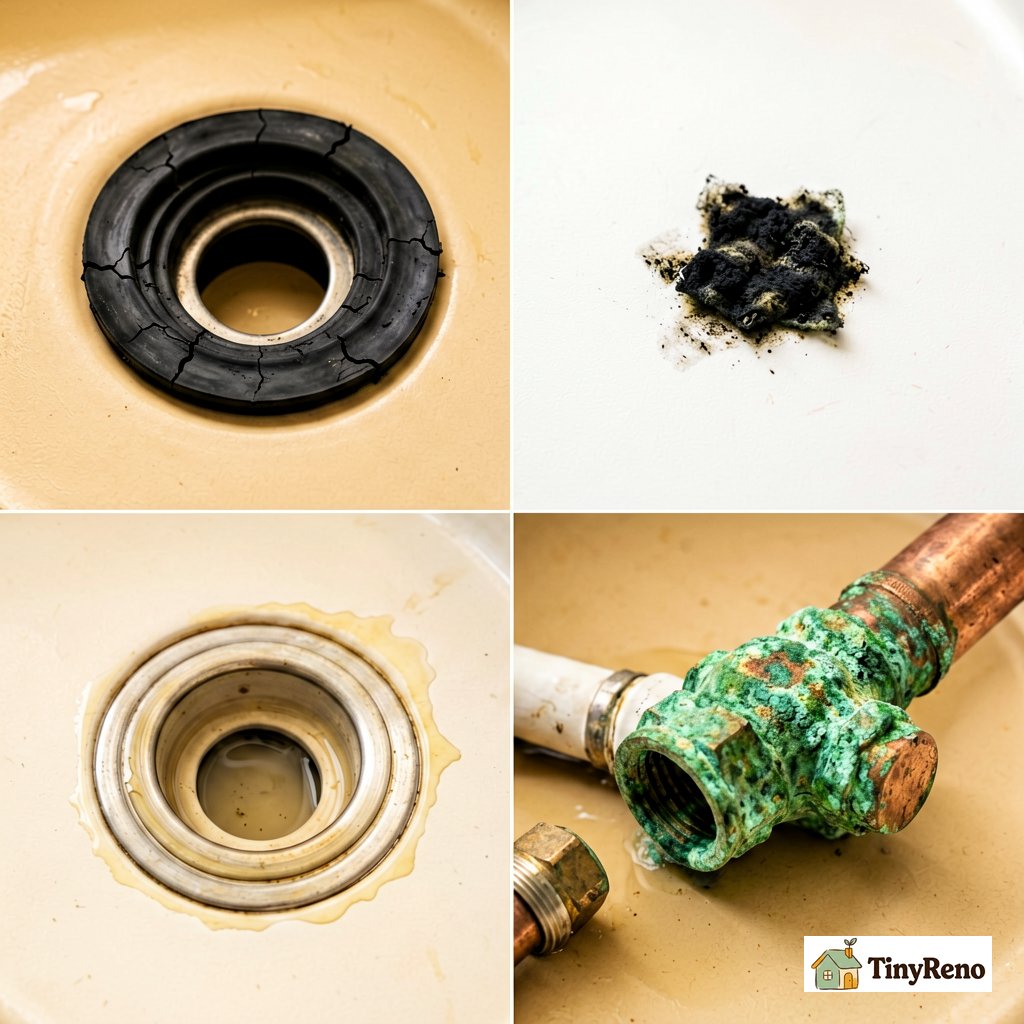
In my Rego Park apartment the black ring turned out to be decomposing rubber from the drain gasket — the small washer that seals the drain pipe to the sink basin. In a renter's sink the rubber is usually original to the building, which means it could be ten or twenty years old. As it ages the rubber gets brittle, cracks, and starts to shed black particles that mix with soap scum and water minerals into a paste that sticks to everything it touches. That paste is what you see as the ring.
The second most common cause is mold. Bathroom and kitchen sinks are warm and damp about sixteen hours a day in a typical rental. The overflow hole on a bathroom sink — that small hole near the top of the basin — is the perfect breeding ground for black mold because it almost never dries out. I helped a friend in Astoria open hers up last year and the inside looked like a science experiment. The overflow gasket had a film of black mold an eighth of an inch thick.
The third cause is a slow leak. If the residue is concentrated under the sink rather than inside it, and it feels wet or sticky, the gasket under the drain is failing and water is seeping out every time you run the tap. This is the version I had the most trouble with in my own place — for three months I cleaned the rim of the sink every Sunday and did not think to look under the cabinet. The leak left a black residue on the pipe that I assumed was just dust.
A fourth, less common cause is a buildup of minerals and organic matter in old pipes. In buildings with old copper or galvanized plumbing, hard water deposits and naturally occurring bacteria can form a dark slime that shows up where water sits longest. Copper itself usually turns green when it oxidizes, so a black residue is more likely from manganese or iron bacteria than from the copper itself. I have only seen this twice in my time helping friends diagnose sink problems — once in a pre-war in the Bronx, once in a new build in Long Island City where the contractor used cheap fittings.
How to Tell Which One You Have
Before you buy any cleaner, figure out which of these you are dealing with. The cleaning method that works on rubber decomposition will not work on mold, and vice versa. The easiest diagnostic is smell. The black gunk in sink from a rotted drain gasket has a sweet chemical smell, almost like an old tire. Mold has an earthy damp smell, like wet leaves or a basement after rain. A slow leak has no smell at all — you just notice the cabinet floor under the sink feels soft or has a dark stain.
The next diagnostic is location. Look at where the gunk sits. If it is a ring right around the drain opening on the inside of the sink, that is almost always the gasket. If it is up near the overflow hole on a bathroom sink, that is mold in the overflow channel. If it is on the pipe under the cabinet, that is a leak. If it is on the faucet base or the handles, that is hard water mineral deposits mixed with whatever soap you use — and that is a fifth category that looks similar but is not actually black gunk.
I keep a small flashlight in my kitchen junk drawer for exactly this. Shine it into the drain and look at the rubber gasket right where the drain meets the basin. If it looks cracked, crumbly, or is missing chunks, you have your culprit. The flashlight also helps under the cabinet — most renter cabinets are dark and you cannot see the slow leak stains without one.
If you've done the smell and location tests and you're still not sure, here's the simplest version: if the gunk is inside the sink near the drain, replace the gasket first — it's $5 and fifteen minutes, and even if the real cause was something else, you've eliminated the most likely one. If the gunk is outside the sink, under the cabinet, you have a leak and you need to find the failed washer. The copper-pipe explanation is the last one to consider, not the first.
Fixing the Gasket Problem
For a rotted drain gasket, the fix is replacing the part, not cleaning the sink. Take the photo of the drain assembly first — there are about four common sizes and you want to bring the old one to the hardware store so you get a match. Home Depot and Lowe's both stock replacement drain gaskets in the plumbing aisle, usually under $5. The gasket is sometimes called a "drain washer" or "sink drain gasket."

Replacing it is a fifteen minute job and requires only a flathead screwdriver and a pair of pliers. Unscrew the drain flange from above, lift out the old gasket, drop in the new one, and reassemble. There are good YouTube videos for your specific sink model if you get stuck. In my Rego Park apartment I watched my landlord do it in eight minutes. I have done it twice since on my own and both times it took about fifteen minutes, including the time I dropped a screw down the drain and had to fish it out with a bent wire hanger.
If you are renting, tell your landlord. In most cities a rotted gasket is a habitability issue and the landlord is required to fix it. Document everything in writing. In my last lease I had a clause that any plumbing repair under $25 I could do myself and deduct from rent with receipts. Most leases do not have this, but most landlords will still reimburse you for a $4 part if you show them the photo and ask nicely. The bigger favor you are doing yourself is catching it before the slow leak damages the cabinet floor.
Cleaning the Mold Version
If the black gunk in sink is actually mold in the overflow channel, the fix is different. Pour about half a cup of baking soda down the overflow hole, then slowly pour half a cup of white vinegar after it. The fizzing is mostly carbon dioxide — it doesn't kill mold, but the bubbling action helps loosen the film so the hot water flush can carry it away. For actual mold removal, the overnight vinegar-soaked rag method works better. The baking soda and vinegar is a maintenance step, not a cure. — as hot as your tap will go. Repeat once. This worked on my Astoria friend's sink and the overflow channel was visibly cleaner the next day.
For stubborn mold in the overflow, soak a rag in white vinegar, stuff it into the overflow hole with a screwdriver, and leave it overnight. In the morning pull the rag out and use a bottle brush to scrub the inside of the overflow channel. The mold should wipe away. If it does not, the overflow gasket itself may be moldy and need replacement — that is a $3 part and a fifteen minute job, same process as the drain gasket above.
Do not use bleach on the rubber parts of the drain — the gasket, the washers, the overflow seal — because it accelerates rubber decay and you'll be back with black gunk in sink in six months. Bleach on the ceramic or metal parts of the sink is fine: mix one tablespoon of bleach into one cup of water, apply with a soft cloth, let sit for five minutes, then wipe clean. The distinction is the material, not the location.
The Slow Leak Underneath
If the residue is under the cabinet on the pipe or the cabinet floor, the fix is the same as the gasket problem — find the failed seal, replace it, and clean up the residue. This is the third major cause of black gunk in sink: a slow leak. The common failure points are the P-trap washers, the connection between the sink tailpiece and the P-trap, and the gasket where the drain enters the sink from above. Each of these has a rubber or fiber washer that ages out every five to ten years.
For the cleanup itself, anything stronger than dish soap will damage the cabinet finish. Wipe up what you can with paper towels, then clean the pipe and cabinet floor with a mixture of dish soap and warm water. For any stain that remains, hit it with a magic eraser — yes, I know I said earlier not to use magic erasers on non stick pans. On a cabinet floor or a PVC pipe it is fine. The stain will not come out completely but it will lighten significantly and stop smelling.
The bigger concern is the cabinet floor itself. If the wood feels soft when you press it, the leak has been going on long enough to rot the substrate. That is a landlord issue, not a renter issue. Take photos, send them in writing, and ask for a cabinet replacement. In New York and California habitability law is on your side. In other states your local tenant union can tell you where you stand. The black gunk is a symptom — the rot underneath is the real problem and the one that costs money if left alone.
Stopping It From Coming Back
Once you fix the cause, a few habits keep the black gunk from returning. Run hot water down the drain for thirty seconds after each use — this keeps soap residue from settling. Once a week, pour a kettle of hot tap water — not boiling — down the drain. If your building has PVC drain pipes (most modern apartments do), boiling water can soften the plastic and loosen the joints over time. The goal is to melt soap and grease, and hot tap water is hot enough for that. This melts the soap and grease before it can build up into a paste. Once a month, do the baking soda and vinegar flush I described above. None of these are expensive and together they cost about ten minutebs a month.
The other habit is checking under the cabinet once a season. Shine a flashlight on the pipes and the cabinet floor. If you see new dark stains or feel any moisture, you are catching a leak early. The cost of fixing a slow leak in month one is a $4 gasket. The cost of fixing it in year three is a $400 cabinet replacement plus the argument with your landlord. I learned this the expensive way in my second rental and I check under every sink in every place I have lived since.
This is one of those renter mysteries that feels much worse than it is. Almost always it is one of four things — a rotted gasket, mold in the overflow, a slow leak, or hard water minerals. Each one has a known cause, a known fix, and a known prevention. The trick is figuring out which one you have before you start spending money on the wrong cleaner.


Discussion (0)
Sign in to join the discussion