

The corner of my kitchen counter, between the wall and the sink, was dead space. About 12 inches wide and 14 inches deep, completely unused because nothing fit there. I tried a small wooden cutting board that lasted a week before it slid off. I tried a stack of cookbooks that fell over every time I opened the cabinet above. I tried a freestanding two-tier shelf that took up so much of the 12 inches that it didn't leave room for anything else.
Then I tried a wire corner shelf — a small, two-tier wire rack designed specifically for corners. It mounted to the backsplash with two screws, sat flush against the wall, and gave me two usable surfaces in a footprint of about 9 by 9 inches. It's been there for four years. It holds sponges, dish soap, a small plant, and the kitchen shears I reach for most.
Most wire corner shelves end up in a closet because people buy them without thinking through what they're for. The corner is a specific kind of space with specific constraints. A shelf that works there needs to fit the geometry and serve the use. This guide walks through where wire corner shelves actually save space, where they're a waste of money, and how to pick one that stays mounted.
What a Wire Corner Shelf Actually Is
A wire corner shelf is a small shelf unit, usually two or three tiers, designed to fit into the corner where two walls meet. The shape is typically a 90-degree wedge — narrower at the corner, wider at the front. The construction is wire — usually steel with a chrome or white finish — so air circulates and water doesn't pool.
The mounting is the part most people underestimate. A wire corner shelf is either:
Wall-mounted — the shelf attaches to the wall or backsplash with screws or anchors. Two or three screws hold the shelf firmly in place. The shelf becomes part of the wall.
Freestanding — the shelf sits on the counter or floor with its own base. No mounting required. The shelf can be moved or removed without tools.
Wall-mounted is the right choice for most kitchen corners, bathroom vanities, and pantry corners. Freestanding works for closets, garage shelving, or anywhere you want flexibility.
Where Wire Corner Shelves Actually Save Space
The places where a corner shelf solves a problem you actually have:
1. The Dead Corner of a Kitchen Counter
Most kitchen counters have a corner where two runs of cabinet meet. The corner is usually too narrow for a freestanding shelf and too awkward to use as counter space. A wall-mounted shelf turns the corner into usable vertical storage for things you reach for daily — sponges, dish soap, a small plant, hand soap.
Why it works: the shelf fits the geometry of the corner. The wire construction lets water drain (important for sponges). The mounting keeps it out of the way.
What to look for: a two-tier shelf at least 9 inches deep at the widest point. Chrome or white finish to match most kitchens. Wall-mounted with included screws and anchors.
2. Inside a Shower or Above a Bathtub
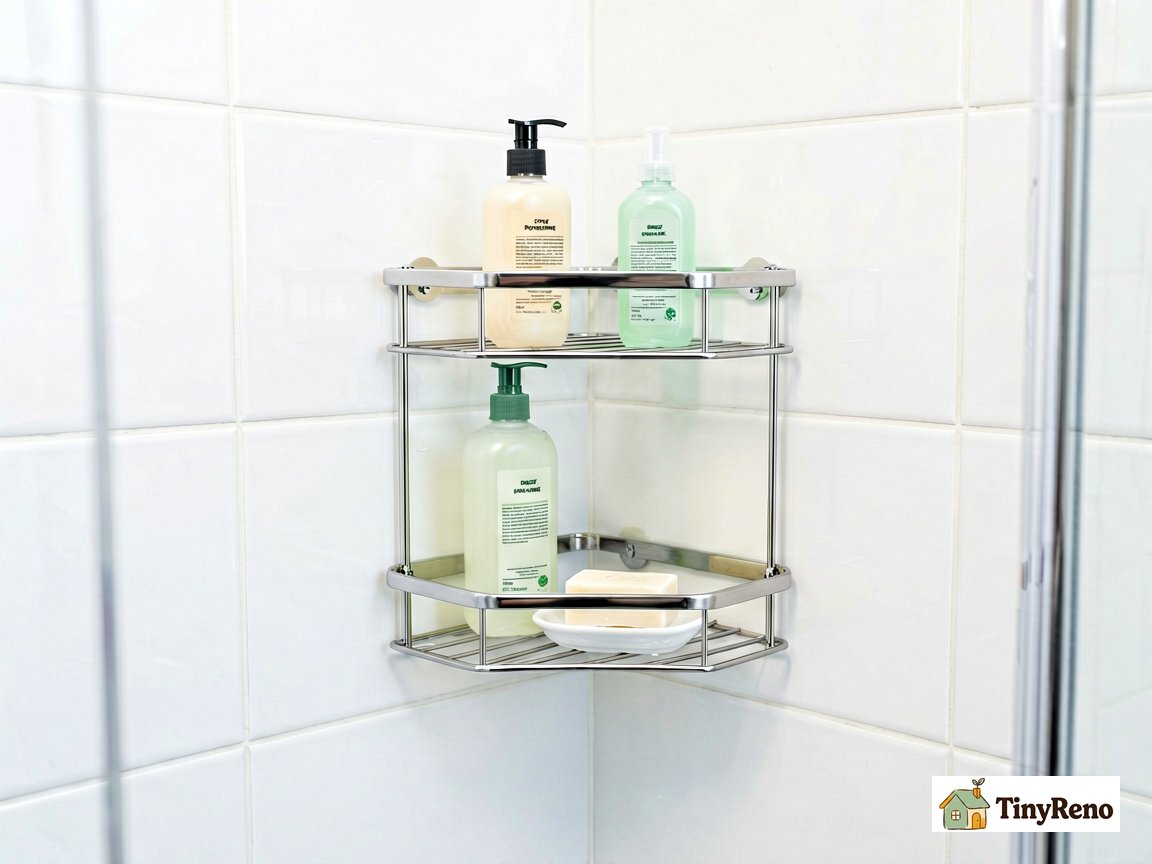
The corner of a shower or the wall above a bathtub is another dead space. A wire corner shelf mounted inside the shower holds shampoo, conditioner, body wash, and a razor. The wire construction lets water drain so nothing sits in pooled water.
Why it works: the shelf uses vertical space that would otherwise be tile. The wire keeps soap and bottles from sitting in water.
What to look for: a stainless steel or chrome shelf that won't rust. A tension-mounted version (no screws) works for renters who can't drill into tile. A wall-mounted version is more secure but requires drilling.
A warning that shows up in the reviews but rarely in the product description: even "chrome" or "stainless" wire shelves can rust in a shower, especially at the weld points. If you're mounting one inside a shower, look for actual stainless steel construction — not chrome-plated steel — and dry the shelf with a towel once a week. The rusty drip lines on white tile are almost impossible to remove.
3. Inside a Bathroom Vanity
The corner of a bathroom vanity, between the sink and the wall, is often awkward. A small wire shelf mounted to the backsplash or wall holds toothbrushes, toothpaste, and a small cup.
Why it works: the shelf uses the corner that would otherwise be empty counter space. The wire keeps the items visible and dry.
What to look for: a small shelf (6-8 inches at the widest). A finish that matches the bathroom hardware. Wall-mounted or adhesive-mounted (for renters who can't drill).
4. Inside a Pantry
The corners of a pantry are usually wasted because the shelf depth is determined by the door width, not the back corner. A small wire shelf mounted inside the pantry adds an extra tier of storage for spices, small cans, or packets.
Why it works: the shelf uses the corner that would otherwise be empty. The wire keeps items visible.
What to look for: a slim shelf (4-6 inches at the widest) that fits inside the pantry without blocking the door. Wall-mounted or shelf-mounted (using small clips that hook over the existing pantry shelf).
5. Inside a Closet
The corner of a closet, where two walls meet, often has a wasted vertical space above the rod or in the back. A wire shelf mounted in the closet adds storage for folded sweaters, shoes, or accessories.
Why it works: the shelf uses the corner that would otherwise be empty. The wire keeps items visible and lets air circulate (important for woolens).
What to look for: a wall-mounted shelf that doesn't interfere with the closet rod. A finish that doesn't show under closet lighting.
Where Wire Corner Shelves Don't Work
A few places where the shelf is more trouble than it's worth:
1. Heavy Items
Wire corner shelves are designed for light items — sponges, soap, small bottles, spices. They are not designed for heavy items — books, large cans, or anything that makes the shelf visibly bend. Most wall-mounted wire shelves are rated for 10 to 20 pounds per tier, but that rating assumes proper anchors in solid wall material. If your shelf doesn't have a weight rating, keep it under 10 pounds and check the wire for sagging every few months. The wire construction will bend under heavy weight.
2. Items That Need a Solid Surface
Anything that needs a flat, solid surface to stand on (a glass, a small vase, an egg) will wobble on a wire shelf. Wire shelves are best for items that are themselves rigid — bottles, jars, packets.
3. Corners That Aren't 90 Degrees
Most corners in a home are 90 degrees. Some are not — older homes sometimes have odd corners where the walls meet at 110 or 75 degrees. A wire shelf designed for 90 degrees won't fit an odd corner.
4. High-Traffic Areas
A wire shelf that sticks out from the corner will catch hips and elbows. For a kitchen counter, the widest point of the shelf should be no more than 12 inches from the corner — anything bigger starts to invade your work area. My current one is 9 inches and it's exactly right. In a narrower space, like a bathroom vanity, stay under 8 inches.
How to Mount a Wire Corner Shelf in About 10 Minutes
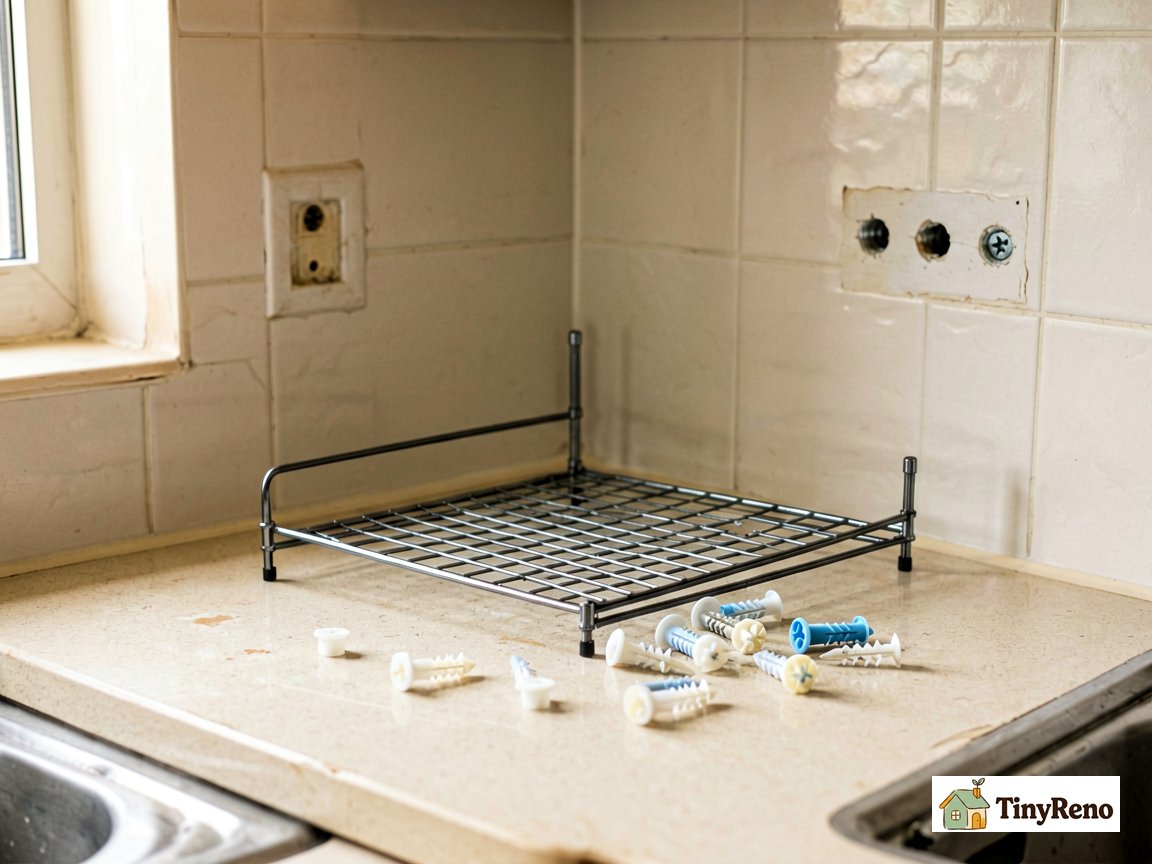
A wall-mounted model comes with two or three brackets, screws, and wall anchors (for drywall). The install:
- Hold the shelf in the corner where you want it.
- Mark the screw holes with a pencil.
- Drill pilot holes (most kits include the right drill bit).
- Push the wall anchors into the pilot holes.
- Screw the brackets in.
- Snap the shelf onto the brackets.
- Test by pressing down firmly.
For tile or masonry, use a carbide-tipped masonry bit and do not use the hammer setting on your drill — the impact will crack the tile. Drill slowly, with light pressure, and let the bit do the work. Once you're through the tile, you can switch to a regular drill bit for the drywall behind it. For renters who can't drill, tension-mounted versions work in showers and bathtubs — but install them carefully. A tension shelf that's not fully tightened will hold for a few days and then slide, taking everything on it to the floor. Push up firmly on the shelf after installation to test it. If it moves at all, tighten it further. And never put glass bottles on a tension shelf — one slip and you're cleaning up broken glass. Adhesive-mounted versions work in bathrooms but not in showers (the adhesive fails when wet).
The Common Mistakes
A few things that make wire corner shelves end up in a closet:
Buying too big. A shelf that's wider than the available corner takes up more space than it saves. Measure the corner before you buy. The shelf should fit the corner, not the other way around.
Buying too small. A shelf that's only 4-5 inches at the widest point doesn't hold enough to justify the install. Most useful corner shelves are at least 8-10 inches at the widest.
Mounting in the wrong place. A shelf mounted too high is hard to reach. A shelf mounted too low collects dust and gets kicked. The right height for a kitchen counter shelf is about 6-10 inches above the counter.
Mounting with the wrong hardware. Drywall anchors are for drywall. Wood screws are for studs. Masonry anchors are for brick or concrete. Using the wrong hardware means the shelf falls within a few months.
Mounting without checking for pipes and wires. A corner often has plumbing or electrical wiring inside the walls. Use a stud finder with electrical detection or tap the wall to listen for a hollow sound before drilling.
The Right Wire Shelf for the Right Place
A quick guide to picking the right shelf:
| Location | Type | Size | Finish |
|---|---|---|---|
| Kitchen counter | Wall-mounted | 9-12 inches | Chrome or white |
| Inside shower | Tension or wall-mounted | 8-10 inches | Stainless steel |
| Bathroom vanity | Wall or adhesive | 6-8 inches | Chrome |
| Pantry | Wall or shelf-mounted | 4-6 inches | Chrome or white |
| Closet | Wall-mounted | 8-10 inches | White |
What About Freestanding Corner Shelves?
Freestanding corner shelves (the ones that sit on the counter without mounting) are a different category. They're better for renters who can't drill, and for situations where you want flexibility. The downsides:
- They take up more footprint than wall-mounted shelves
- They can slide or tip if bumped
- They look less clean because the base is visible
For most kitchen and bathroom uses, wall-mounted is the better choice. The install is 10 minutes and the result is permanent, sturdy, and out of the way.
The Two Things That Matter Most
When picking a wire shelf, two things matter more than any other:
- The width at the widest point. This determines how much you can store. Too narrow (under 6 inches) and you can only fit a single bottle. Too wide (over 14 inches) and the shelf protrudes into the working space.
- The mounting hardware. A shelf that falls off the wall in three months is a shelf in a closet. Get a shelf with proper anchors for your wall type.
Get those right and the shelf will stay up for years. Get them wrong and you'll be shopping again next month.
How Long a Good Wire Shelf Lasts
The shelf I have in my kitchen is four years old and shows no signs of giving up. The chrome finish has held up. The brackets are still firmly in the drywall. The wire hasn't bent.
The shelves I've bought that failed — two of them, both from the same discount store — failed because of the mounting. The included anchors were plastic drywall anchors rated for under 10 pounds. The shelves held about 8 pounds of dish soap, sponges, and a small plant. They lasted about eight months before the anchors pulled out of the drywall and the shelves fell.
The difference between a four-year shelf and an eight-month shelf is almost always the anchors. Spend an extra $5 on better anchors. It's worth it.
Wire corner shelves are a specific solution to a specific problem. The problem is a corner that's dead space. The solution is a shelf that fits the geometry and serves the use. For most kitchen, bathroom, and pantry corners, the right wire shelf stays up for years. The wrong one ends up in a closet within a year. The difference is mostly in the anchors and the size.
That shelf in my kitchen corner — the one that's held the same four things for four years — was a cheap one from a big-box store. What made it last wasn't the shelf itself. It was the anchors I swapped in when the included ones felt flimsy. A $5 pack of better anchors turned a shelf that would have failed in a year into one that's still there today. That's the whole lesson, really: the shelf is just wire. The anchors are what keep it on the wall.


Discussion (0)
Sign in to join the discussion