

I bought a 10-piece stainless steel cookware set the year I moved into my first apartment that I planned to stay in for "at least five years." It came with a small starter set of nylon utensils — and the next year I was hunting for the best utensils for stainless steel cookware because the starter set had melted, cracked, and warped. The nylon set cost about $15. Within a year, three of the four pieces had melted on the edge of a hot pan, the spatula had cracked in half across the handle, and the ladle's bowl had warped into an oval.
The replacement set was bamboo. Same outcome in about 18 months — the bamboo cracked at the joints, the lacquered finish chipped off in flakes that ended up in the food, and one of the spoons split lengthwise because bamboo doesn't handle the dishwasher.
The third set — wood salt and pepper grinders set's cousin, plain wooden spoons from a kitchen store — has lasted five years. The fourth, a single stainless steel spatula, has lasted six and is showing no signs of stopping.
Here's what I learned. I went through three sets of "best utensils for stainless steel cookware" recommendations before I understood that most of the lists are written by people who have not actually cooked on stainless steel daily. Stainless steel is hot, unforgiving, and will damage or be damaged by the wrong utensil. This guide walks through what to buy, what to skip, and the one utensil that matters more than the others.
What Makes Stainless Steel Different From Non-Stick
Stainless steel cookware is fundamentally different from non-stick in three ways that affect utensil choice:
Heat retention. Stainless steel gets hot and stays hot. A dry stainless steel pan on a gas burner at medium-high heat can reach 400°F or higher. With food in the pan, the surface temperature is usually lower, but the edges and handle of a metal utensil can still get hot enough to soften cheap plastic. The wrong utensil will soften, melt, or burn at that temperature. Nylon melts at about 400°F. Bamboo drys out and cracks at high heat. Silicone softens above 500°F depending on the grade.
Metal-on-metal scraping. Stainless steel is metal. You can use metal utensils on it without damaging the pan. This is a big advantage over non-stick, where any metal utensil scratches the coating. It also means the utensil needs to be durable enough to handle the abrasion.
Food sticking. Stainless steel, when properly preheated, doesn't stick. But the moment the pan is too cool, or the food is wet, or the oil isn't enough, food will weld itself to the surface. The right utensil lets you scrape the fond — the brown stuck bits — without scratching the pan.
A note on the "stainless steel on stainless steel" pairing: a metal spatula will leave fine scratches on the cooking surface over time. These are cosmetic and don't affect the pan's performance, but if you're the kind of person who wants their pans to stay mirror-smooth forever, a wood or silicone utensil is the gentler choice. I use metal because the scratches don't bother me and the scraping ability is worth it.
The Materials That Work (and Which to Skip)
A quick comparison of the four most common utensil materials and how they perform on stainless steel:
Wood (beech, maple, olive). Heat-resistant up to about 400°F. Safe on stainless steel. Doesn't scratch. Will eventually crack or split with heavy use, but a good set lasts years. The main downside: can't go in the dishwasher. Hand wash only.
Silicone (high-quality, food-grade). Heat-resistant up to 500-600°F for premium silicone. Safe on stainless steel. Dishwasher-safe. Soft enough that it won't scratch. The main downside: cheap silicone softens and warps at lower temperatures. Buy from a known brand — if the silicone is so cheap that a 4-pack costs $10, it's not the right stuff.
Stainless steel. The only utensil material harder than the pan. Won't melt, won't warp, won't crack. The main downside: it scratches other cookware if you use it on non-stick or enameled cast iron. On stainless steel, it's fine.
Nylon and plastic. Nylon melts at about 400°F, which is below the normal cooking temperature for a stainless steel pan on medium-high heat. The "heat-resistant to 400°F" rating on most nylon utensils is the temperature at which they start to soften, not the temperature they're safe at. Skip these entirely for stainless steel cooking.
Bamboo. Bamboo can be a good budget option if it's a solid piece rather than laminated strips. The problem is that most cheap bamboo utensils are laminated, and the glue joints fail over time. A good solid bamboo spoon can last years, but a cheap laminated one will split at the seams, which is what happened to mine.
The Five Essential Utensils
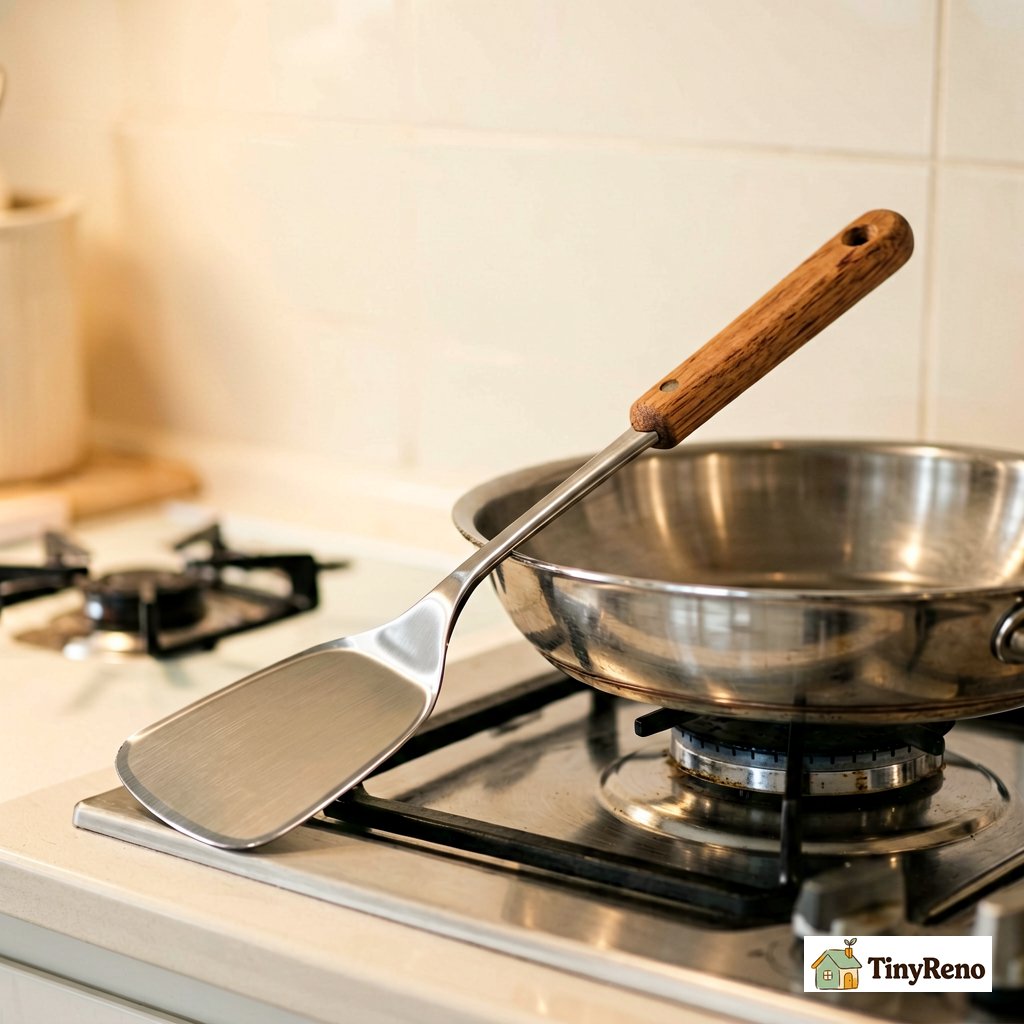
For a renter cooking on stainless steel daily, you need five utensils. Here's what each one should be, and why:
1. The Spatula
This is the one that matters most. A stainless steel spatula with a thin, slightly flexible edge is the most versatile tool for stainless steel cooking. It scrapes the fond cleanly. It flips pancakes, burgers, eggs. It folds vegetables. It will outlast every other utensil in your kitchen.
What to buy: a single-piece stainless steel spatula with a wooden or silicone handle. The head should be thin enough that you can slide it under food, but rigid enough to press down for a good sear. A "fish spatula" — long, thin, with slots — works for almost everything.
What to skip: silicone spatulas for high-heat searing. They work but they don't get under food as well as metal.
2. The Slotted Spoon
For lifting food out of liquid. Boiled potatoes, blanched vegetables, poached eggs, fried foods. The slots let liquid drain while keeping the food on the spoon.
What to buy: stainless steel with a wooden handle, or high-grade silicone. Both work. Stainless steel is more durable; silicone is gentler on non-stick if you also cook on non-stick.
What to skip: wood slotted spoons with thin bowls. The bowl tends to split from the handle after a year of regular use.
3. The Solid Spoon
For stirring sauces, soups, risottos, and custards. The bowl should be deep enough to hold a meaningful amount of liquid.
What to buy: a one-piece wooden spoon, or stainless steel. Both work. Wood is gentler on the pan and quieter; stainless steel is more durable and dishwasher-safe.
What to skip: bamboo spoons, especially the cheap lacquered ones. The lacquer flakes.
4. The Ladle
For soups, stews, and stocks. You use this less often than the other utensils, so durability matters less, but balance matters more. A ladle that's front-heavy is annoying to use.
What to buy: stainless steel with a balanced handle. Or silicone if you prefer the feel.
What to skip: cheap plastic ladles. They warp.
5. The Tongs
For turning meat, tossing salads, and plating. Tongs are the most-used utensil in most home kitchens, often more than the spatula.
What to buy: stainless steel with silicone tips. The silicone protects non-stick surfaces if you also cook on non-stick, and the metal handles don't get hot.
What to skip: all-plastic tongs. The hinge wears out within a year.
A Practical Starter Set
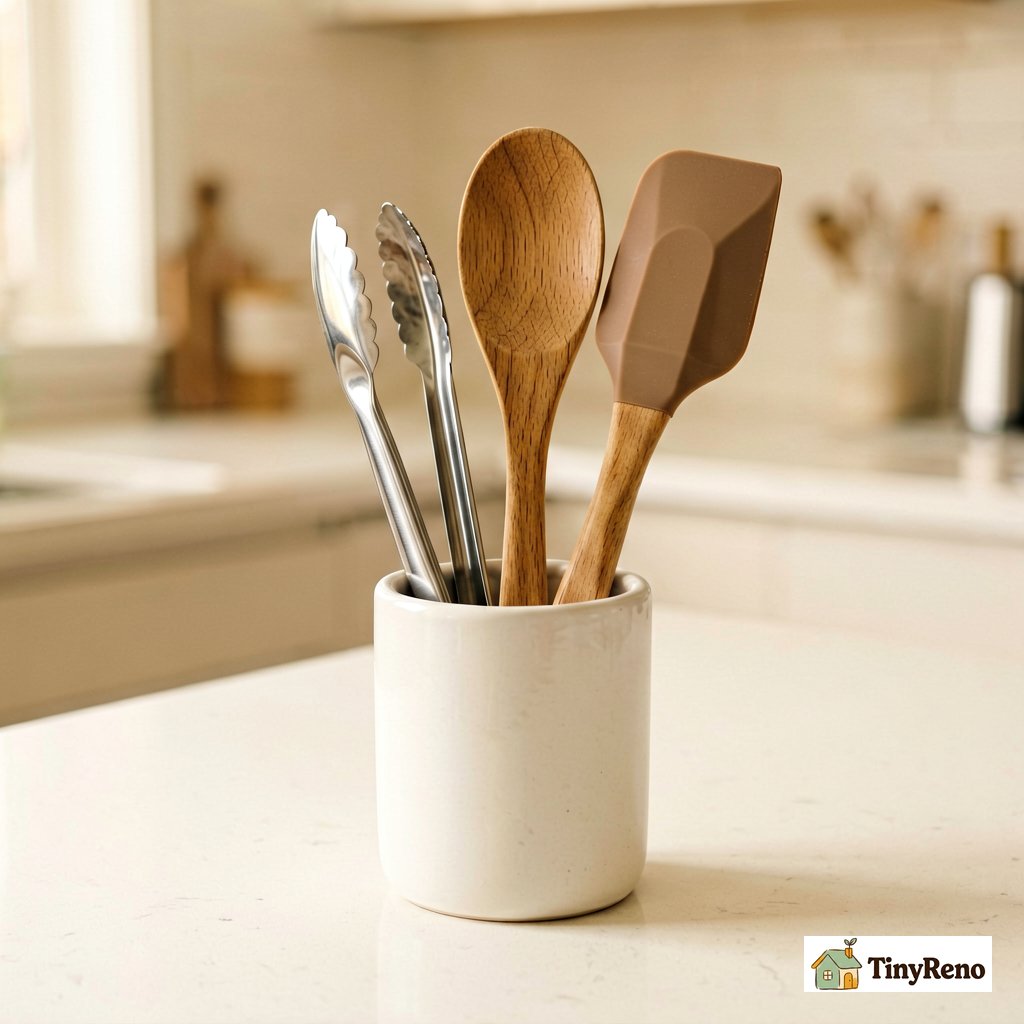
If you're starting from scratch, here's what I'd buy today, based on what I actually paid for each piece over the years. Prices at a big-box kitchen store or Amazon:
- One stainless steel fish spatula (~$15)
- One stainless steel slotted spoon (~$10)
- One wooden solid spoon (~$8)
- One stainless steel ladle (~$12)
- One pair of stainless steel tongs with silicone tips (~$15)
This set will outlast the cheapest $15 nylon set by years. The total cost is higher upfront but the per-year cost is lower because you don't replace the pieces every 18 months.
What About Silicone Sets?
A good silicone set is fine for stainless steel cooking. The advantages: dishwasher-safe, gentle on all cookware including non-stick, no scratching, no splintering. The disadvantages: cheap silicone melts; high-quality silicone is more expensive than wood or metal.
A few brands make food-grade silicone that handles high heat well. Look for: - "Food-grade silicone" or "LFGB certified" on the label - A solid feel (not floppy or thin) - A reputable brand with warranty
A high-quality silicone set in the $30-$50 range will last 5-10 years. A cheap silicone set in the $10-$15 range will fail in 1-2 years, same as nylon.
One thing silicone does poorly: scraping off a hard fond. A metal spatula has a thin, rigid edge that gets under the brown bits and lifts them cleanly. A silicone spatula flexes too much to do this effectively. If you cook a lot of pan sauces or seared proteins, you'll want at least one metal spatula even if the rest of your set is silicone.
The Care Mistakes That Kill Good Utensils
A few habits that shorten the life of any utensil:
Leaving wood in water. Wood absorbs water, swells, dries, and cracks. Wash wooden utensils under running water, dry immediately, store dry. Never soak.
Running wooden utensils through the dishwasher. but it does accelerate cracking and drying. The combination of hot water, steam, and harsh detergent breaks down the wood fibers and the finish faster than hand washing ever will. If you want a wooden utensil to last five years, wash it by hand. Even "dishwasher-safe" wood utensils degrade faster than hand-washed ones.
Using silicone above its rated temperature. A silicone spatula rated to 400°F will soften and warp if you leave it in a pan at 450°F. Don't leave utensils in hot pans. Pull them out when you're not actively using them.
Stacking metal utensils in a drawer. They scratch each other and dull the edges. A utensil holder on the counter, or a drawer organizer, keeps them from grinding together.
What I Use Daily After Three Failed Sets
My current set, six years in:
- One stainless steel fish spatula (still the original) - One wooden spoon with a slight darkening where my hand grips it - One stainless steel ladle - One pair of stainless steel tongs with silicone tips (replaced the silicone tips once after about four years — $8 replacement) - A second stainless steel slotted spoon I bought two years ago
The whole set has cost me about $80 over six years. That's about $13 per year. The previous nylon and bamboo sets cost about $15 each and lasted 1-2 years each — $8-$15 per year. The stainless steel and wood set is comparable in cost and significantly less frustrating to use.
Most lists overcomplicate this. The right set is simple: stainless steel where you need metal (spatula, ladle, slotted spoon), wood or silicone where you want gentler contact (solid spoon, anything that touches non-stick), and stainless steel tongs because you'll use them more than anything else.
The wrong set is whatever melts, cracks, or scratches within a year. That's the whole guide.


Discussion (0)
Sign in to join the discussion