

I bought a set of olive wood cooking utensils on a trip to Italy that I cannot rationally justify. The set came with a small slotted spoon, a larger serving spoon, a spatula, and a tiny fork. Total cost: about $50. Total years I've used them: six. Total times they've been in a dishwasher: zero, because they shouldn't be. Total visible wear: some darkening where my hand grips them most, and a few light scratches on the spatulas.
What I actually use my olive wood set for, after six years: the slotted spoon for fishing pasta out of boiling water, the serving spoon for anything that goes from pot to bowl, the spatula for eggs and sautéing, the tiny fork for spearing pickles straight out of the jar. None of it has gone near a dishwasher. None of it has soaked overnight. The darker grip lines on the handles are from my right hand. If the set broke tomorrow, I'd buy another one from the same street in Italy, because it turned out to be one of the only kitchen purchases I've never regretted.
A friend who saw them bought a similar set of olive wood cooking utensils on Amazon for $25. Within a year, two of the pieces had cracked at the handle and the third had warped. She threw them out.
Olive wood's reputation as the "luxury" cooking utensil material is real, but not for the reasons most people think. The wood itself isn't rarer or harder than beech or maple. What's different is the way it's harvested and finished. Most kitchen tools sold as olive wood cooking utensils are made from branches cut during the regular pruning of olive trees — a byproduct of olive farming, not old-growth timber. The pieces are small, the grain is dense and irregular, and Olive wood contains natural polyphenols that can slow bacterial growth on its surface. This doesn't mean you can skip washing it — you can't. But it does mean that a properly maintained wooden utensil isn't the bacteria trap that some people assume it is. This is true of many dense hardwoods, not just olive.
This guide walks through what olive wood cooking utensils actually are, what they're good for, and the two things that will ruin them in a year. If you're trying to decide whether to spend $25 or $80 on a set, this should give you what you need to make the call.
What Olive Wood Actually Is
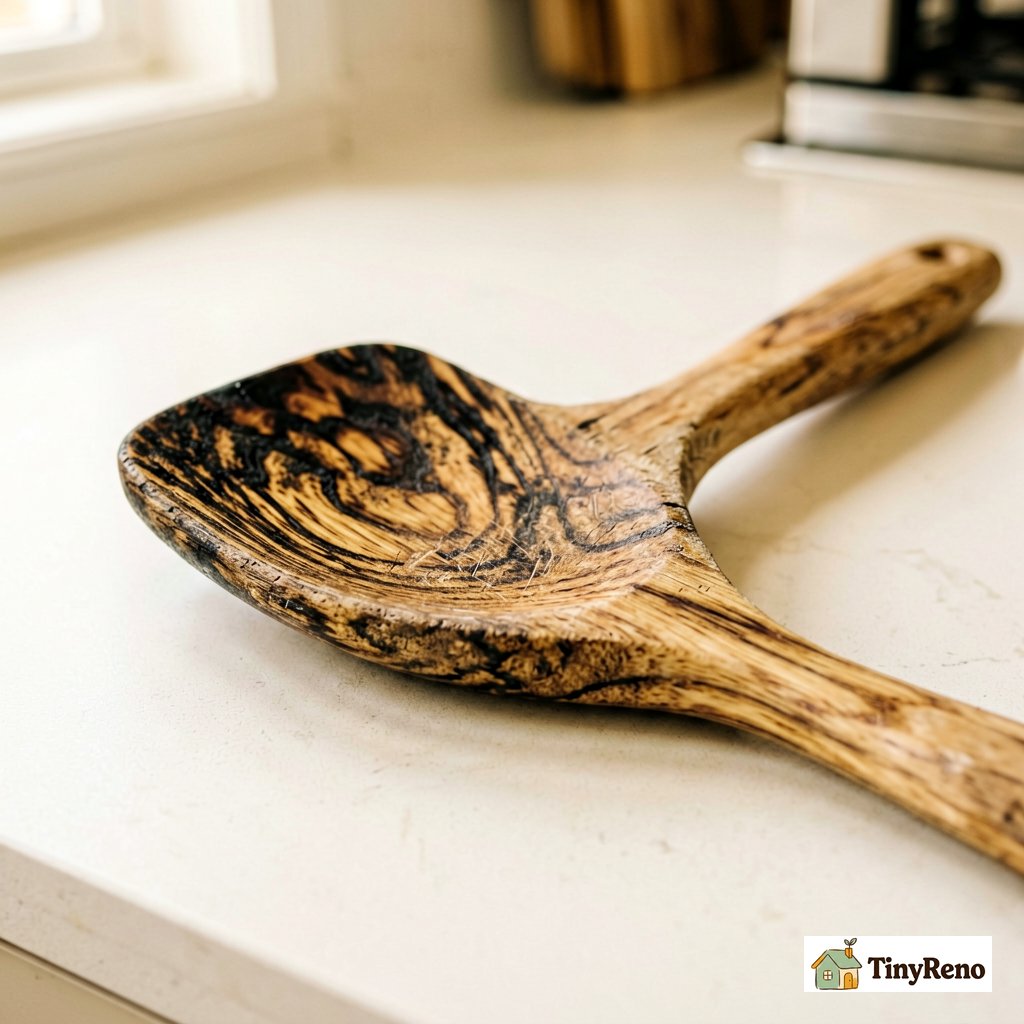
Most "olive wood" kitchen tools on the market come from one of two sources:
1. Byproduct of olive oil production. Trees in commercial olive groves are pruned regularly to keep them productive. The cut branches are usually 5-15 cm in diameter — too small for lumber but perfect for kitchen utensils. This is the bulk of what you're buying when you get a $25-$50 olive wood utensil set. 2. Recycled olive trees. Old olive orchards that are no longer productive are sometimes cut down and the wood is sold to craftsmen. These pieces are larger, the grain is more dramatic, and the price is higher — usually $80-$200 per utensil.
The dense, irregular grain you see in olive wood utensils is from the slow growth of the trees and the small diameter of the branches. The wood is hard (about 2,000 on the Janka scale, comparable to maple) but not unusually hard. What makes it distinctive is the figure — the dark and light streaks that come from the irregular growth pattern.
The antibacterial properties are real but modest. Olive wood contains polyphenols that inhibit bacterial growth on the surface. This doesn't replace washing, but it does mean olive wood is somewhat less hospitable to bacteria than plastic or other woods.
The Things Olive Wood Utensils Are Good For
Olive wood is suitable for almost any cooking task, with the standard caveats about wood and heat:
Stirring and serving. Olive wood spoons and spatulas work for stirring sauces, soups, and stews. The wood doesn't conduct heat well, so the handle stays cool. This is the main advantage of any wood utensil over metal or silicone.
Non-stick cookware. Olive wood is hard enough that it won't scratch non-stick coatings the way metal will. It's softer than the coating, so the coating wins in any contact. This is the main advantage over bamboo, which can be harder than non-stick coatings in some pieces.
Cold and room-temperature food. Olive wood is fine for salad tongs, cheese knives, butter spreaders, and similar tools. The wood doesn't impart flavor at these temperatures.
Long-term durability. A well-cared-for olive wood utensil will outlast a decade of regular use. The wood doesn't splinter easily when properly finished, and the surface develops a patina that protects it over time.
The Things Olive Wood Utensils Are Bad For
A few uses will damage olive wood quickly:
Prolonged contact with water. Olive wood absorbs water, which causes it to swell, then dry, then crack. Never soak an olive wood utensil. Never put it in the dishwasher. Never leave it in a sink of dishwater. Wash it by hand under running water, dry it immediately.
High heat. Olive wood can handle brief contact with hot pans. It cannot handle being left on a hot burner or in a hot oven. The heat dries the wood rapidly and causes cracking.
Heavy stirring in thick batters. The leverage on long-handled olive wood spoons can crack the handle if you're stirring something very thick or very heavy. For these tasks, a heavier wooden spoon or a metal spoon is more durable.
The dishwasher. This is worth repeating. Olive wood should never go in the dishwasher. The high heat, the prolonged water exposure, and the detergent all damage the wood.
How Olive Wood Compares to Other Utensil Materials
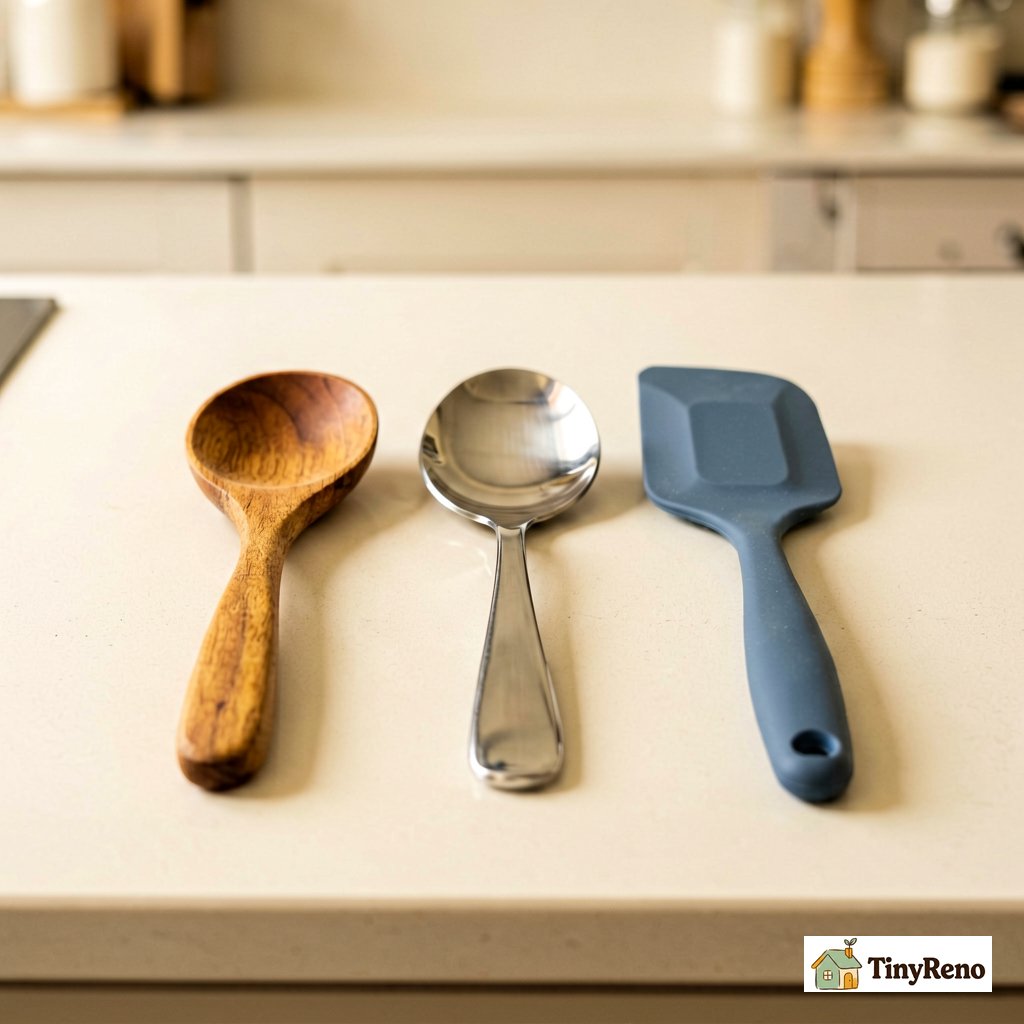
A quick comparison of the four most common kitchen utensil materials:
| Material | Pros | Cons | Best For |
|---|---|---|---|
| Olive wood | Beautiful, antibacterial, non-stick safe, ages well | Expensive, can't soak, hand wash only | Sautéing, serving, non-stick pans |
| Bamboo | Cheap, lightweight, sustainable | Less durable, can splinter, less dense | Budget cooking, occasional use |
| Maple | Hard, durable, takes finish well | Less distinctive grain, harder to find | Daily stirring, all-purpose |
| Silicone | Dishwasher safe, heat resistant, cheap | Can melt at high heat, doesn't age well, plastic feel | High-heat cooking, baking |
| Stainless steel | Dishwasher-safe, durable, cheap | Scratches non-stick, conducts heat | Boiling, heavy stirring |
For a renter kitchen that needs a small set of durable, attractive utensils that work for most tasks, olive wood is the right choice if you can afford it and are willing to hand-wash. Bamboo is the budget alternative that works for most of the same tasks. Stainless steel is the right choice for heavy boiling and dishwasher cleanup. Silicone is the right choice for high-heat baking.
What to Look For When Buying
The quality of olive wood utensils varies. Here's what to look for:
Solid one-piece construction. The handle and the functional end (spoon bowl, spatula head) should be the same piece of wood. Some cheaper utensils glue the head to the handle. These will eventually separate.
Smooth, food-safe finish. The wood should feel smooth, with no rough patches or splinters. The finish is usually a food-safe oil (mineral oil, walnut oil, or a proprietary blend). Avoid utensils with a thick lacquer finish — lacquer can chip off into food over time.
Visible grain pattern. The irregular dark and light streaks are what make olive wood distinctive. If a piece looks uniformly tan or uniformly brown, it's probably a different wood (often beech) stained to look like olive wood. This isn't necessarily bad — beech is also a good utensil wood — but it should be priced accordingly.
Reasonable weight. Olive wood is dense and should have some heft to it. A very light utensil is either a different wood or a poorly selected piece of olive wood.
Honest sourcing. Most reputable sellers will tell you where the olive wood came from (Tunisia, Italy, Spain are the main sources). A vague "Mediterranean" or no sourcing information is a yellow flag.
Care and Maintenance
Olive wood lasts decades with basic care:
- Hand wash only. Run under warm water, use a small amount of dish soap, rinse, dry immediately with a towel. Don't let it sit in water.
- Oil occasionally. Once a month, rub a small amount of food-grade mineral oil or beeswax into the wood with a soft cloth. Let it sit for 10 minutes, then buff off the excess. This prevents the wood from drying out and protects the finish.
- Store dry. Don't leave it in a damp drawer or near a steaming pot. A dry countertop or a drawer organizer works.
- Sand if scratched. If the surface gets rough or develops splinters, a light sanding with 220-grit sandpaper and a re-oiling will restore it. Most olive wood utensils come with a small care instruction card that includes sanding instructions.
A well-maintained olive wood utensil will develop a darker, richer color over the years. This is not damage — it's the patina, and it's the sign of a well-loved tool.
The Real Cost Comparison
Olive wood is more expensive upfront than other materials. Here's how the cost breaks down over a decade:
I can't give you a precise cost-per-year breakdown because I don't know how often you cook, how well you remember to hand-wash things, or how humid your kitchen is. What I can tell you is this: my $50 Italy set has lasted six years and shows no sign of failing. My friend's $25 Amazon set lasted eleven months and went in the trash. The difference wasn't the price. It was the dishwasher. If you're the kind of person who remembers to hand-wash, olive wood will cost you less than anything else. If you're not, it'll cost you more.
Olive wood is the cheapest option over a decade, by a small margin, if you actually take care of it. If you don't take care of it, the $25 set lasts a year and the cost becomes $25 per year — much worse than the alternatives.
The Two Things That Will Ruin Olive Wood
In summary, the two failure modes:
- The dishwasher. Even one cycle will dry the wood enough to cause cracking. Don't do it.
- Prolonged water exposure. A sink of dishwater, a forgotten spatula in a pot of soaking beans, an overnight soak — any of these will ruin olive wood. Wash it, dry it, put it away.
Everything else is recoverable. A scratch, a stain, a slightly rough patch — all fixable with sanding and oil. Water damage is permanent.
What Olive Wood Is Actually Worth
If you're willing to hand-wash your utensils, olive wood is a good investment. The antibacterial properties are real but modest. The aesthetic is unmatched by other cooking woods. The cost is comparable to mid-range stainless steel over a decade. The main downside is the hand-wash requirement.
If you rely on the dishwasher or you tend to leave utensils in the sink, buy bamboo or stainless steel. Olive wood will fail within a year and you'll resent the cost. The wood isn't magic — it just rewards care.
My Italy set is still going strong. My friend's $25 Amazon set failed because she put it in the dishwasher once, didn't notice the cracking, and used it for another six months before the pieces started to fall apart. Same wood. Different outcomes. The wood rewards care and punishes neglect. That's the only real rule.


Discussion (0)
Sign in to join the discussion