

The pepper mill I bought in 2018 is on its third kitchen, and it's the best of the wood salt and pepper grinders I've owned. It has survived two cross-country moves, four roommates, a year in a household where someone ground pepper at 11 PM most nights, and a brief but traumatic episode where it was used as a weapon in a friendly argument about pasta. The mechanism still works. The wood is scarred but solid. It cost $32 and it will probably outlast the next apartment I move into.
The grinder I bought before that — a cheap acrylic model from a kitchen store — lasted about eight months before the metal grinding mechanism started slipping and the peppercorns came out whole. Total cost: $12. Total disappointment: high.
If you're looking at wood salt and pepper grinders and trying to figure out which ones last, here are the five things that determine whether a grinder survives a decade or fails in a year — and most of them are not obvious from the product page. This guide walks through what to look for, what to skip, and the one question to ask yourself before you buy.
What Makes a Wood Grinder Different (and Worth Considering)
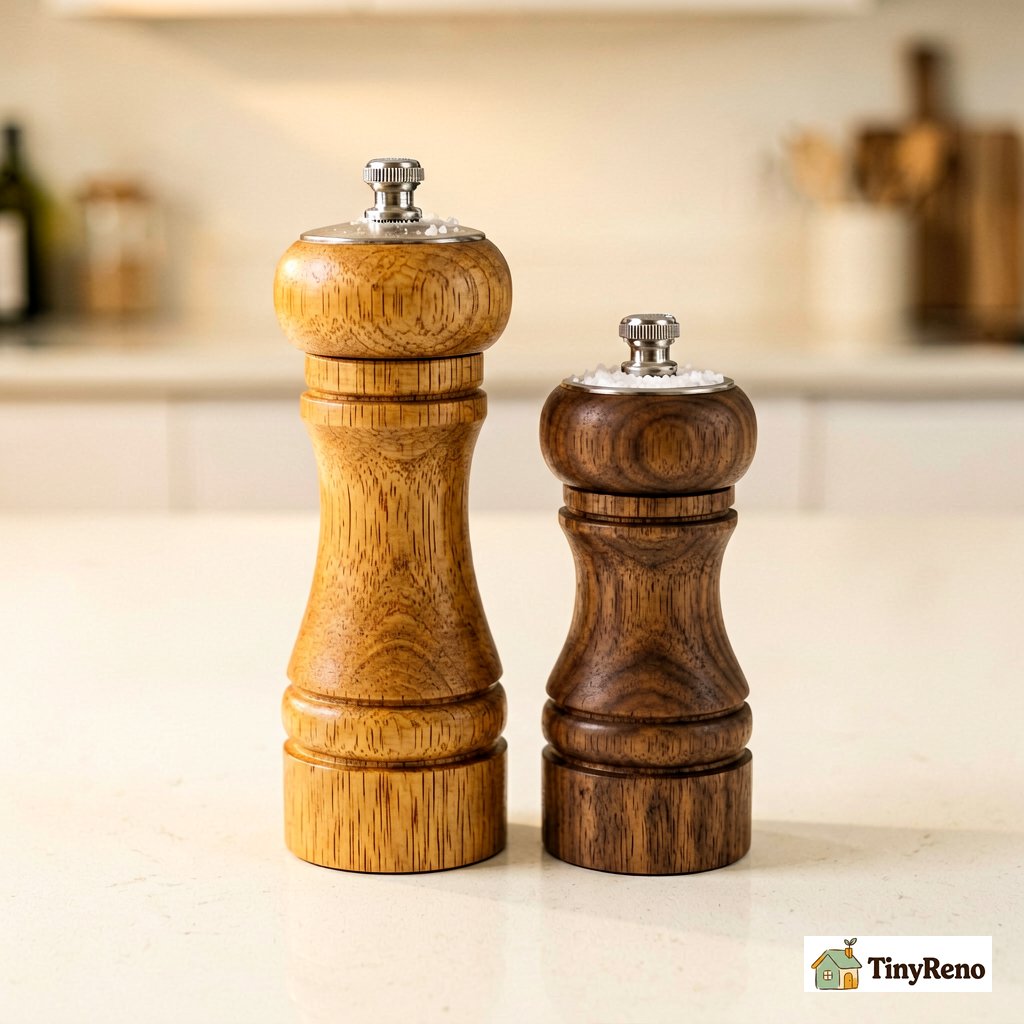
Salt and pepper grinders come in three broad categories:
- Acrylic or plastic grinders — the cheap ones. Usually $8-$15. The grinding mechanism is metal, but the body is plastic, the threads strip easily, and the adjustment mechanism is fragile. - Stainless steel grinders — the modern ones. Sleek, dishwasher-safe, often with a one-handed operation. Most run $25-$60. - Wood grinders — the traditional ones. Wood body, often with a metal grinding mechanism inside. Most run $20-$45 for a good one.
Wood grinders aren't objectively better than stainless steel. They're a different aesthetic and a different feel. They also have a few specific advantages that the other materials don't:
Weight matters more than you'd think. A wood grinder feels heavier in the hand after a year or two — not because the wood has physically gained weight, but because you've learned how much pressure the grinder actually needs. Once you stop gripping it too hard, the weight of the body does more of the work. That's a feel thing, not a material thing. Stainless steel grinders are usually heavier than plastic but lighter than seasoned wood.
The wood protects the mechanism. A wood body doesn't transmit vibration the way a hard acrylic or stainless body does. The grinding mechanism lasts longer because the body absorbs some of the shock. This is why my 2018 grinder is still working.
The aesthetic is forgiving. Wood shows wear as character. Stainless steel shows wear as scratches. Acrylic shows wear as cracks. If you live in a rental and don't want your kitchen to look brand-new forever, wood ages well.
None of this matters if the grinding mechanism itself is bad. A wood body with a cheap mechanism is just a heavy disappointment.
The Five Things That Actually Matter
When you're looking at wood salt and pepper grinders, here are the five things that determine whether it lasts or fails:
### 1. The Grinding Mechanism: Ceramic vs Metal
There are two types of grinding mechanisms, and they're not equal:
Ceramic mechanisms are good for salt. They're hard, they don't corrode, and they grind salt cleanly. They're slightly less effective at pepper because peppercorns are softer and the ceramic can crush them rather than cutting cleanly.
Metal mechanisms (usually carbon steel or stainless) are good for pepper. They cut pepper cleanly. They're prone to corrosion if used for salt, especially in humid kitchens.
The best grinders use a metal burr mechanism specifically designed for pepper, paired with a separate ceramic mechanism for salt. This is the "matched set" approach used by most premium grinder makers. If you're buying a set, this is the configuration to look for.
If you're only buying one grinder for both salt and pepper, get a metal one and dedicate it to pepper. Use a small dish for salt. Or buy the matched set.
### 2. The Wood Type and Construction
Most wood grinders are made from one of these woods:
- Beech — the most common. Pale color, tight grain, takes a finish well. Mid-range price.
- Maple — slightly harder than beech, similar color. Mid-range price.
- Walnut — darker color, harder wood, more expensive. Premium feel.
- Olive wood — the most beautiful. Distinctive grain pattern, very hard, expensive. Often handmade.
The wood type affects durability less than you'd think. A well-made grinder in any of these woods will outlast a poorly-made one in any wood. What matters more is the construction:
- Single piece vs glued. Single-piece bodies are stronger. Glued bodies can crack at the seam over time. Look at the bottom of the grinder — if you can see a glue line running around the circumference, it's a glued body.
- Finish quality. A good finish (oil, wax, or a hard lacquer) protects the wood and brings out the grain. A poor finish feels rough and wears off in months.
- Stability. The base should sit flat on a table. If the grinder rocks when you set it down, the base is uneven — a sign of poor machining.
### 3. The Adjustment Mechanism
The adjustment is what controls the grind size — coarse for steaks, fine for eggs, anything in between. There are two styles:
- Top adjustment (twist the top of the grinder to adjust). Most common. Usually a screw-style mechanism that moves the burr closer or further from the grinding surface.
- Bottom adjustment (twist a knob at the base). Less common. Usually associated with premium grinders. The advantage: the top stays clean, and you can see the grind setting at a glance.
The mechanism itself is usually a knurled knob or a small dial. The key question: does it stay in place once adjusted? A good adjustment mechanism clicks firmly into position and doesn't drift when you grind. A poor one slips back to a default setting every time you use it.
### 4. The Size and Capacity
Grinders come in sizes from about 4 inches tall (a few tablespoons of peppercorns) to about 12 inches tall (holds enough peppercorns for a small restaurant). Most home kitchens want something in the 6-9 inch range.
Bigger isn't necessarily better. A taller grinder holds more peppercorns but is heavier to use and harder to refill. A shorter grinder is more ergonomic for daily use but runs out faster.
The most common home size is 7 inches. This holds about a quarter cup of peppercorns, which is roughly 2-3 weeks of regular use. If you cook a lot, go bigger. If you only grind occasionally, smaller is fine.
### 5. The Brand and the Warranty
Most wood grinders don't come with a warranty beyond the return window. But a few brands stand behind their products with multi-year guarantees on the grinding mechanism. This is a meaningful signal:
- A brand that warranties the mechanism for 5+ years is telling you they expect it to last. - A brand that doesn't warranty it is telling you they don't.
Mid-range brands that warranty the mechanism typically run $30-$50. Premium handmade brands that warranty the mechanism run $60-$150. Anything cheaper is a gamble.
What to Skip
A few features that don't actually matter and can distract from the things that do:
Built-in lights. The grinder lights up when you grind. It's a gimmick. You'll see the food in normal kitchen light.
One-handed operation. Useful for some cooks, useless for others. If you do most of your seasoning with one hand free, consider it. Otherwise, it's $10-$20 of cost that doesn't add durability.
Decorative carvings. The grinder has intricate carved details. It looks beautiful. It doesn't grind better.
Refillable vs pre-filled. Some grinders come pre-filled with peppercorns. The price includes the peppercorns. Refillable is more flexible long-term. Either works.
How to Test a Grinder Before You Commit
If you're buying in person, two quick tests tell you almost everything:
The shake test. Hold the grinder loosely in your hand and shake it gently. You should hear the peppercorns moving freely inside. If you hear a scraping sound, the mechanism may be misaligned. If you hear nothing, the grinder may be empty or the peppercorns may be jammed.
The grind test. Turn the grinder upside down (or in the direction it grinds) over a white plate or paper towel. Turn it a few times. The grind should be even and the pepper should fall consistently. If the grind is patchy or the mechanism slips and catches, the mechanism is poor quality.
If you're buying online, check the return policy. Most kitchen retailers allow returns on unopened items. A few allow returns on opened items if you can show the mechanism was defective.
Care and Maintenance
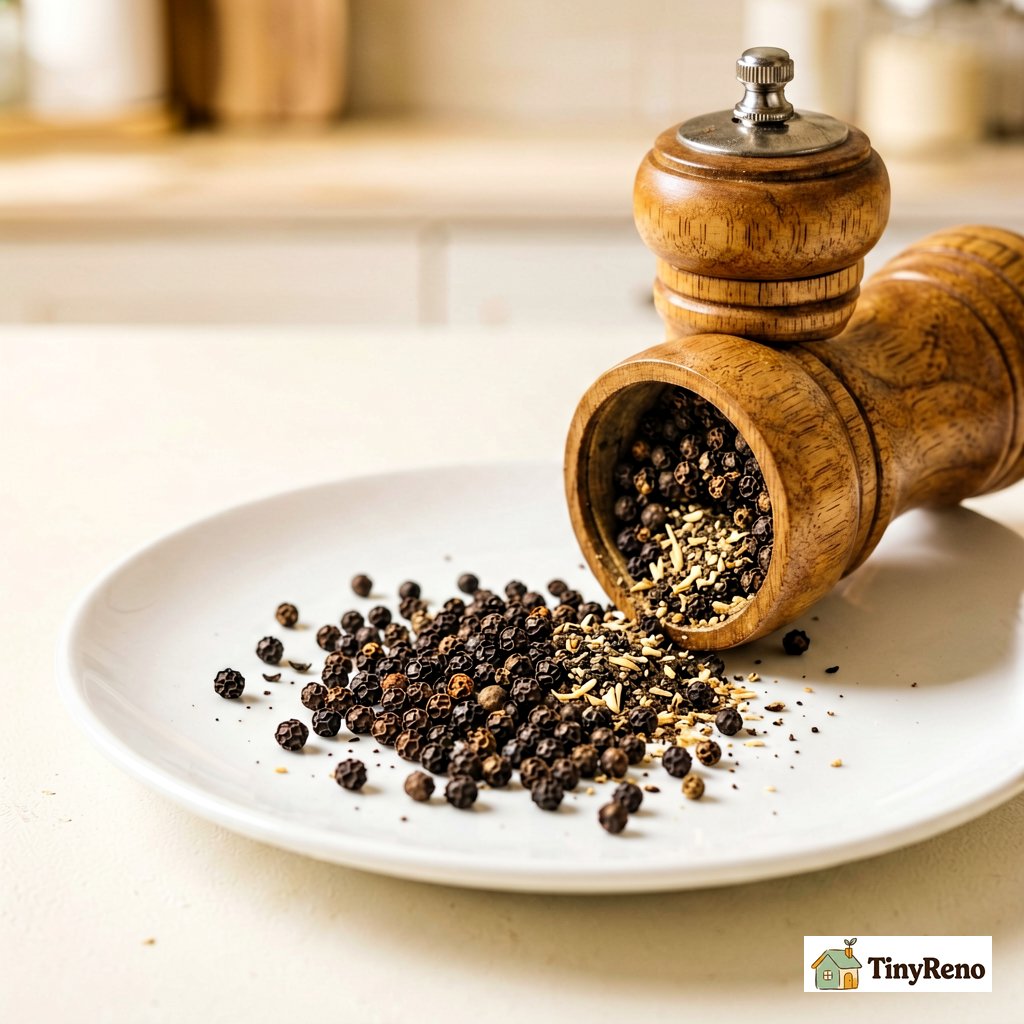
A wood grinder lasts longer with minimal care:
- Keep it dry. Don't wash it under running water. Wipe it with a dry cloth. If it gets wet, dry it immediately and let it air dry completely before refilling.
- Don't grind anything but peppercorns in a pepper grinder. Spices like cumin, coriander, or fennel seeds have different densities and shapes that can damage the mechanism.
- Re-tighten the adjustment occasionally. The threads that hold the adjustment in place can loosen over years. A small clockwise turn with a screwdriver or pliers (gently, on the inside of the grinder) can re-seat them.
- Oil the outside once a year. A light coat of mineral oil or beeswax brings out the grain and protects the wood. Don't oil the mechanism.
A well-cared-for wood grinder will outlast a decade. A neglected one will fail at the mechanism, not the body, and the body is the part you paid for.
The Question to Ask Yourself Before You Buy
There's one question that determines whether a wood grinder is right for you:
Are you willing to hand-crank it?
Wood grinders, even the best ones, are usually manual. There are electric wood grinders, but they're rare and expensive. If you want a grinder that does the work for you, you're looking at stainless steel with a battery-powered mechanism, not wood.
If you're fine with the hand-crank — and most cooks actually prefer it because it gives you control over how much you grind — then a good wood grinder is one of the best small investments you can make for a rental kitchen. Mine has moved with me three times and is still going. It's got a scar on the handle from the pasta argument of 2022, and the finish is worn smooth in exactly one spot where my thumb rests. The grinder I bought before it is in a landfill. The difference was the mechanism, not the wood. If you find one with a good mechanism, buy it, keep it dry, and don't grind cumin in it. It'll outlast the next three apartments.


Discussion (0)
Sign in to join the discussion