

It was ninety-three degrees in Dallas and the inside of the apartment was eighty-one. Outside AC unit not running — that's what I had to report to the landlord that night. The thermostat read sixty-eight and asked for fifty-eight. The fan in the wall unit was blowing room-temperature air around like a very expensive paper fan. The outdoor compressor — the box that sits on the concrete pad behind the building and sounds like a small airplane when it's working — was silent. Outside AC unit not running, inside fan blowing warm air. The inside fan ran, but the outdoor compressor was off, and that was the whole problem. The landlord needed to know the inside was working but the outside ac unit was not running, because that detail changes what the service tech brings.
I opened the panel to look at the disconnect, saw wires I didn't want to touch, closed the panel, and called the landlord. The phone call went well because I'd already done the things I could do without breaking my lease. The service tech arrived the next morning, replaced a $4 capacitor, and the apartment was cold by lunch.
This guide walks through what to check before you call — the five things that take ten minutes total and don't require any tools beyond a flashlight — and then a renter's letter to your landlord that covers what you've already tried so they don't send someone out to "check the thermostat." If your outside ac unit is not running and you're a renter, this is the order of operations.
Why the Inside Runs but the Outside Doesn't
A typical split AC unit has two parts. The indoor part is the air handler — the box with the fan and the evaporator coil, usually in a closet, attic, or mounted on a wall. The outdoor part is the condenser — the metal box on a concrete pad outside, with the compressor, the condenser fan, and a lot of refrigerant tubing connecting the two.
When the inside fan is running but the outside compressor is silent, the most common causes are:
- The thermostat isn't calling for it. If the indoor temperature is already at or below the setpoint, the system won't try to start the compressor. It just runs the fan. This is the "is it actually broken or am I being impatient" question.
- The outdoor disconnect is tripped. There's a small box near the outdoor unit — sometimes on the wall, sometimes mounted to the unit itself — with a pull-out handle or a switch. That disconnect is a second breaker, separate from the main panel. It can trip on its own.
- The capacitor is dead. The capacitor is a small cylindrical part inside the outdoor unit that gives the compressor motor the jolt it needs to start. Capacitors fail with age and heat. A dead capacitor is a $4 part and a 20-minute repair.
- The contactor is stuck. The contactor is a relay that tells the compressor and the outdoor fan to turn on when the thermostat asks for cooling. If the contactor is stuck open, the system never starts the outdoor side.
- The compressor itself has failed. This is the worst-case. A failed compressor is a multi-thousand-dollar repair that almost always requires replacing the whole outdoor unit. This is the landlord's problem, not yours.
The first four are things a renter can diagnose (and sometimes fix). The fifth is the call-the-landlord-and-stop-touching-it scenario.
Step 1: Confirm the Thermostat Is Actually Calling for Cooling
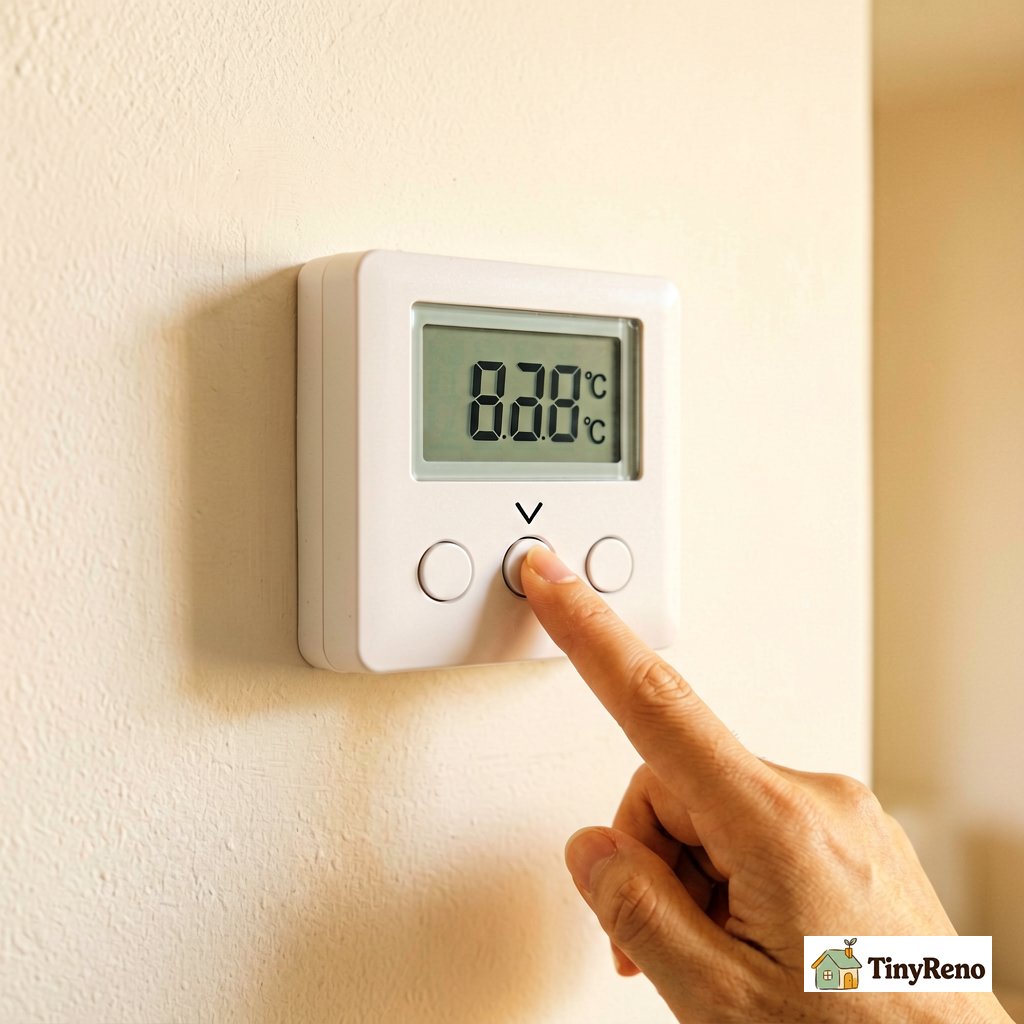
This is the embarrassing one to skip. Before you do anything else, look at the thermostat.
If the indoor temperature reading is at or below the temperature you set, the system has no reason to start the compressor. It will just run the fan. Bump the setpoint down five degrees below the current indoor reading. Wait three minutes. Listen for the outdoor unit.
If the outdoor unit kicks on when you lower the setpoint, you weren't broken. You were impatient. The thermostat has a built-in delay (usually 3-5 minutes) between calling for cooling and starting the compressor to protect the system. That delay is normal.
If the outdoor unit still doesn't kick on after you've lowered the setpoint five degrees and waited five minutes, you've got a real issue.
Step 2: Check the Outdoor Disconnect Box
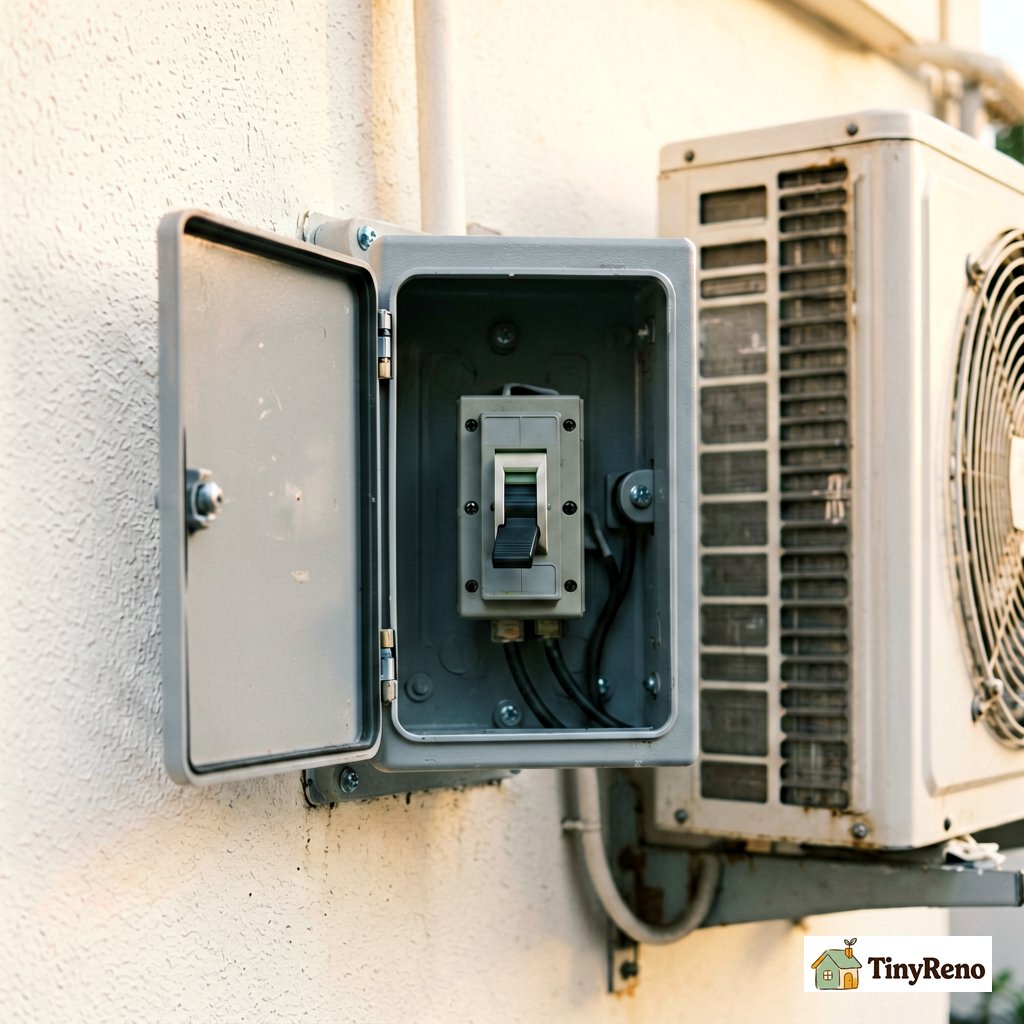
Walk to the outdoor unit. Within a few feet of it there should be a small box — sometimes mounted on the wall of the building, sometimes on a weatherproof sleeve attached directly to the unit. Open the cover. Inside there's either a pull-out handle (looks like a chunky switch you can remove) or a flip switch.
If the pull-out handle is out, push it back in firmly. If it's a flip switch, flip it to "on" or "closed."
If you're a renter looking at an outside ac unit not running, the disconnect is the first thing to check before you even think about calling anyone. It's the easiest fix in this whole guide, and it's the one most tenants skip because they don't know it exists.
The disconnect can trip on its own. It's essentially a second breaker for the outdoor unit specifically. Power surges, brief brownouts, the compressor drawing too much current during a heat wave — any of these can trip it. Pushing it back in is not a repair. It's just resetting a breaker, like flipping a light switch.
Look at the disconnect box carefully before you open it. Some have a fuse inside in addition to the breaker. If there's a blown fuse, that's a sign something downstream caused the surge. Don't replace the fuse yourself — that crosses the line from "resetting a breaker" into "doing electrical work" and most leases don't allow it.
Step 3: Look at the Outdoor Unit's Status Lights
Most modern outdoor units have a small status light on the side of the cabinet. The color and pattern of the light tells a service tech what's happening with the system.
The meanings vary by manufacturer. The most common:
- Solid green: the unit has power and is in standby
- Slow blink green: the unit is running normally
- Fast blink green: the unit is in a defrost cycle (this is normal in heating mode for heat pumps, not for cooling-only units)
- Solid red or amber: the unit has shut down on a fault
- No light at all: no power to the unit
If the status light is solid red or amber, the unit has shut itself down to protect the compressor. This is what happens when the refrigerant pressure is wrong, the coils are overheating, or the compressor is drawing too much current. You can't fix this yourself. Note the color and pattern, and include it in the message to your landlord.
If there's no light at all, you've either got a tripped disconnect (step 2) or a power issue (back to step 1 to confirm the thermostat is calling).
Step 4: Look and Smell for the Obvious
Stand near the outdoor unit and look at it with a flashlight if it's evening. A few things are worth checking visually:
The fan blade: the outdoor unit has a large fan on top (or sometimes on the side). Look through the grille and see if the fan blade is visible and intact. A missing blade, a cracked blade, or a blade stuck against the housing will prevent the unit from starting.
The cabinet condition: the metal cabinet should be intact, with no obvious rust holes or damage. A unit that's been physically damaged (hit by a lawnmower, vandalized, struck by falling branches) is the landlord's problem, but noting the damage helps the service tech come prepared.
The concrete pad: the unit should sit level on the pad. If the pad has tilted or sunk, the refrigerant lines and electrical conduit can be stressed. Again, landlord problem, but worth noting.
The smell: a sweet chemical smell near the outdoor unit can mean refrigerant leaking. A burning smell can mean an electrical component has failed. Either is "stop investigating and call your landlord" territory.
Step 5: Wait and See if It Self-Recovers
Modern AC units have built-in safety delays. If the compressor shut down on a fault, it will wait anywhere between 30 minutes and several hours before attempting to restart. This is to protect the compressor from short-cycling.
So after you've checked steps 1-4, give the system 30-60 minutes to try restarting on its own. Set the thermostat to a temperature that's clearly below the current indoor temperature so the system has a reason to try.
If the unit kicks on during this waiting period, you've got a "watchful waiting" situation rather than an emergency. Note the time it restarted and mention it to your landlord.
If the unit doesn't kick on after an hour, you've confirmed: the inside runs but the outside doesn't, and the system won't restart itself. Time to call.
What to Tell Your Landlord
The most useful message to your landlord covers what you've checked and what you observed. Here's a template you can adapt:
Subject: Air conditioning not cooling — indoor fan runs, outdoor compressor off
Hi [landlord/property manager name],
The AC in [unit number] is running the indoor fan but the outside ac unit is not running. Indoor temperature is reading [X] degrees on the thermostat. I set the thermostat to [Y] degrees, well below the indoor temperature, and waited [Z] minutes. The outdoor unit did not start.
I checked the outdoor disconnect box and it appears to be in the on position. The status light on the outdoor unit is [color/pattern, or no light]. I did not open any panels on the outdoor unit and I did not attempt any repairs.
The unit is the [brand, if visible on the cabinet, e.g. Carrier, Trane, Rheem] outside [unit description, e.g. on the concrete pad behind the building, north side].
This started [date] and the indoor temperature has been [current temp] since. Please let me know when a service tech can come out.
Thanks, [Your name]
This message covers the four things a service tech needs to know: what's working, what isn't, what you've already checked, and what brand the unit is. The "I did not attempt any repairs" line is important — it protects you from being blamed if something you touched made it worse.
What's Typically the Landlord's Responsibility
A short list of what should fall on the landlord, not you:
- The capacitor replacement - The contactor replacement - Refrigerant top-ups or leak repairs - Compressor replacement - Electrical work inside the unit cabinet - Any warranty-covered repair
What might fall on you as a renter, depending on your lease:
- Keeping the air filter clean (usually monthly during cooling season) - Keeping the area around the outdoor unit clear of debris and weeds - Reporting problems promptly so they don't get worse - Allowing access for service calls
The "renter responsibilities" in most leases for AC are mostly about not making things worse. The cost of repair is almost always on the landlord.
A Note About Heat Pump Systems
If your outdoor unit is a heat pump (rather than a straight air conditioner), it will run year-round because it provides both heating and cooling. Heat pumps also defrost themselves periodically during cold weather — the outdoor unit will shut down for 5-15 minutes, the indoor unit will briefly blow cold air or, and then the outdoor unit will kick back on.
If you have a heat pump, a brief shut-down in cold weather is normal. A persistent outdoor unit not turning on when the inside is clearly calling for heating or cooling is not normal.
The Five-Minute Recap
When the outside AC unit is not turning on but inside is, the order of operations is:
1. Confirm the thermostat is calling for cooling (bump setpoint down 5 degrees, wait 3 minutes) 2. Check the outdoor disconnect box (push the pull-out handle back in) 3. Look at the outdoor unit's status light (note color and pattern) 4. Visually inspect for obvious damage or smell 5. Wait 30-60 minutes for the unit to self-recover
If those five steps don't bring it back, message your landlord with the details above. Most "outside ac unit not running" situations resolve within 24 hours of a service call, and the most common fix is a $4 capacitor that takes twenty minutes to replace. The apartment will be cold by dinner.


Discussion (0)
Sign in to join the discussion