

I was twenty-three and hosting what I thought was an adult dinner party for six people. I had to learn how to remove spaghetti sauce stain from a rug, a shirt, and a wall, all at once, before guests arrived. The pot of spaghetti was in my hands. The path to the table was clear. The cat was not where I thought the cat was. The cat was directly between my feet. I went up. The pot went one direction. The sauce went every direction.
There was red on the rug, red on my white shirt, red on the chair, red on the wall. Six guests were about to arrive in twenty minutes. The cat was cleaning her paw with the offended dignity of a wronged monarch. I had about ninety seconds to start saving what could be saved, and I had no idea that the first thirty seconds mattered more than anything I'd do for the next three hours.
This guide is what I wish I'd had that night — a real how to remove spaghetti sauce stain method, ordered by what works first. The order of operations matters. So does the timing. The stain you lift in the first minute is dramatically different from the stain you fight for the next month.
What Spaghetti Sauce Does to Fabric and Carpet in the First Minute
Spaghetti sauce is not just tomato. It's tomato, oil, salt, often sugar, sometimes garlic and onion, and frequently a small amount of ground beef or pork. The combination is the problem.
The pigments (lycopene, the red color in tomatoes) bond to fibers almost immediately on contact. The bond gets stronger the longer the pigment sits and the warmer the fabric gets. Cold water slows the bonding. Hot water speeds it up dramatically.
The oils coat the fibers and prevent water-based cleaners from reaching the pigment underneath. If you use a water-based cleaner first, the water beads up on the oil layer and you wipe the surface while the pigment stays trapped underneath.
The proteins (from meat or dairy in some recipes) bond chemically to natural fibers like cotton and wool. Protein stains set with heat. This is why hot water makes a meat-based spaghetti sauce stain essentially permanent on a cotton shirt.
The acids (from the tomato) can damage certain fibers on contact — silk, rayon, and some older carpets with natural dyes. The longer the acid sits, the more damage.
The first thirty seconds are the window where you can lift most of this out. After that, you're treating what's left. After the dryer, you're accepting it.
Step 1: Lift, Don't Rub (the First Thirty Seconds)
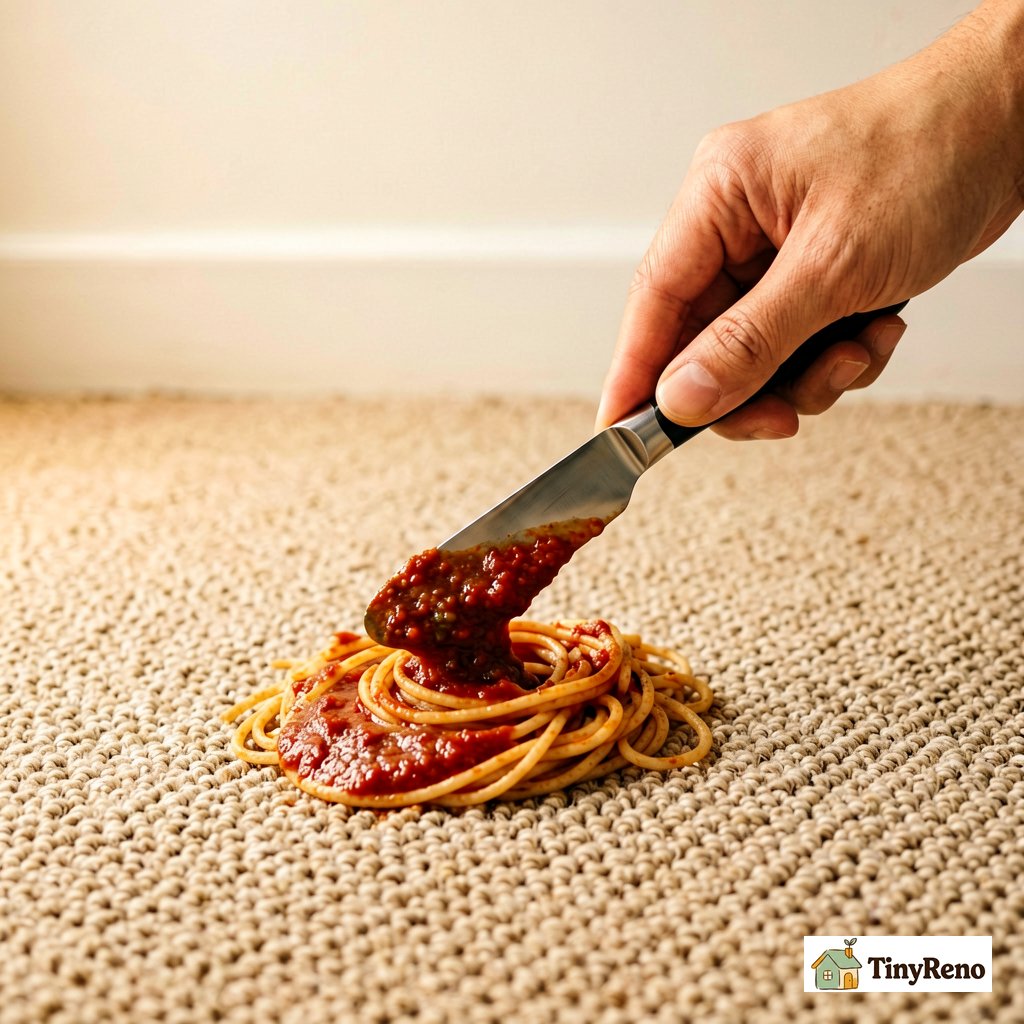
The instant the sauce hits fabric or carpet, your only job is to lift as much of it off the surface as possible without pressing it deeper.
For carpet: get a flat-edged tool — a butter knife, a spoon, a credit card, the edge of a paper plate — and scoop up the excess sauce. Work from the outside of the stain toward the center so you don't spread it. If you have a clean cloth or paper towel, press it down on the stain and lift. Don't rub, don't scrub, don't wipe. Press and lift.
For fabric on a chair or shirt: hold the stained section under cold running water from the back, so the water pushes the sauce out the same side it came in. Don't run water over the front — that drives the sauce deeper into the weave.
If you only have thirty seconds before guests ring the doorbell, this step alone will save more of the stain than anything else you do. Knowing how to remove spaghetti sauce stain starts here.
This step alone removes about half the stain. The cat-and-pot incident left a 12-inch splatter on the rug. After thirty seconds of scooping and pressing with paper towels, the visible red was reduced to a faint smudge. The cat's contribution was a single paw print that came out completely in the next step.
Step 2: Cold Water Flush (the Next Two Minutes)
Once the excess is lifted, flush the stain with cold water. This is the step that does the heavy lifting for the pigments and the salt.
For carpet: pour cold water directly onto the area from a cup or a small pitcher. Let it pool. Wait thirty seconds. Press with a clean cloth to absorb. Repeat. The water will turn orange-red. That's the pigments coming out. Keep flushing until the water you press out runs clear.
For fabric: hold the stained section under a running cold tap. If the fabric is sturdy (cotton, polyester, linen), you can flex the fabric gently under the water to work the pigment loose. If it's delicate (silk, rayon, wool), just let the water run through without flexing.
Don't use hot water at any point in the first twenty-four hours. Hot water sets the lycopene and the proteins, and once they're set, you can't unset them.
Step 3: Dish Soap Treatment (the Following Ten Minutes)
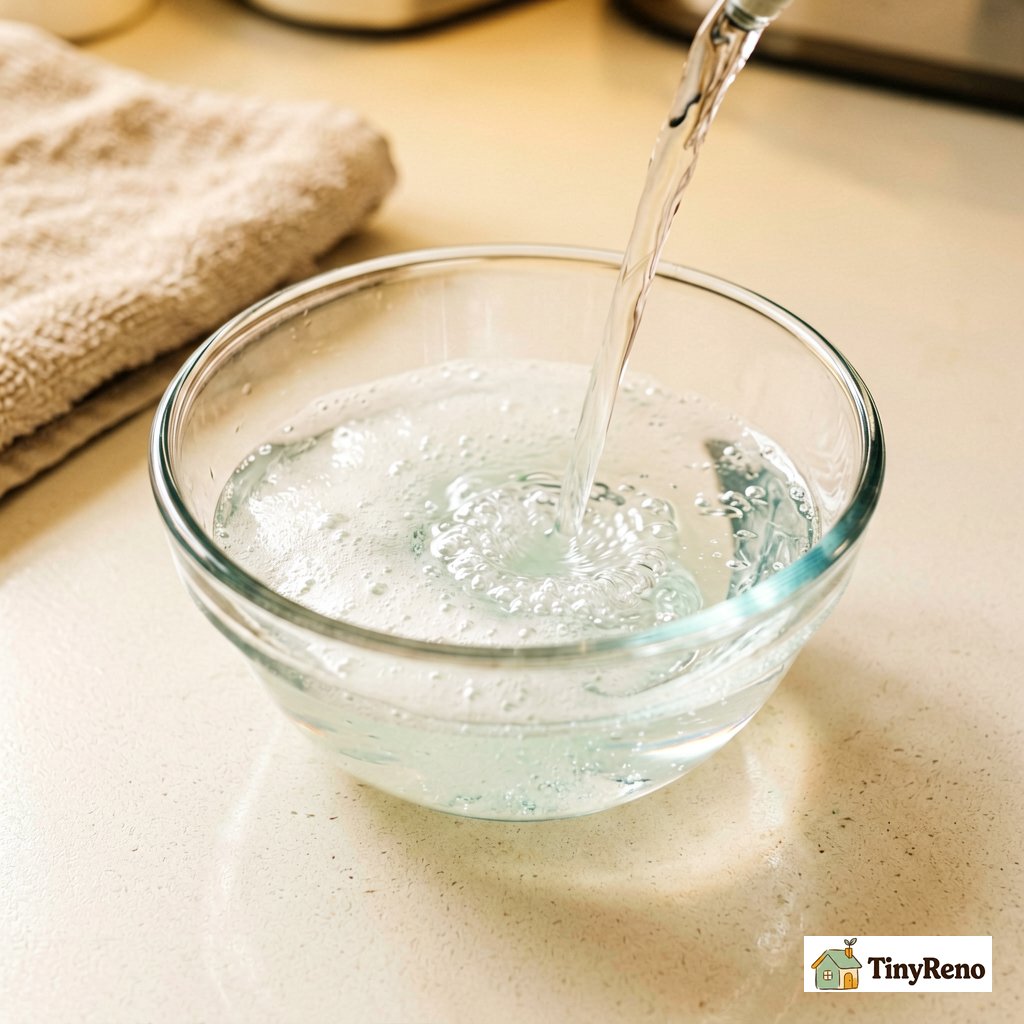
After the cold water flush, the stain that remains is mostly the oils. Water-based cleaners won't touch oils. You need a degreaser.
The cheapest effective degreaser is plain liquid dish soap — the kind you use at the sink. Dish soap is designed to break down cooking oil. It's safe on most fabrics and most carpets.
Application for carpet: dilute a tablespoon of dish soap in a cup of cold water. Pour it onto the stained area. Work it in gently with your fingers or a soft brush — soft meaning an old toothbrush, not a scrub brush. Wait ten minutes. Blot with a clean cloth. Repeat if the stain is still visible.
Application for fabric: apply a small amount of dish soap directly to the back of the stain. Work it in gently with your fingers. Wait ten minutes. Rinse with cold water from the back. Repeat if needed.
This step is where most of the remaining pigment lifts out. The dish soap breaks the oil layer and frees the pigments so the cold water can carry them away.
Step 4: The Stain Remover Treatment (Optional but Worth It)
For stubborn remnants, after the dish soap treatment and rinse, apply a commercial stain remover designed for food stains. The active ingredients in these (usually a mix of surfactants and enzymes) target proteins and pigments that dish soap alone doesn't fully remove.
For white fabrics: an oxygen-based bleach soak (the powder kind, dissolved in water per package directions) works well. Soak the garment for a few hours, then wash normally.
For colored fabrics: skip the bleach and use a color-safe enzyme stain remover. Follow the package directions.
For carpet: a carpet stain remover designed for food stains works, but honestly, by step 3 most of the stain is out of the carpet already. The step 4 carpet treatment is for the persistent shadow.
Apply, wait the recommended time, blot or rinse, and let dry.
Step 5: Dry and Check
After all the wet treatments, let the area dry completely and look at it. Wet carpet and fabric always looks darker than dry. What looks like a remaining stain when wet may disappear as it dries.
If a faint shadow remains after drying, repeat steps 2-4. Don't go to step 5 until the stain is gone or you've decided to accept the result.
For fabric, do not put the garment in the dryer until the stain is completely gone. Dryer heat sets any remaining pigment permanently. If you're not sure, let it air dry and check.
For carpet, do not walk on the cleaned area until it's dry. Foot traffic on a damp carpet pushes any remaining pigment back into the fibers.
What Not to Do
The mistakes that ruin things:
Don't use club soda. Old advice suggested club soda because the carbonation "lifts" stains. It doesn't. The minerals in club soda can leave their own residue. Cold water does the same job.
Don't use vinegar directly on the pigment. Vinegar helps with some things (mineral deposits, hard water residue) and is counterproductive with others (set tomato stains). For a fresh spaghetti sauce stain, vinegar is wasted at best.
Don't use a magic eraser on carpet. Magic erasers are abrasive. They can rough up carpet fibers and change the texture, making the cleaned area visibly different from the surrounding carpet.
Don't rub the stain. Even gently. Lifting and pressing are different from rubbing. Rubbing drives the pigment deeper and spreads it.
Don't skip the cold water step. Cold water is the most important tool. Hot water sets the pigment. Warm water is better than hot but worse than cold.
The Cat-and-Pot Incident, Six Months Later
The dinner party was rescued. The six guests arrived, the second pot of pasta was made, the white shirt went into the wash before the dryer and came out with only a faint orange shadow on the cuff. The rug, after the four-step process, was completely clean within an hour. The cat judged me from the bedroom for the rest of the evening.
Most spaghetti sauce stains are not as catastrophic as that one. But the method is the same regardless of scale. The faster you scoop, the longer you flush with cold, the more you let the dish soap sit, the better the result. The first thirty seconds decide whether you're fighting a stain or just cleaning up.
A Quick Decision Tree for Spaghetti Sauce
| Situation | Action |
|---|---|
| Fresh, large spill on carpet | Scoop, cold water flush, dish soap, repeat |
| Fresh splash on shirt | Cold water from back, dish soap, wash normally |
| Dried stain (set for hours) | Cold water soak 30 min, dish soap, stain remover |
| Old set-in stain | Oxygen bleach soak for white fabric; partial acceptance for colored |
| Delicate fabric (silk, rayon) | Cold water flush only, take to cleaner |
| Carpet with natural dyes | Cold water + dish soap only, no stain remover |
The dish soap is the part most guides leave out, and it's the part that does the most work after the cold water. If you remember nothing else from this guide, remember: scoop, cold water, dish soap, patience.


Discussion (0)
Sign in to join the discussion