

The shirt was a white linen button-down I'd bought for $14 at a thrift store and loved more than was reasonable. I spilled water on it — just water from a glass — and thought I'd need to learn how to remove water stains from clothes by the end of the afternoon. I figured the stain would dry and disappear. It didn't. It left a ring. A faint tan ring, right on the chest, the exact diameter of the bottom of the glass. I tried to blot it. The ring grew. I tried to rinse it under the tap. The ring turned into a map. By the end of the afternoon the shirt had three overlapping circles where there used to be one, and I'd learned what most people only learn after ruining a favorite piece of clothing: water itself stains fabric, and the way you respond in the first thirty seconds is the difference between a clean shirt and a permanent shadow.
This guide walks through what's actually happening when water leaves a mark on clothes, why your first instinct usually makes it worse, and the four-step method for how to remove water stains from clothes that works on almost any washable fabric without taking it to a dry cleaner.
What a "Water Stain" Actually Is (and Why It Shows Up)
Water itself is clear. The mark it leaves on fabric is not from the water. It's from what's dissolved in the water and what's already on the fabric.
There are three common sources:
1. Minerals in hard water. Calcium and magnesium don't evaporate. When the water dries, the minerals stay behind on the fibers as a faint white or tan residue. Hard-water rings are the most common "water stain" on clothing. 2. Detergent or fabric softener residue already on the cloth. If the shirt was washed with too much detergent, or with fabric softener, the residue sits on the fibers invisibly. New water dissolves some of that residue and re-deposits it in a ring as the wet area dries. 3. Sugar, salt, or other dissolved solids. A splash from a sugary drink, a sweaty collar, even plain tap water in some cities — all leave a dissolved residue that shows up as a tide line when the area dries unevenly.
The ring forms because the wet area dries from the outside in. As the edge dries, the dissolved stuff concentrates at the moving boundary and gets deposited there. That's why the ring is darker at the edge and lighter in the middle.
Why Rubbing and Blotting Usually Make It Worse
The instinct when you see a wet spot on a dry shirt is to grab a paper towel and blot. Or to rub the spot with your thumb. Both make the stain worse, for two reasons.
First, you're spreading the wet area. The original stain was small — the diameter of the glass. The moment you press a paper towel to it, the wet area expands to whatever the paper towel touches. Now there are minerals and residue spread over a larger patch, and when that larger patch dries, the ring is correspondingly larger.
Second, you're mechanically pushing the dissolved solids deeper into the fabric. The fibers have a grain. Rubbing against the grain pushes the residue into the spaces between fibers where it bonds and dries in place. Blotting with pressure does the same thing, just slower.
The right move when water hits clothing is to do almost nothing. Let it dry evenly. If the stain is from a clean source (just water), it may disappear on its own. If it's from something with dissolved solids, you'll need the four-step method coming up next.
The Four-Step Method That Actually Works
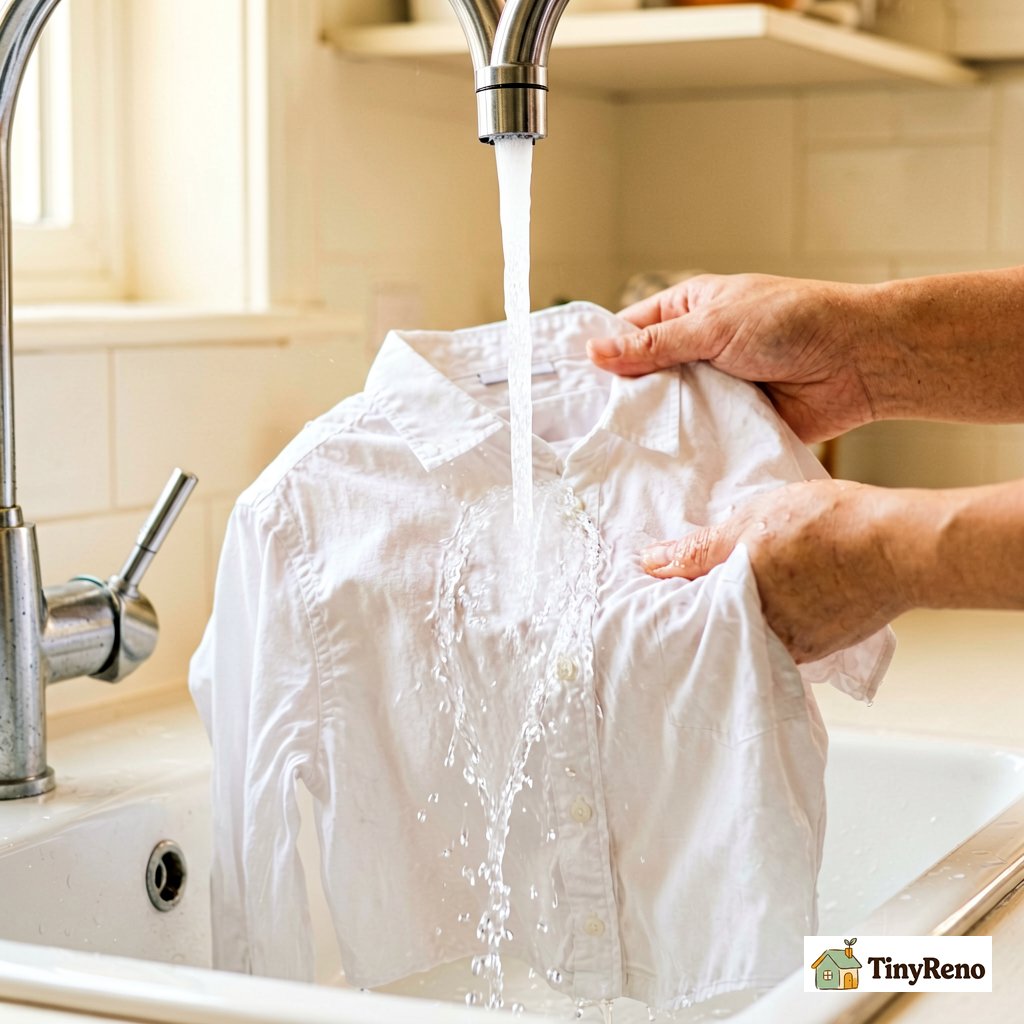
For water stains on washable clothing — cotton, linen, polyester, blends — this is the method that removes the ring without setting it deeper:
Step 1: Rinse the entire affected area under cool running water. Don't blot, don't rub. Hold the fabric under the tap with the stained side down so the water runs through the fibers and carries the dissolved residue with it. Thirty seconds is usually enough. If the stain was on the front of the shirt, flip it so the back is up and let the water push the residue out the front.
Step 2: Gently squeeze (don't wring) out the excess water. Lay the garment flat on a clean towel, roll the towel up with the garment inside, and press. The towel absorbs the moisture. Don't twist — twisting stretches the fibers and can warp the garment, especially knits.
Step 3: Rewash the garment alone, with the usual amount of detergent, on a normal cycle. Putting it in with a full load risks the residue redepositing on other clothes. Wash it by itself. If the fabric is white, add a small amount of oxygen bleach (the powder kind, not chlorine bleach — chlorine sets some stains). If the fabric is colored, skip the bleach.
Step 4: Air-dry the garment flat or on a hanger. Don't put it in the dryer until the stain is gone. Dryer heat sets stains permanently. If the stain is still faintly visible after the wash, repeat steps 1-3. If it's gone, dry normally.
This works for the majority of water stains on washable clothing. The total time is about an hour, most of which is the washing machine.
When the Stain Is on Something You Can't Machine-Wash
Silk, wool, cashmere, rayon, and anything labeled "dry clean only" needs a different approach. Don't machine-wash these — the heat and agitation will shrink or distort them.
For silk and rayon: flush the stained area with cool water from the back of the fabric, then lay it flat on a clean towel and roll to remove moisture. Take it to a dry cleaner the same day if the stain is visible after the flush. Most dry cleaners can get a water ring out of silk without damaging the fabric.
For wool and cashmere: the stain often disappears as the garment dries, because wool fibers release trapped residue as they relax. If it doesn't, flush with cool water, blot gently (don't rub), reshape the garment, and lay flat to dry.
For vintage or expensive items: if the stain is on something you'd be heartbroken to ruin, skip the home method entirely. Take it to a dry cleaner and tell them what the stain is from. The cost of a dry clean on a single garment is much less than replacing the garment.
The Stubborn Cases
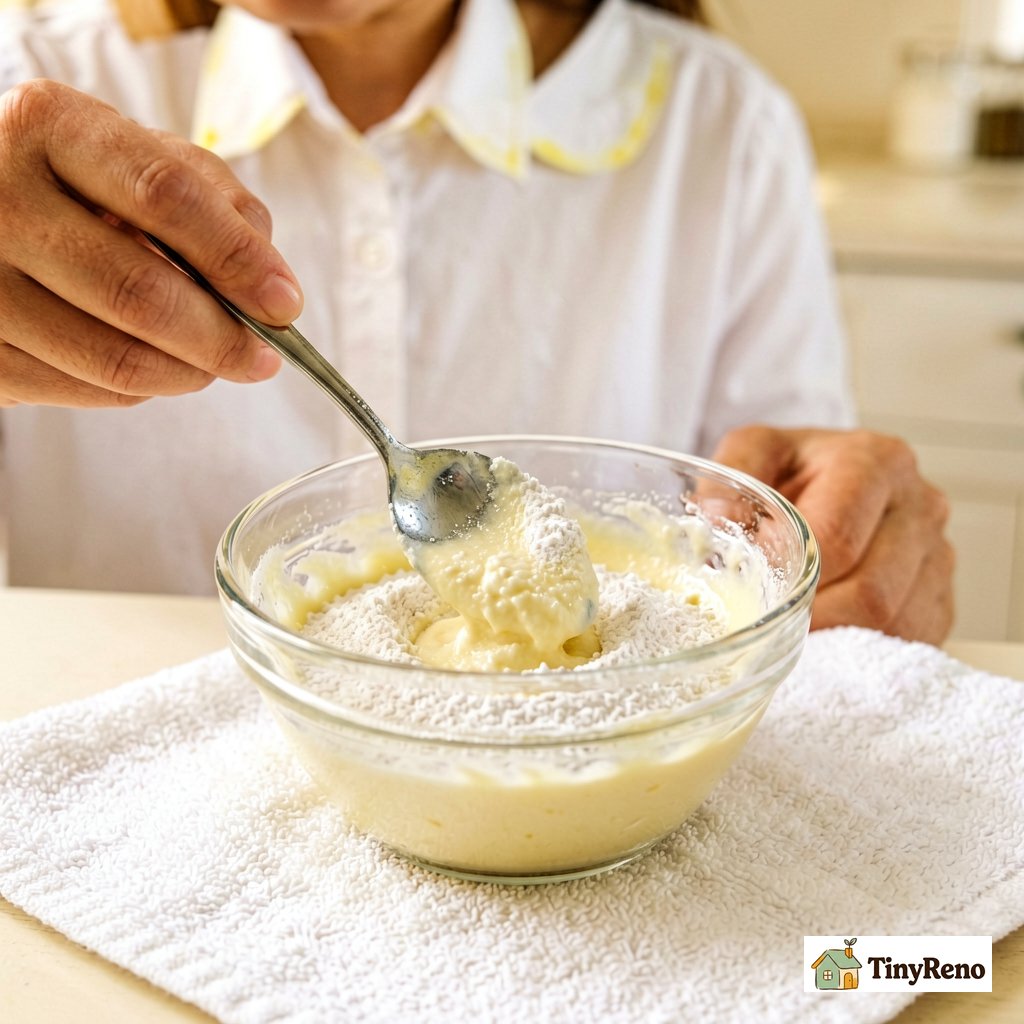
A few specific situations need a slightly different approach:
Sweat rings on collars. The yellow ring on a shirt collar is partly water and partly body oils and salt. Treat the collar with a paste of baking soda and water (about 2:1 baking soda to water), let it sit for 30 minutes, then wash normally. The baking soda breaks down the body oils without setting the stain.
Mineral stains from hard water on dark clothes. These show up as faint light patches rather than rings. Soak the garment in a solution of one part white vinegar to three parts cool water for 30 minutes, then wash normally. The vinegar dissolves the minerals.
Old, set-in water stains. If the stain has been through the dryer, it may not come out completely. Re-wash with an oxygen bleach soak (follow the package directions). If it's still visible after two washes, accept it as part of the garment and stop — further treatment risks damaging the fabric.
Stains from colored liquids that look like water. Wine, coffee, tea, and fruit juice all leave stains that look like water marks at first but contain pigments that need targeted treatment. Those are not water stains and need a different method (cold water rinse immediately, then a stain remover designed for that specific pigment).
What Not to Do
A few mistakes that ruin clothes:
- Don't rub with bar soap. Bar soap can set some stains and leaves its own residue that's hard to rinse out. - Don't use chlorine bleach on water stains. Chlorine doesn't dissolve minerals and can yellow whites. - Don't iron a wet area to "speed up drying." Ironing heat sets stains. - Don't use hot water on a fresh stain. Hot water can set protein-based stains (like sweat) and can shrink some fabrics.
How to Prevent Water Stains in the First Place
Most water stains are preventable with three habits:
Empty glasses before they spill. This sounds obvious. It's also the entire solution. The shirts I've ruined have all been from drinks I left on the edge of a table.
Wash dark clothes inside out. This reduces the visible residue from detergent and water on the outside of the fabric where you'd notice it.
Use less detergent. Most people use twice the detergent they need. The excess doesn't rinse clean and it concentrates in tide lines as clothes dry. Measure it. If your machine has a "he" or "high efficiency" setting, follow its dosage — it's calibrated for low-water wash cycles.
The four-step method handles most water stains that do happen. The prevention habits keep the rest of your clothes from joining the linen button-down graveyard.
A Quick Decision Tree for Water Stains
| Situation | Action |
|---|---|
| Fresh water splash, small area | Let it dry evenly, no treatment |
| Hard-water ring, white or pastel fabric | Rinse, vinegar soak 30 min, rewash |
| Hard-water ring, dark fabric | Rinse, vinegar soak 30 min, rewash |
| Sweat ring on collar | Baking soda paste, then wash |
| Colored liquid (wine, coffee, juice) | Cold water flush immediately, then targeted stain remover |
| Dry-clean-only fabric | Don't home-treat, take to cleaner same day |
| Old set-in stain | Oxygen bleach soak, accept partial if needed |
The linen button-down survived. The first wash didn't get it out. The second wash did, mostly. The third wash got the last shadow. It's now a "weekend shirt" rather than a "nice occasions" shirt, but it's still in rotation. Most water stains will come out if you respond with cool water and patience instead of paper towel and panic.


Discussion (0)
Sign in to join the discussion