

It was 11 PM on a Tuesday when the bedroom outlet stopped working. I needed to know how can you tell if a circuit breaker is bad, because nothing else in the apartment made sense. The living room was fine. The kitchen was fine. Just that one outlet, plus the lamp plugged into it, and a phone charger that had been at 8 percent for the last hour. I flipped the breaker. Nothing. Flipped it back. Still nothing. Stood in the laundry room in my socks looking at the panel like it owed me money.
The breaker wasn't tripped. The GFCI downstream wasn't tripped either. The outlet was just dead. That night I learned what most renters don't know until something stops working — a circuit breaker can fail without tripping, and the only way to tell whether the breaker is bad, the outlet is bad, or something else is wrong is to work through a small decision tree with a $10 outlet tester.
This guide walks through the bad circuit breaker symptoms you'll see when the breaker is the actual problem, and the simpler faults that look the same but cost ten dollars and ten minutes to fix.
The Three Things That Can Fail When One Outlet Dies
When an outlet or a section of your apartment goes dark, the actual fault is one of three things, in roughly this order of frequency:
1. The downstream GFCI tripped. Bathrooms, kitchens, garages, and exterior outlets are usually GFCI-protected. The GFCI itself is often in a different room — sometimes the bathroom, sometimes the garage, sometimes a weird hallway outlet that doesn't look like anything. A tripped GFCI will look like a button that's slightly popped out instead of flush. 2. The outlet itself failed. Outlets wear out. The internal metal grips that hold a plug loosen over years of use, the contact points oxidize, and eventually the connection just stops making. This is the most common failure for an outlet that's been in service since the 1980s. 3. The circuit breaker itself is bad. This is the rarest of the three, but it does happen, especially in older panels where the breaker hasn't been cycled in a decade. A bad breaker will look normal but won't actually be passing current when it's in the "on" position.
The bad circuit breaker symptoms are subtle. You have to rule out the other two before you can be confident it's the breaker.
Step 1: Check the GFCI Chain First (It's Almost Always This)
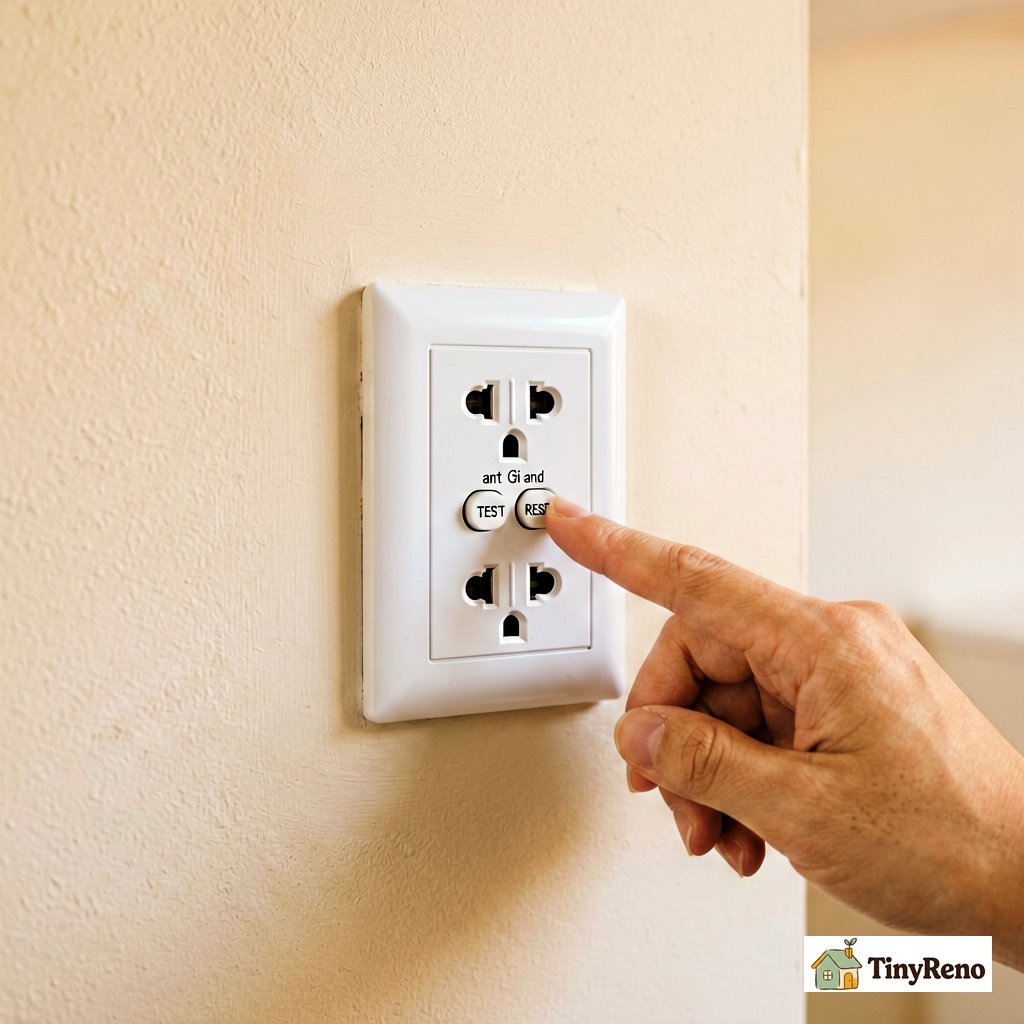
Before you touch the breaker panel, walk through the apartment and press every "reset" button you can find. GFCI outlets have two buttons in the middle — "test" and "reset." A tripped GFCI will have the reset button sticking out slightly. Press it until it clicks flush. Then walk back to your dead outlet and check.
In one apartment I rented, the GFCI protecting the bedroom outlets was in the bathroom — three rooms away and totally invisible from the bedroom. I'd never have found it if the previous tenant hadn't mentioned it on move-in day.
If pressing reset on a GFCI brings your outlet back, you're done. The problem was never the breaker. Don't touch the panel.
Step 2: Test the Outlet Itself with a $10 Plug-In Tester
If the GFCI chain didn't fix it, the next test is the outlet itself. You need a plug-in outlet tester — the kind with three lights on the back that costs about ten dollars at any hardware store. It plugs into the dead outlet and tells you, by which lights are on, whether the outlet is wired correctly and whether it's actually receiving power.
This is the cheapest diagnostic tool you'll ever buy, and it works for every electrical question you'll ever have as a renter.
What the tester can tell you: - All lights off: no power reaching the outlet - Two yellow lights: correct wiring, power is on - One yellow light: hot wire has an open or reversed polarity - Red light: dangerous wiring fault — stop and call your landlord
If your tester shows no lights on the dead outlet but full lights on the next outlet down the wall, the problem is between those two outlets — usually a backstab connection that failed. That is a wiring issue, not a breaker issue.
Step 3: Test the Breaker Itself with a Multimeter
This is the step that actually answers the question how can you tell if a circuit breaker is bad. It requires a multimeter (about $15) and the willingness to open your breaker panel.
⚠️ Safety: the main lugs in a breaker panel are always live, even with the main breaker off. Don't touch any wires. Don't touch the bus bars. Only touch the breaker you're testing, and only by its plastic switch.
Set your multimeter to AC voltage (VAC, usually 200V or 600V range). With the breaker in the "on" position, touch one probe to the breaker terminal screw and the other probe to the neutral bar (the silver-colored bus bar with many white wires attached to it).
What you're measuring: - You should see roughly 120 volts. If you see 120V, the breaker is passing current when it's "on." - If you see 0 volts with the breaker on, the breaker is bad — replace it.
Now flip the breaker off and measure again.
- You should see 0 volts. If you see 120V, the breaker is failing to disconnect — dangerous, replace immediately.
This is the only definitive test for a bad breaker. Everything else is inference.
Step 4: The 30-Second Visual Inspection
Before you get out the multimeter, look at the breaker itself with the panel door open. A few visual cues are worth noting:
Burn marks or discoloration: if the breaker switch or the area around it shows brown or black scorching, the breaker has been overloaded and the internal contacts are damaged. Replace it.
Loose switch feel: a healthy breaker clicks firmly into both "on" and "off." If the switch feels mushy, doesn't click solidly, or sits in a slightly wobbly middle position, the spring mechanism is failing.
Heat: with the panel door open (and only with the door open — don't touch anything inside), hold the back of your hand an inch from the breaker. If it's noticeably warmer than the other breakers, it's drawing current it shouldn't. This is rare but real.
A breaker that fails any of these visual tests should be replaced regardless of what the multimeter says. The visual signs mean the breaker is degrading.
How to Tell If a Circuit Breaker Is Bad Without a Multimeter
If you don't have a multimeter — and most renters don't — there are a few cheaper proxies:
Cycle the breaker five times in a row. Flip it off, then on, off, then on, five times. A healthy breaker clicks crisply each time. A breaker that starts to feel loose, doesn't quite click the same way twice, or fails to fully engage the "on" position after the fifth cycle is failing.
Check the breaker with a known-good appliance. Plug a lamp you know works into an outlet on the same circuit. If the lamp lights, the breaker is fine. If the lamp doesn't light but the same lamp works in another outlet on a different circuit, the breaker is suspect.
Look for the chain of outlets. Unplug everything from every outlet on the suspect circuit. Then plug a single known-good lamp into each outlet one at a time. If some outlets work and others don't, the breaker is fine and the wiring between those outlets has failed. If none work, the breaker is the prime suspect.
These aren't definitive, but they narrow it down enough to know whether to call your landlord about a breaker or a wiring issue.
What You Should Not Do as a Renter
A short list of things that can hurt you, your deposit, or your lease:
- Don't open the panel cover beyond the door. The dead front (the plastic cover over the breakers) is renter-safe to remove in most jurisdictions. The actual panel cover with the bus bars exposed is not. If you need to test terminals, that's a landlord or licensed electrician job. - Don't replace the breaker yourself. In most states and most leases, breaker replacement is a licensed-electrician task. Even if you're handy, the insurance implications if something goes wrong later are not worth it. - Don't keep resetting a tripped breaker repeatedly. If a breaker trips, resets, and trips again within minutes, there is a real fault on the circuit. Stop resetting it. Call your landlord. Continuing to reset can overheat the wiring inside the walls. - Don't assume a GFCI you can't find doesn't exist. Older apartments often have GFCIs in surprising places — behind the fridge, inside a closet, in the garage. Search the apartment before assuming the breaker is the issue.
What to Tell Your Landlord
Once you've worked through the decision tree, you have specific information to give your landlord instead of "the power's out." This makes their job faster and your repair faster.
If you suspect a bad breaker: tell them the symptom (which outlets died), what you tested (GFCI chain — found nothing; outlet tester — shows no power; breaker visually looks normal but failed the multimeter test on the load terminal).
If you suspect a wiring fault: tell them the outlet and what the plug-in tester showed. "No lights on the bedroom outlet, full lights on the hallway outlet next to it" is a specific data point your landlord can hand to an electrician.
If you suspect a GFCI: tell them where you found the tripped reset button. They'll probably want to know which circuit it protects so they can label the panel correctly.
The more specific you are, the faster the repair. The faster the repair, the less time you spend with a dead outlet.
The Quick Reference for Bad Circuit Breaker Symptoms
| Symptom | Likely Cause | Action |
|---|---|---|
| One outlet dead, others on same wall work | Outlet failure or backstab wiring | Try outlet tester, call landlord if no power |
| All outlets in a room dead, breaker looks fine | Breaker not passing current or wiring fault | Multimeter test the breaker |
| GFCI reset button popped out in another room | GFCI tripped | Press reset, walk away |
| Breaker trips repeatedly after reset | Circuit overload or short | Stop resetting, call landlord |
| Breaker switch feels loose or mushy | Mechanical breaker failure | Note for landlord, don't force |
| Burn marks or smell near breaker | Breaker overheating, dangerous | Call landlord immediately |
The decision tree catches most issues in under ten minutes. The bad circuit breaker is the rare diagnosis, but it's a real one — and the only way to be sure is the multimeter test on the breaker terminal itself. Everything else just narrows the search.


Discussion (0)
Sign in to join the discussion