

The first apartment I rented in Portland had a glass shower door I wiped down maybe twice. Six months later, the glass looked like someone had splashed milk on it and let it dry in the sun — patchy, chalky, almost permanently fogged. I ran my fingernail across a spot and the white film came off in a fine powder. That was the moment I learned hard water doesn't show up overnight. It accumulates. And the day you notice it is usually weeks after it started settling into your glass, your chrome, and the grout between your tiles.
This guide walks through what actually happens to a shower over time when the water is hard, what each stage looks like, and what you can do at each step without spending more than a few dollars — and without losing any of your security deposit.
What "Hard Water in Shower" Actually Means (the Chemistry You Can Skip but Shouldn't)
Hard water is water with extra dissolved minerals, mostly calcium and magnesium. When the water hits a warm surface — glass, tile, chrome — the minerals don't evaporate. They stay behind and bond with the surface. Over time the bond gets tighter. What started as a faint haze becomes a crust. What started as a crust becomes a scale you can scratch off with a coin but not with a sponge.
The longer the bond has, the harder it is to break. That's why the same vinegar that wipes off a two-week-old film won't touch a six-month buildup. Time matters as much as the cleaning product.
Stage 1 — Day 1 to Week 2: The "Wipe With a Towel" Stage
Fresh hard water spots wipe off with a dry microfiber towel. If you squeegee the glass after every shower and towel-dry the faucet, you'll never see a real stain. Most renters don't do this. Most renters don't even own a squeegee.
Story from a friend in Austin: she kept a small microfiber cloth on the edge of her tub and wiped the glass for the first month of her lease. By month three she'd forgotten. By month six the glass had the haze. The microfiber was still there, dry, in the same spot.
This is the part most renter guides on how to fix hard water in shower skip — they jump straight to the vinegar and never explain why the buildup grew in the first place. The reason is simpler than the chemistry. Prevention is one towel. Skipping it is six months of scrubbing.
Action for this stage: prevention is just two minutes after each shower. But since you're reading this, you've probably already passed it.
Stage 2 — Week 2 to Month 3: The "Vinegar Sprays, Wait, and Wipe" Stage
This is where the white vinegar trick lives. Plain white vinegar is roughly 5% acetic acid. The acid reacts with the calcium and magnesium carbonates and softens them. The bond that formed over weeks starts to break down. You spray, you wait ten to fifteen minutes, you wipe. The film comes off without scrubbing.
The exact method: 1. Pour undiluted white vinegar into a spray bottle. 2. Spray the glass, the chrome, and any grout lines that show white. 3. Wait 10-15 minutes. Don't let it dry on the surface — re-spray if it does. 4. Wipe with a microfiber cloth. For grout, use an old toothbrush. 5. Rinse with clean water and dry.
This works for fresh-to-moderate buildup. The smell fades in about twenty minutes once you rinse.
Stage 3 — Month 3 to Month 9: The "Vinegar for Hard Water Buildup Needs Heat and Patience" Stage
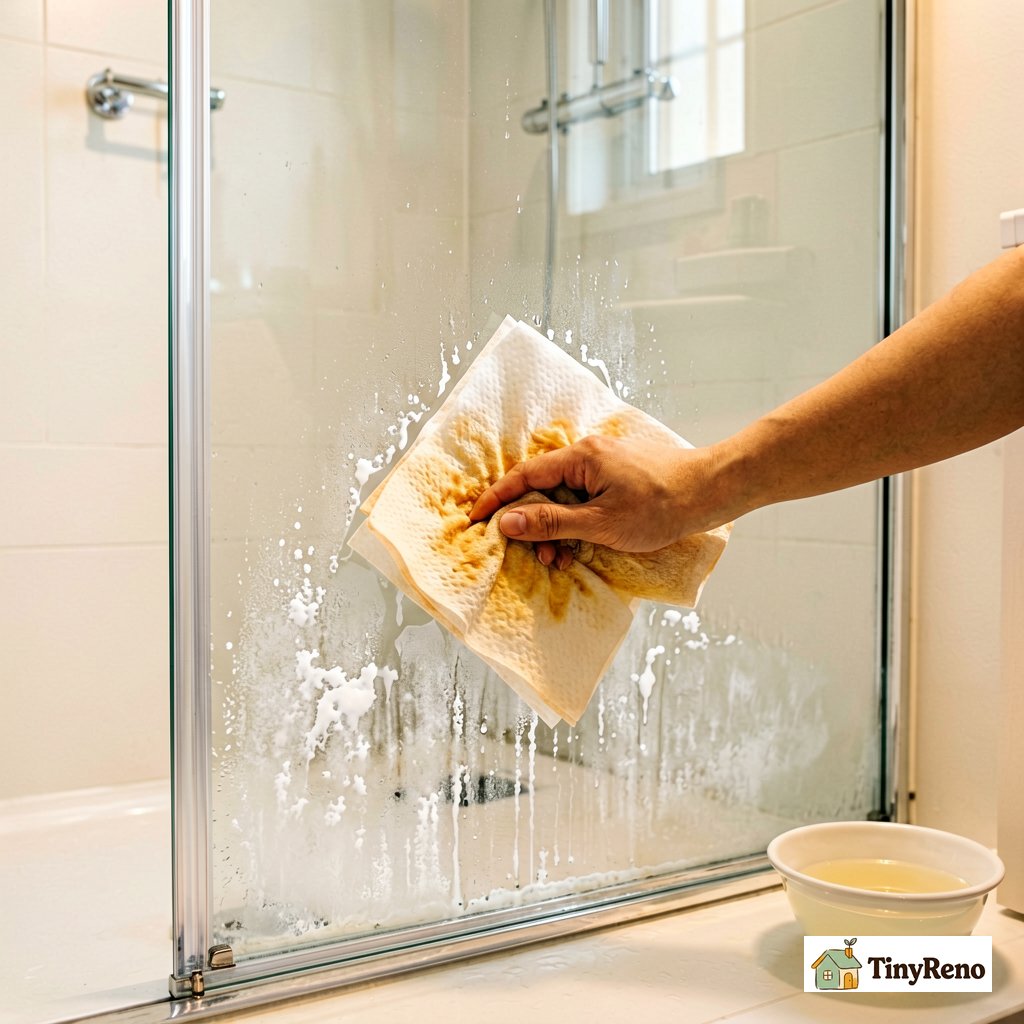
At this point the buildup is no longer just sitting on the glass. It's etched slightly into the surface. Cold vinegar still helps, but slowly. What actually breaks the bond now is warm vinegar — heating the vinegar to about 110-120°F speeds up the reaction noticeably.
The warm method: 1. Warm vinegar in a pot (don't boil — just warm it like bathwater). 2. Soak paper towels in the warm vinegar and lay them across the stained areas. 3. Leave them for 30-45 minutes. Keep them damp — re-soak every 15 minutes. 4. Scrub gently with a non-scratch pad. 5. Rinse and dry.
The paper towel trick is the part most blogs skip. The vinegar stays in contact with the surface instead of running off. That contact time is what does the work.
This is the version of vinegar for hard water buildup that actually earns its reputation online — not the cold spray you wipe off in thirty seconds, but the soaked-paper-towel, half-hour contact-time version that lets the acid finish reacting before you disturb it. The difference between the two is the difference between "kinda cleaner" and "actually clear."
Stage 4 — Month 9 and Beyond: The "You Might Need a Mild Acid Cleaner" Stage
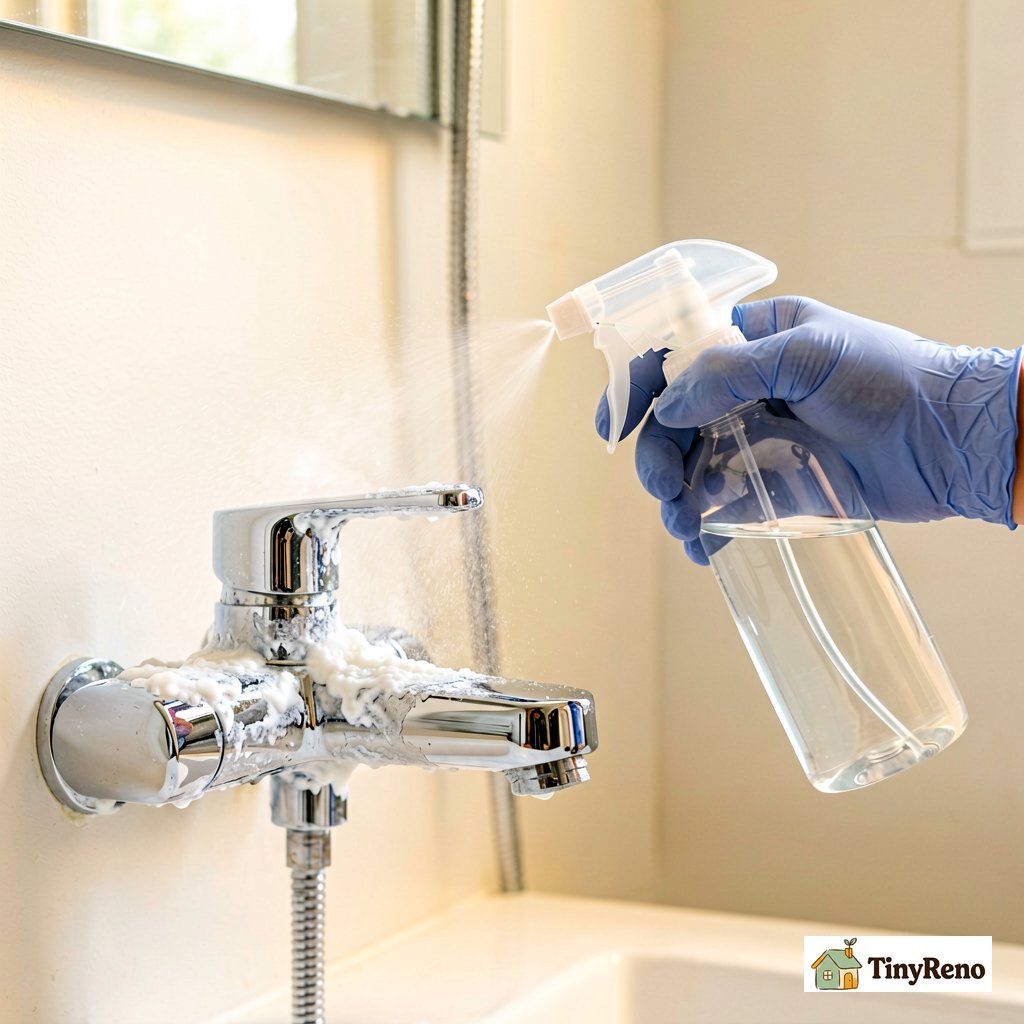
If warm vinegar and patience haven't fully cleared the glass, you're dealing with a real mineral scale. This is the stage where most renters panic and reach for whatever's under the sink — which is usually a mistake. Bleach doesn't touch calcium. Ammonia-based cleaners leave streaks and don't break the bond either.
What does work at this stage is a mild acid-based bathroom cleaner designed for hard water stains. The active ingredient is usually a small percentage of sulfamic acid or citric acid — both safe on glass and chrome when used as directed, both far less aggressive than the muriatic acid some old-timers will tell you to use (don't — it etches glass permanently).
Application: follow the bottle. Spray, wait the recommended time, scrub gently with a non-scratch pad, rinse thoroughly. Wear gloves. Ventilate the bathroom.
For grout lines that have gone dark with mineral buildup, the same cleaner works but you'll need a stiff brush and more elbow grease. The grout is porous — the minerals have worked their way below the surface. You may not get it back to day-one white without regrouting, and that's a landlord problem, not a renter problem.
Stage 5 — The Move-Out Day Realization
Most renters first care about hard water stains the week before they move out, when they look at the shower and realize the landlord is going to notice. By then you're in Stage 3 or Stage 4 and you have an afternoon.
The "I have 4 hours" plan: 1. Warm a pot of vinegar. 2. Soak paper towels in it and cover every stained surface — glass, chrome, tile, faucet handles. 3. Set a timer for 30 minutes. Re-soak the towels at the 15-minute mark. 4. Scrub everything with a non-scratch pad. 5. Rinse. 6. Repeat once on anything still cloudy. 7. Dry with a clean microfiber cloth.
If the buildup is over a year old and the glass still looks etched after two rounds, accept the partial result, document it with dated photos, and move on. The deposit deduction for hard water stains in most states is capped, and you have more leverage disputing it than you think — but only if you documented the condition when you moved in.
What About the Faucet, the Showerhead, and the Drains?
Hard water hits more than the glass.
Faucet and handles: the same vinegar spray and wait method. For aerators (the little screen at the tip of the spout), unscrew by hand, soak in vinegar for 20 minutes, scrub with an old toothbrush, reinstall.
Showerhead: fill a plastic bag with vinegar, slip it over the showerhead so the head is submerged, tie it with a rubber band, leave overnight. The next morning run the shower for 30 seconds to flush. The spray pattern comes back.
Drains: vinegar doesn't clear hair clogs — that's a different problem. But the white crust around the drain opening is hard water and wipes off with a vinegar soak.
What You Should Never Use on Shower Glass
A quick list of things that make hard water stains worse or damage the surface:
- Abrasive powders like Comet or Ajax — they scratch the glass coating and make future buildup stick faster. - Steel wool or metal scrub pads — same reason. - Muriatic acid — works but etches glass permanently. Not worth it for a rental. - Bleach — does nothing for mineral deposits and damages grout. - Mixing cleaners — vinegar plus bleach creates chlorine gas. Vinegar plus ammonia creates chloramine vapor. Don't mix anything.
A Renter's Quick Reference by Timeline
| Stage | Time on Surface | What Works | What Doesn't |
|---|---|---|---|
| Fresh (days) | Day 1-14 | Dry microfiber wipe | Nothing yet — just prevent |
| Light (weeks) | Week 2-12 | Cold vinegar spray + wait | Strong cleaners overkill |
| Moderate (months) | Month 3-9 | Warm vinegar + soaked paper towels | Cold vinegar alone |
| Heavy (6+ months) | Month 9+ | Mild acid-based hard water cleaner | DIY vinegar only |
| Permanent etch | Year+ | Won't fully reverse — document and dispute | Aggressive acids |
The 5-Minute Daily Habit That Prevents All of This
If you take one thing from this guide: keep a small microfiber cloth hanging in the shower and wipe the glass and the faucet after your last shower of the day. Two minutes. That's the whole prevention plan. The buildup that takes six months to form takes ten seconds a day to stop.
If you're past that point, work through the stages above. Most buildup under six months responds to warm vinegar and patience. Most buildup over a year needs the proper cleaner and a realistic expectation. And if you're staring at the shower the night before move-out, do the four-hour plan, take dated photos, and sleep. The deposit is more recoverable than you think.


Discussion (0)
Sign in to join the discussion