

My first shower wall decision was in 2019 when I retiled a shower in a 1940s bungalow in Atlanta and had to choose between traditional ceramic tile and the newer solid surface panels like Corian and cultured granite. I went with tile because the rest of the shower had tile on the floor and curb and I wanted everything to match. The install took me five days, the grout joints cracked within two years, and I spent the next three years maintaining the grout and caulk to keep the shower watertight. Six years later, when I helped a friend with a similar decision in a different apartment, I made a different recommendation. Here is the five key differences between solid surface shower panels and tile across cost, install difficulty, durability, look, and rental friendliness, and the right answer for each of the four most common shower wall situations. The decision is not about which material is better in absolute terms, but which material is better for your specific shower, your specific budget, your specific skill level, and your specific timeline.
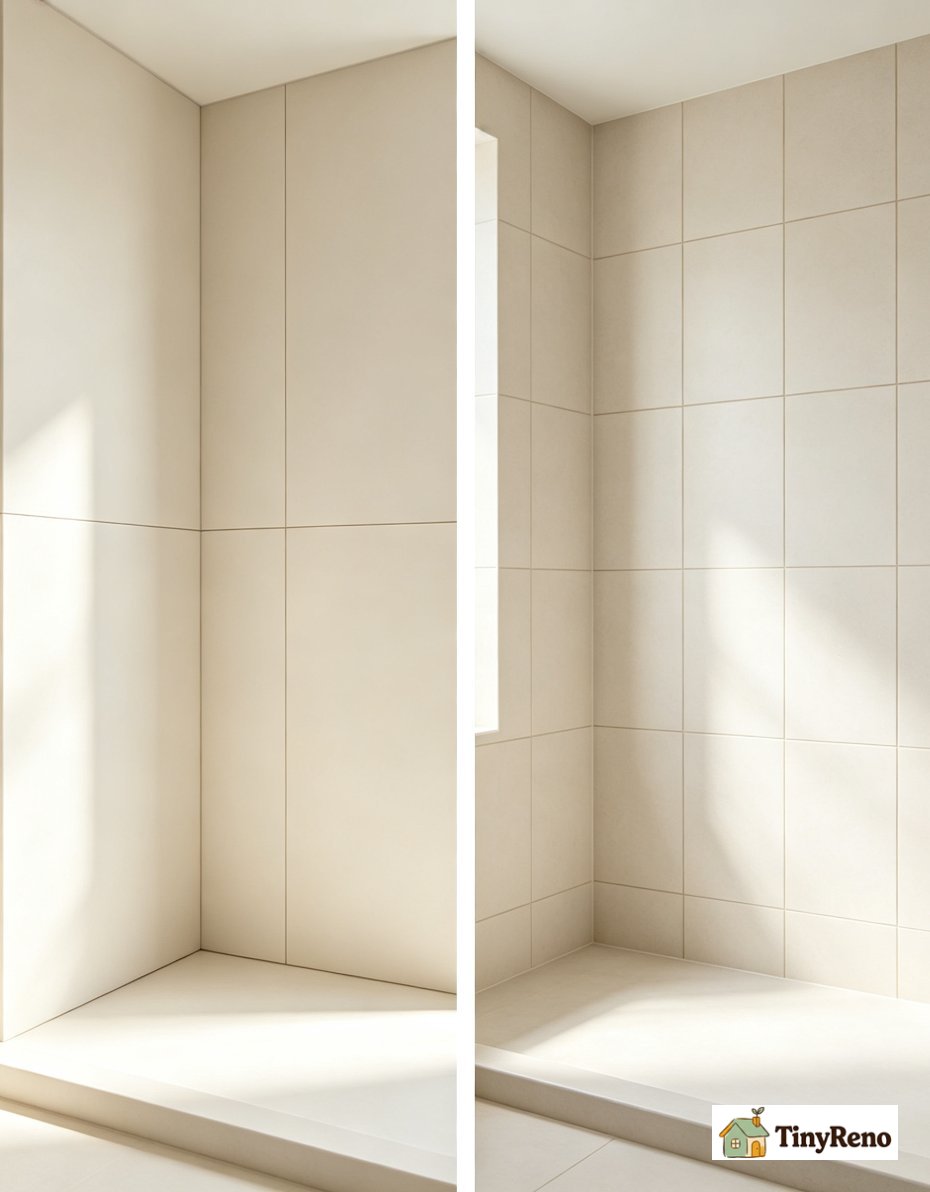
The Five Key Differences Between Solid Surface Shower Panels and Tile
Five key differences determine which shower wall material is right for your situation. Here is the comparison I now use when I am helping someone pick between solid surface and tile, and the way I think about it is in terms of which difference matters most for the specific bathroom project.
Difference one, cost. Solid surface shower panels cost $400 to $1,200 per wall section for materials plus installation, which is roughly the same as a mid range tile shower at $500 to $1,500 per wall section for. Budget tile can be as low as $200 per wall section, and high end solid surface can be as high as $2,000 per wall section. The total project cost depends on the shower size, the material quality, and the labor cost in your area. The cost difference is small enough that it usually does not drive the decision. What drives the decision is the install time and the maintenance over the life of the shower.
Difference two, install difficulty and time. Solid surface panels install in one to two days for a typical three wall shower, compared to three to five days for tile. The solid surface panels come in large sheets that are glued directly to the substrate, and the joints are sealed with a color matched silicone caulk. The tile install requires substrate prep, waterproofing, tile setting, grouting, and sealing, and the grout needs to cure for 48 to 72 hours between steps. The time difference is the biggest practical difference between the two materials, and it is what makes solid surface the right answer for time pressured projects.
Difference three, durability and maintenance. Solid surface panels are waterproof by themselves because they are a continuous non porous material. Tile is waterproof only when the grout and caulk are in good condition. The grout in a tile shower needs to be resealed every one to two years and the caulk needs to be replaced every three to five years. The solid surface panels need only occasional cleaning and the occasional recaulking of the joints. Over a 20 year lifespan, the tile shower needs roughly 8 to 10 grout resealings and 4 to 6 caulk replacements, while the solid surface shower needs only 2 to 3 caulk replacements.
Difference four, look and design flexibility. Tile offers almost unlimited design flexibility because tiles come in thousands of colors, sizes, shapes, and patterns. You can create a custom pattern, a specific color, or a specific texture that matches the rest of the bathroom exactly. Solid surface panels come in a limited range of colors and patterns (typically 30 to 100 options per manufacturer), and the panels are large sheets with seams between them. The tile is the right answer for a custom design aesthetic or for a bathroom where the shower wall needs to match a specific color or pattern in the rest of the room. The solid surface panels are the right answer for a clean modern look where the limited color and pattern options are sufficient.
Difference five, repair and replacement. Tile repairs are straightforward because individual tiles can be replaced if they crack or chip. The repair involves removing the damaged tile, cleaning the substrate, setting a new tile, regrouting, and resealing. Solid surface panel repairs are more complex because the panels are large sheets and a damaged panel often requires replacing the entire panel. Solid surface panel repairs are usually done by a professional because the color matching and the seam finishing require specialized tools and skill. The tile is the right answer for situations where the shower is likely to see impact damage or where individual tile replacement may be needed. The solid surface panels are the right answer for situations where the shower is unlikely to see impact damage and where the homeowner wants a low maintenance long term solution.
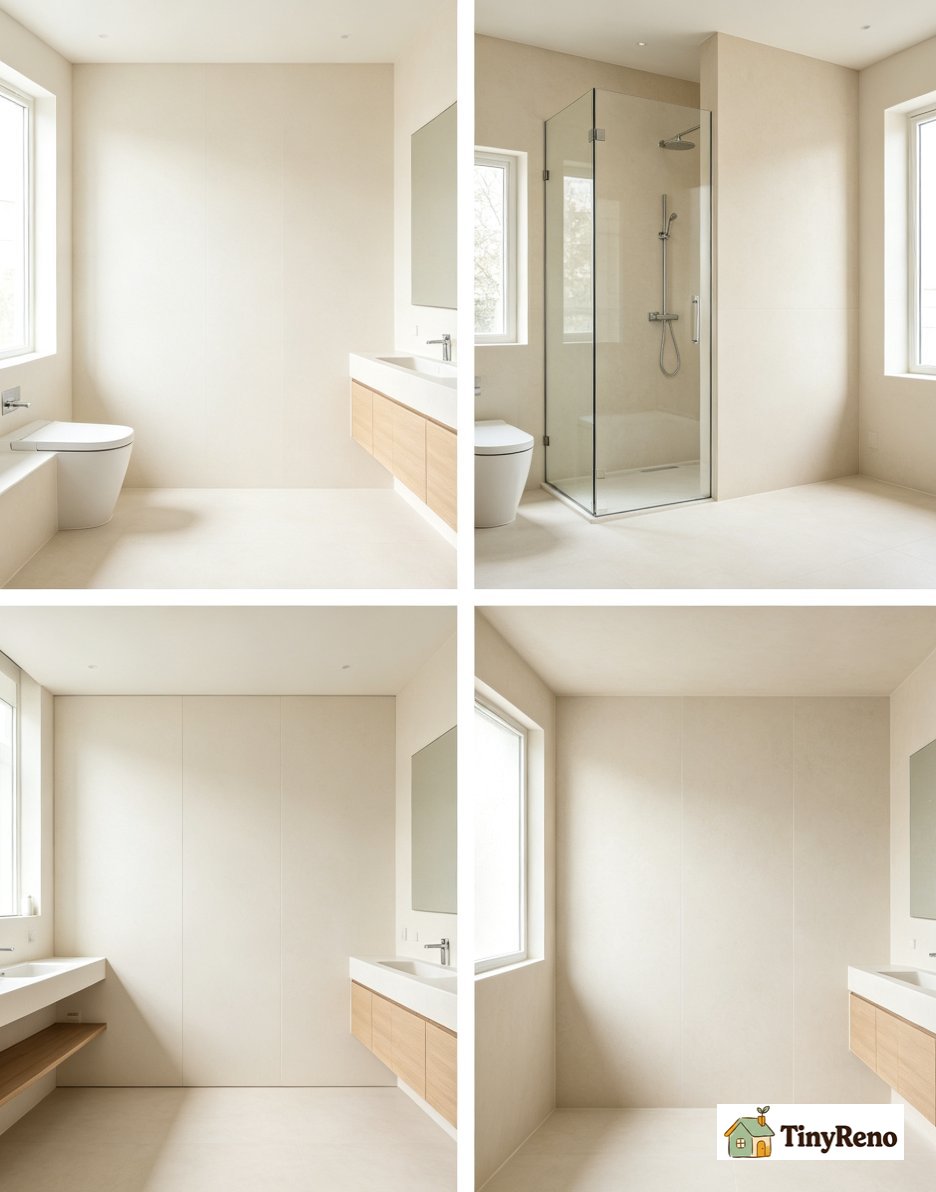
When Solid Surface Shower Panels Are the Right Answer
Solid surface shower panels are the right answer in four specific situations. Here is when I recommend them over tile, and why.
Situation one, the bathroom needs a fast install. If the shower needs to be done in one to two days rather than three to five days, solid surface panels are the right answer. The fast install is what makes solid surface panels the choice for rental property renovations, hotel renovations, and time pressured homeowner projects. The solid surface panels can be installed in a single day and the shower can be used within 24 hours of the install.
Situation two, the homeowner wants minimal long term maintenance. If the homeowner wants a shower that needs only occasional cleaning and the occasional recaulking, solid surface panels are the right answer. The lack of grout means there are no grout joints to reseal and no caulk lines to maintain. Over the 20 year lifespan of the shower, this saves roughly 40 to 60 hours of maintenance work compared to a tile shower.
Situation three, the bathroom has a modern or contemporary design aesthetic. If the bathroom is designed in a modern or contemporary style with clean lines and minimal ornamentation, solid surface panels are the right answer. The solid surface panels come in colors and patterns that match the modern aesthetic, and the lack of grout lines creates the clean look that modern bathrooms are known for. Tile is the right answer for traditional or transitional design aesthetics where the grout lines are part of the design.
Situation four, the shower is in a humid climate where grout failure is a risk. If the shower is in a humid climate where the humidity accelerates grout deterioration, solid surface panels are the right answer. The solid surface panels are not affected by humidity because they are a non porous material. Tile showers in humid climates need more frequent grout resealing and caulk replacement to prevent water damage.
When Tile Shower Walls Are the Right Answer
Tile shower walls are the right answer in five specific situations. Here is when I recommend them over solid surface panels, and why.
Situation one, the bathroom needs a custom design. If the shower wall needs to match a specific color, pattern, or texture in the rest of the bathroom, tile is the right answer. The tile offers almost unlimited design flexibility, and a skilled tile installer can create almost any look. The solid surface panels are limited to the colors and patterns offered by the manufacturer, which may not match the specific design aesthetic.
Situation two, the budget is tight. If the budget for the shower walls is under $500 total, tile is the right answer. Budget tile can be as low as $200 per wall section for, while budget solid surface panels are rarely under $400 per wall section. The cost difference is what makes tile the right answer for budget constrained projects.
Situation three, the homeowner has tile setting skill or wants to DIY. If the homeowner has tile setting skill or wants to learn, tile is the right answer for the install. The tile install takes longer but the skill is widely available and the tools are inexpensive. The solid surface panel install requires specialized tools and is usually done by a professional.
Situation four, the shower is likely to see impact damage. If the shower is in a household with active children or where impact damage is a risk, tile is the right answer. The individual tiles can be replaced if they crack or chip, while the solid surface panels usually require replacing the entire panel if they are damaged.
Situation five, the bathroom is part of a historic preservation project. If the bathroom is in a historic home or part of a historic preservation project, tile is usually the right answer because the preservation guidelines often require traditional materials. Solid surface panels may not be allowed in historic preservation projects, and the design flexibility of tile makes it possible to match the historic aesthetic exactly.
How Solid Surface Shower Panels Are Actually Installed
Understanding how solid surface shower panels are installed helps clarify why they install faster than tile and why they require specialized tools. Here is the install process for a typical three wall shower.
The install starts with a clean, flat substrate. The substrate is usually cement board or similar material that is screwed to the wall framing. The substrate does not need to be waterproofed because the solid surface panels themselves are waterproof. The panels are cut to size using a circular saw with a fine tooth blade or a specialized solid surface cutting tool. The cuts need to be precise because the seams between panels are visible and need to fit tightly.
The panels are glued to the substrate using a construction adhesive designed for solid surface material. The adhesive is applied in a serpentine pattern on the back of the panel, and the panel is pressed firmly against the substrate. The panels are held in place with temporary bracing while the adhesive cures, usually for 24 hours. The seams between panels are sealed with a color matched silicone caulk that is designed specifically for solid surface material.
The total install time for a typical three wall shower is one to two days, with most of the time spent on cutting the panels to size and getting the seams to fit tightly. The seams are the most critical part of the install because any gap or uneven seam will be visible and will collect mildew over time. The install is usually done by a professional because the cutting and the seam finishing require specialized tools and skill.
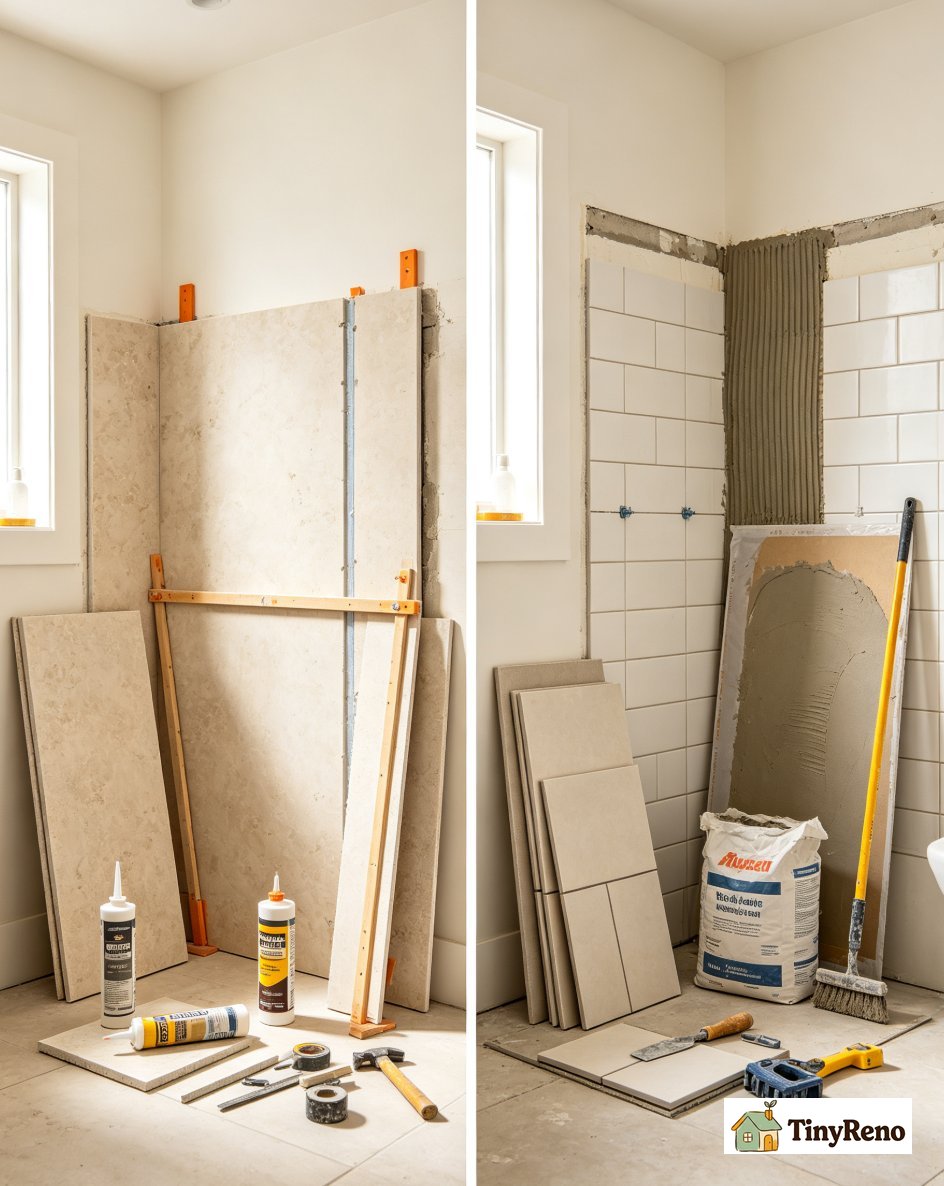
How Tile Shower Walls Are Actually Installed
Understanding how tile shower walls are installed helps clarify why they take longer to install than solid surface panels and why the skill requirement is different. Here is the install process for a typical three wall tile shower.
The install starts with a clean substrate, usually cement board screwed to the wall framing. The substrate is then waterproofed with a sheet membrane like Schluter Kerdi or a liquid applied membrane like RedGard. The waterproofing is the most critical step because it is what prevents water from getting behind the tile and damaging the substrate. The waterproofing has to be continuous across all walls, the curb, and the shower pan.
Once the waterproofing has cured (24 hours for liquid applied, immediate for sheet membrane), the tile can be set. The tile is set in thinset mortar, which is applied to the substrate with a notched trowel. The tile is pressed into the mortar and held in place until the mortar cures. The tile layout has to be planned in advance to minimize cuts and to ensure that the pattern looks correct. The tile install takes one to two days for a typical three wall shower.
After the tile mortar has cured (24 hours), the grout is applied. The grout is pressed into the joints with a grout float, and the excess is wiped off the tile face with a damp sponge. The grout has to cure for 48 to 72 hours before the shower can be used. After the grout has cured, a penetrating sealer is applied to the grout joints to prevent water absorption. The total install time for a typical three wall tile shower is three to five days, and the shower cannot be used until the grout and sealer have cured.
What I Would Do Differently If I Was Making This Decision Today
If I was making the shower wall decision for the first time today, the three things I would do differently are these. First, I would consider solid surface panels for any project where the budget allows it. The time savings during install and the maintenance savings over the life of the shower add up to a strong value proposition even though the upfront cost is similar to tile. Second, I would match the shower wall material to the bathroom design aesthetic rather than the other way around. The shower wall should look like it belongs in the bathroom, not the other way around. Third, I would consider the long term maintenance when making the decision. A solid surface shower that needs minimal maintenance for 20 years is worth the upfront cost difference for most homeowners, while a tile shower that needs regular grout resealing is worth the upfront cost difference for most renters.
The one thing I would not do differently is to consider solid surface panels as a universally better option. The tile is the right answer for many situations, including custom designs, budget constrained projects, historic preservation projects, and situations where impact damage is a risk. The decision is not about which material is better in absolute terms, but which material is better for your specific situation.
The five key differences above and the four situations for solid surface panels and five situations for tile are what I now recommend for any shower wall decision. The right answer depends on your specific shower, your specific budget, your specific skill level, and your specific timeline. The wrong answer is the one that does not match your situation, even if it is the right answer for someone else.


Discussion (0)
Sign in to join the discussion