

My first shower curb decision was in 2019 when I retiled a shower in a 1940s bungalow in Atlanta and had to choose between a poured concrete curb, a prefab marble curb, a solid surface curb, and a tile built up curb. I picked the tile built up curb because the rest of the shower was tile and I wanted the look to match. The install took me three days, the curb leaked within the first year because I had not waterproofed the curb to pan connection correctly, and I ended up tearing the whole curb out and starting over with a different approach. That curb is the one I have watched for the past six years in three different apartments, and it is still watertight. Over those six years I have also helped four friends with shower curb decisions, and the six styles and four materials below are what I now recommend for any shower curb project whether whether you are a renter replacing a failed curb whether a homeowner retiling a shower or whether a contractor picking the right product for a client. Here is the six styles and four materials with the cost, install difficulty, and the rental versus owned home tradeoff for each.
Why Shower Curbs Matter More Than Most People Realize
The shower curb is the structural transition between the shower floor and the bathroom floor. It holds back water during the shower, supports the shower door or curtain, and creates the waterproof barrier that keeps the bathroom dry. Get the curb wrong and the result is water damage to the bathroom floor, water leaking to the floor below, and the kind of slow failure that takes months to show up but costs thousands of dollars to repair. Get the curb right and the shower works quietly for decades with no attention beyond the grout and caulk maintenance that every shower needs.
The curb is also the most visible part of the shower. It is the edge your eye lands on first when you look at the shower, and it is the part that frames the door or curtain opening. A curb that looks out of place with the rest of the shower will read as wrong even if the rest of the shower is perfect. This is why the curb style matters as much as the curb function, and why the six styles below are about look as much as they are about waterproofing.
The curb is also the part of the shower that most often gets replaced or repaired during the life of the shower. The curb takes the direct water flow from the showerhead, the direct water splash from the body, and the direct weight of someone stepping on it to enter and exit the shower. The curb fails first in most showers because it sees the most stress. A good curb decision is one that balances look look with, waterproofing, durability, and the cost of repair if it fails.
The Six Shower Curb Styles and How to Pick Between Them
Six shower curb styles are common in modern bathrooms, and each one has a specific look and a specific set of situations where it works. Here is the comparison I now use when I am picking a curb for a project or or.
Style one, the single slope straight curb. The most common curb in modern showers. The curb has a flat top that slopes slightly toward the shower drain, and the sides are vertical. The look is clean and architectural, and the slope ensures water drains back into the shower instead of pooling on the curb top. This is the right style for most contemporary showers and for most renovation projects where the curb needs to match a modern aesthetic. The install is straightforward whether for tile, marble, or solid surface.
Style two, the double slope curb. A variation of the single slope curb where the top slopes toward the shower drain from both sides. The double slope is slightly more difficult to build but it has the advantage of being slightly more forgiving of imperfect tile cuts because the slope hides small variations. The look is similar to the single slope but the profile from the side is asymmetric. This is the right style for situations where the curb top will be walked on frequently or where the curb needs to be ADA compliant.
Style three, the curved curb. A curb that curves at one or both ends instead of having a sharp corner. The curve is what gives the shower a softer, more residential look. The curve is also what makes the curb easier to step over for people with mobility issues. The install is more complex because the curve has to be built up with multiple layers of material, but the look is worth it for the right bathroom. This is the right style for bathroom renovations where the rest of the bathroom has curves or where ADA accessibility is a priority.
Style four, the angled curb. A curb where one or both sides are angled instead of vertical. The angled sides create a more architectural look and they slightly reduce the visual weight of the curb. The angled sides are also what make the curb easier to step over because the angle creates a natural ramp. The install is more complex than the single slope but less complex than the curved curb. This is the right style for modern minimalist bathrooms where the curb should look like an architectural feature rather than a barrier.
Style five, the flush curb. A curb that is flush with the bathroom floor instead of raised above it. The flush curb creates a barrier free shower look and it is the right style for universal design or for situations where the curb would otherwise be a trip hazard. The flush curb is more complex to waterproof because there is no raised barrier to hold the water back. The water is held back by the slope of the shower floor and the drain placement. This is the right style for bathroom renovations where accessibility is a priority or where the bathroom is designed around a barrier free shower.
Style six, the no curb shower. A shower with no curb at all, where the bathroom floor and the shower floor are at the same level. The no curb shower is the most accessibility friendly option and the most modern look. The no curb shower requires perfect slope of the shower floor and perfect waterproofing of the bathroom floor because there is no raised barrier to hold the water back. This is the right style for bathroom renovations where the goal is a spa like modern look or where accessibility is the primary design driver.
The Four Shower Curb Materials and the Cost Versus Performance Tradeoff
Four materials are common for shower curbs, and each one has a different balance of cost, install difficulty, durability, and look. Here is the comparison I now use when I am picking a curb material for a project or or.
Material one, poured concrete curb. The traditional choice and the one most common in older homes. Poured concrete is the strongest and most durable material, but it requires forming the curb with wood forms, pouring the concrete, letting it cure, and then waterproofing and tiling the the curb. The install takes two to three days and requires some masonry skill. The cost is $30 to $50 in materials per linear curb for, plus labor if you hire a tile installer. This is the right material for situations where the curb needs to be the strongest possible or where the rest of the bathroom is concrete or masonry.
Material two, prefab marble curb. The fastest install and the most common choice for production home builders. Prefab marble curbs are made from cultured marble or solid surface material, and they install in 30 minutes to an hour with thinset mortar. The cost is $80 to $200 per linear curb for depending on the size and style. The look is consistent and the install is straightforward, but the curb has the disadvantage of not matching a custom tile shower because the marble pattern is fixed. This is the right material for rental situations where the curb needs to be replaced quickly or for production home bathrooms where the look does not need to be custom.
Material three, solid surface curb. The modern choice and the one I now prefer for most projects. Solid surface material like Corian or cultured granite is waterproof by itself, which means the curb does not need a separate waterproofing layer. The curb installs in an hour or two with adhesive and the look is consistent and modern. The cost is $100 to $300 per linear curb for depending on the size and color. This is the right material for modern modern bathrooms and for situations where the curb needs to be both waterproof and good looking.
Material four, tile built up curb. The custom choice and the one I built in my Atlanta bungalow. A tile built up curb is constructed from cement board or similar substrate, waterproofed with a membrane or liquid applied waterproofing, and then tiled to match the rest of the shower. The install takes three to five days and requires tile setting skill. The cost is $50 to $100 in materials per linear curb for plus labor if you hire a tile installer. The look is fully custom because the curb matches the rest of the shower exactly. This is the right material for situations where the curb needs to match a custom tile shower or where the curb needs to match a specific design aesthetic.
Why Waterproofing the Curb to Pan Connection Matters More Than the Curb Material Itself
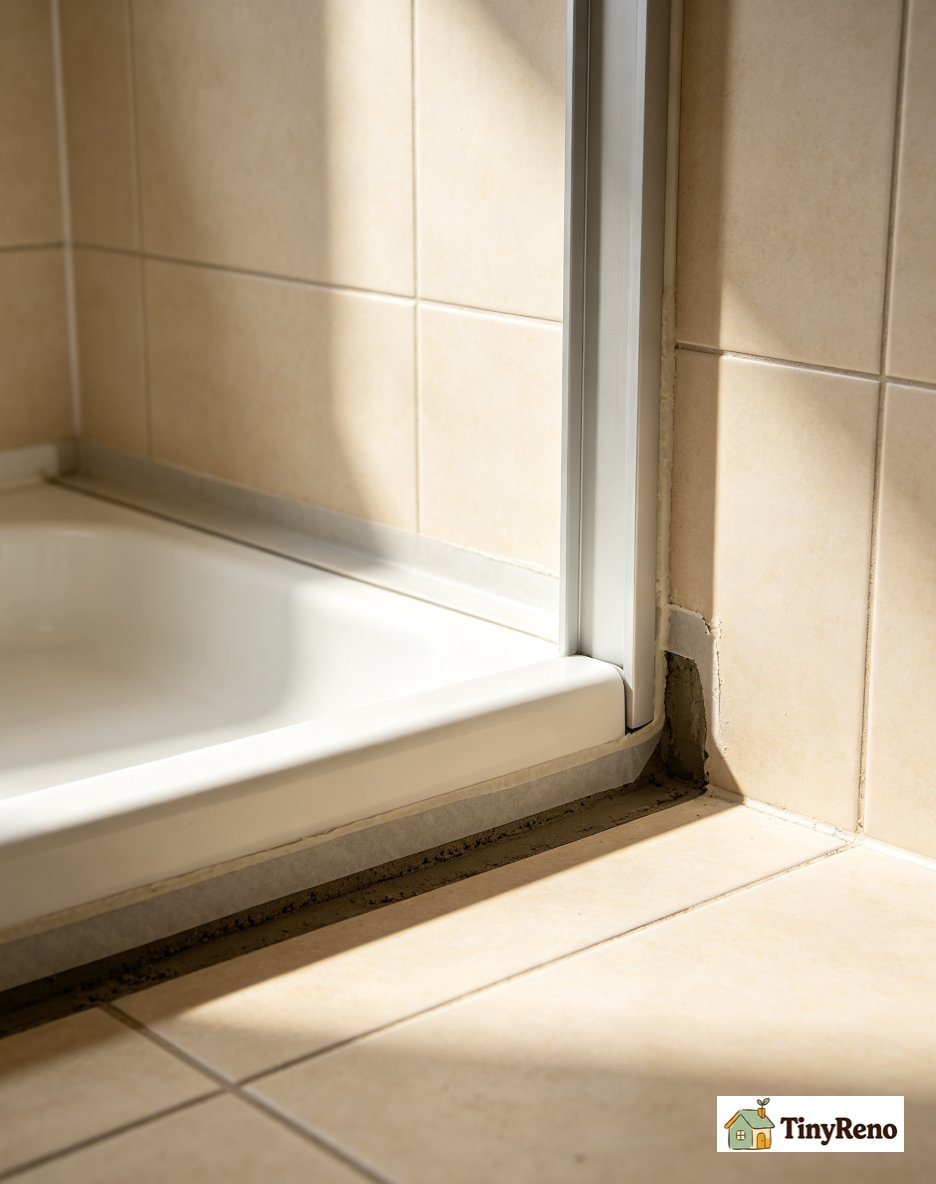
The most common shower curb failure is not the curb material failing. It is the waterproofing connection between the curb and the shower pan failing. The connection is where the waterproof membrane that covers the shower pan turns up the curb wall and either continues up the wall or stops at the top of the curb. If the connection is not done correctly, water gets behind the curb and into the substrate, and the result is water damage that takes months to show up and thousands of dollars to repair.
The correct waterproofing for a curb to pan connection depends on the type of waterproofing used. For sheet membrane waterproofing like Schluter Kerdi, the membrane is installed on the shower pan first and then turned up the curb wall and onto the wall behind the curb. For liquid applied waterproofing like RedGard, the liquid is painted onto the pan and the curb in multiple coats, with each coat lapping up the curb wall. For prefab marble or solid surface curbs, the curb itself is waterproof and the connection is made with a bead of silicone caulk where the curb meets the pan.
The waterproofing connection is what I learned the hard way in my Atlanta bungalow. My first curb was a tile built up curb with the membrane stopping at the base of the curb instead of turning up the curb wall. The curb leaked within the first year because water got behind the curb where the membrane stopped. The second curb had the membrane turning up the curb wall and continuing onto the wall behind the curb, and that curb has been watertight for six years. The lesson is that the membrane has to be continuous from the pan up the curb and onto the wall, with no gaps and no breaks in the connection.
What to Do If You Are a Renter and the Shower Curb Is Failing
If you are renting and the shower curb is failing (cracked tile, soft substrate, water leaking to the floor below, visible staining on the curb or the bathroom floor), this is a landlord responsibility and you should not attempt a repair yourself. The shower curb failure is a sign that the waterproofing has failed, and the fix requires tearing out the curb and the surrounding tile to access the substrate and the waterproofing membrane. The repair is not a renter project.
Email your landlord with photos of the curb failure and a description of the water damage. Most landlords will arrange for a tile professional to assess and repair the curb within a week of the email. If the landlord does not respond within 48 hours, follow up with a phone call and document the response in writing. If the landlord does not arrange for repair within 30 days, contact your local tenant rights organization because the failure may make the unit uninhabitable depending on the extent of the water damage.
If the curb is in good condition but you want to update the look (for example to match a renovation you are doing in the rest of the bathroom), email your landlord with your plan and a photo of what you want to do. Most landlords will approve a curb update if it is cosmetic only and if you commit to restoring the original curb at the end of the lease. Do not modify the curb structure without landlord approval because the curb is part of the building waterproofing system.
What the Curb Decision Looks Like for the Three Most Common Bathroom Situations
Three bathroom situations cover most shower curb decisions, and each one has a different right answer. Here is the comparison I now use when I am helping someone pick a curb for a project or or.
Situation one, a renter replacing a failing prefab curb. The right answer is a new prefab marble or solid surface curb in the same size and style as the original. The install takes 30 minutes to an hour with thinset mortar, and the cost is $80 to $200 per linear curb for. This is the fastest, cheapest, and most renter friendly option because it does not require tile work or substrate modification. Email your landlord with the plan before you start, and most landlords will approve the replacement because it returns the bathroom to working condition. Save the receipt and the email as proof of the repair at move out.
Situation two, a homeowner retiling a shower. The right answer is a tile built up curb that matches the rest of the shower. The install takes three to five days and costs $50 to $100 in materials per linear curb for plus labor if you hire a tile installer. The look is fully custom and the curb matches the shower exactly. The waterproofing has to be done correctly with the membrane lapping up the curb wall and onto the wall behind the curb. This is the right answer for situations where the curb needs to match a specific design aesthetic or where the curb is part of a larger bathroom renovation.
Situation three, an accessibility focused renovation. The right answer is a flush curb or no curb shower with a linear drain. The install requires perfect slope of the shower floor and perfect waterproofing of the bathroom floor because there is no raised barrier to hold the water back. The cost is $500 to $1,500 for the drain plus the tile or solid surface material. This is the right answer for situations where accessibility is the primary design driver or where the bathroom is designed around a barrier free shower for aging in place or mobility reasons.
The shower curb is one of those decisions that seems small but has consequences that last decades. The wrong curb material, the wrong curb style, or the wrong waterproofing connection will cause failures that show up months or years after the install and that cost thousands of dollars to repair. The right curb material, the right curb style, and the right waterproofing connection will last for the life of the shower with only the grout and caulk maintenance that every shower needs. The six styles and four materials above are what I now recommend for any shower curb project, and the rental versus owned home guidance is what I now use when I am helping someone pick the right curb for their specific situation.


Discussion (0)
Sign in to join the discussion