

I bought my first dark velvet curtain on a Tuesday in February, and by the following Tuesday I had ordered three more. That is not the kind of sentence I would normally write about a window treatment, but here is what happened. I had been staring at the same pale grey wall in my Brooklyn apartment for two years. The wall was the wall behind my couch. It was empty because I could never find art that worked with the cool grey tone, and the window next to it had a sheer linen curtain that did nothing for the room at night. I ordered a single 50 by 96 inch panel of forest green polyester velvet from a retailer I had never used before, more or less on a whim, because I had been looking at a friend's emerald velvet curtains the previous weekend and could not stop thinking about how the color had made her living room look like a hotel lobby. The single panel arrived four days later. I steamed it, hung it on the existing tension rod at 7 p.m. on a Tuesday, and by 7:05 p.m. I was sitting on the couch staring at the wall thinking I had made a mistake. The green was darker than I had expected. The room looked smaller. I almost took it down. Then I turned on the floor lamp, and the velvet's pile caught the warm light in a way that made the green shift from forest to jewel, and the wall behind the curtain went from empty to intentional. I left the curtain up. By the following Tuesday I had ordered panels for the bedroom, the office, and the dining area. Here is what I learned across that first year of living with dark velvet curtains in every room, what worked, what failed, and the one thing I wish I had known before I ordered the first one.
The First Week and the Mistake I Almost Made by Taking It Down
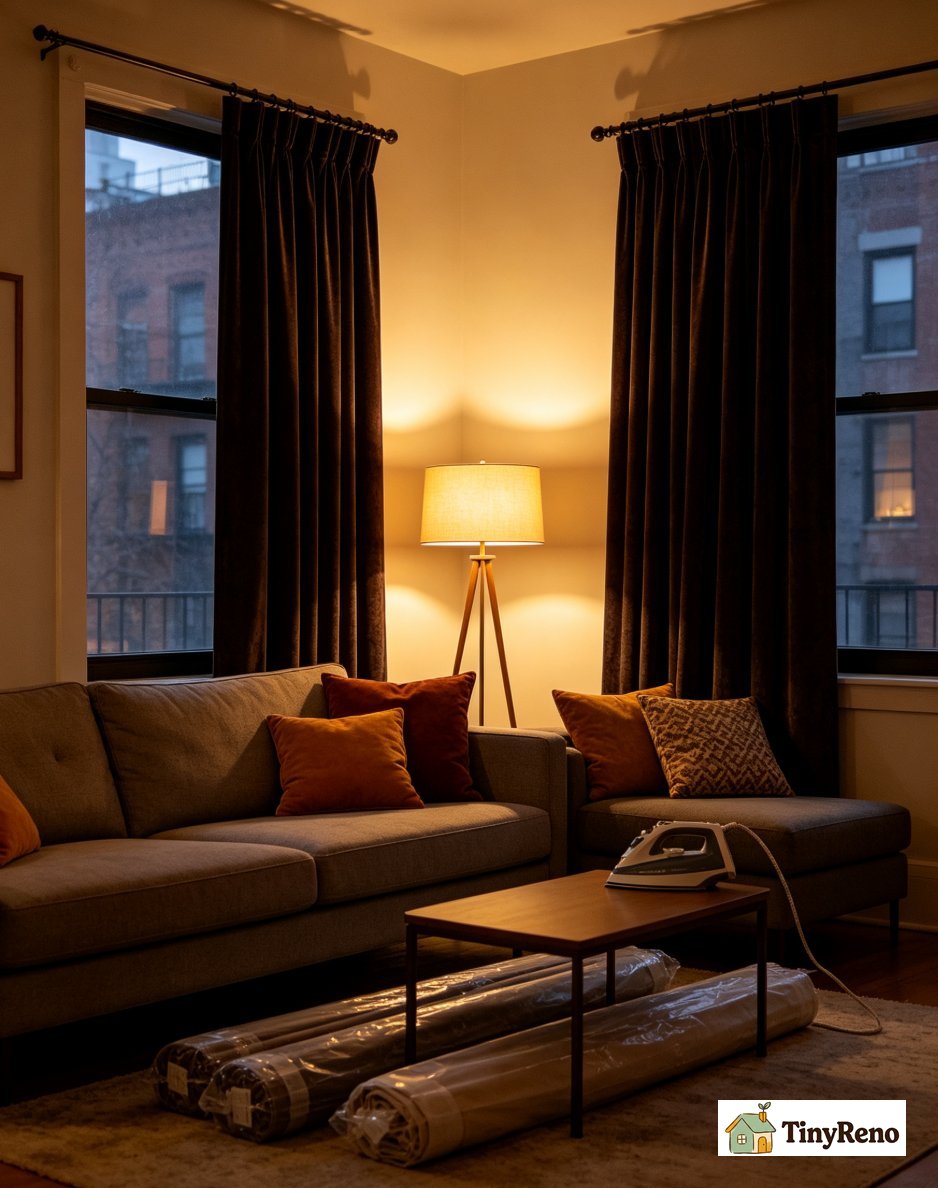
The first week with the forest green curtain in the living room was harder than I expected. I had ordered the panel expecting to love it, and instead I spent the first three days wondering if I had wasted $45 on a single panel that made my apartment look like a cave. The problem was not the velvet. The problem was that I had ordered the panel without changing anything else in the room. The floor lamp was too small, the throw pillows were the wrong scale, and the room did not have enough other texture to balance the velvet's weight. On the fourth day I moved the floor lamp to the corner closer to the curtain, swapped two of the throw pillows for ones in warmer tones, and the room finally clicked. That is the first lesson I now tell anyone who orders dark velvet. The curtain is going to look wrong for the first three days. Give it a week before you take it down. The room needs to adjust to the new weight, and you need to see the velvet in all three lighting conditions (morning, afternoon, evening) before you can judge whether the color works.
Why Forest Green Became the Color I Recommend to Almost Everyone
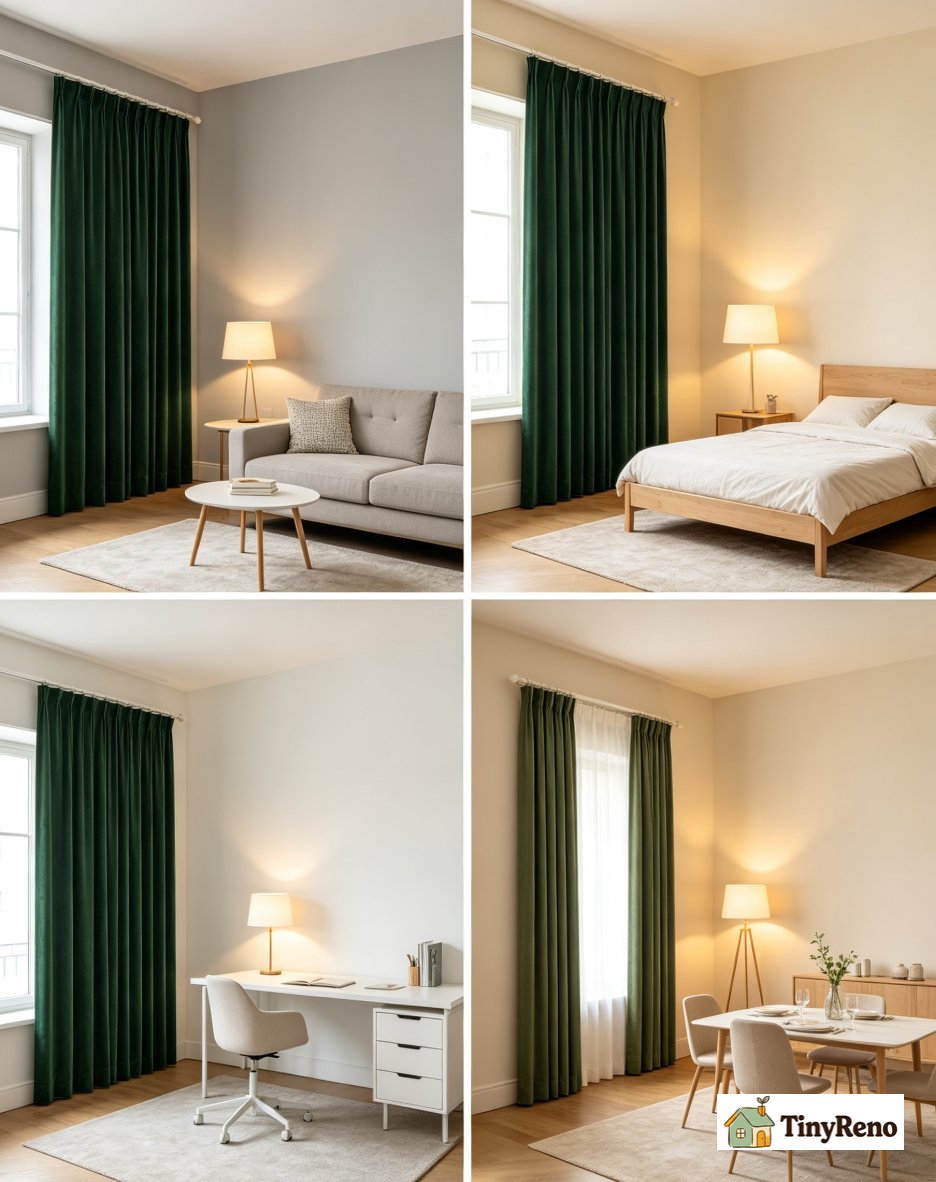
After the living room curtain worked, I ordered the bedroom panel in the same forest green. Then I ordered the office in navy. Then the dining area in burgundy. By the end of the year I had four dark velvet panels in four different colors, and the one I kept coming back to was forest green. Not because forest green is objectively the best color, but because it is the color that does the most work in the most situations. The living room forest green worked against pale grey walls. The bedroom forest green worked against cream walls. The friend's forest green worked against beige walls. The other family's forest green worked against white walls. Forest green velvet reads as heritage and library no matter what is behind it, which is the visual association that makes a small apartment look like a curated space rather than a rental default. Navy is the safe choice that never clashes with anything but never has the wow factor. Burgundy is the formal choice that loses points in modern rooms. Forest green is the color that does both jobs at once, which is why I now recommend it first when someone asks what color to try.
The Three Failures I Watched in My Friends' Apartments Before I Believed in This
Before I bought my own, I watched three friends try dark velvet in their apartments and learned what not to do from their regrets. The first friend bought a charcoal velvet panel for her180 square foot studio and had to take it down after two months because the room felt like a cave every evening by five p.m. The second friend bought a deep teal velvet at the lowest price point and within a year the pile had flattened and the color looked dull under her apartment's fluorescent lights. The third friend bought a beautiful burgundy velvet and hung it on a flimsy tension rod, which sagged within weeks and pulled the curtain into a sad droop in the middle that made the room look worse than before. Each of those failures taught me something specific that I now apply to every dark velvet recommendation. First, do not put dark velvet in a small or dim room unless you have strong overhead lighting. Second, spend at least $40 per panel on polyester velvet or $80 on cotton, because cheap velvet looks cheap. Third, use a heavy duty curtain rod with real anchors, not a tension rod for anything heavier than a sheer cotton panel. The three friends eventually replaced their curtains with versions that worked, and two of them now have dark velvet in rooms where it makes sense. The third kept the deep teal but upgraded to a heavier rod and added a floor lamp, and now it works just as well.
How I Installed All Four Panels Without Drilling a Single Hole
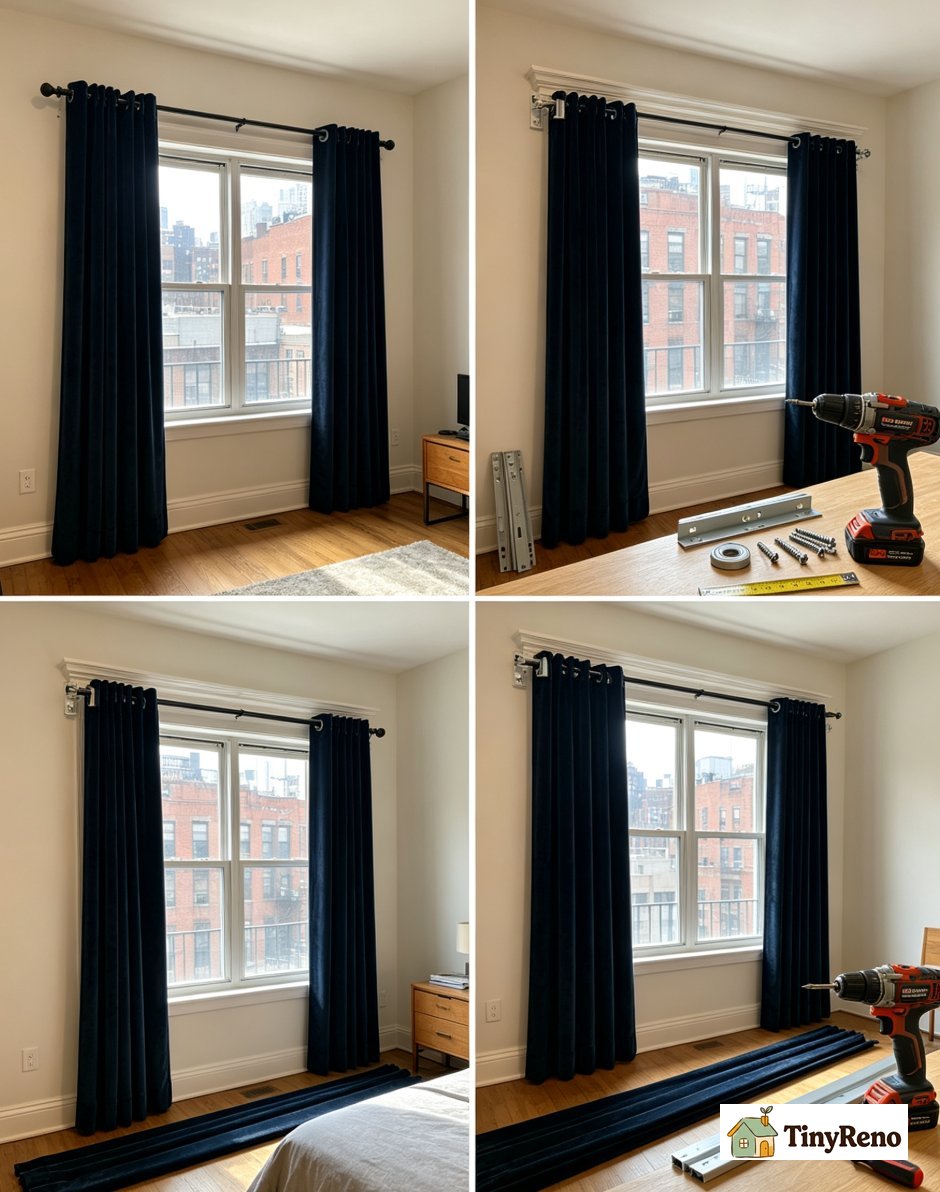
I rent, so drilling holes was not on the table. The first panel I installed on the existing tension rod, which worked because the window frame was solid wood with a deep sill. The second and third panels needed new rods because the bedroom and office windows did not have tension rod compatible frames. For those I used Kwik Hang brackets that clip over the top of the decorative window molding and hold the rod without any screws. The brackets are rated for 25 pounds and a single dark velvet panel plus a one inch rod comes in around3 to 4 pounds total, well within the rating. The dining area window was wider, so it needed two panels. Two panels plus the rod and hardware came to about 8 pounds — still under the 25-pound rating, but the bracket placement with two panels looked less stable than I liked on that particular window. I asked my landlord for permission to drill two small holes for heavy-duty brackets, and she approved the same day. For that one I asked my landlord for permission to drill two small holes for heavy duty brackets, and she approved the same day because the holes are easy to patch on move out. The full installation across four rooms took one Saturday and cost about $30 in hardware plus the panels themselves. The whole project came in under $300.
Six Months In and the Maintenance I Did Not Expect
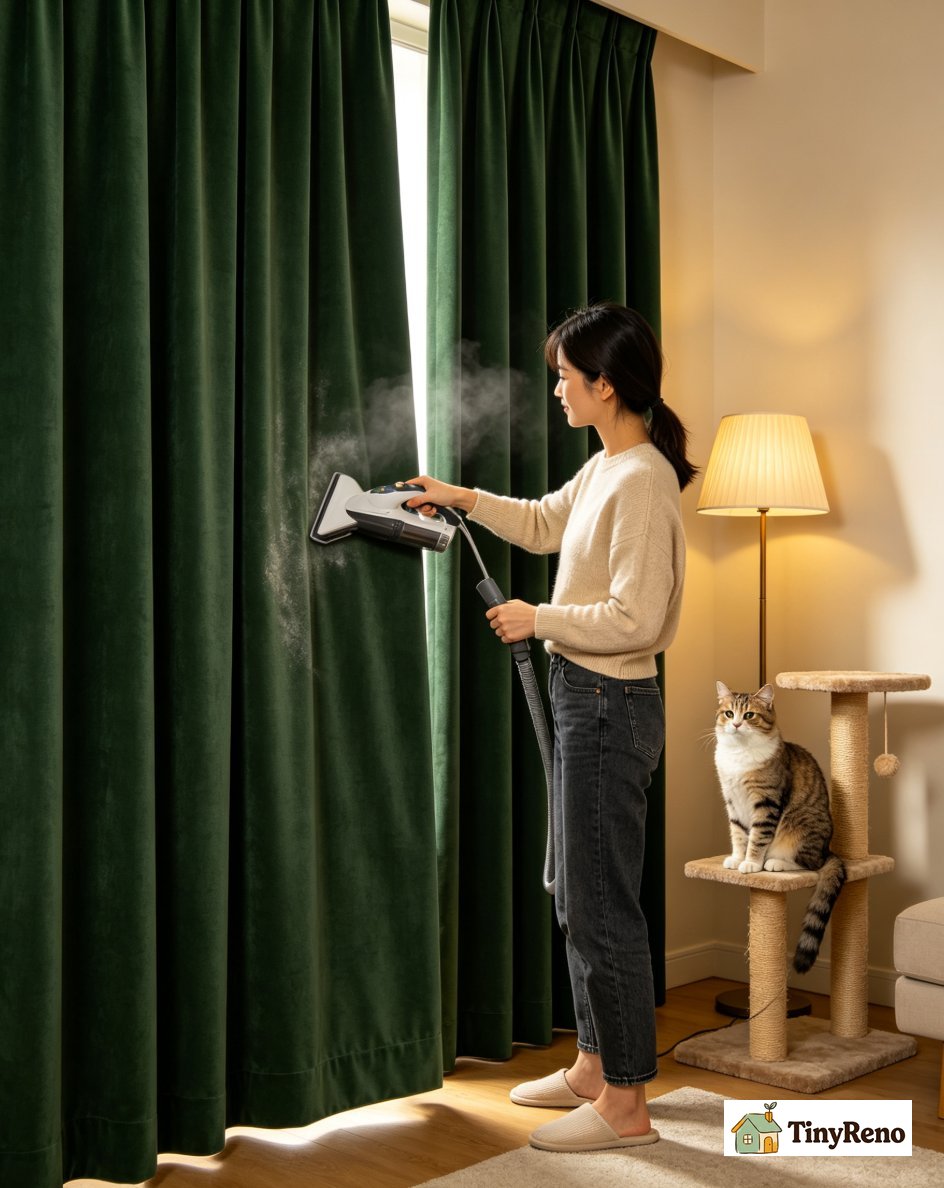
The thing nobody warned me about with dark velvet was the maintenance. Velvet piles attract dust and pet hair at a rate that cotton and linen simply do not, and the darker the velvet the more visible the dust becomes against the pile. Forest green velvet in particular shows every piece of white dust and every strand of cat hair, which means I now vacuum my curtains once a week with an upholstery attachment. The vacuum takes about ten minutes for four panels, and it is the difference between velvet that looks fresh and velvet that looks tired. The other maintenance I did not expect was the steaming. Polyester velvet arrives from the retailer with compression wrinkles from the packaging, and even after the initial steam the panels need a touch up steam every few months when the pile settles unevenly. A handheld steamer is the right tool for this, not an iron. The iron will crush the pile permanently. Once a month I run the steamer over each panel for about three minutes per panel, which keeps the velvet looking fresh and full. The combined vacuum and steam routine takes about twenty minutes a month total, which is the time cost of owning dark velvet that nobody talks about in the product photos.
What I Would Do Differently if I Was Starting Over Today
If I was starting the dark velvet project over today, I would do two things differently. First, I would order five or six color samples and run the actual five day sample test before committing to the full panels. I did not do this the first time and got lucky that forest green worked. Forest green is the color most likely to work, but every room is different, and the only way to know whether the color works in your specific room with your specific lighting is to hang samples for a week. Second, I would start with a single panel in the living room and live with it for a month before ordering panels for the other rooms. The single panel test is what tells you whether dark velvet works for your room and your lifestyle (especially if you have pets or small children). It also tells you whether you can handle the weekly vacuum and monthly steam routine. The first month of living with one dark velvet curtain is the test of whether you want to live with four. I happened to pass the test, but I know friends who did not. For them the curtain came down, the wall went back to pale grey, and the room returned to looking like a rental default rather than a curated space. That is the honest answer to whether dark velvet is right for you. Try one panel for a month. If you find yourself staring at the wall instead of the curtain, the dark velvet is working. If you find yourself staring at the curtain and willing the wall to look intentional again, dark velvet is not the right choice for your room and you should take it down.


Discussion (0)
Sign in to join the discussion