

My friend Daniel bought a 1972 ranch house in Atlanta in March 2024 and started planning a renovation before moving in. The popcorn ceiling in the living room was the first thing on his list because he didn't like the texture and wanted smooth drywall before his kids arrived in the summer. He ordered a $35 DIY asbestos in popcorn ceiling testing kit from Home Depot, mailed a sample to the included lab, and waited. The report that arrived two weeks later said "1.2 percent chrysotile asbestos detected, material classified as ACM (asbestos-containing material) per EPA NESHAP." That number was neither zero nor high. It was a number Daniel didn't know what to do with. He emailed me the report at 11pm on a Tuesday and asked if 1.2 percent meant his house was going to kill his kids. I called him back and we walked through what the report actually said, what the EPA classification meant, and what his options were. Three months later he'd talked to seven other Atlanta homebuyers who were all asking the same question about their own pre-1986 asbestos in popcorn ceiling testing, and I'd realized this was a question that deserved a longer answer than a phone call. Here's what Daniel's test result actually meant, what the 1986 ban did and didn't cover, and the five things you can do if your popcorn ceiling tests positive.
How Daniel decided whether to test his popcorn ceiling at all
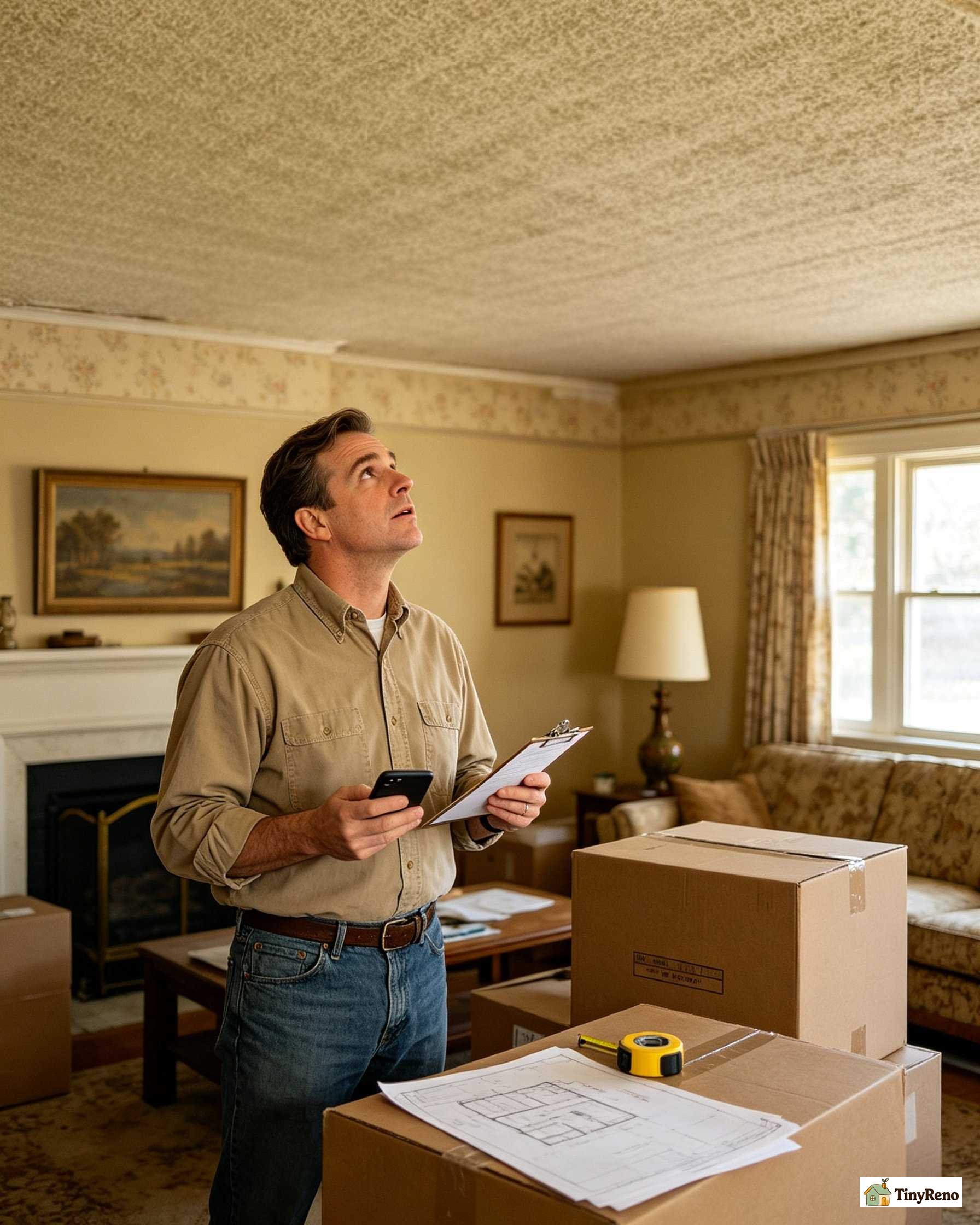
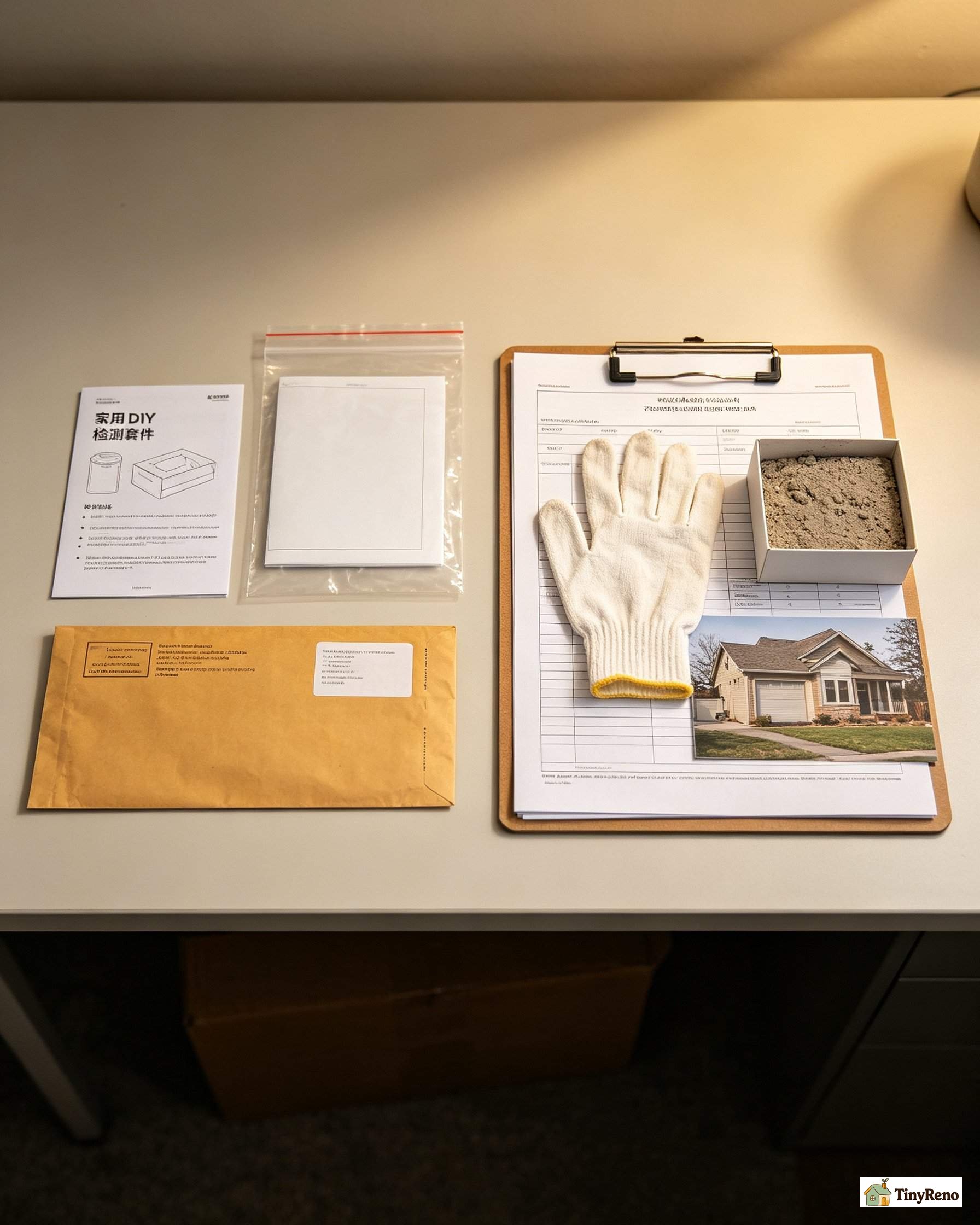
Daniel spent three days deciding whether to test. He'd read enough online to know that asbestos in popcorn ceiling testing was a real risk in pre-1986 homes, but he didn't know if his specific house had any. His three-day internal argument went something like this: if he didn't test and the ceiling did contain asbestos, he'd be scraping it during renovation and potentially exposing his family to airborne fibers for weeks. If he tested and it came back positive, the renovation would either have to wait for a professional abatement or get more expensive to cover the cost of encapsulating the ceiling instead of removing it. Either way, the test was the cheaper path. He spent $35 on the kit, $15 on priority shipping to the lab, and another 30 minutes watching a YouTube video to figure out how to collect the sample without contaminating it.
The three-question filter that helped Daniel decide whether to test at all was: was the house built before 1986 (yes, 1972), is the ceiling going to be disturbed during any planned renovation (yes, he was planning to scrape it smooth), and does state law require disclosure if he rents or sells before disturbing it (yes, Georgia requires disclosure to tenants for any pre-1986 building material). If any of those three is true for your situation, the $35-$50 DIY kit is worth the price even if you don't end up disturbing the ceiling yourself. The reason is that an unknown asbestos ceiling is worth less than a known asbestos ceiling in any real estate transaction, and a $50 test result is the cheapest way to convert the unknown into the known.
Why Daniel chose the DIY kit instead of calling a pro first
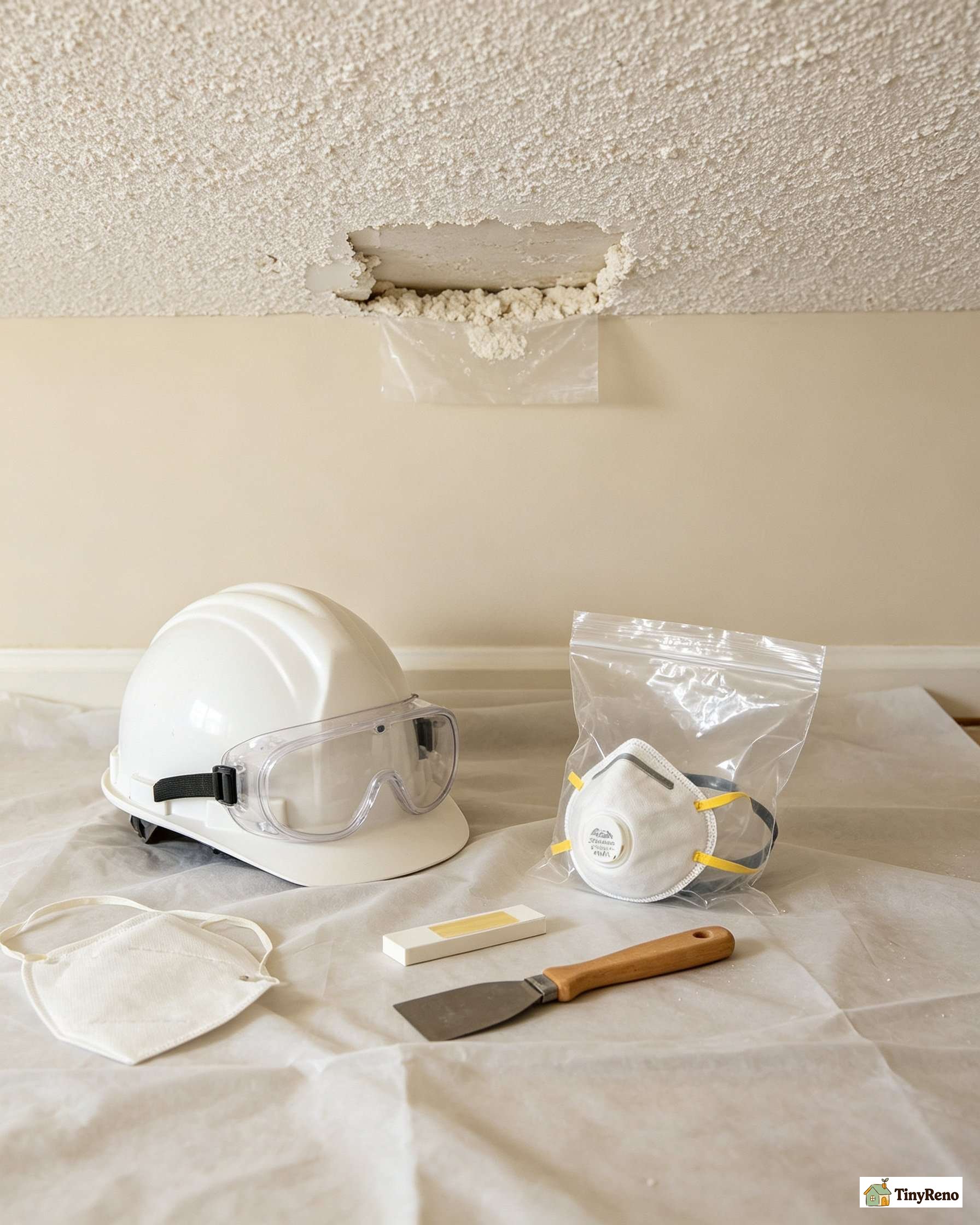
Daniel's reasoning for going DIY first was straightforward: he wanted to know if there was any asbestos at all before spending $300 to $500 on a professional inspection. His logic was that if the DIY kit came back negative, he didn't need the pro. If the kit came back positive, he'd call the pro to confirm the result with a more sensitive lab test. He'd already paid $50 for the kit; spending $300-$500 more felt premature before he knew whether there was anything to confirm.
The DIY kit and the professional inspection use different analytical methods, and that's worth understanding before you decide which to use. The DIY kit uses PLM (polarized light microscopy), which has a detection limit of about 1 percent asbestos by weight. That means if your sample contains less than 1 percent asbestos, the DIY kit will report it as "asbestos not detected" — even if there is some. The professional inspection uses TEM (transmission electron microscopy), which has a detection limit of about 0.01 percent — 100 times more sensitive than the DIY kit. So a DIY kit negative result is not the same as a professional inspection negative result. If the DIY kit is positive, the result is reliable. If the DIY kit is negative and your ceiling is pre-1986 or has been disturbed, you should still consider a professional inspection.
The three situations where Daniel's research suggested skipping the DIY kit and calling a pro directly are: first, if the house was built before 1978 (the cutoff for high-risk sprayed-on asbestos is generally 1973-1978 depending on the source), second, if the ceiling is already visibly damaged, peeling, or has water damage (disturbed asbestos is when the risk goes up), and third, if you're planning any renovation that involves scraping, sanding, or removing the popcorn texture (any disturbance can release fibers). For everyone else — pre-1986 but post-1978 ceiling, intact, not planning heavy renovation — the DIY kit is a reasonable starting point that costs less than a dinner for two.
What the 1986 asbestos ban actually covered
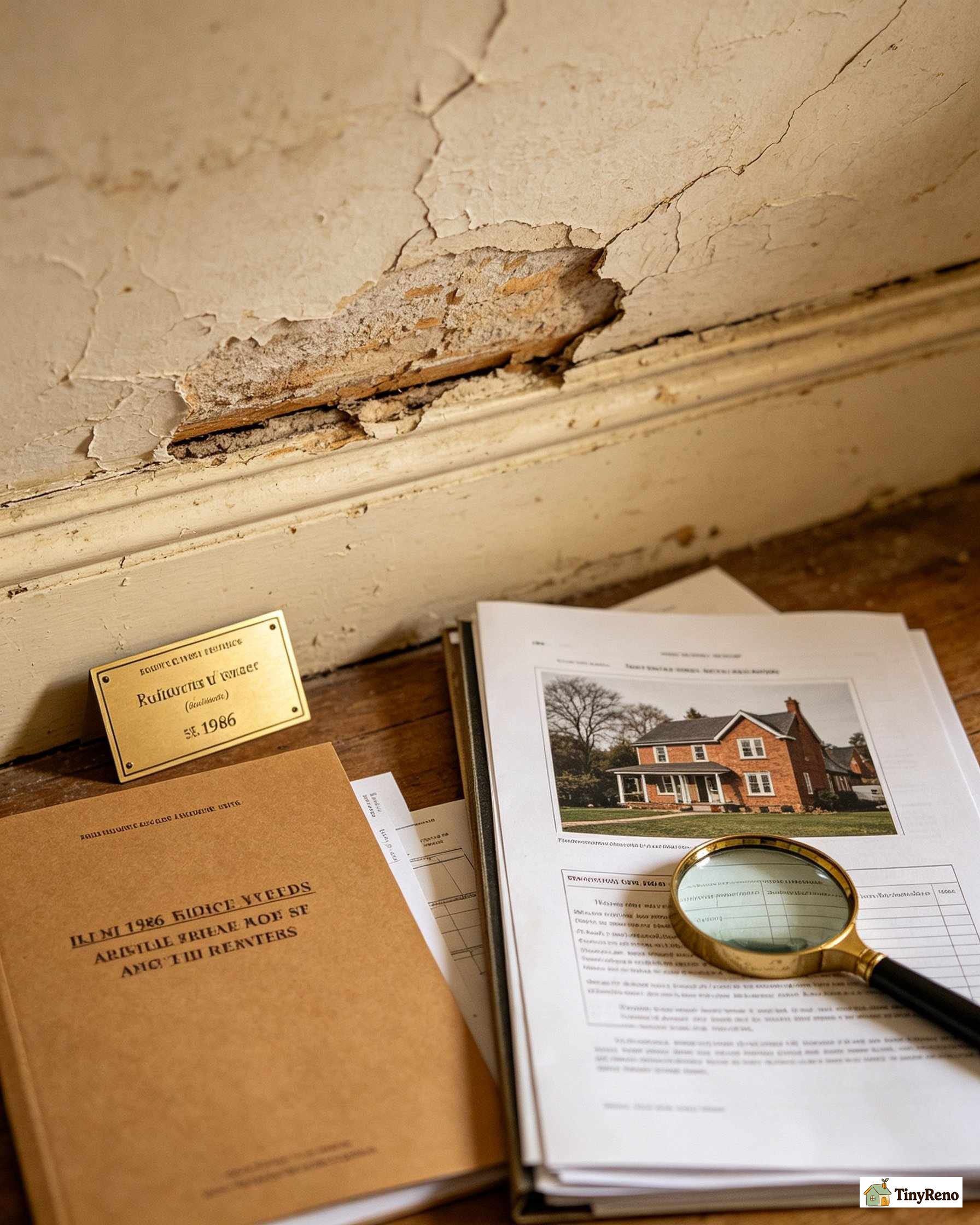
The phrase Daniel kept seeing online was "asbestos was banned in 1986," and it took him a while to understand why that didn't mean what he thought it meant. The EPA's 1986 ban under the Asbestos Hazard Emergency Response Act (AHERA) and the National Emission Standards for Hazardous Air Pollutants (NESHAP) actually applied to six specific categories of sprayed-on asbestos products. The most relevant category for Daniel's popcorn ceiling was "asbestos-containing spray-applied surfacing materials" — but only the friable (easily crumbled) version, not the non-friable texture paint that was commonly used in residential popcorn ceilings from the 1950s through the mid-1980s.
The practical implication is that any popcorn ceiling installed in a US home before roughly 1986 has a meaningful probability of containing asbestos. Industry estimates put the prevalence somewhere between 1 percent and 10 percent of all popcorn ceilings installed in that era, with the higher end in homes built between 1960 and 1978. The reason isn't that builders in the 1970s were doing anything illegal; they were using what was then a standard, EPA-approved construction material. The fiber type most commonly used in residential popcorn was chrysotile (white asbestos), the same fiber type still legally used in some industrial applications today. Daniel's 1972 house was at the high-risk end of the timeline, which is part of why the 1.2 percent reading wasn't surprising once we understood the history.
There's a common misconception that the 1986 ban means any pre-1986 popcorn ceiling is automatically illegal or requires immediate removal. Neither is true. The EPA classifies asbestos-containing material (ACM) into three types: friable (easily crumbled, high risk when disturbed), non-friable (bound into a matrix, low risk when intact), and regulated asbestos-containing material (RACM, certain applications that require specific handling). Intact popcorn ceiling in a residential home is almost always classified as non-friable Category II, which means it's not hazardous in its current state and doesn't require removal unless it will be disturbed. The classification matters because it determines what your actual obligation is.
What Daniel ended up doing with his 1.2 percent asbestos in popcorn ceiling testing result
After Daniel got the report and we talked through the options, he spent another two weeks getting bids from three asbestos abatement companies and one encapsulation specialist. The bids ranged from $1,800 for full professional abatement to $450 for encapsulation (sealing the ceiling with a liquid sealant that locks in any loose fibers) to $2,800 for installing new drywall over the popcorn (covering, not removing). Daniel's decision came down to three factors: the ceiling was intact (no water damage, no peeling), he was planning to renovate anyway (so disturbing the ceiling was a real possibility), and he wanted to do the renovation himself in his spare time.
The five options Daniel had, in order from cheapest to most expensive, were: first, do nothing — if the ceiling is intact and not going to be disturbed, the asbestos is encapsulated in place and not a hazard. Second, encapsulate with a liquid sealant — $300 to $500 in DIY materials, $800 to $1,500 if you hire a pro. The sealant locks in any loose fibers and the ceiling can be painted over. Third, cover with new drywall — $2,000 to $3,500 for a typical room. The new drywall is screwed into the joists through the existing popcorn ceiling, encapsulating it permanently. Fourth, full professional abatement — $5 to $20 per square foot, so a 1,200 square foot house would cost $6,000 to $24,000. This is the only option that actually removes the asbestos.
The fifth option is to disclose and sell or rent as-is. Daniel decided to encapsulate. The ceiling was intact, he wasn't planning to scrape it during his renovation, and the encapsulation cost him $400 in materials and one Saturday of his time. The ceiling is now sealed, painted, and has not been disturbed. He confirmed with the encapsulation specialist that as long as nobody scrapes, sands, or removes the popcorn texture, the encapsulation will last for the life of the ceiling. His renovation plans were adjusted to install new light fixtures without cutting into the ceiling, and the kids have a smooth painted ceiling that they're not going to be touching — and he still has the asbestos in popcorn ceiling testing report saved in his email just in case.
What renters and landlords should do about a positive asbestos in popcorn ceiling testing result
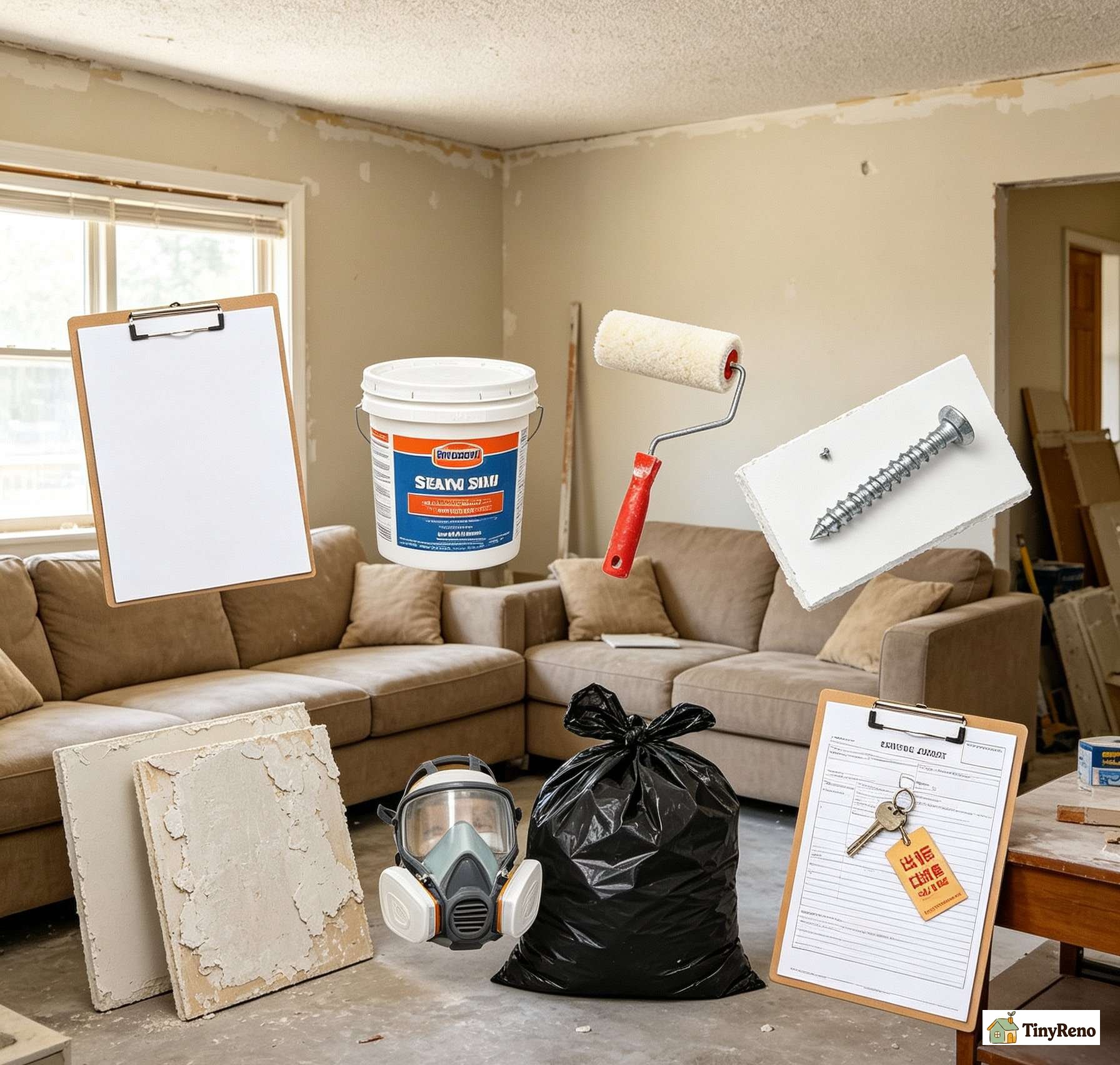
If you're a renter and your landlord tells you the popcorn ceiling contains asbestos, your rights depend on your state and whether the ceiling will be disturbed during your tenancy. In most states, landlords are required to disclose known asbestos in pre-1986 buildings before you sign the lease, but the landlord isn't required to remove the asbestos if it's intact and not being disturbed. If your landlord plans any renovation that would disturb the ceiling, they are required to hire a licensed asbestos abatement contractor or get a clearance test after the work. The EPA's NESHAP regulations apply to commercial and multi-unit residential buildings; single-family rentals fall under state law and vary considerably.
If you're a landlord with a pre-1986 rental that has popcorn ceilings, the disclosure obligation is on you. The federal requirement under HUD's disclosure rule applies to sales, not rentals, but most states have parallel requirements for rentals. The standard disclosure language is something like: "This property was built before 1986 and may contain asbestos-containing materials, including popcorn ceiling texture. The ceiling has not been tested. Tenants are advised not to disturb the ceiling texture." Even without a positive test, this disclosure protects you legally if a tenant later develops a concern. With a positive test, the disclosure should include the test results, the location of the asbestos, and the recommended management approach (do nothing, encapsulate, or remove).
If you're a buyer, the disclosure obligation falls on the seller. In most states, sellers are required to disclose known asbestos conditions, and a positive test result from before the sale creates a known condition that must be disclosed. If you're in contract on a pre-1986 home and the popcorn ceiling hasn't been tested, ask for it to be tested during the inspection period. The $50 DIY kit or $400 pro inspection is much cheaper than finding out after closing that you need a $6,000 encapsulation job. The standard real estate contract in most states allows the buyer to negotiate a credit or repair for a positive test, and some sellers will agree to do the encapsulation before closing.
The bigger picture on popcorn ceiling asbestos in 2025
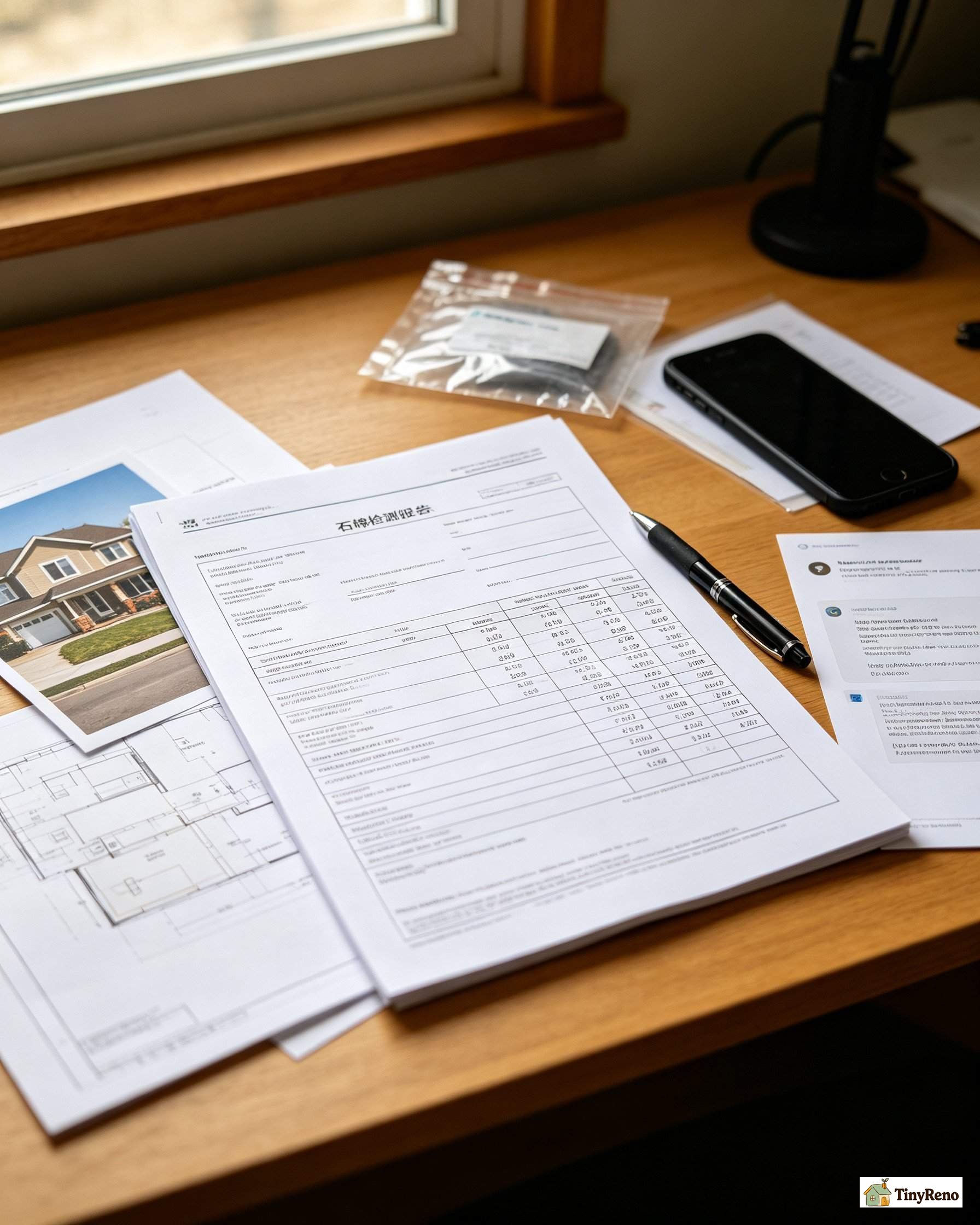
Two years after Daniel's test, the popcorn ceiling in his living room is still there, encapsulated and painted over, and his kids are five and seven. The house is fine. The asbestos is fine. The cost was $400 for the encapsulation and $50 for the test, totaling $450 for a 1,200 square foot ceiling that was potentially going to be a $6,000 to $24,000 problem. Daniel got lucky in two ways: he tested before disturbing the ceiling, and the ceiling was intact when he tested.
The bigger picture for anyone dealing with popcorn ceiling asbestos in 2025 is that the test result is rarely the end of the story. A negative DIY kit result gives you information but not certainty. A positive DIY kit result gives you certainty but not the end of the world. The end of the story for anyone considering asbestos in popcorn ceiling testing is almost always either encapsulation or careful non-disturbance, both of which cost a fraction of full abatement. The cost of the test itself — $35 to $500 depending on whether you DIY or hire a pro — is the cheapest part of the decision and the part most often skipped.
If you're staring at a popcorn ceiling in a pre-1986 home and don't know if it contains asbestos, start with the DIY kit. The $35 to $50 you spend is the cheapest insurance you'll ever buy on a house. If the kit comes back positive, decide between encapsulation and abatement based on whether you plan to disturb the ceiling in the next 10 years. If you don't plan to disturb it, encapsulation or even no action is the right answer. If you do plan to disturb it, get a professional inspection and follow their recommendations. The asbestos in your ceiling is only a problem if you make it one.


Discussion (0)
Sign in to join the discussion