

My friend Carla emailed me a photo of her bathroom ceiling on a Tuesday in August 2023. She had a water spot on ceiling but no leak visible — about the size of a dinner plate, yellow-brown at the edges with a darker center — directly under her upstairs neighbor's bathroom. She'd been noticing it for two weeks and it wasn't getting bigger or smaller. She didn't see any water dripping. She knocked on the upstairs neighbor's door and asked if they had a leak. They said no. Her property manager sent a maintenance guy who opened the ceiling in the spot, found dry drywall, and said the pipe above was dry. The maintenance guy told her it was a "cosmetic issue" and left. The spot was still there. Carla emailed me because she'd been Googling her way through every variation of water spot on ceiling but no leak for three days and hadn't found an answer that matched her situation.
I called her that night and we walked through every possible cause together, eliminating them one by one over the next five months. The cause turned out to be a slow leak from the upstairs neighbor's shower pan that didn't drip through the ceiling — it traveled sideways along a pipe before settling into Carla's ceiling drywall. The spot stayed roughly the same size because the upstairs shower was used daily but only for short periods, so the leak was steady but small. This is the version of a ceiling water spot that most advice online doesn't prepare you for, and it's the one that actually shows up in real apartments. Here's how we figured it out, what the other four causes were, and the renter-friendly diagnostic steps that work before you call a plumber.
The "ghost stain" that took three months to identify
Carla's first guess was that the spot was from an old leak that had already been fixed. Her upstairs neighbor had a bathroom pipe leak in March 2023, five months before the spot appeared in Carla's ceiling. The maintenance team had come, replaced a section of copper pipe, pressure-tested the new joint, and declared the repair complete. No more leaks reported in the upstairs unit. But Carla's ceiling spot showed up in August, three months after the repair was supposedly done. The maintenance guy's verdict was that the spot was old and the pipe was dry, so it must be cosmetic. Carla accepted that for a week.
What changed Carla's mind was the spot getting slightly darker around the edges over the next month. A truly old stain doesn't change — the minerals are already set into the drywall and the color is what it is. A stain that gets darker is still receiving water, even if it's not visibly wet to the touch. Carla pressed a paper towel against the spot for ten minutes and pulled it away. The towel came away faintly damp. There was active water, just very slowly.
What we eventually found was that the upstairs pipe repair had been done correctly, but the upstairs neighbor's shower pan — a one-piece fiberglass pan under the shower — had a hairline crack along the front edge that wasn't visible from inside the shower because it was under the caulk line. Water from each shower would seep through the crack at a rate of maybe a quarter cup per shower, travel along the pipe that ran horizontally above Carla's bathroom ceiling, and deposit slowly into the drywall. The water wasn't dripping. It was soaking. The spot grew darker because it was still receiving water every day, just at a very slow rate. The maintenance guy had opened the wrong spot — he looked directly above Carla's ceiling but the leak was horizontally offset by about 18 inches along the pipe.
The HVAC condensation trap that fooled two other renters
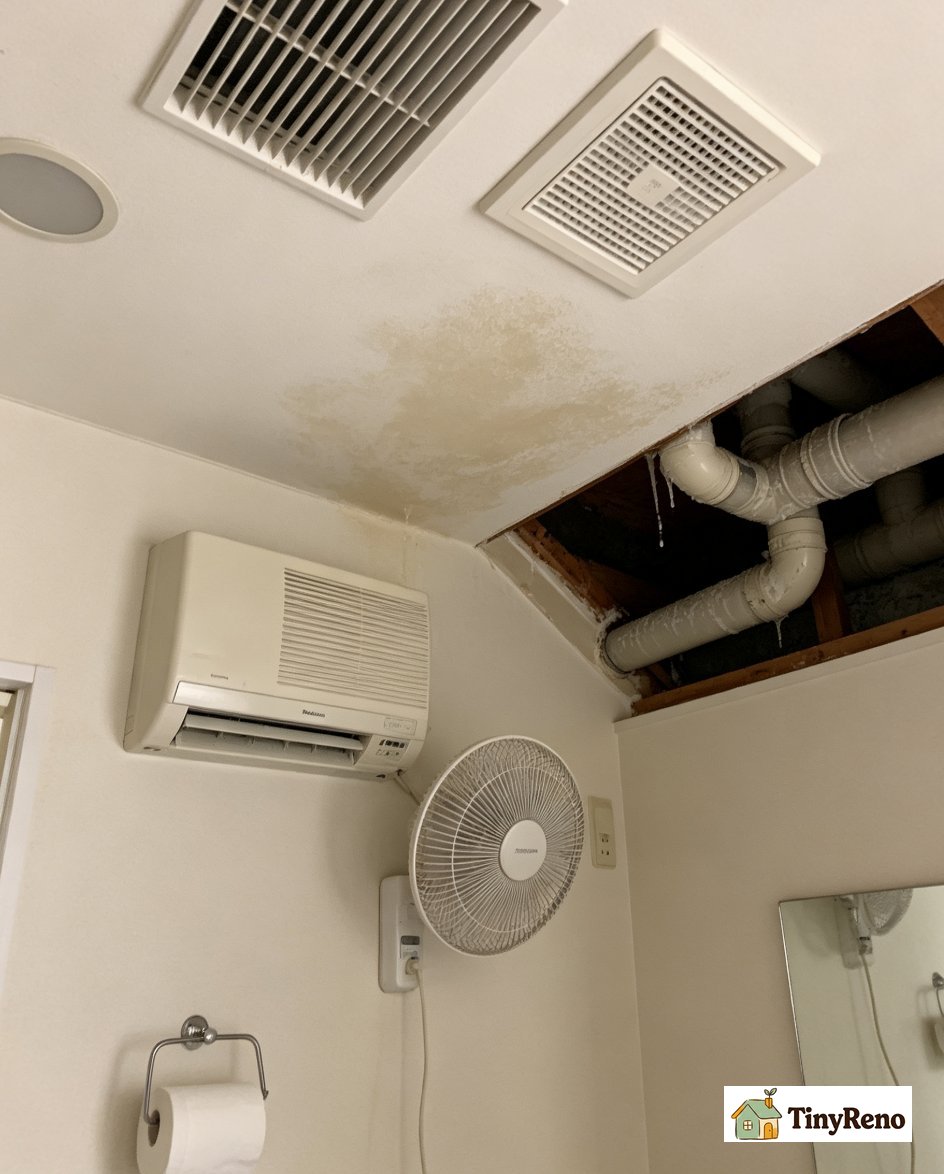
The second case of a water spot on ceiling but no leak I helped diagnose was for a renter in Houston who had a recurring spot directly under his bathroom ceiling vent. The spot would appear faint in the morning, get darker during the day when the AC was running, and almost disappear overnight when the AC cycled off. He replaced his bathroom fan three times before realizing the spot wasn't coming from inside his bathroom at all.
What was happening was that the air conditioning ductwork in his ceiling ran directly above his bathroom ceiling. The duct was sweating — warm attic air meeting cold metal ductwork was creating condensation on the outside of the duct, and the condensation was running down to the lowest point of the duct, which happened to be right above his bathroom ceiling. The condensation dripped once or twice a day at most, just enough to keep the spot damp but not enough to actually drip through. From his perspective inside the bathroom, it looked like a ceiling water spot with no source.
Three diagnostic signs that it's HVAC condensation: the spot appears or darkens when the AC runs and fades when the AC is off, the spot is directly under or near a ceiling vent or where ductwork would logically run, and the spot doesn't have a brown ring around the edges the way a leak does (condensation leaves a more uniform discoloration). The fix is to wrap the ductwork in insulation where it's exposed in the attic, which costs about $20 in materials and an hour of work. Most HVAC contractors will do it for $150-200 if you'd rather not climb into the attic yourself.
The shower pan slow leak that's the most common cause
After Carla's case and the Houston case, I started noticing how often a water spot on a ceiling with no active leak turned out to be a shower pan problem in an upstairs unit. This is the most common cause by far, and it's the one that's hardest to confirm because the leak is invisible from inside the upstairs shower. The water goes through the pan, around the drain connection, and travels horizontally before it shows up on a downstairs ceiling.
The diagnostic signs for a shower pan slow leak are: the spot is directly under or near a bathroom in the upstairs unit, the spot doesn't change with weather (so it's not a roof leak) and doesn't change with HVAC operation (so it's not condensation), and the spot is roughly the same size day after day but never gets visibly wet. The "roughly the same size" part is what throws most renters off — a leak should either get bigger or drip through, and a steady same-size spot doesn't match either pattern.
The test that finally confirmed Carla's shower pan was the source took about a week. She asked her upstairs neighbor to stop using that specific shower for seven days and to use the other bathroom instead. By day five, Carla's ceiling spot started to lighten at the edges. By day eight, the spot was noticeably fainter overall. When the upstairs neighbor resumed using the shower, the spot darkened again within 48 hours. The pattern was unmistakable. The upstairs shower pan was confirmed as the source, and the neighbor agreed to have it replaced. The total repair cost was $850 split between the upstairs neighbor and Carla's building (the building paid because the pan was an original fixture, not a tenant-installed upgrade).
The four other causes and how to tell them apart
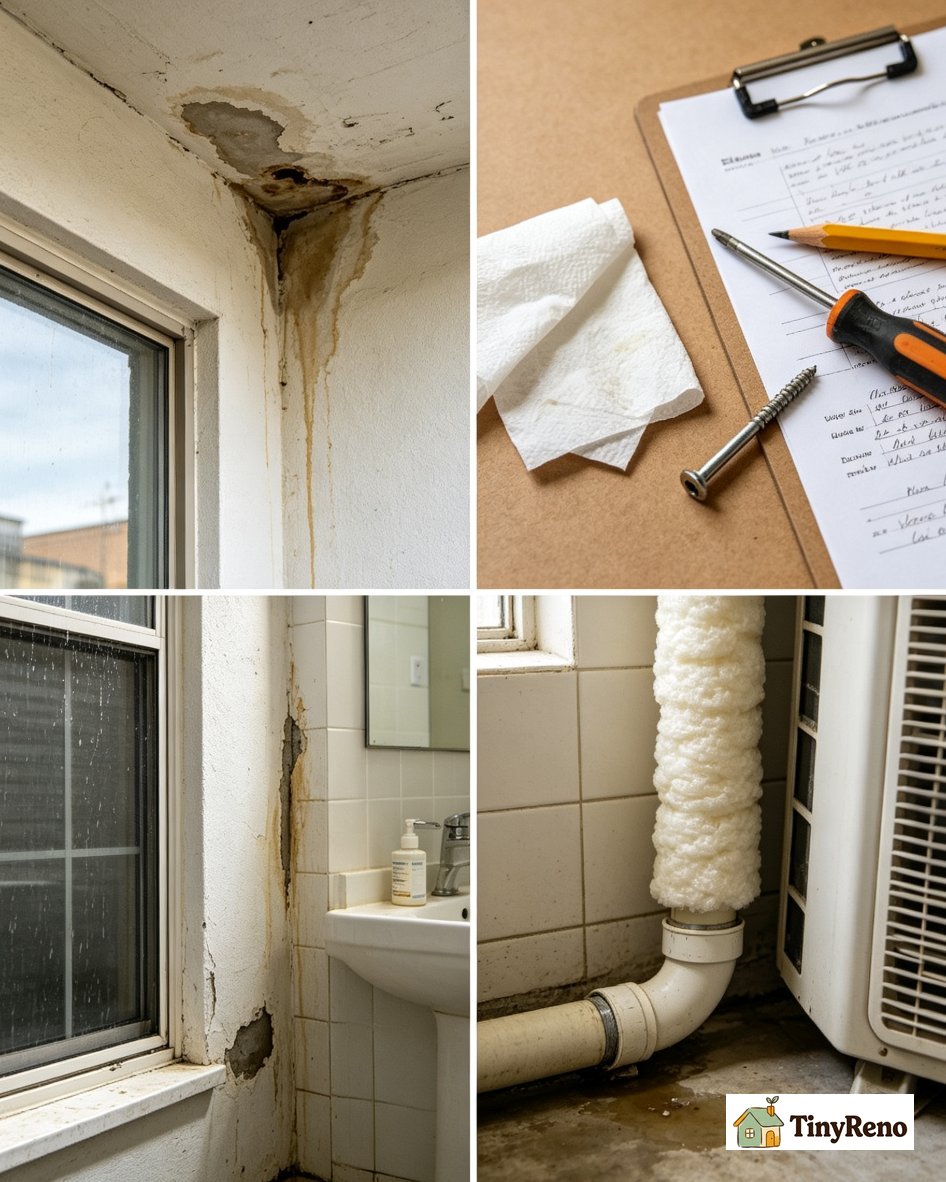
Beyond the three causes above (ghost stain from old leak, HVAC condensation, upstairs shower pan slow leak), there are four other possibilities that account for most of the remaining cases of water spot on ceiling but no leak. The diagnostic checklist below will help you narrow down which one is your situation.
Cause number four is roof flashing failure. The spot appears or darkens within 24 hours of rain, especially wind-driven rain from a specific direction. The spot is on a top-floor ceiling or directly under an area where the roof meets a wall or chimney. Fix requires a roofer to inspect and replace flashing; renter's insurance covers interior damage but not the roof repair itself.
Cause number five is window or wall sealing failure. The spot appears after wind-driven rain from one direction and is near an exterior wall. Water infiltrates through failed caulking or window flashing and travels through the wall cavity before settling in the ceiling drywall. Fix requires the landlord to reseal the exterior, which most landlords will do if you show them the timing correlation between rain and the spot.
Cause number six is plumbing condensation on cold pipes. The spot is directly under a bathroom or kitchen where copper or steel pipes run through the ceiling. The pipes sweat in summer humidity and the condensation drips occasionally. The fix is to insulate the pipes with foam pipe insulation, which costs about $3 per pipe at any hardware store. This is the only cause on this list that a renter can usually fix themselves without involving the landlord.
Cause number seven is HVAC condensate drain line backup. The spot is near where the AC condensate drain line exits the air handler. If the drain line is clogged, the condensation backs up and overflows the drain pan, which drips into the ceiling below. Fix is to clear the drain line with a wet-dry vacuum or call an HVAC tech ($80-150). This is more common in humid climates and in units where the AC runs year-round.
The five-step diagnostic that works before you call a plumber
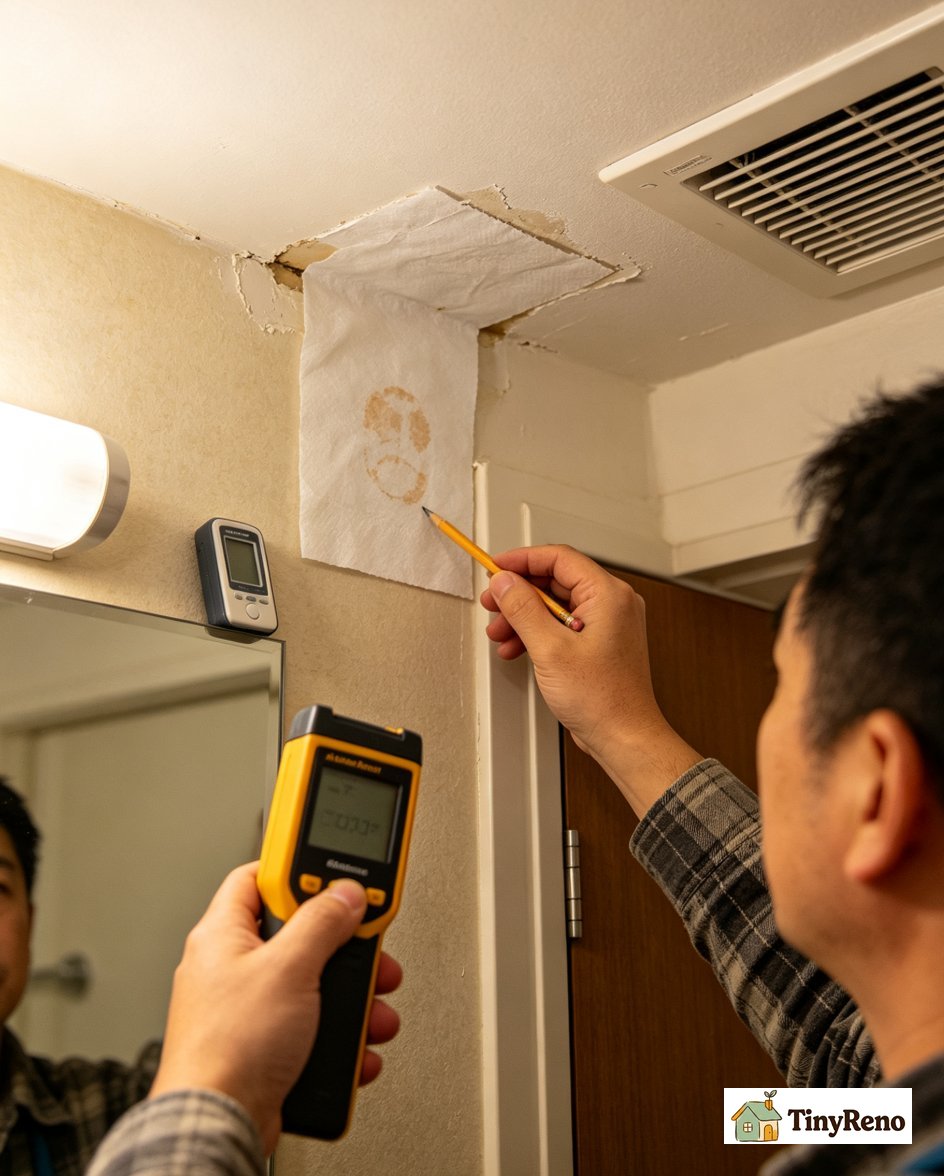
The five-step diagnostic that helps you figure out which of the seven causes above is your situation, in the order I'd recommend trying them, is: first, press a dry paper towel to the spot for ten minutes and check if it's damp. If it's dry, the spot is old and the active water has stopped. If it's damp, the spot is still receiving water and you need to find the source. Second, check whether the spot correlates with weather by marking the edge of the spot with a pencil and drawing the date next to it, then checking the spot after the next rain. If the spot grows after rain, the source is roof or exterior. Third, check whether the spot correlates with HVAC operation by running the AC for an hour and seeing if the spot darkens. If yes, the source is condensation or a condensate drain backup. Fourth, knock on the upstairs neighbor's door and ask if they've had any plumbing work done in the last six months. If yes, ask them to stop using the closest bathroom fixture for a week and see if the spot fades. Fifth, if the spot is still there after the first four steps and it isn't correlating with anything obvious, open a maintenance ticket with your landlord and ask for a moisture meter reading on the ceiling. Most property managers have one or know a contractor who does.
The moisture meter reading is the test that ends the guesswork. A reading above 1 percent moisture content in the drywall means water is actively reaching that spot, even if it's not visibly wet. A reading below 1 percent means the spot is residual staining from past water and is not currently active. The landlord can use the meter reading to justify the next step, ( which might be opening the ceiling for inspection, sending a plumber, or simply leaving the spot alone if it's residual. Most landlords will act on a moisture meter reading faster than they will on a verbal description.
What Carla's ceiling taught me about water stains
Carla's shower pan was eventually replaced in October 2023, two months after she first emailed me the photo. The total cost of the diagnostic and repair was about $1,100 (the plumber's inspection fee, the moisture meter reading through Carla's property manager, the pan replacement split between upstairs and the building, and the ceiling patch and paint after the spot was confirmed dry). The upstairs neighbor had been using the same shower for two years without noticing anything was wrong because the leak was slow enough that the upstairs unit never showed any water damage. The damage only showed up on Carla's ceiling, 18 inches horizontally offset from the actual leak source.
The lesson from Carla's case, and from the Houston HVAC condensation case, and from the three other renters I've helped with similar ceiling mysteries in the last two years, is that a water spot on ceiling but no leak almost always has a real source — it's just not where you'd expect. The five-step diagnostic process works because it eliminates the most common causes first, in the order that's cheapest to test, before you spend money on a plumber or contractor. Most renters spend $300-500 on a plumber's first visit only to find out the leak isn't even in the ceiling they were looking at. The diagnostic costs nothing and saves the service call if the cause turns out to be HVAC or plumbing condensation.
If you're staring at a water spot on the ceiling but no leak right now and don't know where it came from, start with the paper towel test. If the towel comes away damp after ten minutes, the source is active and you have a real ceiling mystery on your hands. If the towel comes away dry, you can take your time with the rest of the diagnostic because the source has stopped. Either way, you don't have to guess. The five-step process gives you a real answer in under a week, which is what most renters who are losing sleep over a water spot on the ceiling but no leak actually need — not a contractor's estimate, not a plumber's invoice, just an answer.


Discussion (0)
Sign in to join the discussion