

My phone rang at 2:14am on a Tuesday in January 2024. It was my friend Jenna, calling from her one-bedroom apartment in Chicago. She'd just stepped out of the shower and heard a sound she described as "rain, but inside, and from above." When water is dripping from the ceiling onto your hardwood floor at 2am, you have no idea what to do first. She didn't want to call her landlord at 2am. She didn't know if it was safe to be near the water. She didn't know if this was something she caused or something the building caused. The truth is, when water is dripping from the ceiling, the first 10 minutes matter more than she realized.
The reason I'm writing this is that water dripping from the ceiling is the kind of emergency that doesn't wait for office hours, doesn't wait for a contractor to call back, and doesn't wait for a renter's research time. By the time most people start searching, they've already lost something — a rug, a couch, a ceiling, or sometimes the whole floor below. After helping Jenna through her own ceiling leak and talking through similar situations with four other renters in 2024 and 2025, I learned that the difference between a $500 damage and a $5,000 damage is almost entirely what happens in the first 10 minutes. Here's what those 10 minutes looked like in Jenna's apartment, what her landlord did (and didn't do), and what finally got the upstairs neighbor to stop running water at midnight.
Jenna's first 10 minutes: she did four things right and one thing wrong
Jenna called me at 2:14am while she was standing in her living room holding a towel under the drip. The towel was getting soaked through every 90 seconds. She had a pile of Amazon boxes in the corner that she'd been meaning to break down, a laptop plugged into the wall outlet about three feet from where the water was hitting the floor, and her cat was hiding under the couch because cats do that when there's unusual noise. The first thing she told me was that she'd been trying to identify which upstairs neighbor's bathroom was leaking by listening for flushing. That was the wrong thing to do, and it cost her about 90 seconds of time when the water reached the laptop charger.
What she did right, in this order, was: she moved the boxes out of the splash zone first (the boxes had a brand-new stand mixer inside that she'd just received for Christmas), she took a 12-second video of the water hitting the floor with the timestamp visible, she texted her landlord's emergency number even though she hated waking him up, and she put a pot under the drip instead of trying to find a bucket. The pot wasn't big enough, but it was what she had. The thing she did wrong was trying to identify the upstairs source by listening — she should have turned off the electricity to the living room at the breaker box first, before anything else.
The order matters because each step protects something different. Moving the boxes out protected the mixer. The video protected her ability to file an insurance claim later. The text to her landlord started the clock on his legal obligation to respond (in most states, 24 to 72 hours for an active leak). The pot caught water that would otherwise have reached the laptop. Skipping any one of these steps created a problem that compounded as the minutes passed. By the time I called her back at 2:23am, the laptop charger had been hit by water because she'd been listening for upstairs flushing instead of running to the breaker box.
The upstairs neighbor, the dripping pipe, and how we figured it out together
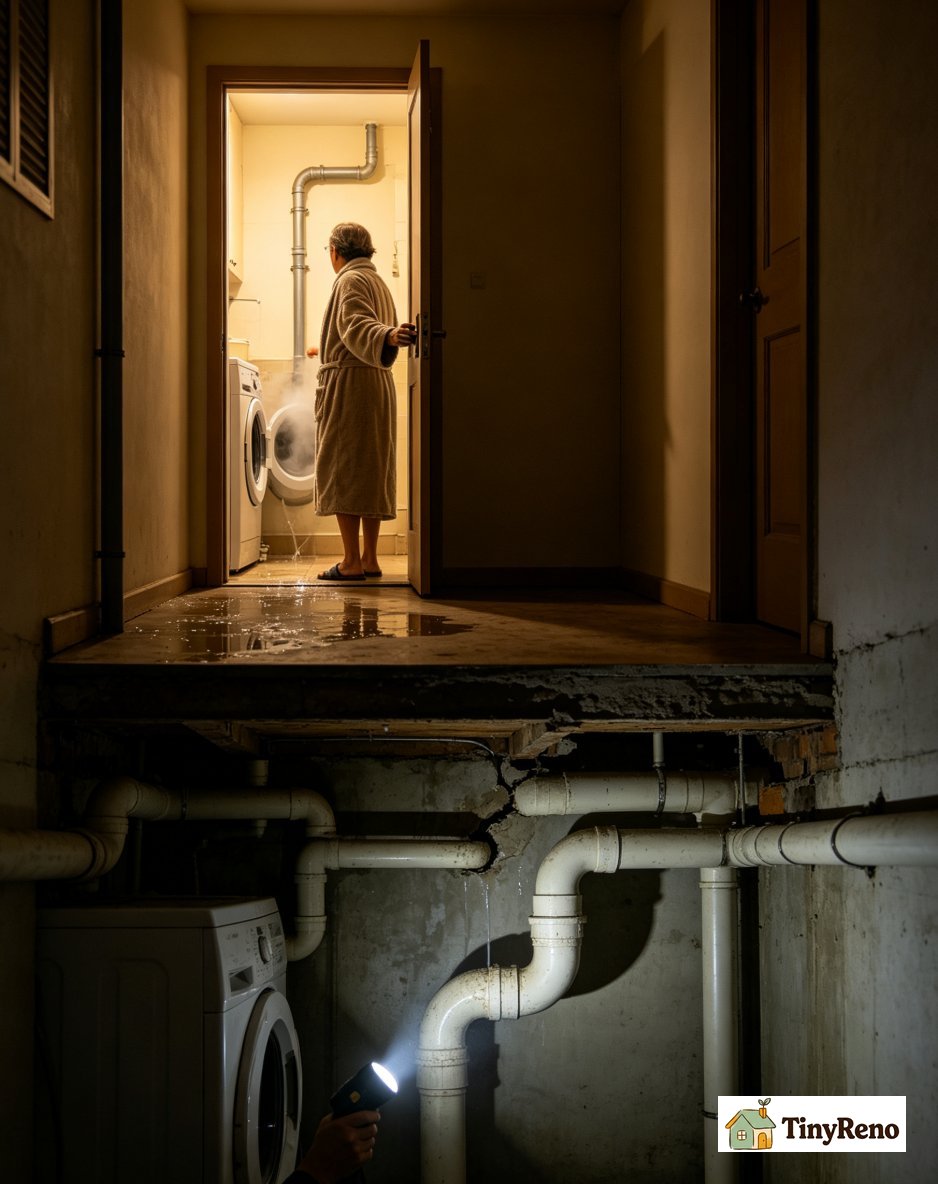
Once Jenna's landlord called back at 2:31am and confirmed he'd send his maintenance guy, the next question was where the water was actually coming from. He asked Jenna to listen at the ceiling and tell him what she heard. She said it sounded like a faint hissing, not a gurgle. He asked her to go upstairs and knock on her upstairs neighbor's door. She didn't want to. He explained that if the upstairs neighbor was awake and using water at 2:30am, that's almost certainly the source, and the neighbor could stop using water immediately and contain the problem from above. She went upstairs. The neighbor opened the door in a bathrobe, said she'd been doing laundry because she worked nights and was doing it during her off hours. The washing machine had been running for 45 minutes. That was the source.
The five common sources of water dripping from the ceiling in residential buildings each have a signature you can learn to recognize. Jenna's situation was the most common one for a multi-unit building — the upstairs neighbor's plumbing, specifically the washing machine drain. The signature is water that drips continuously or in pulses that match the upstairs neighbor's water usage — drips that happen when they run the dishwasher, shower, or washing machine. The second source is a roof leak, which shows up during or shortly after rain, especially wind-driven rain. The third is HVAC condensation, which only drips when the air conditioning has been running for a while and stops when it cycles off. The fourth is a plumbing failure inside the wall or ceiling, which drips constantly and sounds like running water behind the wall. The fifth is window or exterior wall sealing failure, which only appears after specific weather events and may appear on multiple surfaces at once.
What Jenna learned from knocking on the upstairs door was something that saved her the next month of dealing with the landlord: she had the neighbor's name, phone number, and apartment number in writing after that conversation. Her landlord later needed both the upstairs neighbor to confirm her washing machine was the source AND needed her to be available for the plumber's second visit. Having that relationship already established made everything move faster. If you're reading this at 2am and haven't knocked upstairs yet, do it. It's awkward, but it solves 80% of the multi-unit ceiling leak mysteries in under 10 minutes.
What Jenna's landlord actually did (and what he didn't do)
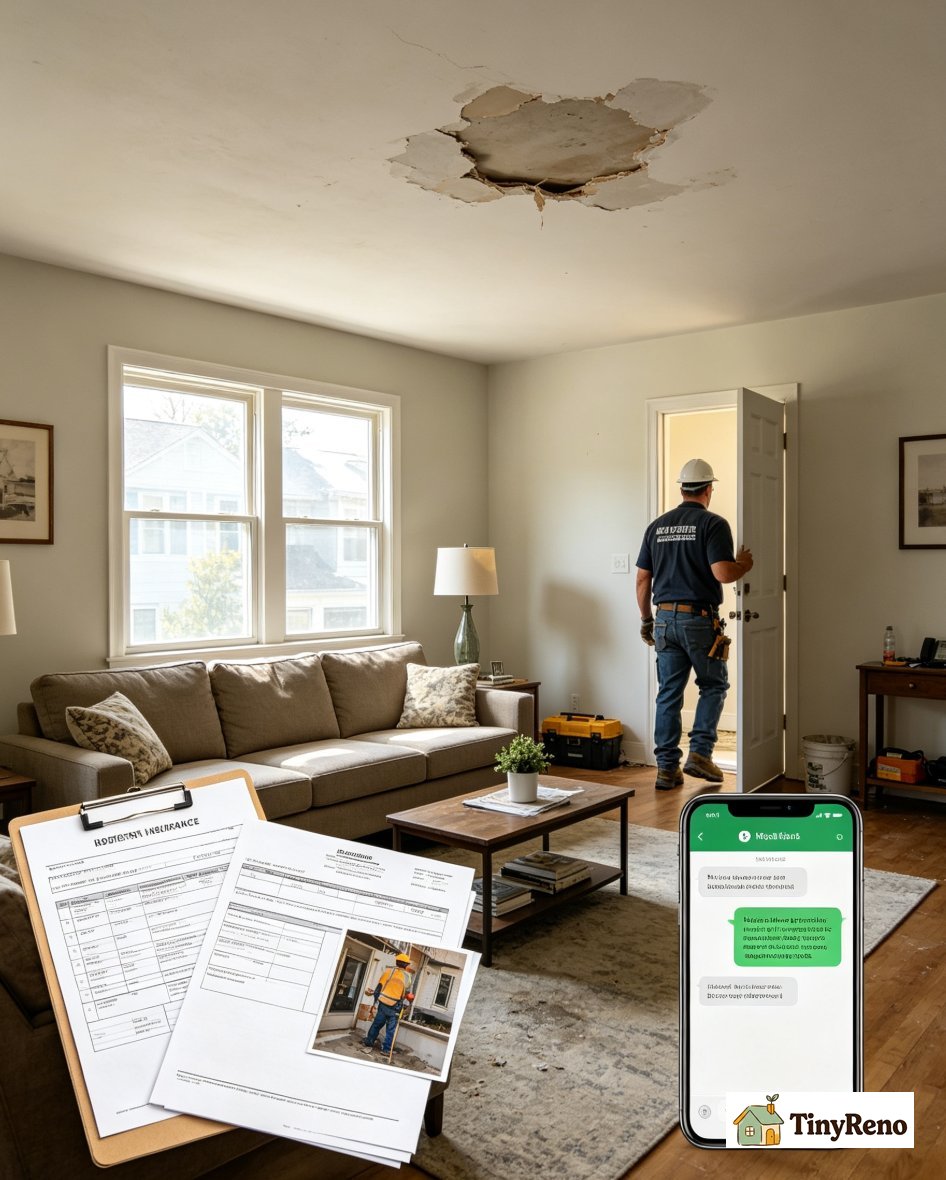
Jenna's landlord texted back at 2:36am with a one-line message: "Maintenance will be there at 8am. Don't use that outlet, I'll send someone to kill power tomorrow." That's it. No apology, no ETA for the plumber, no mention of the upstairs neighbor's washing machine being shut off. Jenna called him again at 2:42am and asked him to call the upstairs neighbor and ask her to stop the washing machine cycle. He said he'd handle it in the morning. By 6am, the upstairs neighbor had finished her laundry and the drip had slowed to a stop, but the ceiling was sagging over the couch.
In most US states, the legal responsibility for a ceiling leak falls on the landlord, not the renter, because it almost always involves a building system (plumbing, HVAC, roof, structure) rather than anything the renter controls. The federal standard comes from HUD's "habitability" requirements, which most states have adopted or expanded upon in their landlord-tenant laws. Under habitability, the landlord must provide a unit that is "fit for human habitation," which courts have generally interpreted to include protection from water intrusion, mold, and structural damage. A ceiling that is actively leaking water is by definition not habitable in the affected area. The state where Jenna's apartment is located (Illinois) gives landlords 24 hours to address active water leaks as the the legal standard. Her landlord exceeded that window by texting at 2:36am and not arriving until 8am.
What Jenna did at 7:15am, after her landlord's text but before maintenance arrived, was call her renters insurance company's 24-hour claims line. She had taken the video with the timestamp visible, she had the text from her landlord confirming he'd been notified, and she had documented the source (the upstairs neighbor's washing machine). The claims line told her to take photos of everything in the affected zone — couch, rug, electronics, books, anything — and to keep receipts for any emergency supplies she bought. They opened a claim and gave her a claim number on the phone. The total damage claim came to about $4,200 (couch replacement, ceiling repair deductible from the landlord's side, and electronics that had been hit by water). Her deductible was $500. Her landlord paid the ceiling repair separately. None of this would have been possible without the 12-second video she took at 2:14am.
The three things Jenna wishes she'd done differently
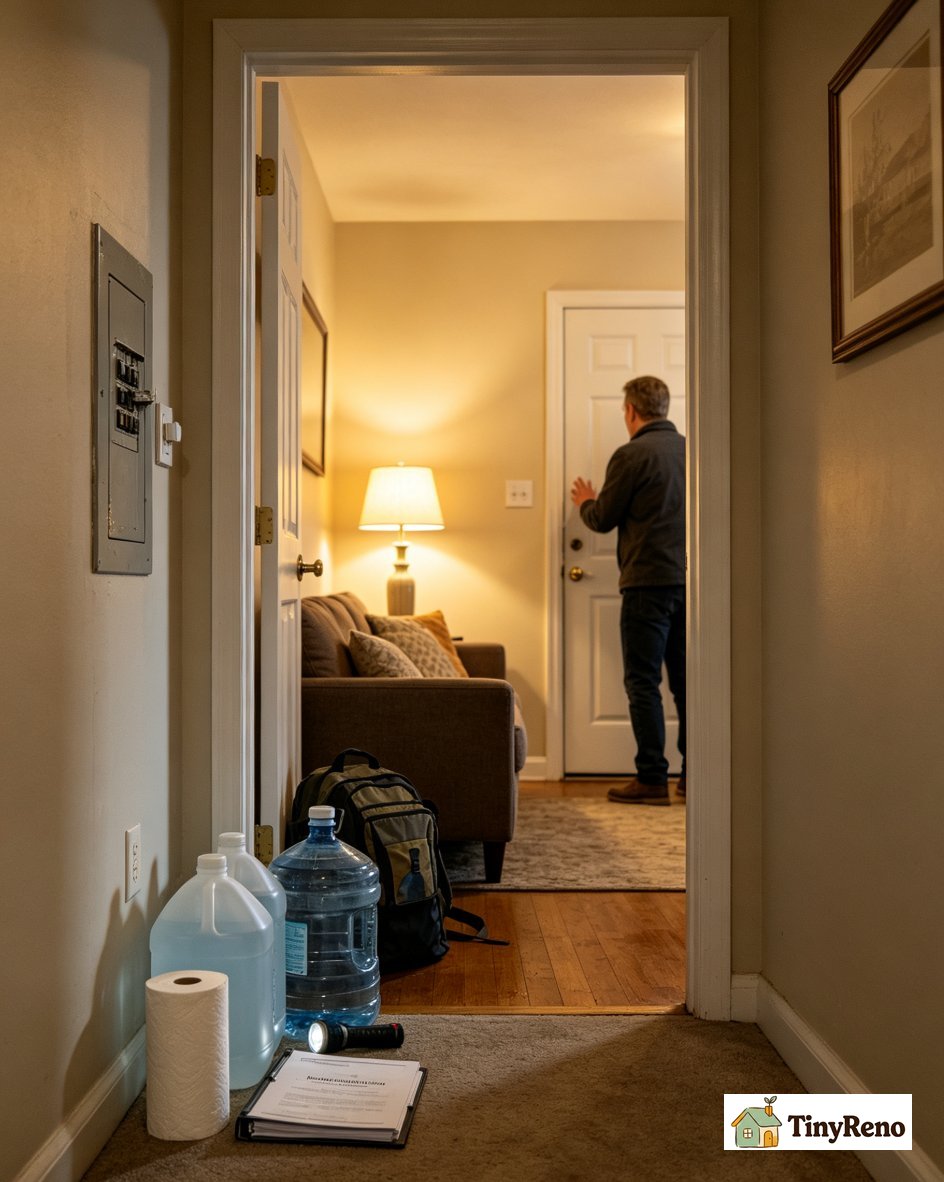
After the plumber fixed the upstairs neighbor's drain (a cracked P-trap, $280 repair split between upstairs and Jenna's building), and the ceiling was dried out and patched two weeks later, Jenna and I sat down and walked through what would have gone differently if she'd had a plan before the drip started. There were three things she wished she'd done differently, and one thing she'd done that turned out to be surprisingly important.
The first thing was the breaker box. If she'd gone to the breaker box in the first 90 seconds instead of listening for upstairs flushing, the laptop charger wouldn't have been hit by water and she wouldn't have lost the $1,200 laptop. The fix was simple — find the breaker labeled "living room" and flip it off — but she didn't think about it because she'd been focused on figuring out where the water was coming from. Knowing which breakers control which rooms before you have a water emergency is something every renter should do in their first week in a unit, the same way you'd find the fire escape before you need it.
The second thing was the bucket. The pot she used wasn't big enough and she had to empty it three times before the dripping slowed. A 5-gallon bucket from a hardware store would have held more water and required less attention. She bought one the next day and now keeps it in her hall closet, along with a roll of paper towels, a flashlight, and a printed copy of her renter's insurance claim number. Her hall closet is now her "water emergency kit."
The third thing was the upstairs knock. She wished she'd done it earlier than she did. The neighbor was awake and would have stopped the laundry cycle immediately if she'd known. By the time Jenna went upstairs at 2:38am, the washing machine had been running for an hour and the upstairs drain had been overwhelmed for at least 30 minutes. Earlier intervention would have cut the total volume of water that came through Jenna's ceiling by maybe 60 percent. The thing she'd done that turned out to be surprisingly important was the 12-second video. She almost didn't take it because she felt silly filming at 2am. The video was what made the insurance claim move smoothly and what convinced her landlord to pay for the ceiling repair without arguing.
The follow-up that mattered more than the repair
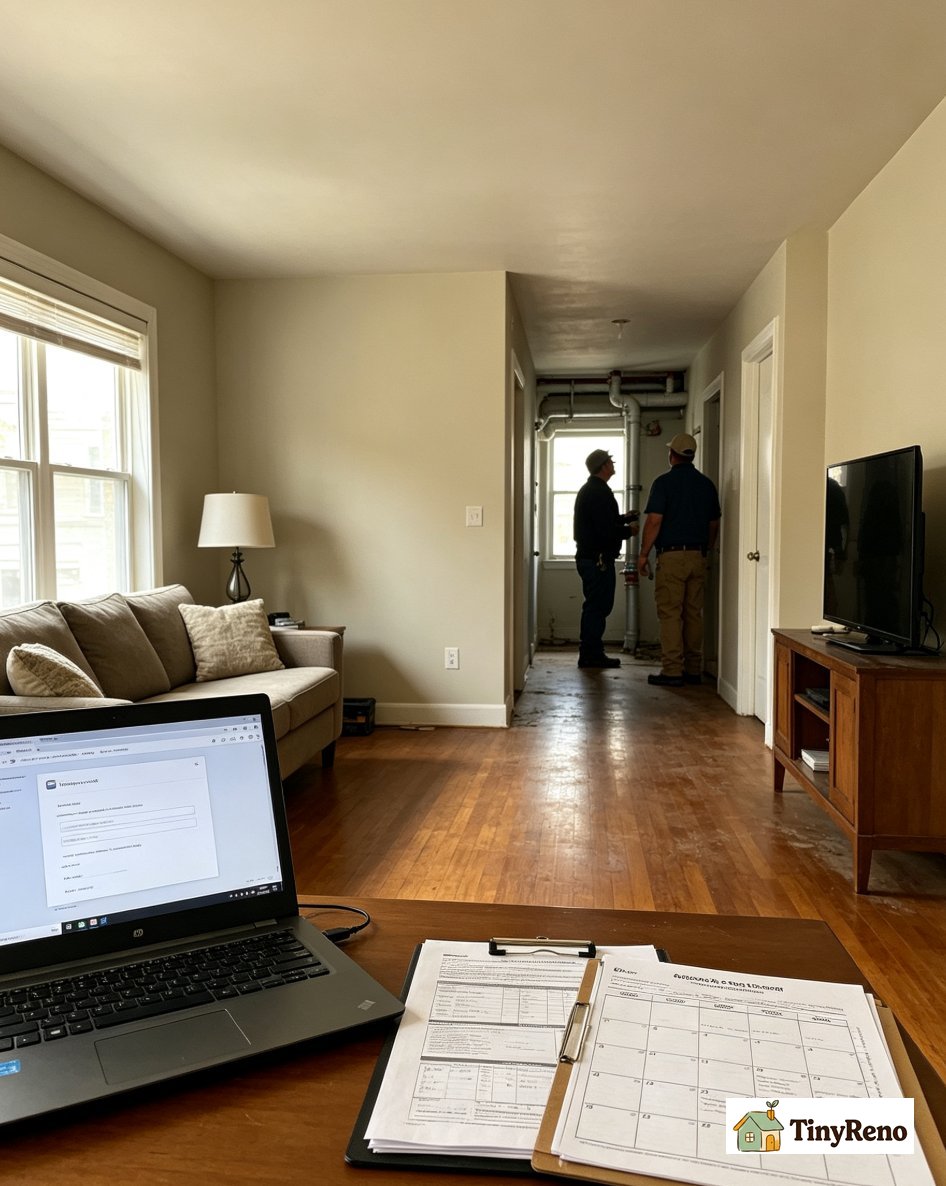
Two weeks after the leak, when the ceiling had been patched and painted and the couch had been replaced, Jenna sent her landlord a one-paragraph email summarizing what had happened. She included the timestamp of the original video, the date and time of his response text, the maintenance arrival time, the plumber's diagnosis of the cracked P-trap, the upstairs neighbor's confirmation that her washing machine was the source, and the total insurance claim settlement. She ended the email by saying that she appreciated the quick response and that she'd like to set up a quarterly check-in on the upstairs plumbing to prevent a recurrence. She sent the email at 9am on a weekday so it would land during business hours and not feel like a complaint.
Her landlord replied within an hour and agreed to the quarterly check-in. Six months later, when another unit in the building had a similar leak from a different cause (a deteriorated wax ring under a toilet), Jenna's landlord was already in the habit of checking the upstairs plumbing proactively and the second leak was caught in the drywall stage rather than after it had dripped through a ceiling. The email didn't just document this one incident; it changed how the building was maintained going forward. That's the longer-term payoff of documenting well — it's not just about getting reimbursed, it's about preventing the next time you have water dripping from the ceiling.
The reason most renters don't do this kind of follow-up is that they feel the relationship is adversarial once there's been damage. But the landlord-tenant relationship is going to continue for the rest of the lease, and the way the damage is documented and discussed sets the tone for everything that comes after. Jenna now has a landlord who knows she's organized, who's already scheduled quarterly plumbing checks, and who won't argue about responsibility the next time something drips. That's worth one paragraph.
What Jenna's ceiling leak taught me about water emergencies
Eight months after Jenna's leak, I was at her apartment for dinner and the upstairs neighbor mentioned she'd had a small leak from her bathtub spout that she'd fixed herself before it could damage anything. The upstairs neighbor had called Jenna first because Jenna had become the building's unofficial "water person" — the renter downstairs who knew how to respond when something dripped. Jenna's response, which I overheard, was calm and specific: she told the upstairs neighbor to put a towel under the spout, take a photo of where the water was coming from, text the landlord, and call her if she needed anything. The upstairs neighbor did exactly that and the spout got fixed the next day without any damage to Jenna's unit. The relationship that started at 2am in a hallway had become the building's most effective early warning system.
The bigger lesson from Jenna's experience, and from the four other renters I talked through similar situations with in 2024 and 2025, is that water emergencies are about the relationship you have with the people around you as much as they're about the bucket or the breaker box. The bucket is technical. The relationship is what gets you through the next 24 hours, the next insurance call, the next quarterly check. None of this is complicated, but it is what separates a renter who has occasional water dripping from the ceiling once from a renter who has it every winter, and what turns a 2am emergency call into a Tuesday morning work order.
If you remember nothing else from this article, remember that water is dripping from the ceiling is a problem that gets worse by the minute and better by the action you take. The 10-minute window is real. The bucket, the breaker, the video, the text to the landlord, the knock on the upstairs door — those are the five things that matter most. The insurance claim and the legal rights are what you fall back on if the landlord doesn't respond, but in most cases the landlord responds, the upstairs neighbor cooperates, and the leak gets fixed within a week. The difference between a $500 outcome and a $5,000 outcome is almost entirely what happens in those first 10 minutes, and what you put in writing afterwards to make sure the next time water is dripping from the ceiling doesn't catch you off guard.


Discussion (0)
Sign in to join the discussion