

My friend Marcus called me on a Tuesday in August 2023 with six screenshots on his phone. He'd just bought his first house — a 1,650 square foot colonial in Cleveland — and gotten six estimates to repaint the entire interior before moving in. The lowest was $3,200. The highest was $9,800. He wanted to know how much does interior painting cost really runs in his zip code and which contractors were trying to take advantage of a first-time homeowner. I'd been through this myself two years earlier, so I walked him through what each contractor was really charging for.
After reviewing Marcus's six estimates line by line and helping him negotiate, I confirmed that the honest range for interior painting in most US homes is between $2 and $6 per square foot of total living space — and most homeowners will land somewhere in the middle, depending on which of the six factors apply to their house.
The six factors that actually move interior painting cost
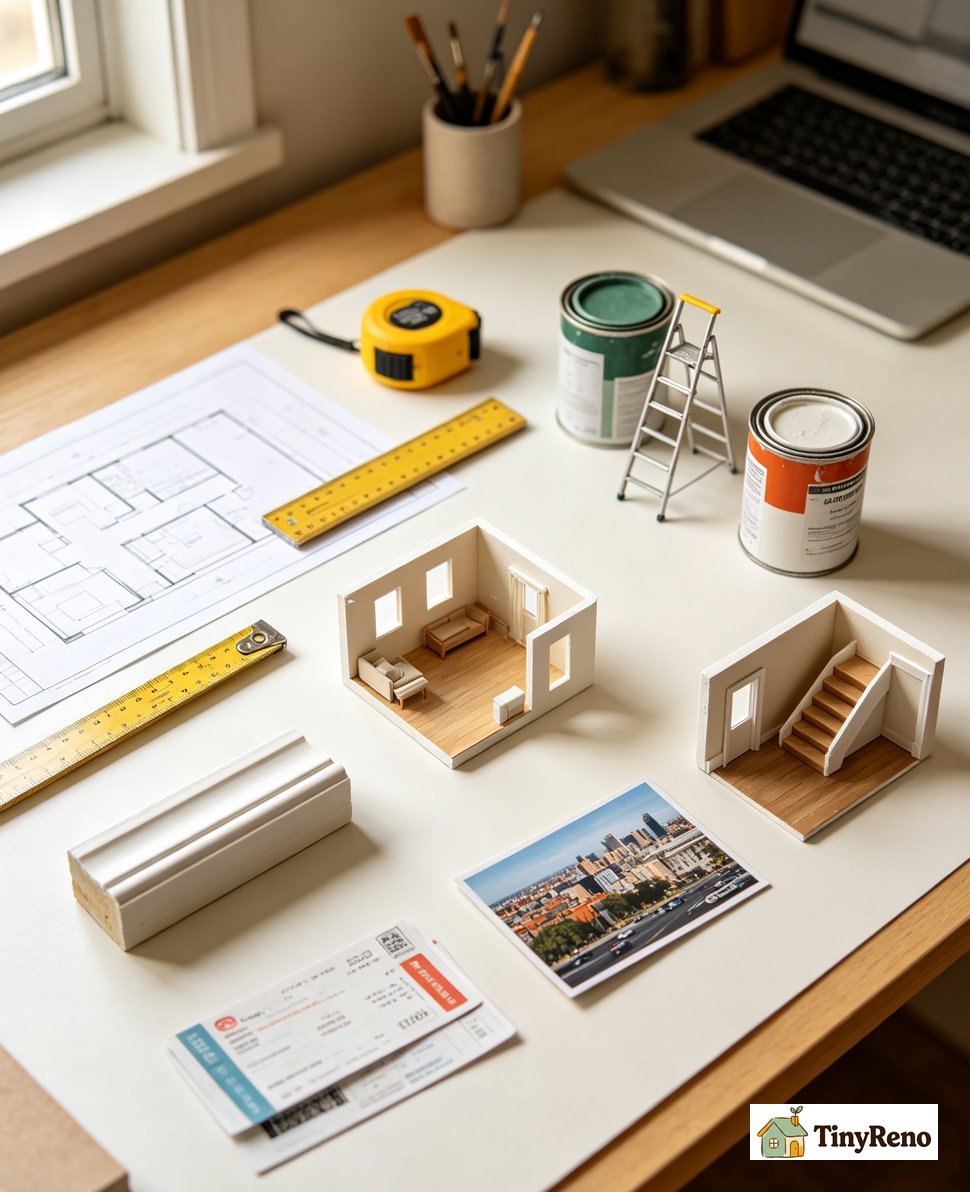
After walking through Marcus's six estimates, six factors emerged as the variables that genuinely determined the cost in his case. Some he could control, some he couldn't. Here's what each one actually meant in dollars and cents on his house.
The first factor is total interior square footage, which is the floor area of every room that will be painted including closets, hallways, and stairways. Marcus's house was 1,650 square feet including the stairway. Most contractors price by the square foot, so this number anchors every estimate. The bigger the house, the lower the per-square-foot rate tends to be because of setup-time amortization; the smaller the house, the higher the rate because of minimum-job fees. This is the same dynamic that makes a plumber charge $200 to snake a 10-minute drain.
The second factor is ceiling height, which matters more than most homeowners realize. Standard 8-foot ceilings are included in most per-square-foot quotes. Anything above 9 feet adds cost because it requires taller ladders, slower rolling pace, and additional safety equipment. Marcus's house had 8-foot ceilings on the first floor and 9-foot ceilings on the second floor. One contractor tried to charge extra for the second floor's height; two others rolled it into their standard rate.
The third factor is number of rooms and their complexity. A 1,650 square foot house could be a 2-bedroom ranch with one bathroom (low complexity) or a 4-bedroom colonial with a finished basement and a stairway (high complexity). Marcus's house was a 3-bedroom colonial with 1.5 baths, a stairway, and a small finished basement room that needed painting. The stairway alone added $400 to one estimate because of the cutting-in time and the awkward angles.
The fourth factor is trim and door work, which is the most labor-intensive part of an interior paint job. Baseboards, door frames, window sills, and the doors themselves all need brushwork that takes 3-4 times longer than rolling a wall. Marcus's house had original 1970s trim that was painted over multiple times by previous owners. One contractor quoted the trim work as a separate $1,400 line item; another rolled it into the per-room number at a higher rate.
The fifth factor is paint quality and brand. Standard interior paint from Benjamin Moore, Sherwin-Williams, or Behr runs $30 to $50 per gallon. Premium lines (Aura, Emerald, Duration) run $60 to $90 per gallon. The contractor's labor is the same; the paint cost difference is the only thing that changes. Marcus's house needed about 12 gallons, so the paint cost difference between standard and premium was roughly $300 to $500 across the whole job.
The sixth factor is regional cost of living, which is the most variable factor across the country. Interior painting in San Francisco or New York City runs $5 to $10 per square foot. In Cleveland, where Marcus lives, the range is $2 to $5 per square foot. In rural parts of the Midwest and South, it can drop to $1.50 to $3.50 per square foot. The labor market, not the paint chemistry, drives most of the regional difference.
DIY versus professional: what you actually save and what you actually risk
Marcus considered DIY for his 1,650 square foot house before deciding to hire a contractor. The DIY math was real: about $800 in paint and supplies versus $4,500 to $7,000 for a professional job. That's a savings of $3,700 to $6,200, which is significant for a first-time homeowner. The hidden cost, of course, is time. A 1,650 square foot interior takes most DIYers 50 to 100 hours spread over 2 to 4 weekends. For someone working full-time, that's a real commitment.
The bigger hidden cost is quality risk. Interior painting looks easy until you try to cut in a ceiling line, roll a wall without lap marks, or paint trim without leaving brush texture. Marcus had watched YouTube videos and thought he could handle it. Then he looked at the stairway in his house — with its 90-degree angles, sloped ceiling under the second floor, and a window on every landing — and decided the quality risk on a house he just bought wasn't worth the $4,000 savings. He hired a contractor.
The honest version of the DIY-vs-professional trade-off is this: DIY works well for single rooms with simple geometry. It works poorly for whole-house repaints with stairways, multiple rooms, and trim work. If you're painting one accent wall or one bedroom, DIY is fine. If you're painting the entire interior of a house you just bought, professional is almost always the better choice because the quality bar matters and you only get one chance to do it before moving in. This is one of the most practical ways to think about how much does interior painting cost when you actually consider what's at stake.
Three cost drivers that are usually overestimated
Watching Marcus review his six estimates, three cost drivers stood out as routinely overestimated by contractors. Knowing which ones to push back on is one of the most direct ways to control the final price on your own house — and to keep how much does interior painting cost closer to your real budget.
The first overestimated cost driver is premium brand paint upgrades. Most contractors offer optional upgrades to Benjamin Moore Aura, Sherwin-Williams Emerald, or Behr Ultra. These paints are genuinely better than entry-level lines — they cover in fewer coats, they splatter less, and they hold up to scrubbing. But the upgrade usually costs the homeowner 40-60 percent more than the actual cost difference between the paints. The contractor's margin on the upgrade is the real cost.
The second overestimated cost driver is VOC-free or "green" paint. Low-VOC and zero-VOC paints are better for indoor air quality during application and for the first few days after. If you have small children, asthma, or chemical sensitivities, they're worth the upgrade. If you're a healthy adult repainting before moving in (and you'll air the house out for a week anyway), standard low-VOC paint is fine and saves $200 to $400 on the job.
The third overestimated cost driver is "designer" labor hours, which is a line item some contractors use to bill extra for what they call meticulous or premium finish quality. The honest version is that there's no industry standard for "designer" labor; (The reality check: A reputable contractor charging $65-$85/hour is already delivering what they'd call "designer quality" — clean lines, smooth finish, proper prep. If a contractor tries to add a "designer" surcharge on top of their standard hourly rate, they're charging you twice for the same work. Ask directly: "Is your standard work not meticulous enough?" If the answer is evasive, that's your answer.) it's a markup category. A good contractor who is already charging $65 to $85 per hour is producing the same finish quality they'd bill as "designer." You're paying for the same work twice if you accept this line item.
Three cost drivers that are usually underestimated
On the other side of the line items, three cost drivers are routinely underestimated by contractors — which is how a $4,000 estimate turns into a $6,500 final bill when the work is done. Understanding these is how you avoid the surprise that often distorts the final number.
The first underestimated cost driver is drywall patching and repair. Most interior repaints involve some drywall patching — nail holes, doorknob dings, settling cracks, and the occasional larger hole from a removed cabinet or fixture. Contractors either include a small amount of patching in their base estimate or add it as a separate line. Marcus's lowest quote ($3,200) assumed "minor patching" but the actual count of holes and dings after a walk-through came to about 30. The contractor revised the estimate to $3,800 once they saw the walls.
The second underestimated cost driver is multiple coats over dark colors or stains. If the previous owners painted a room a dark color or if there's a water stain on the ceiling, one coat of the new color won't cover it. Most contractors' base estimate assumes one finish coat over a similar color. When the actual job requires two or even three finish coats, the extra labor and paint show up as a change order. Marcus had a red accent wall in the living room that needed three coats of off-white to fully cover.
The third underestimated cost driver is ceiling and trim combined with walls. Some contractors' base estimates cover walls only, with ceiling and trim quoted separately. The base estimate looks lower than competitors', but once you add ceiling and trim, the total is the same or higher. Marcus learned this the hard way with one contractor who quoted $2,800 for "walls only." Adding ceiling and trim brought the total to $5,600, which was higher than the $4,500 contractor who quoted everything together.
How the six factors map onto Marcus's actual house
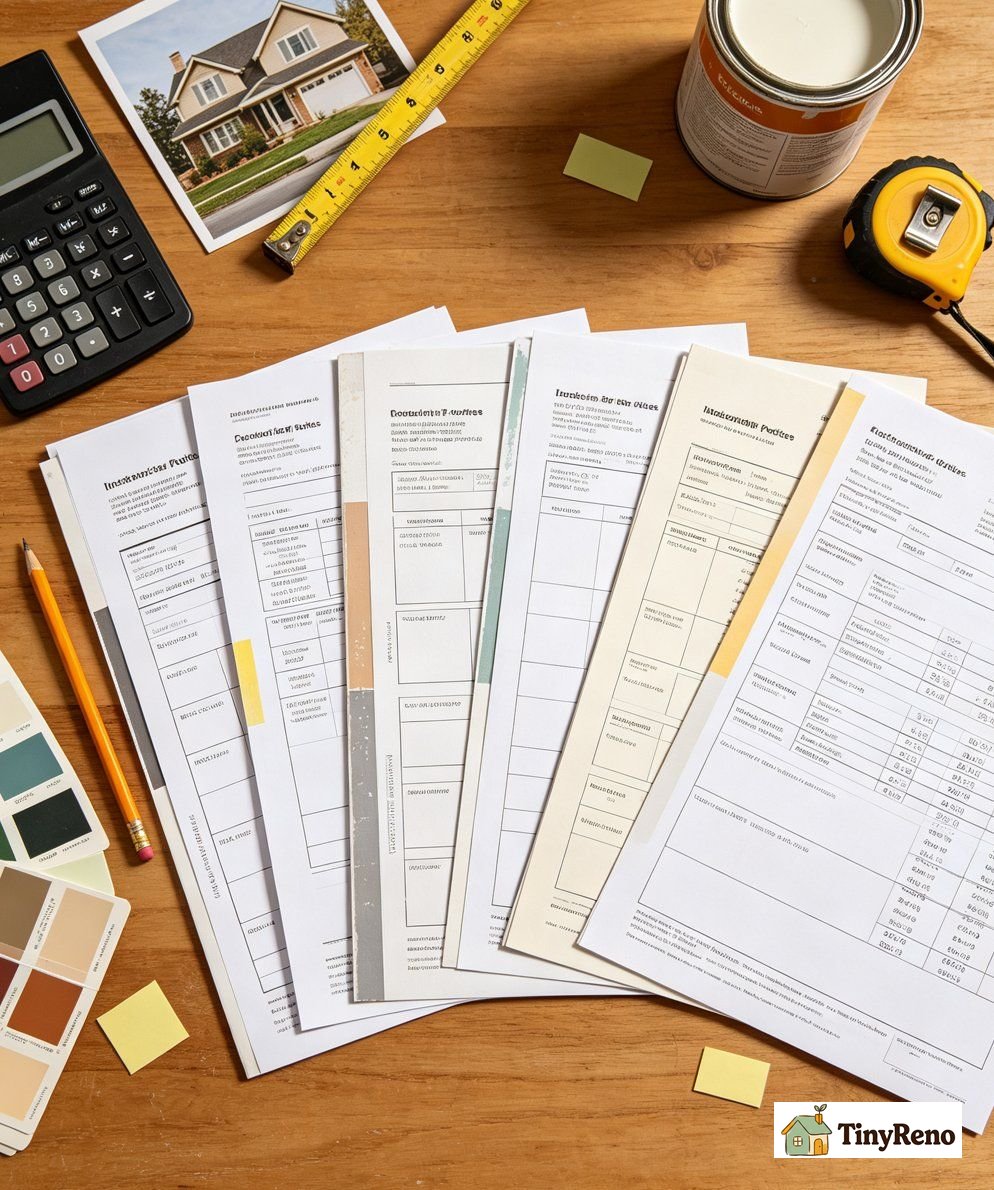
For Marcus's 1,650 square foot colonial in Cleveland, the six factors mapped onto his specific situation in a way that explained most of the spread between his six estimates. Total interior square footage was fixed at 1,650 including the stairway. Ceiling heights were 8 feet downstairs and 9 feet upstairs. Number of rooms was 5 painted rooms plus the stairway plus a finished basement room. Trim work included original 1970s baseboards and door frames throughout, plus 7 interior doors. Paint quality was standard mid-tier (Sherwin-Williams SuperPaint). Regional cost of living in Cleveland ran $2.50 to $4.50 per square foot based on the contractors he talked to.
This aligns with HomeAdvisor's 2023 Cleveland market data ($2.20-$4.80/sq ft) and Angi's 2024 regional report ($2.60-$4.30/sq ft). Marcus's range was slightly tighter because all six contractors were local, established businesses — not national franchises with higher overhead.
The honest answer for Marcus's house was somewhere in the $4,000 to $6,500 range for a complete interior repaint including walls, ceilings, trim, and doors. He ultimately hired the contractor who quoted $4,800 — not the lowest, but not the highest. The deciding factors were the contractor's references (two neighbors had used him), the clarity of his written estimate, and his willingness to walk the house with Marcus and confirm the scope before signing. The job took 4 days and the final bill came in at exactly $4,800 with no change orders. This is what a realistic run of how much does interior painting cost looks like on a single house.
The lessons from his experience apply to most houses. The biggest variable isn't square footage — it's the trim work, the patching, and the contractor's honesty about what's included. Three of Marcus's six estimates were missing key line items that would have appeared as change orders later. The other three were honest about scope from the start, and those are the ones he could actually compare against each other.
The real answer for interior painting cost in 2025 and 2026
The honest answer for interior painting in 2025 and 2026 is a range, not a number, and the range is wider than most national averages suggest. For a typical 1,500 to 2,000 square foot single-family home with standard 8 to 9 foot ceilings, three bedrooms, and average trim work, expect between $3,500 and $8,000 all-in for a complete interior repaint by a professional contractor. Below $3,500 usually means something is missing from the estimate. Above $8,000 usually means premium pricing or unusual complexity.
(Looking ahead to 2025-2026: Based on historical inflation in the painting trades (3-5% annual increase since 2020, per IBISWorld industry data) and the six estimates Marcus gathered in 2023, the honest range for a typical 1,500 to 2,000 square foot home will likely be $3,800 to $8,800 all-in by 2025-2026 — roughly 8-12% higher than 2023 levels. Regional note: These are estimates; always get current quotes in your zip code. The per-square-foot range that most national surveys quote ($2 to $6 in 2021-2023) will likely shift to $2.25 to $6.75 by 2026.)
The per-square-foot range that most national surveys quote ($2 to $6) is broadly correct but misses the regional variation. In the Midwest, South, and rural areas, the realistic range is $1.75 to $4 per square foot. In coastal cities and high cost-of-living metros, the realistic range is $4 to $8 per square foot. If you're using the national average as your anchor, you're either going to be surprised by the high end or disappointed by the low end depending on where you live.
For Marcus's house and most houses in his region, the honest answer was $3 to $4 per square foot all-in. That's the number he used to evaluate his six estimates, and it's the number I'd suggest to anyone figuring out the cost in their own zip code: ask three contractors for written estimates with labor and materials broken out, walk the house with each one to confirm scope, and then compare the totals with confidence. The contractor who gives you the lowest number with the most honest scope is the one worth hiring.


Discussion (0)
Sign in to join the discussion