

Water dripping from the top of the window frame — that's what I woke up to last September during the first big storm of fall. I had just bought a used sectional sofa off Facebook Marketplace two days earlier, and I noticed a thin stream running down the wall behind it onto the cushion. Looked up: a steady trickle was coming off the top edge of the window frame, pooling on the inner sill, and running down the painted drywall. The storm hadn't even peaked yet. I grabbed a towel, a baking sheet, and my phone, and spent the next three hours figuring out what was happening and how to keep it from getting worse.
Water dripping from the top of the window frame during a storm can destroy drywall, soak a sofa, and feed black mold inside the wall before you notice. If you don't know what to do first, here's the order of operations that actually works. Five things can cause it, four of them are your landlord's problem, and there are four moves you can make right now to contain the damage before the contractor shows up.
Why Water Drips From the Top of the Window Frame (5 Real Causes)
Most online answers to "water dripping from top of window frame" blame vague "seal failure" or "old windows." Both are technically true and both are useless. Here are the five specific things that actually cause water to drip from the top of a window frame, roughly in order of how often I see them in older rentals.
- Failed window flashing. Flashing is the thin metal or plastic strip tucked under the siding above your window. When it rusts, lifts, or was never installed properly in the first place, rainwater runs behind the siding and comes out at the top of the frame. This is the most common cause in pre-2000 construction and in any building where a previous owner did a quick window replacement without re-flashing.
- Cracked siding above the frame. Wood or vinyl siding expands and contracts each season. After 10 to 15 years, the joints open up just enough for wind-driven rain to push through. If you see paint peeling or visible cracks in the siding directly above the window, this is your culprit.
- Clogged or sagging gutters. The gutter above the window is supposed to catch roof runoff and direct it to a downspout. When it's full of leaves or has pulled away from the fascia, water cascades directly down the wall — and the first thing it hits is the top of your window frame. You'll see overflow during heavy rain even from inside the house if you stand near the window.
- Aged window sealant or glazing. Older windows (especially pre-1990 single-pane) used a glazing putty that hardens and cracks after 20+ years. Once it cracks, water follows the gap between the glass and the frame straight down. The drip will appear directly under the sash, not from the top.
- An upstairs neighbor's leak. In condos and top-floor apartments, the leak above your window sometimes isn't weather at all — it's plumbing or a unit upstairs with a failing shower pan. This one drips regardless of rain. If your leak happens every time the upstairs shower runs, you have a plumbing leak, not a window problem.
Two of these five are renter-fixable in a narrow sense (the gutter is a maintenance call, the sealant is too old to be your problem). The other three are structural and 100% landlord responsibility.
The 30-Second Test That Tells You Which Cause It Is
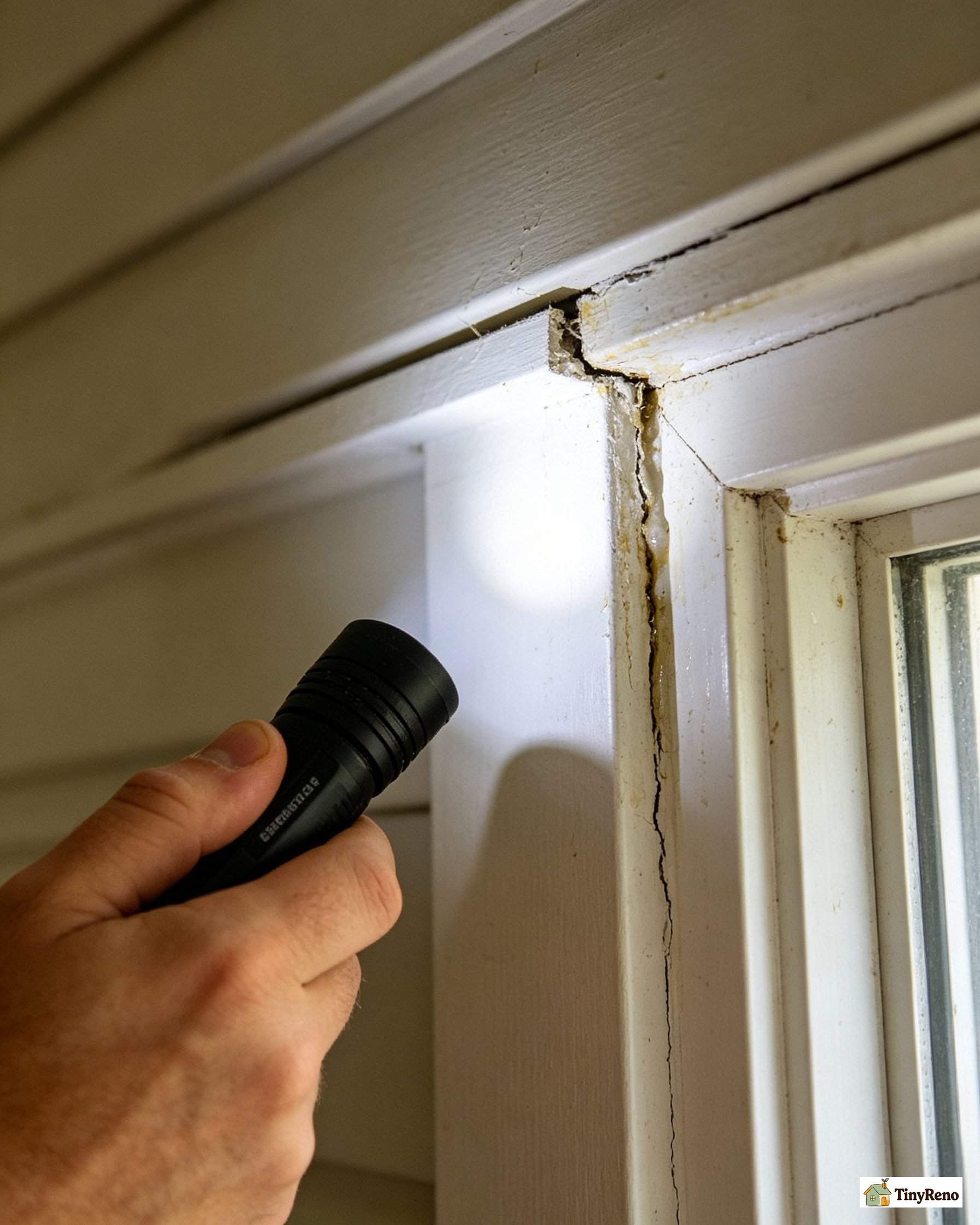
Don't call your landlord yet. Do a 30-second visual check first so you can tell them what's actually happening — landlords fix problems faster when tenants describe a specific symptom, not "it's leaking somewhere."
- Stand outside during the rain with an umbrella. Look at the siding directly above the window. Is water visibly running down behind the siding? Is there a gap between the siding and the window frame?
- Check for flashing. Is there a metal strip tucked under the siding just above the window head? If yes, is it lying flat, or has it pulled away from the wall? If you can't see any flashing at all, that's already your answer — it was never installed or was removed.
- Look up at the gutter. Is it overflowing? Is it sagging away from the house? Can you see water spilling over the front edge during the storm instead of draining down the downspout?
- Look at the sealant around the window. Is the caulk between the window frame and the siding cracked, missing, or peeling away? This is the easiest issue to photograph and send to your landlord.
Two renter rules here: do not climb a ladder to look at gutters or siding above the first floor. And do not get on the roof. Both are landlord responsibility, and both are injury risks that your renter's insurance may not cover if you weren't supposed to be up there.
4 Things You Can Do Right Now (Without Landlord)
You don't need to wait for the landlord to start limiting damage. Here's what to do in the first hour when water is dripping from the top of the window frame.
- Contain the water. Lay a towel or two on the sill. Put a baking sheet or shallow pan under the drip if it's steady. Catch what you can — every towel-load you catch is water that isn't soaking into the drywall. Don't tape plastic sheeting over the window; it traps moisture and accelerates the mold that condensation issues you're already at risk for.
- Move furniture away. Anything fabric or wood within three feet of the leak needs to move: sofa, bed, bookshelf, dresser, electronics. The leak can shift a few inches as the storm direction changes, and you don't want to discover that after the water's already soaked the cushion.
- Run ventilation. Open the window on the other side of the room (or another room entirely) to get cross-breezes moving. Set up a dehumidifier if you have one — empty the bucket twice a day during the storm. Lowering indoor humidity now prevents the mold that would otherwise show up two weeks after the rain stops.
- Document with photos and timestamps. Take three photos right now: the drip itself, the wet sill, and any wet wall or floor. Make sure your phone's metadata preserves the date and time. This protects your deposit at move-out and supports any renter's insurance claim if things get worse. Repeat the photo set every 24 hours until the landlord fixes the issue.
Two things you should not do: don't call 911 (this is property damage, not an emergency), and don't try to disassemble the window frame to "see what's going on" inside — you'll damage it and make the landlord's repair bill land on you.
The 4 Mistakes Renters Make (That Cost Them Their Deposit)
These are the patterns that show up in move-out disputes — every one of them is avoidable if you act in the first 48 hours.
- Mistake 1: Waiting to see if it "stops on its own." The leak doesn't stop on its own. Two weeks later the drywall above the window turns green with mold, the window frame starts to rot, and the landlord's contractor quotes $1,800 to fix it. Reporting in hour one caps your responsibility to "I told you about it."
- Mistake 2: Sealing the leak yourself with silicone or caulk. I get why people do this — water is coming in, caulk feels like the obvious answer. But caulking over an active leak traps the water inside the wall, where it rots the framing and feeds mold you can't see. Worse, when the landlord's contractor comes to fix the real cause, they have to remove your caulk first and charge you for the extra labor.
- Mistake 3: Ignoring the water stain on the wall. The stain is the only proof the leak happened. If you repaint over it before the landlord sees it, the move-out inspector has no record and you lose the dispute. Let the stain stay. Take a photo with a ruler in the frame for scale.
- Mistake 4: Pushing furniture against the stained wall to hide it. Move-out inspectors check behind furniture. A hidden mold colony under a sofa or bed is the single most common cause of $1,000+ deposit deductions for water damage. Same logic as dealing with any other window issue — the visible problem is rarely the real one.
How to Talk to Your Landlord (Email Template Inside)
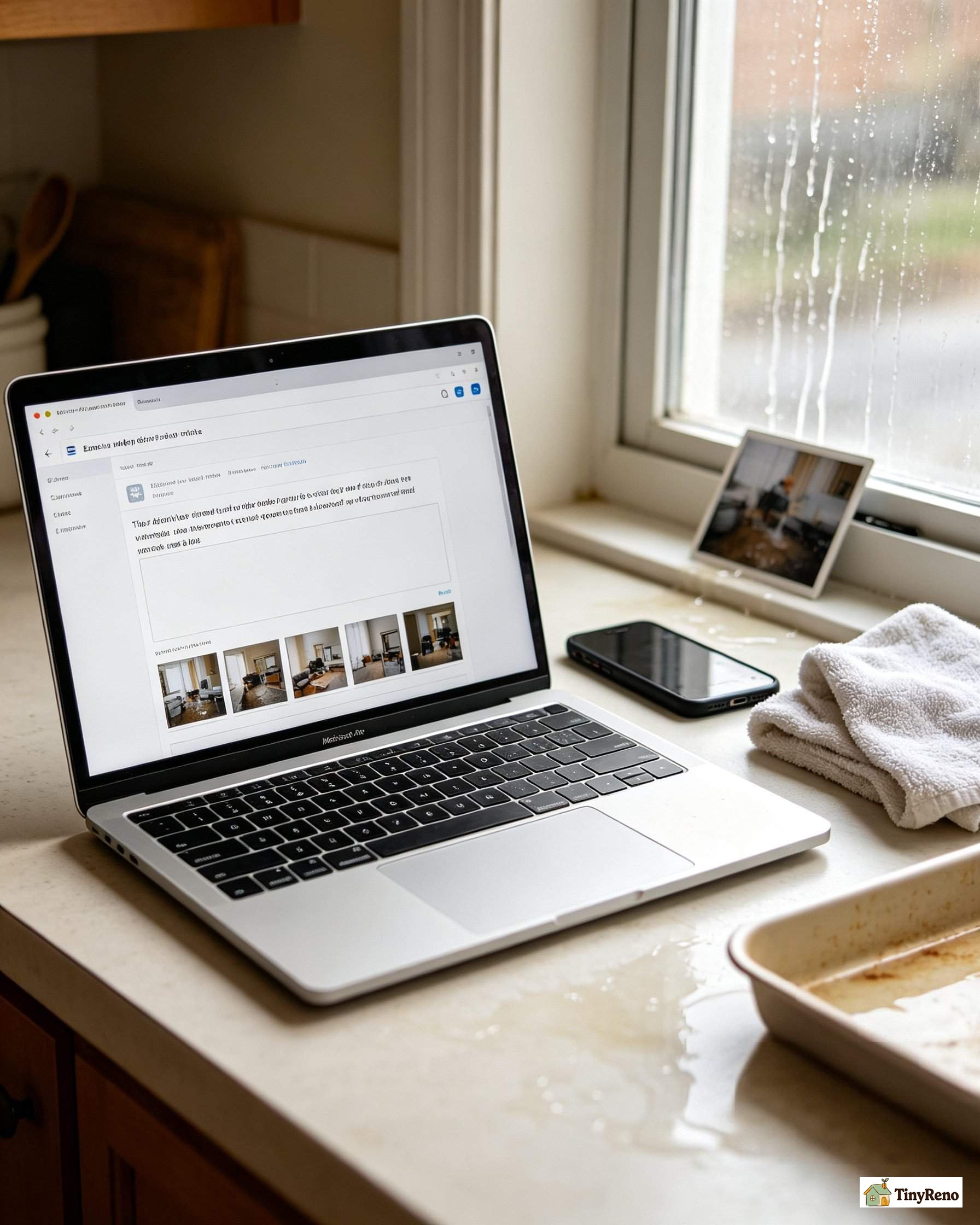
In most US states, water infiltration that can damage the unit or affect habitability is a landlord repair obligation with a 24-to-72-hour response window. Don't negotiate, don't call in a favor — send a written request that creates a paper trail. Here's the template that works:
Subject: Maintenance Request — Window Leak in [Bedroom / Living Room / etc.] (Active)
Hi [Landlord / Property Manager],
I'm writing to report an active water leak coming from the top of the window frame in the [Room Name]. The leak started during the storm on [date] at approximately [time] and continues during rainfall. I have placed towels to contain the water and moved furniture away from the affected area. Photos with timestamps are attached.
The leak appears to be coming from [the flashing above the window / the gutter above the window / the sealant around the frame — pick the closest match from your 30-second test, or write "not sure" if you couldn't tell]. I have not attempted any repair to avoid making the damage worse.
Could you please send someone to assess and repair this within the next 48 hours? Water is currently reaching the interior drywall and I'm concerned about mold.
Thank you,
[Your Name]
[Unit Number]
[Date]
Three rules for the email: describe what you see, not what you think caused it; attach photos with timestamps; and request a specific response window. "Fix this ASAP" gets ignored. "Please respond within 48 hours" creates the documentation your renter's insurance company needs if the landlord stalls.
If the landlord doesn't respond in 72 hours, send a second email cc'ing your local tenant union or code enforcement office. Most states have a habitability complaint process that takes 30 days but produces results. Same urgency logic as a water leak inside a wall — these things don't fix themselves.
When It's Not Your Landlord's Problem
Most window leaks are landlord responsibility. These four situations are not.
- You installed the window trim yourself. If you added decorative molding, shutters, or a curtain rod mount that broke the original seal, you own the resulting leak. The landlord can charge you for the repair and the resulting water damage.
- You knew about the leak and didn't report it. "I noticed it leaking last month but figured it'd stop" reads the same as "I caused the mold growth" in move-out disputes. Report immediately or accept the cost.
- You damaged the window or frame. Cracked glass from a slammed blind, bent frame from a kid's toy, broken seal from a pressure-washer mishap — these are on you.
- The leak is from a public-area pipe that runs above your unit. Rare, but in some buildings, the pipe chase above your window is part of a common system. The landlord still has to fix it, but the work order goes through the building's commercial contractor rather than residential maintenance.
The leak that started my September storm turned out to be failed flashing — the contractor who came out said it had been a problem since before I moved in, and the water had been running down inside the wall for at least a year. He fixed the flashing, replaced the soggy section of drywall, and ran a dehumidifier for three days. Total cost on my end: zero. Total cost if I'd waited two weeks: somewhere around $1,500 of damage plus a mold inspection I wouldn't have wanted to be home for. The hour you spend reporting water dripping from the top of the window frame is the one that decides which version of the story you get.
The first hour is the one that decides which version of the story you get.


Discussion (0)
Sign in to join the discussion