

How do you open a stuck window in a rental without breaking it? That was the question I was asking myself last Thanksgiving, two days before hosting dinner, when the kitchen sash I'd opened a hundred times before moved half an inch and stopped dead. I pushed harder. Nothing. The frame didn't budge, but the paint at the corner cracked open like a peel-off sticker. The kitchen smelled like brine for four days.
That window was painted shut by the previous tenant. It's the single most common reason a window sticks in a rental, and it's fixable in five minutes if you know the right sequence. Here are seven renter-safe fixes that work without breaking the glass, the frame, or your deposit.
Here are the seven fixes that actually work without breaking the glass, the frame, or your deposit.
Why Windows Get Stuck (and Why It's Worse in Rentals)
Windows stick for four reasons, and three of them happen more often in rentals than in homes you own. Knowing which one you're dealing with is the difference between a five-minute fix and a broken sash.
- Paint sealing the seam. The previous tenant — or a landlord's quick "refresh" — painted the window closed. The paint dried over the joint between the sash and the frame, gluing them together. This is the most common cause in older apartments, especially the kind last painted between 2010 and 2019 when landlords were doing cosmetic flips between tenants.
- Wood swelling from humidity. Wood frames absorb moisture in summer and let it go in winter. If your apartment runs humid (40%+ for months, or you don't run a dehumidifier in a basement unit), the frame can swell enough to grip the sash. If you've ever read a window condensation guide and recognized your apartment, swelling is likely part of your problem too.
- Dirty or corroded tracks. Vinyl and aluminum tracks fill up with paint chips, dust, dead bugs, and the gritty black residue that comes off old weatherstripping. Once that layer gets thick, the sash physically can't slide.
- Frame warping. Least common, hardest to fix. The house has settled, the frame is no longer square, and no amount of lubricant will help. This is the only one where you stop and call the landlord — see the last section.
Most stuck windows in rentals are a combination of the first two. That's actually good news, because both are fixable without calling anyone. The seven fixes below cover all four causes, so by the end of this article you'll know how do you open a stuck window no matter which one is biting you.
The 3-Step Safety Check Before You Open a Stuck Window
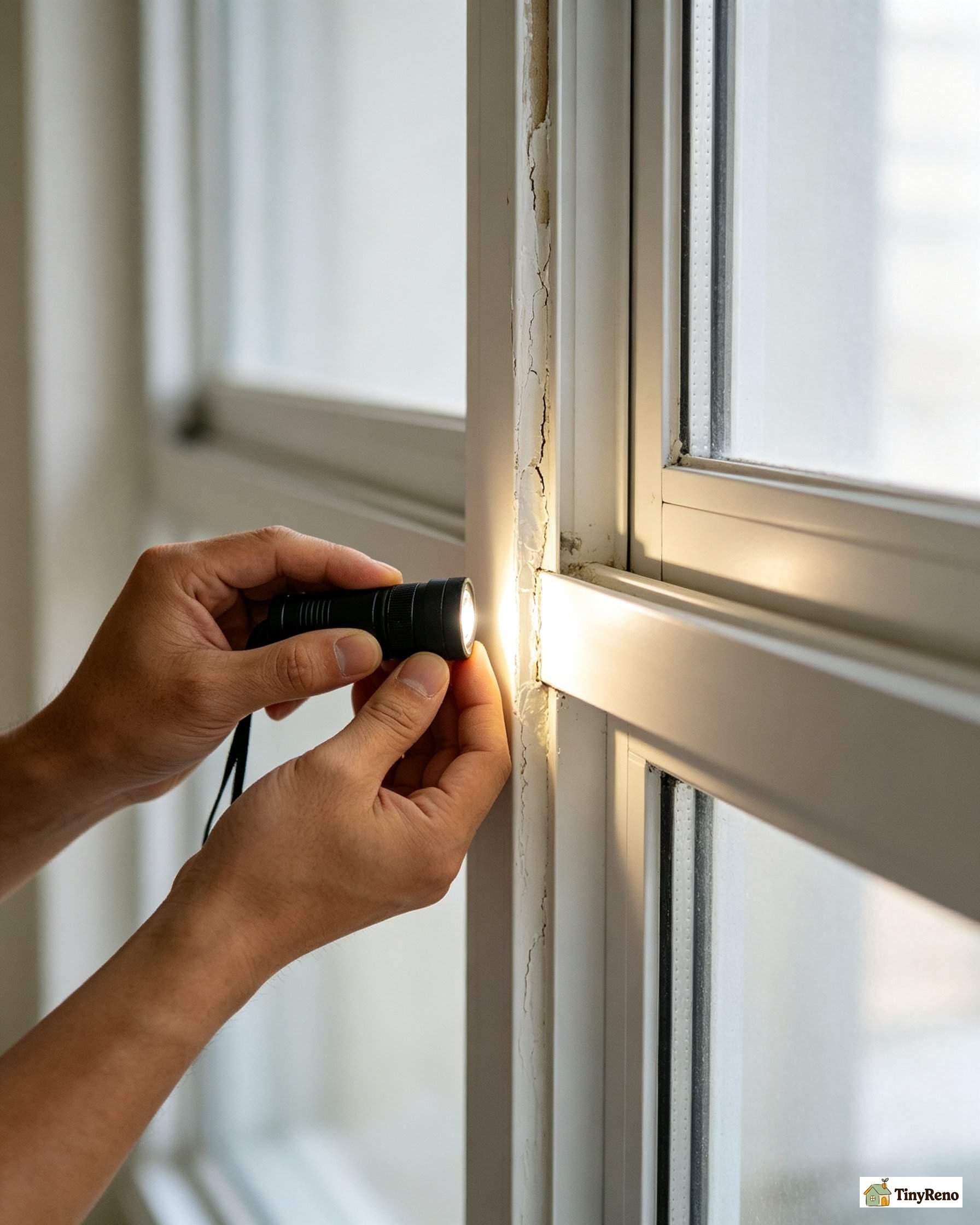
If you Google how do you open a stuck window, you'll get a wall of "just pull harder" advice. Don't follow it. The three checks below take two minutes and tell you whether you're dealing with a five-minute DIY or a job for the landlord.
A stuck window feels like a problem you solve by pulling harder. Don't. The glass is the expensive part, and sash frames crack under sideways force in a way that's obvious to any landlord doing a move-out inspection. Before you do anything, run through these three checks.
- Visual check (60 seconds). Look at the seam where the sash meets the frame. Is there a paint line bridging the gap? Are the weatherstripping pieces torn or pushed out of position? Can you see a screw head at the corners that looks freshly painted over? If yes to any of these, you're dealing with paint seal, not warping — and the fixes below will work.
- Hand test (30 seconds). Place both palms flat on the sash, one on each side, at the same height. Push straight up — no twisting, no yanking. If it moves even a millimeter, the window isn't warped, it's just stuck. If it doesn't move at all, try wiggling gently left-right while pushing up. Stiction feels like a sudden release. Warping feels like hitting a wall.
- Visual confirmation. If you suspect warping, look at the gap between the sash and the frame on all four sides. If the gap is wide at the top and narrow at the bottom (or vice versa), the frame has likely racked out of square. A healthy window has a consistent, parallel gap. If you see this "racked" pattern, stop trying to force it — it's a landlord issue.
- Tool check (10 seconds). You want a thin rag, a hair dryer, a silicone-based lubricant (NOT WD-40 — more on this below), a putty knife or old credit card, and a Phillips screwdriver. That's it. If your instinct is to grab a crowbar, stop and read the next section. If your window is also letting cold air in and you've been wondering whether to replace the whole thing, the stuck sash is usually the upstream problem.
7 Fixes That Actually Open the Stuck Window
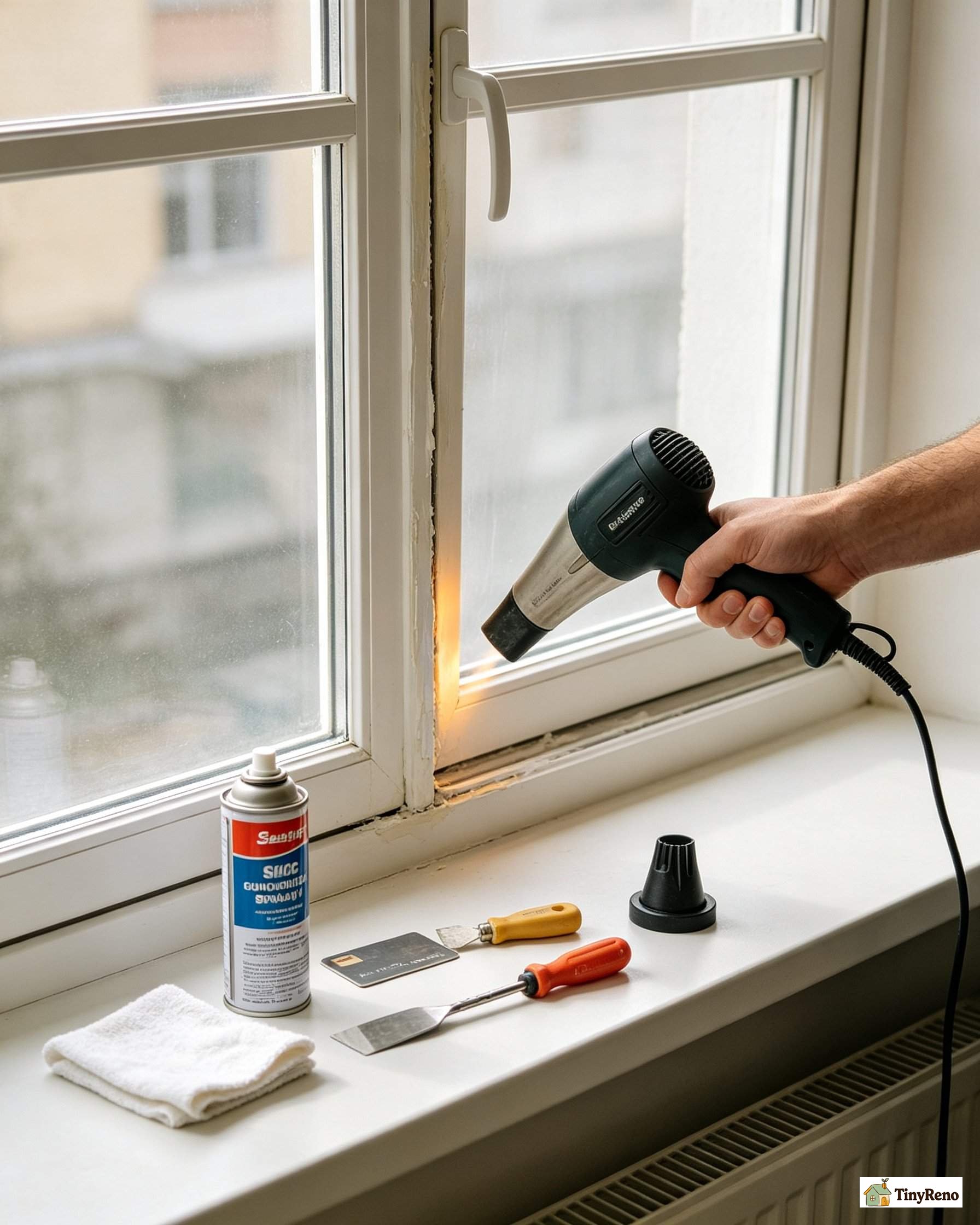
These are in the order I'd try them. Whether you're trying to learn how do you open a stuck window for the first time or you've been struggling with the same sash for years, start at fix one. Most stuck windows open by fix three.
- Hair dryer on the seam. Set it to high heat, hold it four inches from the painted seam for 30 to 60 seconds. Paint softens around 150°F — well within hair dryer range. Try the sash again immediately. The heat alone frees about one in five painted-shut windows. Pro Tip: Keep the hair dryer moving — don't hold it in one spot for more than a few seconds. If the frame feels too hot to touch comfortably (above 140°F), you're risking damage to vinyl or PVC frames. The goal is to soften the paint, not melt the frame.
- Rag-and-leverage method. Fold a thin rag into a strip about an inch wide. Slide it into the seam between sash and frame where the paint bridged. Use a putty knife (or an old credit card if you don't have one) to press the rag down into the gap, then use it as a saw to cut through the paint film. Reheat and repeat for each sealed edge.
- Silicone-based lubricant on the tracks. Look for a spray can that explicitly says "100% Silicone" or "Pure Silicone" on the label. Avoid "dry lubricants" or "PTFE" sprays for this specific job, as they don't last as long on vertical window tracks. Crucially, avoid any lubricant that lists "petroleum distillates" or "mineral oil" in the ingredients, as these can soften paint and degrade rubber weatherstripping over time. Spray a thin line of pure silicone lubricant along both vertical tracks. Slide the sash up and down a few times to work it in. Wipe off the excess. Do not use WD-40 — it strips paint, damages weatherstripping, and a landlord doing a move-out walkthrough will spot it instantly because it leaves an oily rainbow on the frame. This is the same logic behind why you shouldn't oil a squeaky door with cooking spray either.
- Loosen the track screws. Look at the inside face of the frame. Many vinyl and aluminum windows have a Phillips screw at each corner of the sash track that lets you adjust tension. Turn each screw a quarter turn counterclockwise to loosen the grip, try the window, then re-tighten once it slides.
- Remove the screen first. If your window has a screen, take it out before doing anything else. Screens get pushed into the track by humidity and create a false "stuck" feeling because the sash is dragging the screen frame with it. Lift the screen tabs, tilt the bottom inward, and pull it out. Note for Sliding Windows: If you have a horizontal sliding window, the screen is usually on the inside track. Make sure it's not bowed inward and pressing against the glass pane. Sometimes the "stuck window" is actually just a stuck screen that's dragging the sash with it.
- Paint-cutting method for heavy seals. If fixes one through three didn't work, the paint seal is thick. Use a fresh, sharp utility knife, but angle the blade slightly away from the glass and the frame to avoid nicking either. Better yet, use a dedicated paint scraper or a stiff putty knife with a rounded tip, which is far less likely to slip than a razor-sharp utility blade. Run it along the seam where the sash meets the frame, both sides and the top. Cut just deep enough to break the paint film — you're cutting paint, not wood. Then try the hair dryer again.
- Tell the landlord. If you've tried fixes one through six and the window still won't move, you've hit the warping or internal-mechanism failure category. Take photos, send a maintenance request, and stop. Forcing further risks cracking the glass or twisting the frame, and either of those will come out of your deposit. The same applies if you have a window AC unit — a stuck window and a window AC is a guaranteed summer emergency, not a weekend project.
The 3 Mistakes That Break the Window (or Your Deposit)
These are the calls I get from friends after they've already damaged something. Avoid them and you're fine.
- Mistake 1: Pulling harder. Windows that feel "really stuck" are usually one good fix away from opening. Windows that won't move after fix three are warped, and brute force turns a $0 landlord fix into a $400 sash replacement. If it doesn't slide after the lubricant step, stop.
- Mistake 2: Using WD-40. It's the first thing everyone grabs. It also dissolves paint, swells rubber weatherstripping, and leaves an oily film that attracts dust for months. A landlord doing a move-out inspection sees WD-40 residue and assumes you tried to "fix" something you shouldn't have. Use pure silicone spray. It costs the same and doesn't leave a trace.
- Mistake 3: Prying the frame. A flat bar between the sash and the frame will absolutely open the window. It will also bend the frame, crack the interior trim, and leave pry marks that no amount of touch-up paint will hide. The putty knife and rag method does the same job without the damage.
How to Keep It From Sticking Again This Year
Once you've got the window open, five minutes of seasonal maintenance keeps it that way.
- Lube it twice a year. Spring and fall, hit the tracks with silicone spray and work the sash up and down a few times. This takes longer to read about than to do. If you run a dehumidifier in summer, keep your apartment humidity between 40 and 50 percent — that range keeps wood frames from swelling without drying out the air.
- Check the paint seam annually. Walk your windows once a year and look for paint bridging the sash-frame joint. If you see it forming, cut it with a utility knife before it dries hard. This is a five-minute job per window and prevents 90% of next year's stuck-window emergencies.
- Vacuum the tracks. Once a season, run a vacuum crevice tool down both vertical tracks. The grit that builds up is half the reason sash movement gets sluggish over time. This is also a good moment to spot early signs of condensation between the panes, which is a different problem with a different fix. Doing this twice a year is the closest thing to a guarantee that you'll never have to ask how do you open a stuck window again.
When You Should Just Call the Landlord
There are four situations where the answer is "stop, document, and request maintenance," not "fix it yourself."
The glass is cracked or fogged from the inside (seal failure, not a stuck window). The frame is visibly warped or pulling away from the wall. The weatherstripping has come off in strips and the window now whistles. You've tried three of the fixes above and the sash still won't move. In all four cases, the problem is structural or seal-related, not operational, and continuing to mess with it costs you more than it saves.
When you submit the request, include the date, photos of the sash and the frame, and a one-line description ("Window in kitchen won't open — appears to be painted shut or swollen"). Most landlords treat stuck-window maintenance as a 48-hour ticket. If yours doesn't, that's a separate conversation about habitability — but the window itself isn't something you need to fix yourself.
Maintenance Request Template: Copy and adapt this for an email or message to your landlord or property manager.
Email/text template:
Subject: Maintenance Request — Stuck Window [Kitchen / Living Room / etc.] — [Your Address/Unit]
Hi [Landlord / Property Manager], The window in the [Room Name] appears to be stuck or painted shut and will not open. I have attempted gentle, non-damaging methods (lubrication, cleaning tracks) without success. I have not forced the window to avoid damaging the frame or glass. Could you please schedule a maintenance visit to assess and repair this? This is impacting ventilation in the unit.
Sincerely,
[Your Name]
The Thanksgiving window finally opened in March, when I ran a utility knife around the seam on a warm afternoon. Took four minutes. Should have done it in November and saved myself a week of turkey-scented kitchen air.


Discussion (0)
Sign in to join the discussion