

Hardwood floor water damage looks the same for the first 12 hours, then splits into three very different problems depending on what got wet and for how long. My friend left a window cracked during a storm last August. By morning, two gallons of rain had pooled along one edge of the living room floor. She grabbed a towel, soaked up the water, and figured she was done. Two weeks later, three planks cupped into shallow bowls. A month after that, the same area started smelling sweet. The cupping was fixable. The smell meant subfloor damage that cost $1,400 to repair — and her landlord wanted her to pay it. This guide walks through what to do in the first 24 hours so you don't end up in her position.
The reason hardwood floor water damage is so tricky is that the visible water disappears faster than the hidden damage accumulates. A floor can look dry on day one and still have moisture soaking into the subfloor, which then feeds mold and warps the boards from underneath. For water that's still flowing — an active leak, an overflowing tub, a burst pipe — start with our water leak inside wall guide and stop the source before doing anything else. For floor that's already started showing water stains that look like scratches, our scratch repair guide covers why the two problems aren't the same.
3 Types of Hardwood Floor Water Damage (Not All Need the Same Fix)
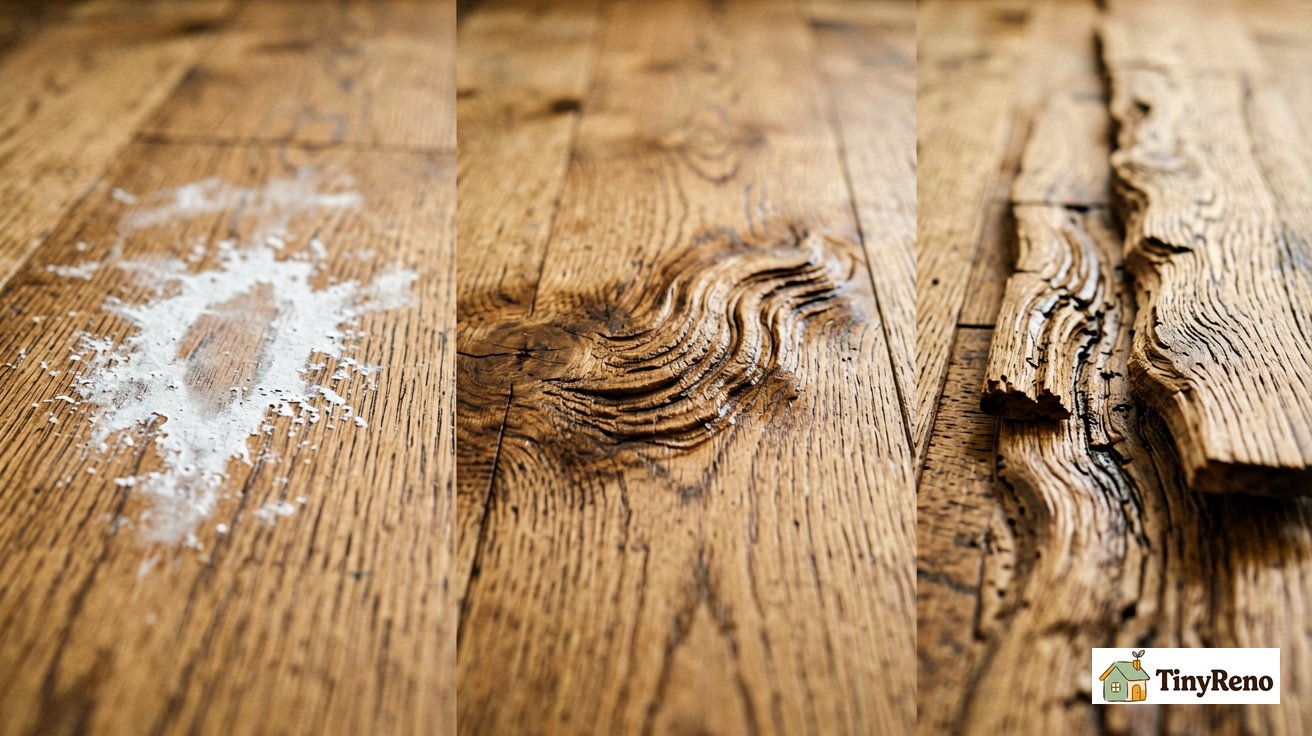
Before you decide what to do, you need to identify which kind of damage you're dealing with. The visible sign on the surface looks similar in all three, but the fix and the timeline are completely different. Walk the affected area slowly. Look at the planks from a low angle (kneel down) so you can see whether they're lying flat or whether the edges are curling. Touch the surface with the palm of your hand — dry, cool, and flat means surface damage only; rough, lifted edges, or any softness means deeper damage.
| Type | What it looks like | How fast it shows up | Renter can fix? | How long the fix takes |
|---|---|---|---|---|
| Surface stain | White or dark water mark on finish, planks still flat | Within 12 hours of water exposure | Yes — usually | 1-2 weeks of drying + refinish |
| Cupping | Edges of planks curl upward, wavy surface, boards still attached | 3-14 days after water exposure | Maybe — depends on moisture content | 2-4 weeks of drying, may self-correct |
| Buckling | Planks lift off the subfloor entirely, gaps or humps visible | 2-6 weeks after water exposure, especially if never dried | No — landlord or pro | Plank replacement, $400-2000+ |
Surface stain is cosmetic — the finish got wet and either hazed (white mark from moisture trapped under the finish) or absorbed water and darkened. The wood itself may still be in good shape. Cupping happens when one side of the plank (the bottom, against the subfloor) stays wetter than the other side (the top, exposed to air). The wet side swells, the dry side doesn't, and the plank bows upward at the edges. Buckling is what happens when cupping goes on long enough that the planks lose their grip on the subfloor and physically lift. By the time you see buckling, the subfloor underneath is almost always wet too.
First 24 Hours: Stop the Damage From Spreading
The first 24 hours after water touches the floor are when you have the most control over which type of damage you end up with. Speed matters more than technique. Here's the order of operations.
Hour 0-2: Remove standing water. Towels first, then a wet-dry shop vac if you have one (regular vacuums short out on water and create an electrical hazard). Get the visible water up. Don't mop with a soaked mop — that just spreads the water around. Blot and absorb, don't wipe and smear.
Hour 2-4: Get air moving. Open windows if the outdoor humidity is lower than indoor. Set up fans pointing across the wet area — not directly at it, but across it, to create airflow. Box fans in two opposite windows create cross-ventilation that pulls moisture out faster than anything else. If you have a dehumidifier, run it in the affected room with the door closed and empty the tank every few hours.
Hour 4-12: Lift the rugs. Any area rug that was on or near the wet area needs to come up. Rugs trap moisture underneath and slow drying. Take them outside to dry separately if they're wet, or set them aside in a dry room if they're dry. Wet padding under a rug is the most common cause of localized mold growth that shows up months later.
Hour 12-24: Document everything. Photograph the wet area with a timestamp. Photograph any visible water marks. Photograph the meter reading if you can access it. Save everything to cloud storage. Send yourself an email with the photos so the timestamp is in the email metadata. This documentation chain matters more for water damage than for any other renter issue, because insurance and the landlord will both want to know when the damage happened.
One thing not to do in the first 24 hours: don't tear up the floor. Even if you can see water pooling under the planks. Tearing up a wet floor is a landlord decision, and it destroys evidence the insurance adjuster needs. Wait.
The 7-Step Method to Save a Wet Floor
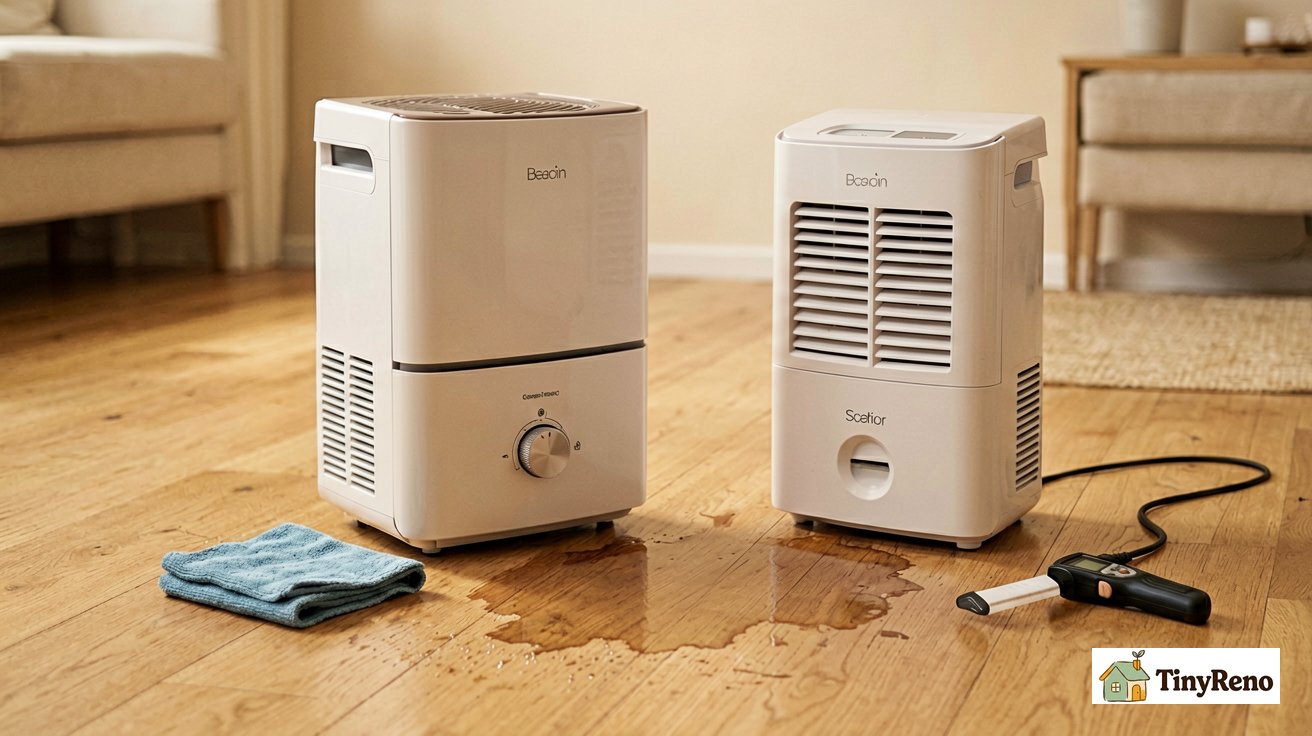
If you've caught the water early (within the first 24 hours) and the damage is surface-level, there's a good chance you can save the floor without a professional. The method below is what restoration companies do for $500-1000 — you can do it yourself for the cost of a dehumidifier rental and some patience. Expect two to four weeks before you know whether it worked.
Step 1: Confirm the water source is off. Active leak versus one-time spill changes everything. A one-time spill can be dried out. An ongoing leak will keep adding moisture and the floor will never recover. Fix the leak first.
Step 2: Remove all furniture from the wet area. Anything sitting on a wet floor traps moisture underneath and can wick it into furniture feet or carpet. Move pieces to a dry room, putting furniture pads under the legs if you have them so you don't scratch the dry floor. When moving furniture, always use furniture sliders or thick felt pads under the legs to prevent scratching the vulnerable, slightly softened wood fibers of the drying floor.
Step 3: Run the dehumidifier and fans continuously. Not for a few hours. For days. Run them 24 hours a day until the moisture meter reads back to normal in the wet area. If you don't have a moisture meter, the rule of thumb is one week minimum for a one-time spill, two weeks minimum for a slow leak that was missed for a day or two. Energy & Safety Note: running a dehumidifier continuously can significantly increase your electricity bill. Check the tank frequently to prevent overflow — consider a model with a continuous drain hose that can empty into a sink or bathtub if you'll be away. Never leave electrical appliances running unattended in an empty apartment for extended periods without proper drainage and fire safety checks.
Step 4: Pull up the baseboards if the wall was wet too. Baseboards trap moisture between the wall and the floor. Removing them lets air circulate along the wall edge and prevents mold from growing in that gap. Pull baseboards off gently with a pry bar; you can put them back later. This is the single step most renters skip that costs them the most at move-out.
Step 5: Check the subfloor with a moisture meter if you have one. A pinless moisture meter costs about $30. Press it against the wood in the wet area and compare to a reading from a dry area of the same floor. If the wet reading is more than 5 percentage points higher than the dry reading, the subfloor is still wet and you need more drying time. If they're within 2 percentage points, you're done drying. Reading the meter: healthy hardwood typically reads between 6-9% moisture content (MC). If your reading is above 12% after a week of drying, continue dehumidification. Readings above 16-20% indicate a high risk of mold growth and may require professional extraction.
Step 6: Let the floor acclimate before any refinishing. Once the moisture is gone, the floor needs another two to four weeks to settle back to its original shape. Cupping will often self-correct during this period provided the moisture imbalance wasn't extreme and the drying process is slow and even. As the planks reabsorb and release moisture evenly, they tend to flatten out. However, if the wood was saturated for weeks or dried too rapidly, the fibers can set in the cupped position, requiring professional sanding to flatten. Don't sand or refinish until the planks are flat again — sanding a cupped floor just makes the cupping more pronounced.
Step 7: Lightly buff any remaining surface stains. White water marks (moisture trapped under the finish) often respond to gentle buffing with a soft cloth and a dab of toothpaste (non-gel) or a 1:1 mix of white vinegar and olive oil. For stubborn white rings, a cloth dampened with mineral spirits can temporarily blur the finish and hide the mark (test in an inconspicuous spot first). Dark stains that have penetrated into the wood need sanding and refinishing — that's a professional job unless you have experience with a drum sander. Avoid using "hardwood floor polish" on white water marks, as it can cloud the finish further.
The reason this method works is that wood floor water damage takes time. Most renters panic in the first 48 hours and either call a restoration company too early (before they know if the damage is reversible) or tear up the floor too soon (destroying salvageable planks). Give the drying process the time it needs. You can't accelerate it past the natural moisture curve.
When to Call the Landlord (And What to Say)
Three situations warrant a landlord call within the first 24 hours. The water is still flowing and you can't stop it yourself. The wet area is more than 10 square feet — that's too big for renter-level drying. The water came from above (upstairs neighbor, roof leak, HVAC overflow) and the subfloor is likely saturated.
Critical: if you observe buckling (planks lifting), stop all DIY efforts and notify your landlord immediately in writing. Buckling indicates the subfloor is likely compromised, which is almost always a structural issue beyond renter repair. Document the buckling with photos and timestamps, but do not attempt to press planks back down or conceal the damage.
For all three, the call is the same: email or text, three sentences, with photos. "There's water damage to the hardwood floor in [room]. It came from [source]. I first noticed it on [date] at [time]. I have photos and have stopped using nearby fixtures. Please advise on inspection." Save the message. The landlord will probably send their maintenance person or a restoration contractor within 48 hours.
What you want to avoid is the landlord's first instinct, which is often "let's just see if it dries out." That's fine for a small surface spill but not for anything where the subfloor got wet. If the landlord says to wait and see, ask specifically: "Has anyone checked the moisture level under the planks?" That question forces them to either hire a moisture meter reading (which costs them) or admit they're guessing. The moisture number is what tells you whether the floor can be saved or whether the subfloor needs to be replaced.
The other conversation to have is about responsibility. Most leases hold the landlord responsible for damage from building-system failures (roof, plumbing, HVAC, upstairs neighbor overflow). If your damage came from one of those, the landlord's insurance covers it and the repair should be on them. If the damage came from something you did (overflowed the tub, spilled a fish tank), it's on you. Knowing which it is matters for both the deposit and the insurance claim. Our settlement cracks guide has the renter-vs-landlord decision framework that applies here too — it's the same logic, different symptom.
Long-Term: What to Watch for in the Next 30 Days
Hardwood floor water damage doesn't end when the visible water is gone. The 30 days after the initial drying matter as much as the first 24 hours. Here's what to watch for.
Days 3-7: check for new cupping. If planks that were flat on day one start showing edge curl on day five, the subfloor is still wet somewhere. Run the dehumidifier another week. Don't refinish anything yet.
Days 7-14: check for musty smell. The sweet, earthy smell that signals early mold growth usually shows up in the second week. If you smell it, check the area with a flashlight held flat against the floor — mold under planks often looks like a faint white or gray haze along the edges. If you see it, the subfloor is involved and you need a professional.
Days 14-30: check for buckling or gapping. If planks start lifting off the subfloor or pulling apart from each other in ways they weren't before, the damage has progressed past what drying alone can fix. This is when restoration professionals get involved. The conversation with the landlord shifts from "can you fix this" to "can we agree on a contractor."
If none of these show up by day 30, the floor has stabilized. The remaining surface stains can be addressed with polish or refinishing, and the rest of the floor is fine. You didn't just save the floor — you documented the entire chain in case the landlord tries to charge you at move-out. That's the part most renters forget: the documentation that protects your deposit isn't the photos you took during the emergency. It's the photos you took 30 days later showing the same area in good condition.
Most hardwood floor water damage that gets caught in the first 24 hours can be saved with the method above. The difference between my friend's $1,400 repair and a $50 dehumidifier rental was about 12 hours of decision-making and a willingness to let the floor dry on its own timeline. The floor wants to recover if you let it. For water that's already done its damage and left visible subfloor problems, our carpet damage guide covers what to do when the same water event hit the carpet instead of the wood. And if mold has started, the mold cleanup guide walks through what the renter can and can't safely handle. The whole sequence — stop the water, dry the floor, document everything — is what separates a $50 fix from a $5,000 deposit deduction.


Discussion (0)
Sign in to join the discussion