

My friend Sarah texted me a photo at 10:43pm on a Tuesday — her IKEA shelf, a 1-inch hole in her drywall, and a frustrated emoji. She'd used the plastic anchor that came in the box. It held for 3 days, then pulled out of the wall when she set a cookbook on the shelf. The shelf weighed 8 pounds. The anchor was rated for 15. The math worked. The wall type didn't. I went over the next morning with a 4-pack of better drywall anchors and a 6-minute fix. Here's the anchor guide I now send anyone who asks me about hanging things on drywall — and why the anchor that came in the box is almost never the right one.
Why the Anchor That Comes in the Box Is Almost Always Wrong
Walk down the hardware aisle and you'll see shelves, hooks, and TV mounts that all come with a plastic anchor in the box. The packaging says "everything you need for installation." What it doesn't say is that the included plastic anchor is the cheapest possible anchor that will pass a basic strength test on solid drywall — assuming the shelf weighs less than 10 pounds and nobody ever leans on it.
The reason these anchors fail isn't a manufacturing defect. It's that the included anchor is designed for the most common wall type (1/2 inch drywall on wood studs, 16 inches apart) and the most common weight class (under 10 pounds). If your wall is plaster, hollow, or concrete — or your shelf is over 10 pounds — the included anchor is the wrong tool. Sarah's wall was 1/2 inch drywall, but her shelf was 12 pounds of books plus the shelf itself, leaning against the wall at a 5-degree angle. The plastic anchor held the static load for 3 days. The dynamic load (someone setting a heavy book on the shelf) pulled it out within seconds.
The 4 types below cover 95% of renter situations. Pick the wrong drywall anchor and you're back to the 1-inch hole. Pick the right drywall anchor and it holds for years.
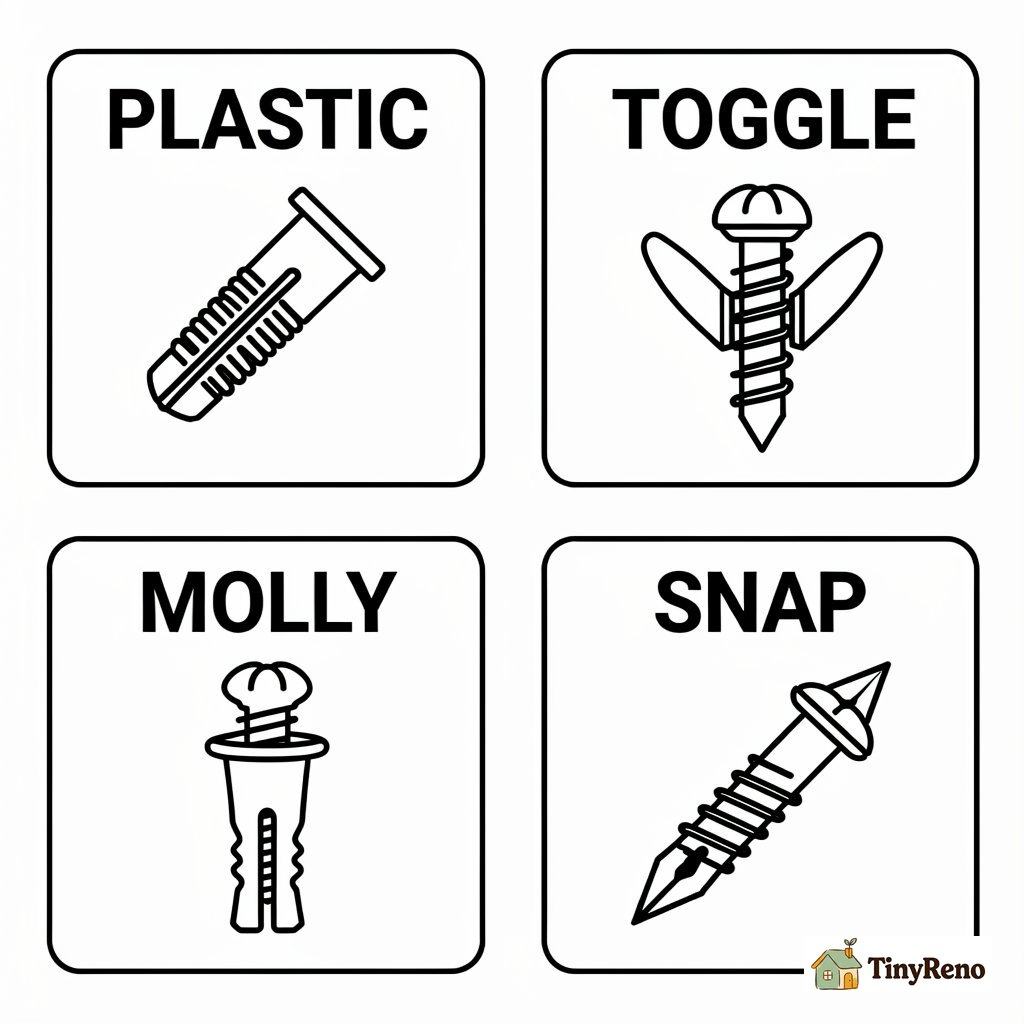
The 4 Anchor Types and When to Use Each
Here's the cheat sheet for the 4 main types you'll see at Home Depot, plus what each is actually good for:
1. Plastic expansion anchor (the kind that comes in the box): $0.10 each in bulk. Works only in solid drywall, light loads (under 10 lbs), and only when the load is straight down (not at an angle). Pulls out under any sustained load over 10 lbs or any angled load. Avoid for anything you care about. Use for: lightweight decorative hooks only.
2. Self-drilling threaded anchor (the upgrade most people should use): $0.50-1 each in bulk. A zinc or plastic screw that drills its own hole when you turn it with a Phillips screwdriver. Holds 25-50 lbs in 1/2 inch drywall, depending on the brand. Works in drywall only, not plaster. The upgrade I tell everyone to use by default. Use for: shelves under 30 lbs, towel bars, mirrors, curtain rods, anything where the load is straight out from the wall.
3. Toggle bolt: $2-3 each in bulk. Has a spring-loaded wing that opens behind the wall and braces against the inside of the drywall. Holds 50-100+ lbs depending on the wall thickness. Works in hollow walls, drywall, plaster, even some hollow-core doors. Requires a larger hole (usually 1/2 inch) to insert. The most reliable anchor for heavy loads in drywall. Use for: TV mounts, heavy shelves, ceiling-mounted items, anything over 30 lbs.
4. Molly bolt (intermediate duty): $1-2 each in bulk. A metal sleeve that compresses behind the wall when you tighten the screw, forming a flange that braces against the inside of the drywall. Holds 25-75 lbs. Works in drywall, plaster, and hollow walls. Permanent once installed — hard to remove without leaving a bigger hole. The middle-ground choice between self-drilling and toggle. Use for: medium-weight shelves in plaster walls where toggles won't fit.
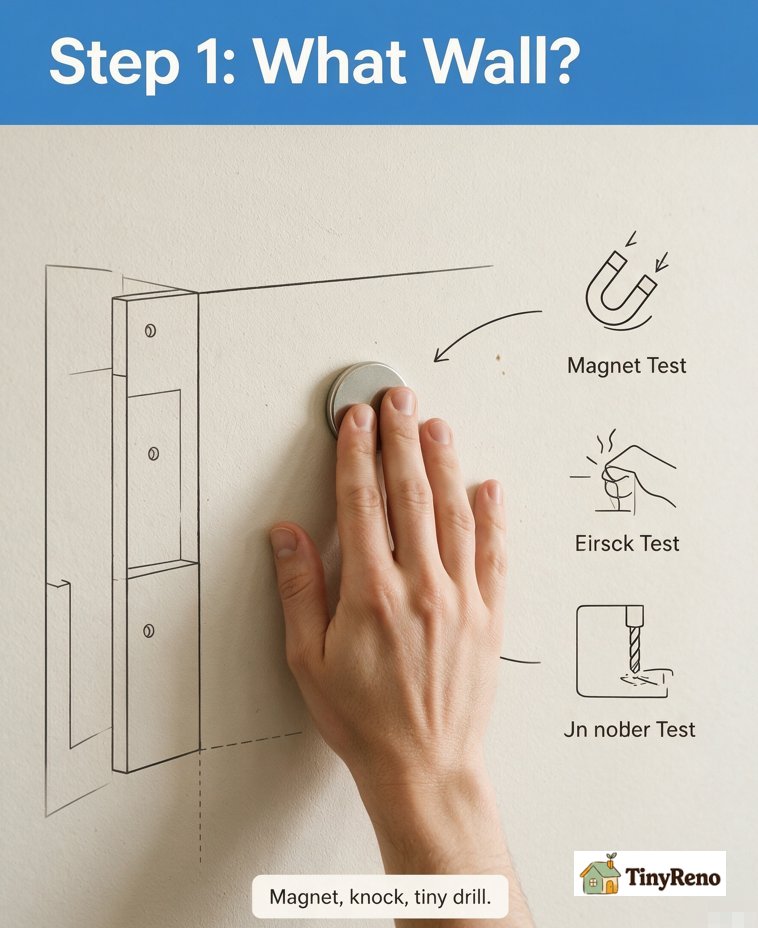
Step 1: Tell What Wall You Have (30-Second Test)
Before you buy any anchor, you need to know what wall type you're anchoring into. Three tests take 30 seconds total.
What you need:
- A magnet (fridge magnet works)
- A drill with a small bit (1/8 inch)
The tests:
Test 1: Magnet. Hold the magnet against the wall. If it sticks firmly, you have drywall screwed into metal studs (modern apartments). If it doesn't stick, you have either drywall on wood studs (most rentals) or plaster (older buildings). The magnet doesn't tell you which of the two, but it tells you metal studs isn't the answer.
Test 2: Knock. Knock on the wall with your knuckle. A hollow sound means drywall on studs. A dense, solid sound means plaster (or concrete, but concrete is rare in apartments). The hollow sound is what you'll hear in 80% of rentals.
Test 3: Drill a tiny pilot hole. If you're still not sure, drill a 1/8 inch hole in an inconspicuous spot. Drywall cuts easily and you'll see paper and gypsum dust. Plaster is harder to drill and produces fine white dust. If the drill hits solid resistance after 1/2 inch (no stud cavity), you've hit concrete or brick — which needs masonry anchors, not the types above.
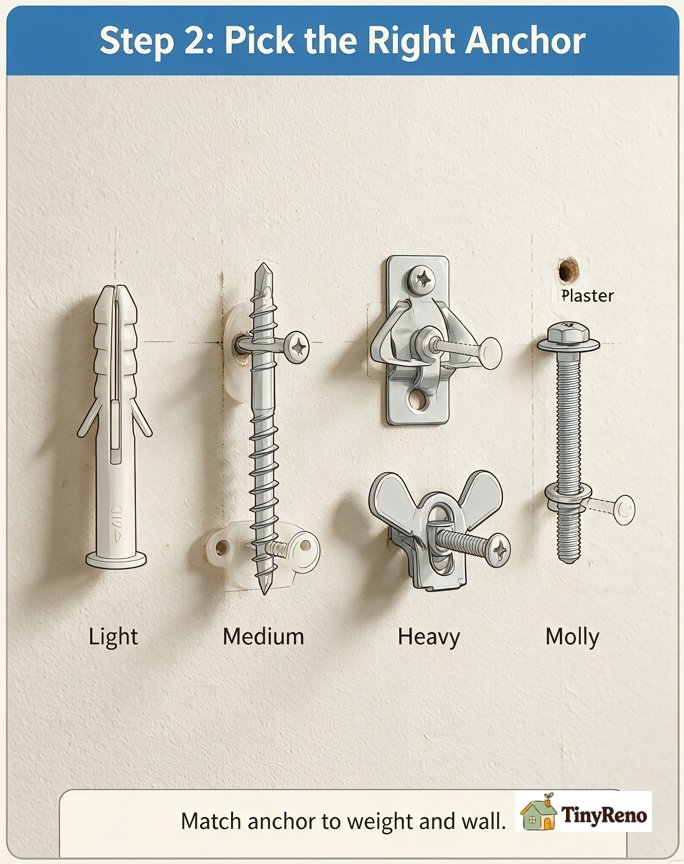
Step 2: Pick the Right Anchor for Your Load
Match the anchor to the load. Here's the decision table I use:
- Under 10 lbs, drywall: Self-drilling threaded anchor (the $0.50-1 upgrade from the included plastic one)
- 10-30 lbs, drywall: Self-drilling threaded anchor, larger size (look for #8 or #10)
- 30-50 lbs, drywall: Toggle bolt
- Over 50 lbs, drywall: Toggle bolt into a stud (find the stud first with a magnet or stud finder, then mount into the stud, not just the drywall)
- Under 20 lbs, plaster: Molly bolt (self-drilling threaded anchors don't work in plaster — the screw can't get a grip)
- Over 20 lbs, plaster: Toggle bolt
The mistake I see most often: people use the included plastic anchor for everything, including 40-pound TV mounts. The anchor holds for a few weeks, then the TV ends up on the floor and the wall has 4 holes instead of the right 2.
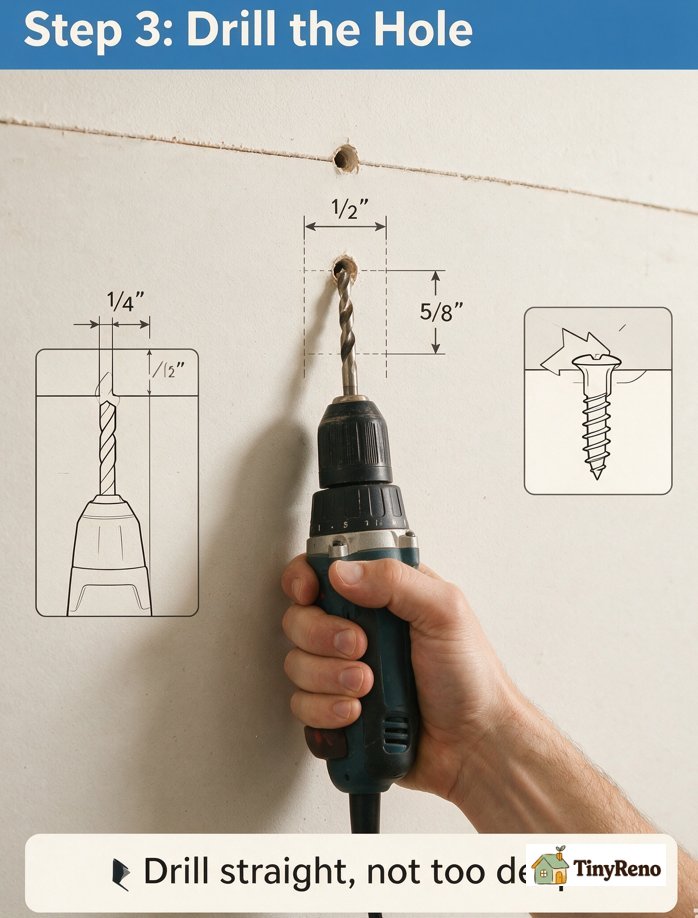
Step 3: Drill the Correct Size Hole (If Needed)
Self-drilling threaded anchors don't need a pilot hole — the anchor drills its own hole when you turn it with a Phillips screwdriver. Press the anchor tip against the wall, apply firm pressure, and turn clockwise until the anchor is flush with the wall.
For toggle bolts and molly bolts — heavier drywall anchor options — you need to drill first. The drill bit size is on the anchor package — usually 1/4 inch for small toggles, 1/2 inch for medium, 5/8 inch for large. Drill straight (not at an angle) and don't push the drill bit all the way through the wall — the bit will hit something on the other side and you don't want to drill into it.
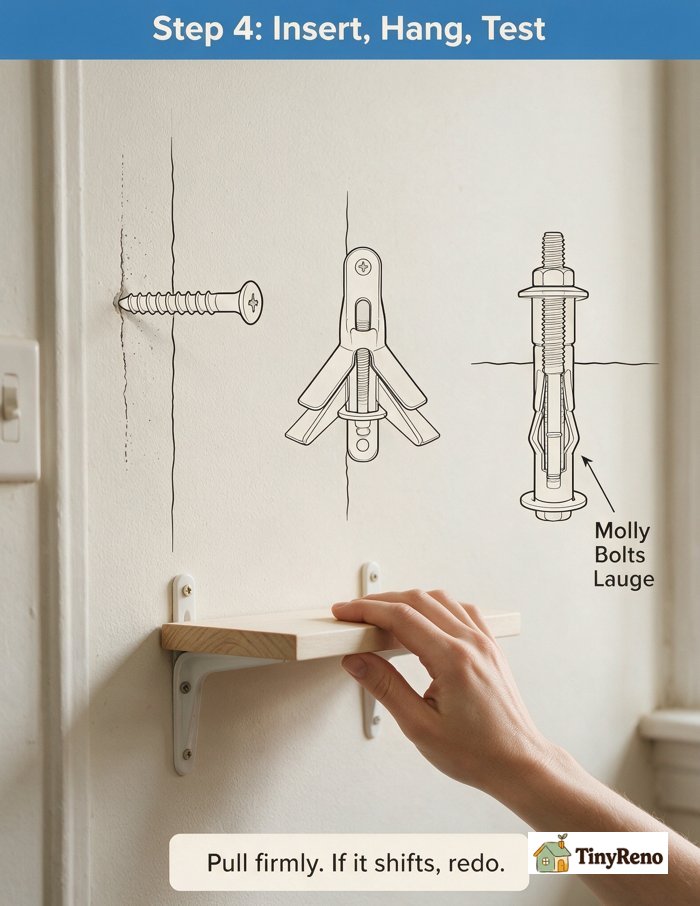
Step 4: Insert, Hang, and Test
For self-drilling threaded: Drive the anchor in with a screwdriver until flush. Then drive the included screw into the anchor, leaving the screw head 1/8 inch out from the wall. Hang your item on the screw head.
For toggle bolts: Thread the item's mounting hardware onto the toggle bolt first, then fold the wings flat against the bolt and push through the hole. Once inside the wall, the wings spring open. Pull the bolt back toward you until the wings catch on the inside of the drywall, then tighten the bolt. The wings will press against the inside of the wall as you tighten.
For molly bolts: Insert the molly into the hole, then tap it flush with a hammer. Tighten the screw on the front — the metal sleeve behind the wall will compress and form a flange. Once the flange is formed, back the screw out, mount your item, and re-insert the screw.
Always test: Before you trust the anchor with the actual load, pull on it firmly with your hand for 10 seconds. If it doesn't budge, it's good. If it shifts at all, you've got the wrong drywall anchor or the wrong size hole and you need to redo it.
How to Patch the 1-Inch Hole When an Anchor Pulls Out
If an anchor pulled out and left a 1-inch hole, the fix is the same 2-coat drywall patch from any hardware store drywall repair kit. The patch costs $5 and takes 30 minutes. The bigger mistake to avoid: filling the hole with caulk instead of compound (caulk shrinks and the patch will show as a depression). Use setting-type joint compound for the first coat and premixed for the second coat. Sand smooth, prime, paint.
When to Call the Landlord
Three situations where the right move is to text the landlord instead of DIY:
- You're mounting something over 50 lbs in plaster or concrete — the right anchor requires a hammer drill and masonry bits that most renters don't own. The cost-benefit doesn't favor DIY when the landlord can do it in 30 minutes with their tools.
- The anchor keeps pulling out after a few weeks even with the right type — usually means the drywall itself is failing (water damage, age, or bad original install). The patch is bigger than an anchor swap.
- You're renting a furnished apartment where the walls have specific fixtures — some high-end rentals have specialized mounting hardware that the landlord prefers to handle directly to avoid damage to expensive fixtures.
For everything else — the bookshelf, the towel bar, the curtain rod, the picture frame — the right anchor matched to the load and the wall type will hold for years. Sarah's shelf, with the right anchor this time, has been holding 18 pounds of cookbooks for 14 months and counting. The $3 anchor saved the $40 shelf from a second trip to the floor.
Small holes in ceiling repair guide covers the related fix when a 1-inch hole in drywall needs patching after an anchor pulls out — same patch logic, different surface.
Hanging things on walls without nails guide covers the alternative renter method when you don't want to drill any holes at all — anchor-free options for lightweight items.


Discussion (0)
Sign in to join the discussion