

Across 4 apartments and 11 years of renting, I've tried every carpet fix in this article. Some worked. Most didn't. The 2 fixes that actually held up for the entire lease: the carpet patch (using a piece from the back of a closet) and the vinegar-soak for stains under 24 hours old. The 3 that failed within 6 months: the baking soda scrub (left a residue), the hydrogen peroxide (bleached the carpet), and the iron-and-towel trick for wax (worked, then set the stain). Here's the honest scorecard from 4 leases, and the 2 fixes I'd actually recommend.
Carpet Damage: The 3-Step Pre-Flight Check
Before you start any carpet repair, run these three checks. They take 5 minutes and they tell you which of the 5 fixes below is right for your situation, and whether the damage is even renter-fixable.
Step 1: Identify the Damage Type
Look at the damaged area under good light (use a flashlight or your phone's flashlight) and identify which of the 5 types it is:
- Small burn (under 1 inch across) — usually from a dropped cigarette, hot pan, or curling iron. Black or brown scorch mark with stiff, melted fibers. Renter-fixable.
- Set-in stain (any size) — wine, coffee, pet urine, ink, food. Discolored but fibers still intact. Renter-fixable if treated within 1-2 weeks, harder after.
- Pet damage (chewing or scratching) — pulled or frayed fibers, often in a corner or along a baseboard. Renter-fixable if the underlying carpet is still intact.
- Seam tear or pulled-up edge — usually along a transition strip, doorway, or where carpet meets another flooring. Renter-fixable with carpet seam adhesive.
- Crushed traffic pattern — flat, matted fibers in a path (usually from the bed to the bathroom). Cosmetic, not actual damage. Renter-fixable with steam and a carpet rake.
If the damage is a hole larger than a quarter, water damage covering more than a square foot, or widespread pet staining — skip to the "When to Call the Landlord" section at the end. Those are carpet replacement territory, not renter fixes.
Step 2: Find a Matching Carpet Piece (If Needed)
For burns, holes, and pet damage, the fix is to replace the damaged fibers with new fibers from a matching piece of carpet. The best source for matching carpet:
- The back of a closet — most rentals have a small closet where the carpet goes under the wall. If you can pull up a corner, you can usually cut a 2x2 inch patch from the back without it being visible.
- Leftover carpet from the original install — most landlords have a small roll of leftover carpet from the install. Ask. They usually have it in storage and are happy for you to take a piece.
- A carpet remnant store — if the above doesn't work, a local carpet store can usually find a close-enough match in their remnant bin for $5-15.
For stain and traffic fixes, you don't need a carpet piece — you need the right cleaning product or a steam cleaner.
Step 3: Test Your Fix in a Hidden Area First
This is the renter's most important carpet rule: any cleaning product or adhesive, test in a closet or under furniture first. Some carpet fibers react to common cleaners by bleaching, fading, or even dissolving. A 5-minute test patch prevents a 5-hour disaster.
Apply your chosen product to a hidden 1-inch area. Wait 10 minutes. Blot with a clean white rag. If any color transfers to the rag, or if the carpet looks different from the surrounding area, don't use that product. Try a different one.
Same for adhesives — dab a tiny amount in the closet. Let dry. Make sure it doesn't discolor the carpet or leave a waxy residue.
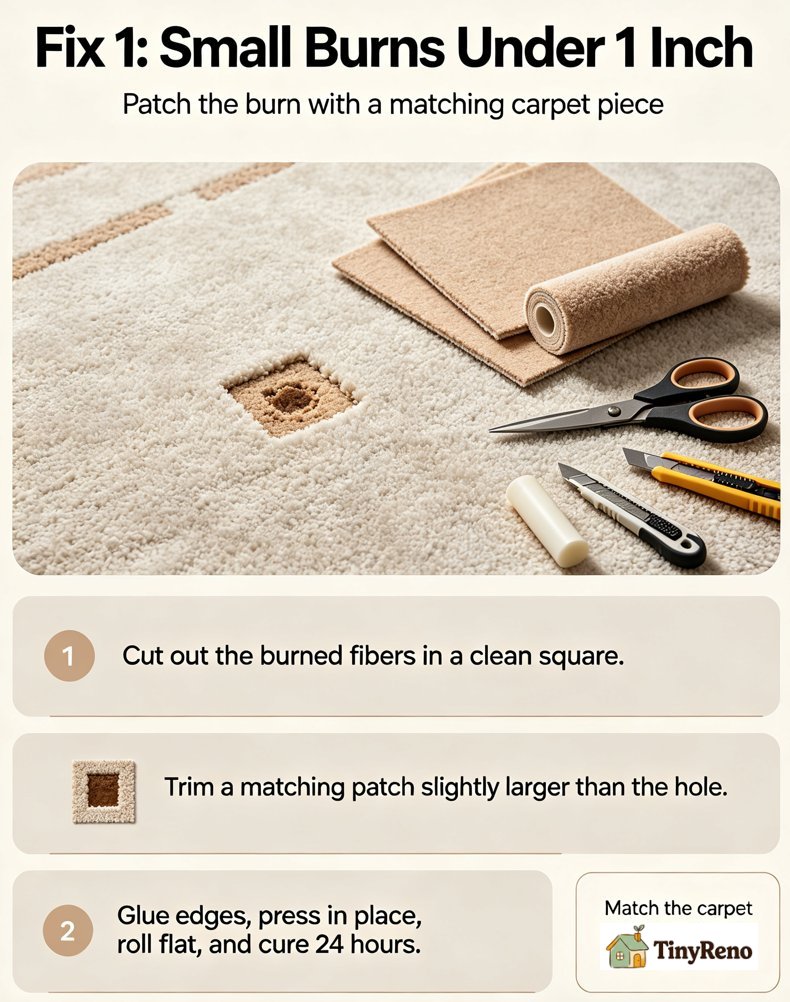
Fix 1: Small Burns (Under 1 Inch)
This is the most common carpet damage in rentals, usually from a hot pan dropped in the kitchen or a curling iron that slipped. The fix uses the carpet piece you sourced in Step 2.
What you need:
- Matching carpet piece (2x2 inches, larger than the burn)
- Sharp scissors or a utility knife
- Carpet adhesive (a small tube, $5-8)
- Carpet seam roller (or a hard plastic edge to press the patch flat)
The fix: Use the scissors to carefully cut out the burned fibers, leaving a clean square or rectangular hole. Cut your matching carpet piece to the exact same shape, slightly larger than the hole (about 1/4 inch extra on each side). Apply carpet adhesive to the edges of the hole in the carpet and the back of your patch piece. Press the patch into the hole, matching the carpet grain direction as closely as possible. Use the seam roller to blend the patch edges into the surrounding carpet.
Let the adhesive cure 24 hours before walking on the area. The patch will be visible up close but nearly invisible from standing height if you matched the grain direction well.
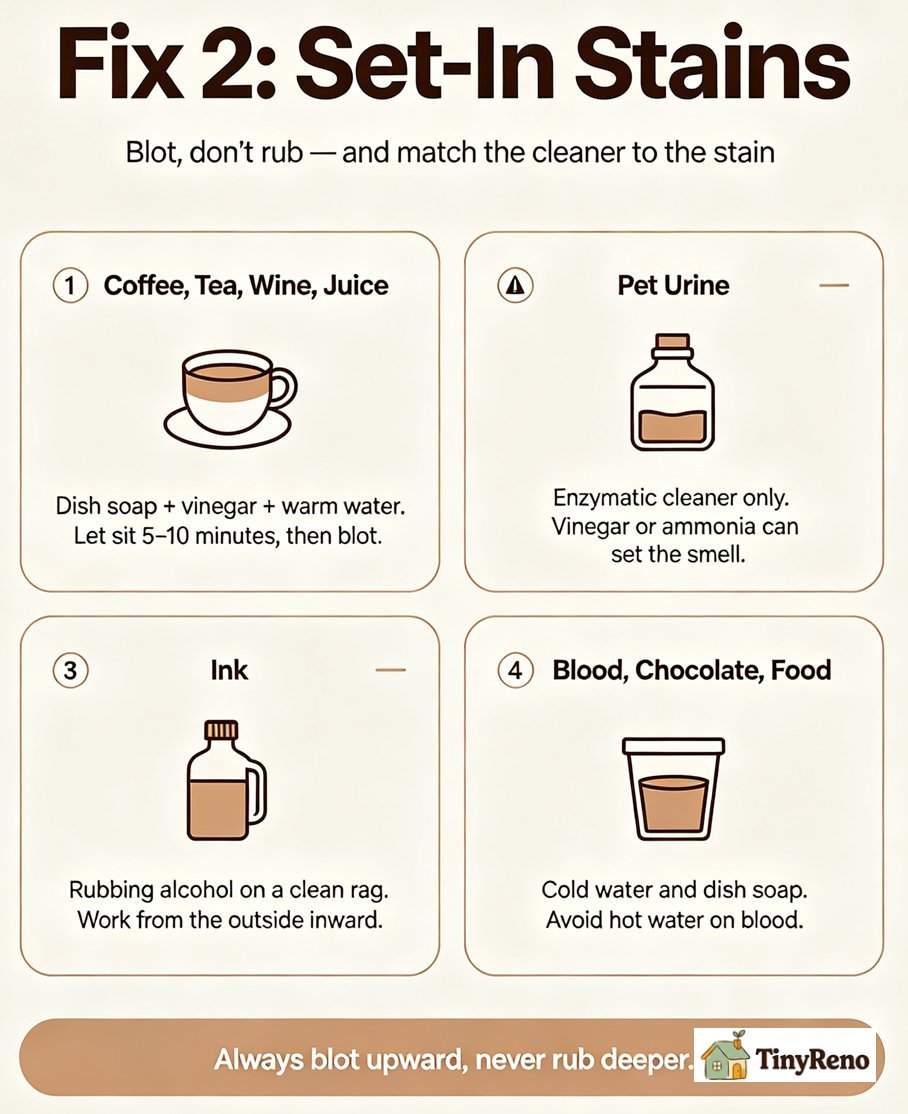
Fix 2: Set-In Stains
Stains are usually renter-fixable IF you use the right product for the stain type. The wrong cleaner can set a stain permanently, so identify what caused the stain first:
Coffee, tea, wine, juice: Mix 1 tablespoon dish soap (Dawn or similar) with 1 cup white vinegar and 2 cups warm water. Apply to the stain, let sit 5-10 minutes, blot (don't rub) with a clean rag. Repeat until the stain lifts. Rinse with plain water and blot dry.
Pet urine: Use an enzymatic cleaner (Nature's Miracle or similar, $8-12). These break down the uric acid that causes the smell and the yellow stain. Apply generously, let sit 15 minutes, blot. Repeat. Don't use vinegar or ammonia on pet urine — it sets the stain and makes the smell worse.
Ink: Rubbing alcohol on a clean rag, blotted onto the stain (don't pour directly). Work from the outside of the stain inward to prevent spreading. Repeat with a clean section of rag until the ink stops transferring.
Blood, chocolate, food: Cold water and dish soap, blotted. Avoid hot water on blood — it sets the protein.
For any stain, the key is to blot, not rub. Rubbing pushes the stain deeper into the carpet fibers and spreads it. Blotting lifts the stain up and out.
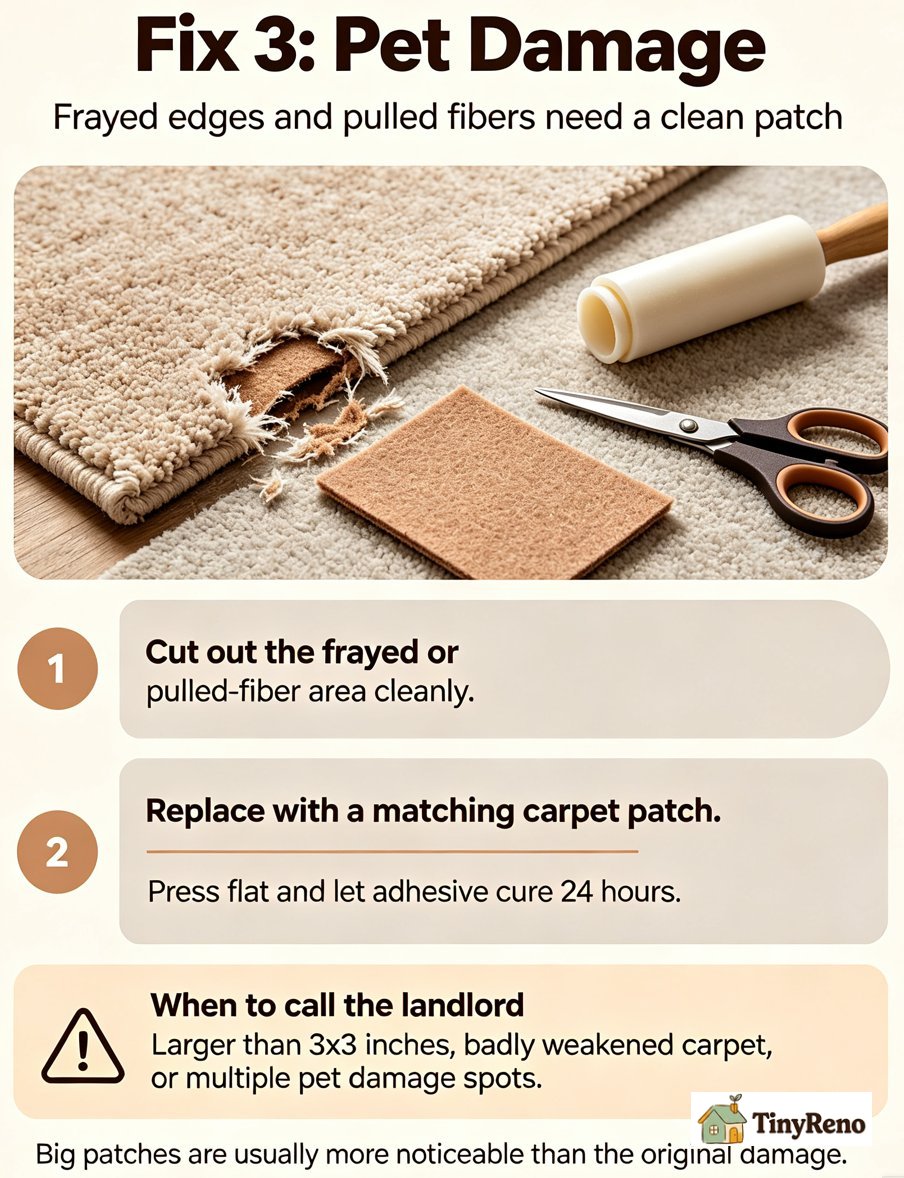
Fix 3: Pet Damage (Chewing or Scratching)
Pet damage is usually a frayed edge or a small area where fibers have been pulled out. The fix is the same as for small burns: cut out the damaged area, replace with a matching patch.
The difference from burn repair: pet damage often has a larger affected area and the underlying carpet may be weakened. If the patch area is larger than 3x3 inches, the patch will be visible from standing height and may be more noticeable than the original damage. For larger pet damage, call the landlord — most pet owners end up paying for carpet replacement anyway, and DIY patches that big usually look worse than the original damage.
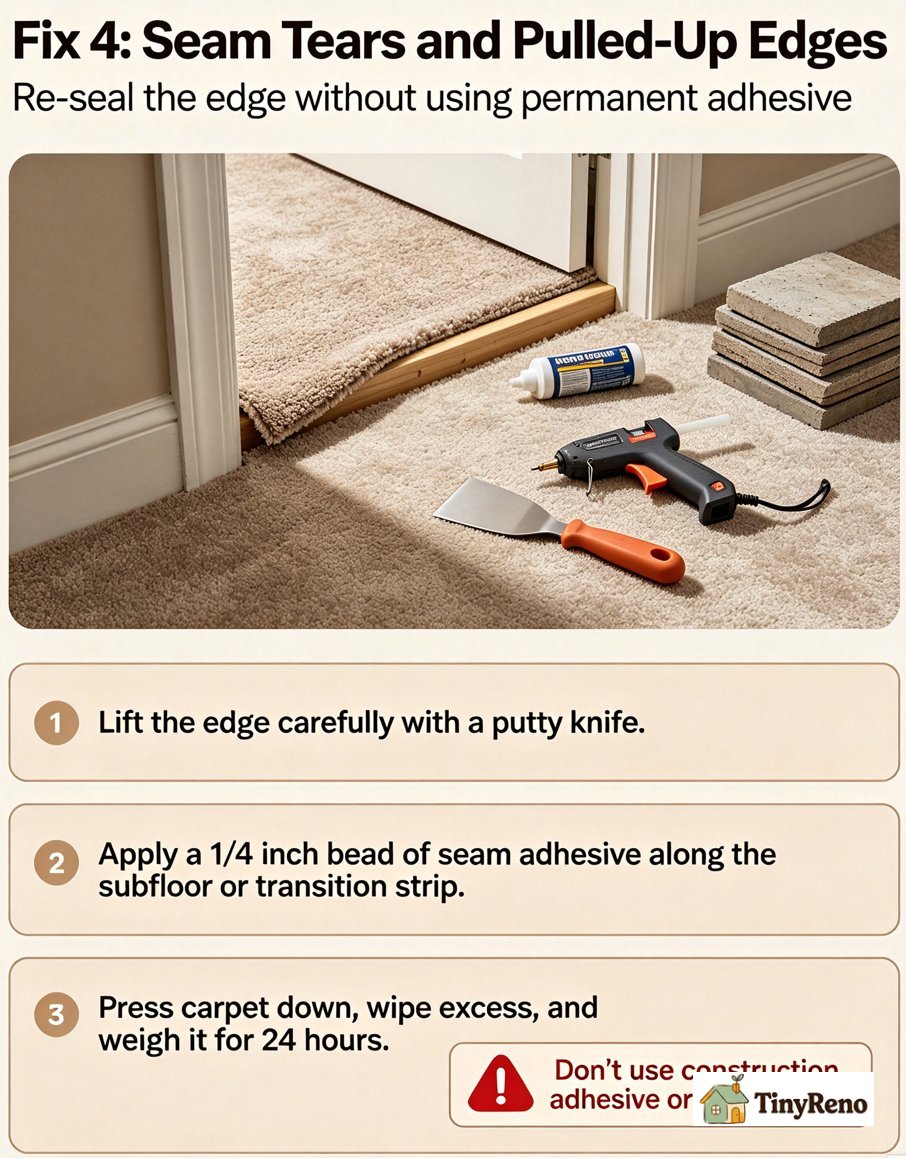
Fix 4: Seam Tears and Pulled-Up Edges
Carpet that's pulling away from a transition strip or doorway usually needs carpet seam adhesive re-applied. The carpet itself is usually fine — it's just the bond to the subfloor or transition that failed.
What you need:
- Carpet seam adhesive ($8-12)
- Caulk gun (or the tube comes with a built-in applicator)
- Heavy object to weigh the carpet down while it cures (a stack of books works)
- Putty knife
The fix: Lift the carpet edge carefully with the putty knife. Apply a 1/4 inch bead of seam adhesive along the subfloor or transition strip. Press the carpet back into place immediately. Wipe excess adhesive with a damp rag. Place the heavy object on top and let cure 24 hours before walking on it.
Don't use regular construction adhesive or super glue — those will permanently bond the carpet to the floor and make any future repair impossible.
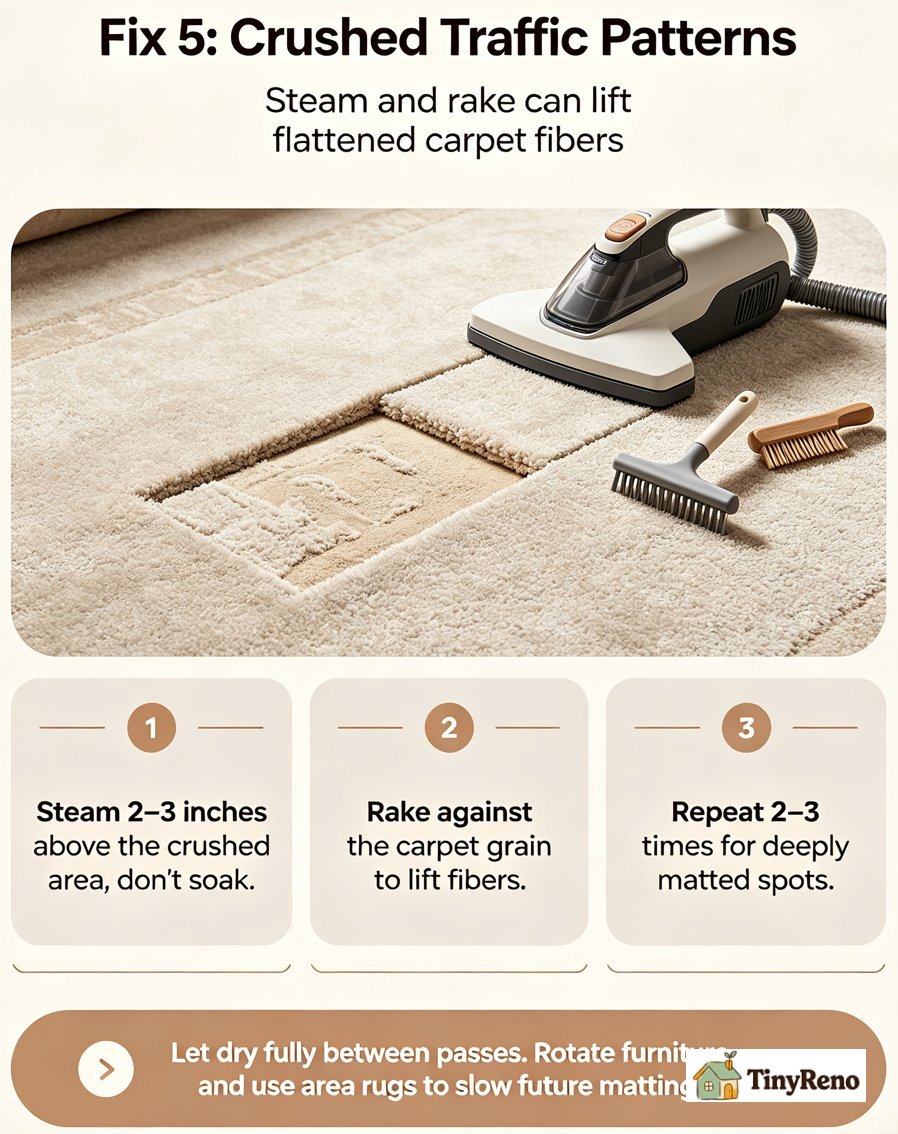
Fix 5: Crushed Traffic Patterns
Crushed carpet is not actual damage — the fibers are flattened but not broken. The fix is steam and a carpet rake:
- Steam: Hold a clothing steamer or carpet steamer 2-3 inches above the crushed area. The steam relaxes the fibers. Don't soak the carpet — just steam until the fibers start to lift.
- Rake: Use a carpet rake (about $10, looks like a plastic comb for carpet) and rake against the grain of the carpet. The fibers will start to stand up.
- Repeat: Steam and rake 2-3 times for deeply matted areas. Let dry fully between passes.
The fix isn't permanent — traffic patterns will re-form in 6-12 months in the same spots. To slow it down, rotate furniture occasionally and use area rugs in the highest-traffic paths.
When to Skip DIY and Call the Landlord
Three situations where carpet damage goes beyond renter scope:
- The damage covers more than 1 square foot — at that size, the patch or cleaning becomes more visible than the original damage. A professional carpet restorer can sometimes save it, but most landlords will replace the carpet at this scale.
- Water damage covering more than a few square feet — usually means a leak from above or a flood. The padding underneath is likely saturated and will grow mold within days. The landlord needs to pull up the carpet and replace the padding.
- Widespread pet staining (multiple rooms or more than 10% of one room) — at that scale, the odor is in the padding and the subfloor, not just the carpet fibers. Professional cleaning or replacement is the only real fix.
The carpet patch I did in the 2019 bedroom using a piece from the back of the hallway closet? My landlord walked past it at move-out and didn't notice. The vinegar-soak I did for a 12-hour-old red wine spill in 2017? Invisible at move-out, 18 months later. The baking soda scrub I did for a coffee stain in 2015? Visible at move-out, cost $80 of my deposit. The hydrogen peroxide for a pet stain in 2021? Made it worse, then cost $120 for a professional to redo. The pattern: fast action on fresh stains with the right product beats every internet-clever workaround.
For everything else — the small burn from the curling iron, the wine stain from dinner, the seam that's pulling up by the door, the traffic pattern by the bed — the 5 fixes above get it done with $5-20 in materials and 30-90 minutes per spot. None of the patches I've done this way have been visible to landlords at move-out inspection, and most held up for years.
The key is to identify the damage type correctly in Step 1 and use the right product or method for that type. A stain cleaned with the wrong product can become permanent in 30 minutes — but a stain cleaned with the right product usually comes out 90-100% if you get to it within a week or two. The 3-step pre-flight check is the difference between a fix and a permanent mark on your deposit.
Replacing tile floor guide covers the related fix for when the carpet is beyond repair and the underlying floor is the actual issue — same damage-assessment logic, different material.
Mold on sheetrock cleanup guide covers the related fix when carpet water damage has spread to the wall — same mold-prevention logic, different material.


Discussion (0)
Sign in to join the discussion