

Wondering, can you paint kitchen countertops to refresh stained, cracked laminate counters in a rental? My first apartment featured an aged yellow laminate counter covered in stove burns, sink water marks, and a cracked corner my landlord dismissed as “character.”
I spent three weekends testing five affordable DIY countertop cover methods to update the ugly surface without full counter replacement. Some cheap fixes bubbled and peeled within weeks, one held strong for nine months, and two wasted my budget entirely.
Below I rank all five renter-safe solutions—including exactly how to paint kitchen countertops correctly—sorted by total material cost, long-term durability, and whether each hack will cost you your security deposit at move-out. If your landlord rejects brand-new countertops, these reversible DIY upgrades refresh your kitchen with zero permanent damage. None of them are perfect. All of them beat looking at the same yellow counter every morning.
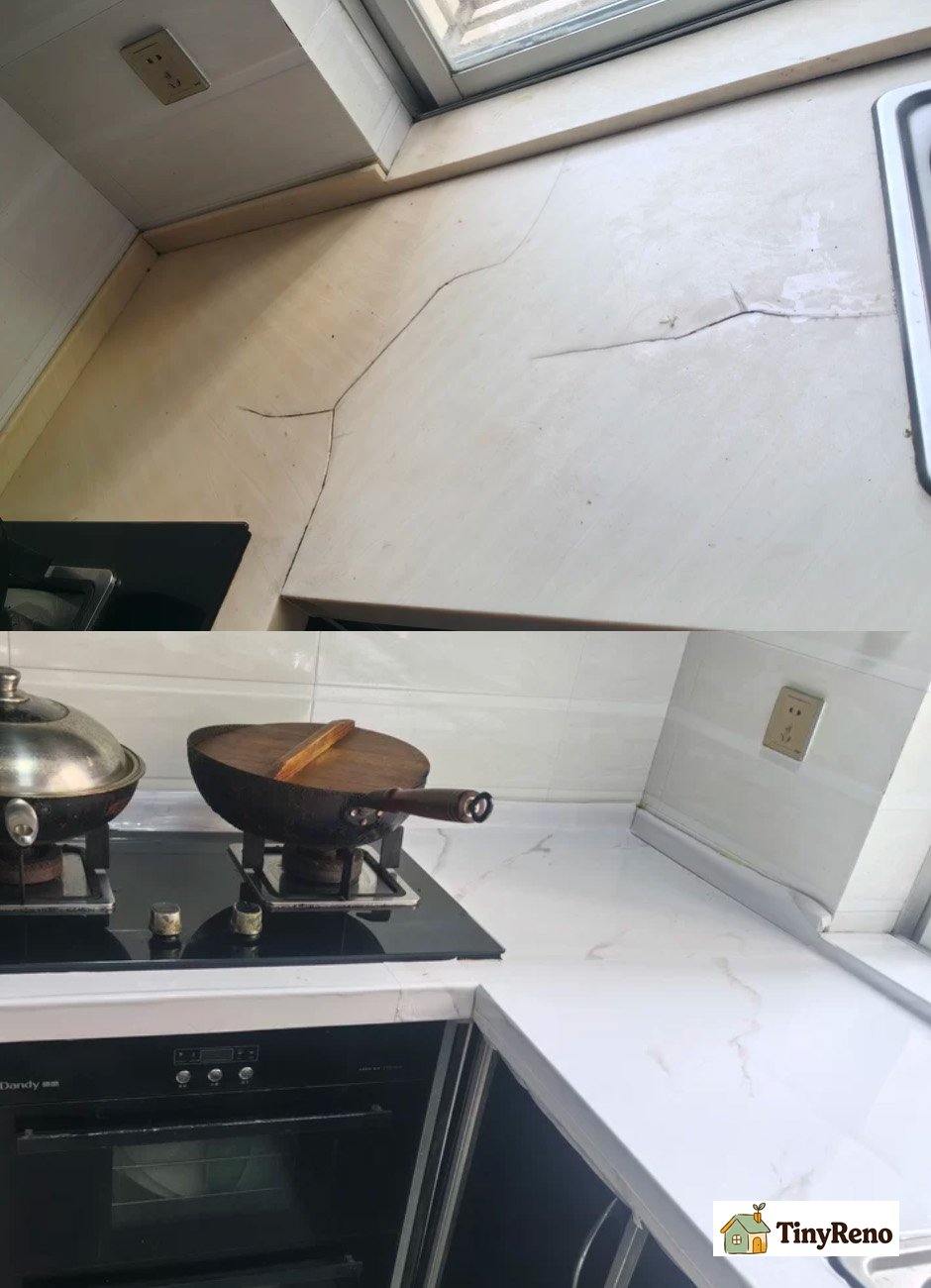
Option 1: Peel-and-stick vinyl tile
Self-adhesive vinyl tile is what most people try first, because it is what shows up when you search "countertop cover" and the first five results are all sponsored ads for the same brand. The honest version: it works, it costs about sixty dollars for a small kitchen, and it holds up for about six to nine months if you do not put anything hot on it. The downside is the seams. Vinyl tile comes in twelve-inch squares. A standard rental kitchen counter needs six to ten squares. Every seam is a place where water can get under the tile and lift the corner. The trick that holds is to seal every seam with a thin bead of clear silicone caulk, the same way you would seal a bathtub. Without the caulk, the corners lift within weeks.
What it costs: sixty to ninety dollars for a small kitchen, plus a tube of caulk.
What happens at move-out: pull the tiles up. There will be adhesive residue. Wipe it off with Goo Gone and a soft cloth. The counter underneath is unchanged. This is the option I used on my second kitchen, and it held up for nine months until the day I moved.
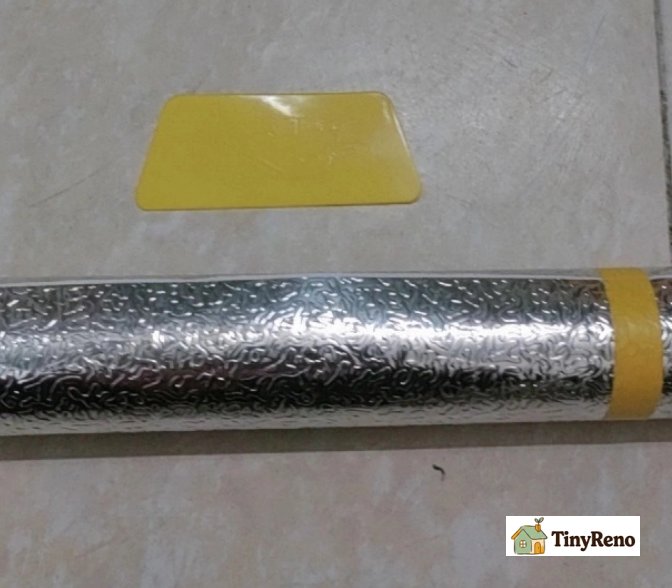
Option 2: Contact paper
Contact paper is the cheapest option and the one with the worst reputation. The reputation is mostly deserved for glossy contact paper, which shows every fingerprint and every water spot the moment you touch it. Matte contact paper, the kind that is sold as "shelf liner" in the kitchen aisle, is a different story. It holds up about as well as vinyl tile for about a third of the cost. The trade-off is that it looks less like real stone or wood, and more like contact paper.
If you go this route, the single most important thing is to pull the sink before you stick anything down. Most people run the contact paper right up to the sink edge. Within a week, water gets under the paper at the seam and the paper bubbles. Disconnect the water supply lines, loosen the sink clips, and slide the paper an inch or two under the sink lip. It adds an hour to the job. It is the only reason my contact paper counter lasted longer than a month.
What it costs: twenty-five to fifty dollars for a small kitchen, plus a utility knife with fresh blades.
What happens at move-out: peel the paper up. There may be a faint adhesive shadow that wipes off with Goo Gone. The counter underneath is unchanged. If your landlord is the type who notices everything, expect to spend thirty minutes cleaning the residue.
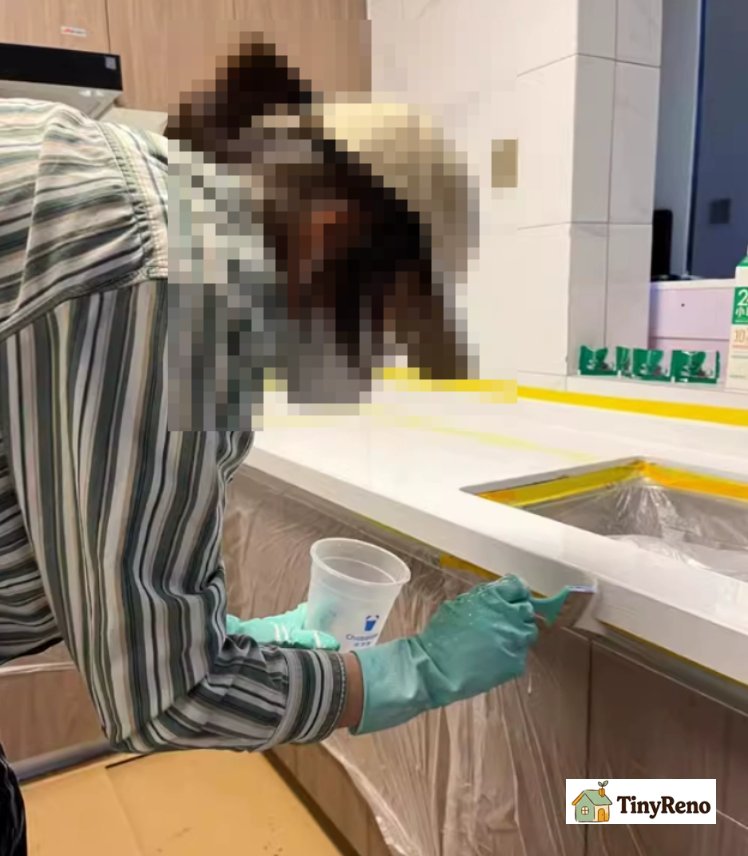
Option 3: Painted countertop with bonding primer
This is the option that looks the most expensive when it is done well, and the most embarrassing when it is done badly. The technique is to sand the existing laminate just enough to kill the shine, prime with a bonding primer made for hard non-porous surfaces, and paint with two coats of cabinet paint or chalk paint, followed by two coats of water-based polyurethane. The total cost is about seventy dollars in materials. The total time is a full weekend, mostly waiting for coats to cure. Twelve hours between every coat is the rule that most guides skip. Skipping it is why most painted counters peel in a strip when you bump them with a vacuum.
The catch is that the paint job is permanent. You cannot peel it off the way you can peel off vinyl tile or contact paper. If your landlord is the type who notices paint on a counter they did not approve, this is the option that costs you part of your deposit. If your landlord is the type who does not look at the counter that closely, this is the option that looks like a real renovation for seventy dollars.
What it costs: seventy to ninety dollars, including all primer, paint, and topcoat.
What happens at move-out: paint is permanent. If you do not disclose it upfront, you risk losing part of your deposit. If you do disclose it upfront, the landlord may ask you to repaint the counter back to the original color, which is impossible without replacing the laminate. This is the only option on this list that is not freely reversible.
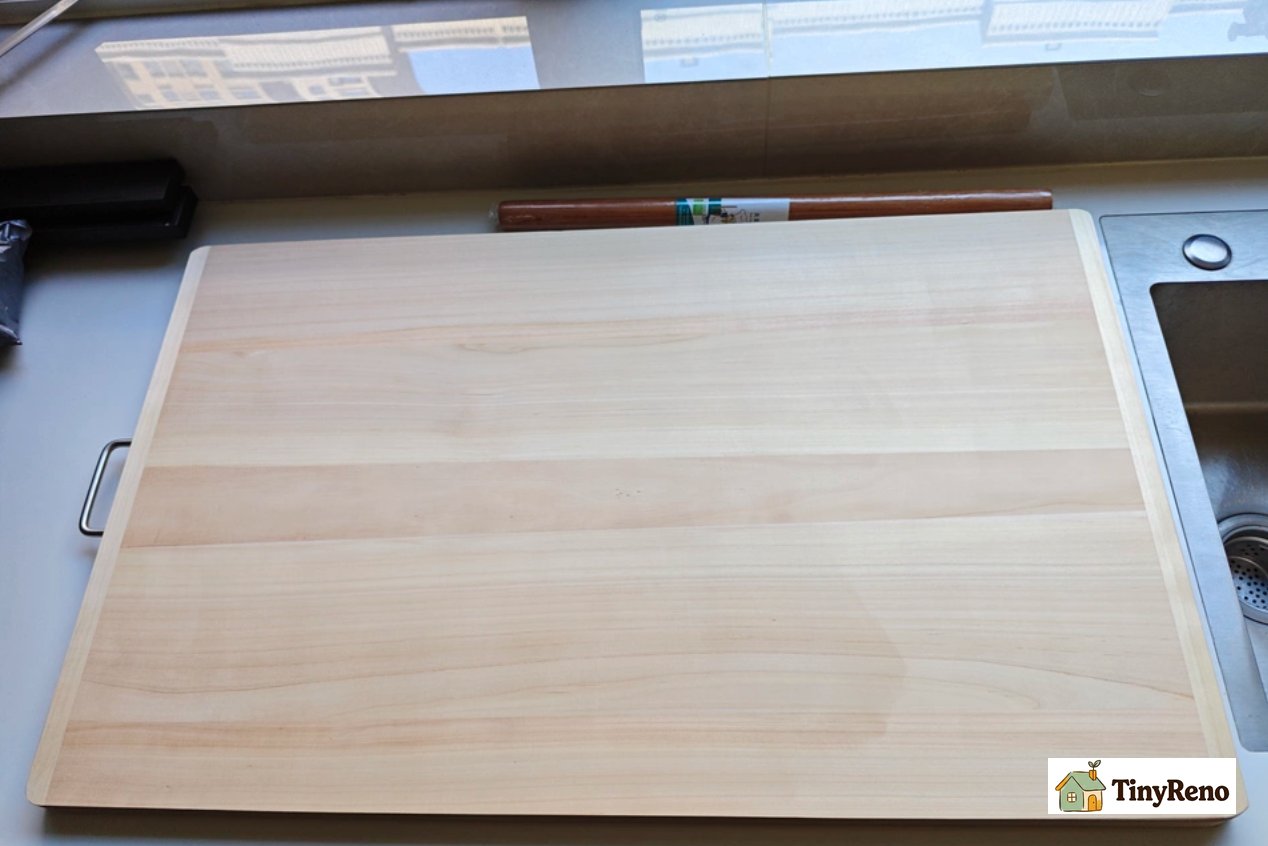
Option 4: Wood cutting board overlay
This is the option that nobody talks about in the renter blogs but that a surprising number of older renters actually do. You buy two or three large wood cutting boards that fit the counter, and you just leave them on top of the counter. You cut on them. You serve on them. You move them when you need to clean underneath. The original counter is fully visible the moment you pick up the boards, so there is nothing to undo at move-out.
The version that works is hardwood, not bamboo or plastic. Bamboo warps within a month under a dripping sink. Plastic boards slide around when you set a hot pan on them. A hardwood cutting board, oiled once a month with food-safe mineral oil, will outlast your lease and then some. The version that does not work is the wood-stained "butcher block contact paper" that some guides recommend. Contact paper is contact paper. A real wood board is a real wood board. They are not the same product.
What it costs: forty to eighty dollars for two or three boards large enough to cover a small counter.
What happens at move-out: pick up the boards. Wipe the counter underneath. There is nothing to undo because the counter is exactly the way it was when you moved in. This is the cleanest option for security deposit purposes.
Option 5: Large format laminate sheet
This is the option that I tried and that failed within a month, so I am putting it last with a warning. Large format laminate sheet is the same material the original counter is made of, sold as a big thin sheet that you glue down over the existing counter. The idea is that you end up with a counter that looks exactly like a real laminate counter, because it is one. The reality is that the glue does not hold on a surface that has been cleaned with anything that leaves a residue. I cleaned my counter with a degreaser, then with denatured alcohol, then I glued down the new sheet. Within three weeks, the glue released in one corner, and the new sheet started to lift like a piece of tape.
This is the option I most want to recommend, because the result looks the most professional when it works. The problem is that it requires a near-perfect substrate and a near-perfect glue job, neither of which I had the first time I tried it. If you go this route, spend the extra hour on prep. Wipe the counter with acetone after the denatured alcohol. Use a contact cement rated for laminate, not the generic construction adhesive I used. Clamp the edges with painter's tape for twelve hours while the glue cures. And budget an extra sheet for the first attempt, because you will probably mess it up.
What it costs: seventy to one hundred and twenty dollars for a small kitchen, plus adhesive and the second sheet.
What happens at move-out: if the glue job held, the new sheet is on the counter permanently, the same way Option 3 paint is. If the glue job failed partway through your lease, you are dealing with a lifting corner that your landlord will absolutely notice.
What I would actually do again
If I had to do this over again, knowing what I know now, I would go with Option 4 wood cutting boards for the part of the counter by the sink, where water is the issue, and Option 1 vinyl tile for the rest of the counter, where water is not the issue. The boards are reversible. The vinyl tile is removable. The seam between the two is hidden by the sink edge. Total cost is about one hundred and twenty dollars. Total time is one Saturday. Total risk at move-out is near zero.
The lesson I keep relearning every time I redo a rental counter is the same lesson: the cheapest option that you can remove in under an hour is almost always the right option. The expensive option that looks the most professional is almost always the option that costs you part of your deposit. Your landlord is not going to notice that you covered an ugly counter. Your landlord is going to notice that you glued a new sheet of laminate to the counter they own.


Discussion (0)
Sign in to join the discussion