

I bought a $5 bottle of wood glue to fix a wobbly chair leg. I squeezed some on, jammed the pieces back together, and sat on the chair two hours later. It broke open the next day, with the glue still tacky inside the joint.
That was the first of four times I "fixed" something with wood glue and watched it fail again within a week. The bottle sat in my closet for a month before I figured out what I was doing wrong.
If you’re searching for the best wood glue for furniture repair and tired of weak, broken glue joints, the secret isn’t pricier adhesive—it’s proper clamping and full cure time. The fix wasn’t a better glue. It was a clamp. A $5 bag of rubber bands from the dollar store and 24 hours of patience.
If you've had a wood glue repair fail on you, this is for you. Here's the actual step that makes it work, plus the four mistakes that make it fail.
The $5 Bottle That Saved Me $300 in Furniture
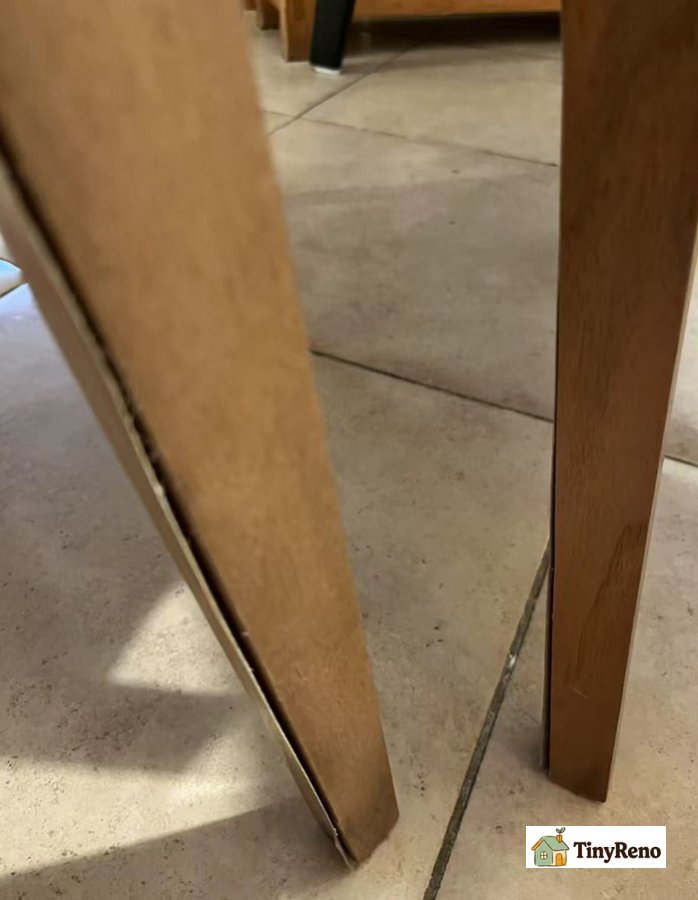
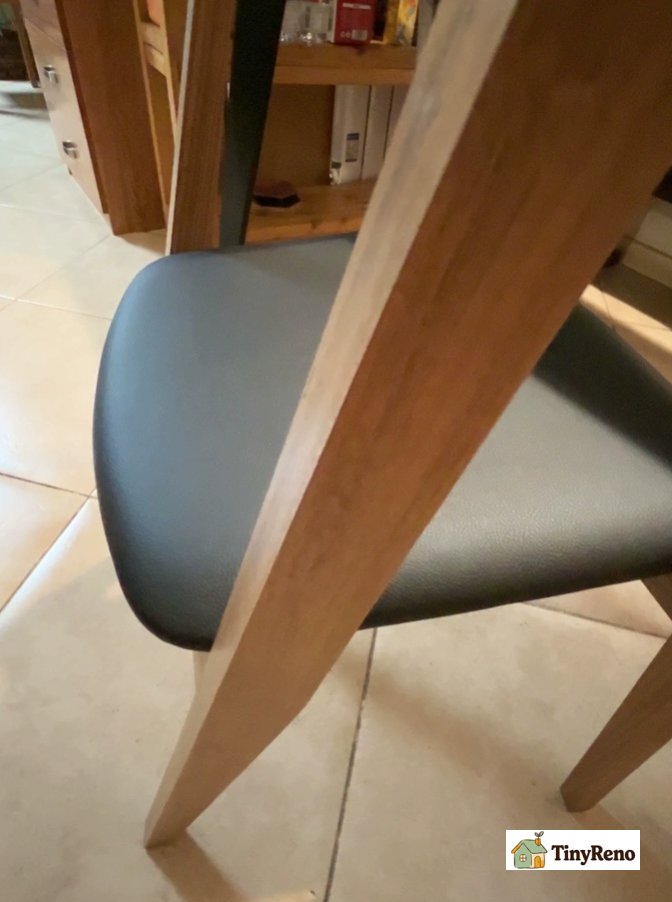
Last winter, one of the legs of my dining chair started to wobble.. A handyman service quoted $80 just to come out, plus materials. I bought a 200g bottle of PVA wood glue for $5, a bag of rubber bands for $1, and fixed it in one evening. The repair held for two years through one move and one landlord inspection.
Wood glue is one of the most underrated renter tools. The cheap white stuff will repair most wooden furniture joints that have come loose: chair legs, table legs, drawer corners, bed slats, cabinet doors. It's forgiving, paintable, and the bottle lasts years.
The problem is that wood glue doesn't work the way most people expect. It's not like super glue that bonds in seconds. The bond takes 24 hours to fully form. If you skip that, the repair fails. Most negative wood glue reviews are complaints about operator error.
How Wood Glue Actually Works (30-Second Version)
PVA wood glue is water-based with tiny polymer particles suspended in it. When you spread it on wood and press the pieces together, the water soaks into the wood fibers and carries the polymer particles deep into the grain. As the water evaporates over the next 24 hours, the polymers lock into a rigid plastic mesh that grips the wood fibers mechanically.
Three things determine whether the bond holds:
- Clamping pressure — the joint must stay pressed together while the glue cures. Air gaps mean no bond.
- Cure time — surface feels dry in 30 minutes, but the polymers don't reach full strength until 24 hours later.
- Contact — the two surfaces must fit together with no dust, old glue, or finish in the way.
If any of those three are wrong, the glue joint is weak. The bottle might as well be full of water.
4 Things That Make the Repair Hold
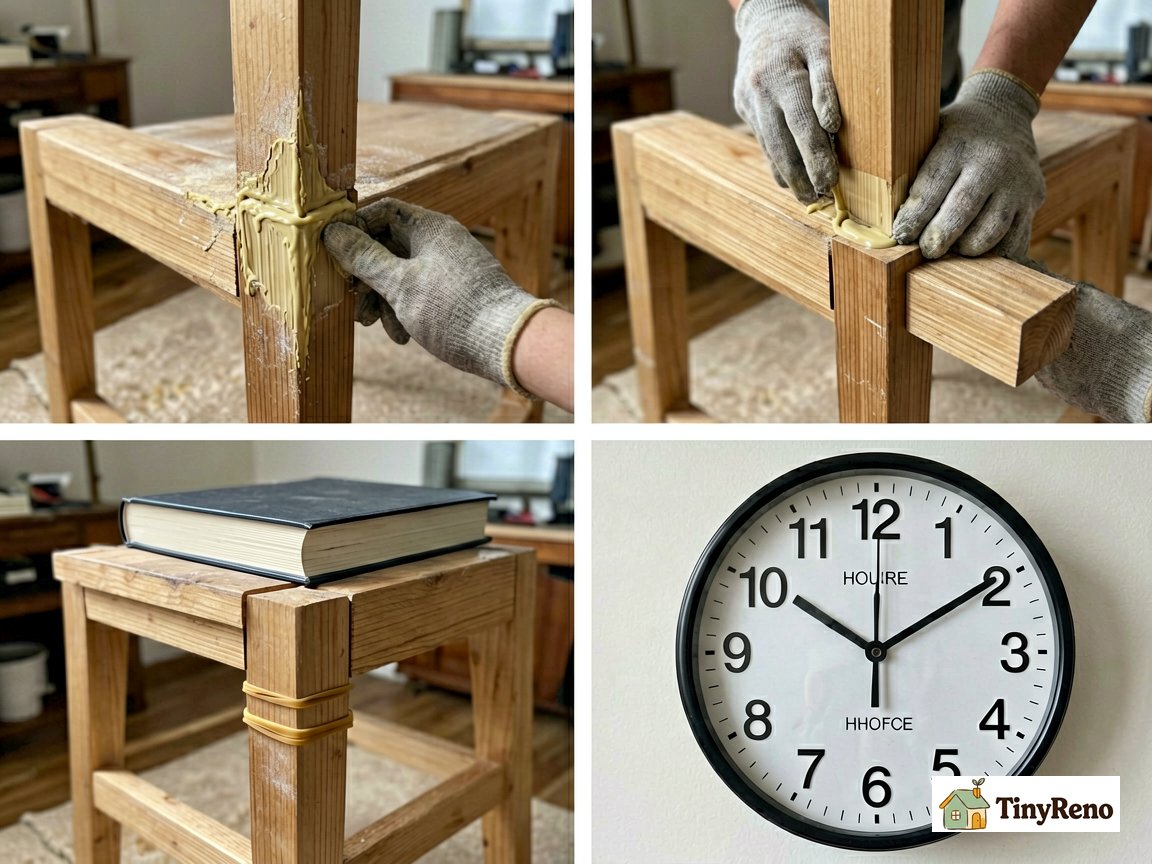
1. The joint has to be CLEAN. Old glue, sawdust, polyurethane finish, oil from your hands — all of these prevent the water in PVA from soaking into the wood. Wipe both surfaces with a damp cloth, let them dry, then rough up glossy areas with 120-grit sandpaper.
2. The fit has to be tight. Wood glue works by soaking into fibers and bonding them. If the joint has a visible gap wider than a credit card, glue alone won't fill it. Either sand down the high spots, or accept that you need a wood filler first. For wobbly joints, check that the original tenon or dowel isn't worn down — a loose joint means the wood itself has shrunk and may need reinforcement.
3. Apply glue to BOTH surfaces. Not just one. The wood needs glue on both sides so water can soak in from both directions and the polymer can grab both fiber networks.
4. Clamp it for at least 8 hours. 24 is better. The pressure has to be sustained. This is the step most people skip. More on this below.
The Clamp Trick (For When You Don't Own a Clamp)
Woodworking tutorials always say "clamp it." What they don't tell renters is that nobody owns wood clamps. A four-pack of bar clamps costs $25.
Here's what actually works, ranked by ease:
Rubber bands + heavy books. Wrap 4-6 rubber bands around the joint. Stack books or a brick on top. Works for chair legs, drawer corners, anything horizontal.
Painter's tape, wrapped tight. Wrap blue painter's tape around it like a bandage. Pull tight as you go, apply 4-5 layers. Surprisingly good grip on smooth surfaces.
Lean the furniture against a wall. For chair legs and table legs, turn the piece upside down and lean it against a wall so gravity holds the joint closed.
Wrap with plastic wrap and use a ratchet strap. Wrap the repair area in plastic wrap to keep glue from sticking, then cinch a ratchet strap around it.
For drawer corners and cabinet joints: put a heavy object inside the drawer to keep pressure on the corner joints while the glue dries.
The pressure doesn't need to be extreme. What it needs to be is sustained. A chair leg held together with rubber bands and a brick overnight is exactly as strong as one held in a $25 bar clamp.
3 Times My Repair Failed (So You Don't Repeat It)
Failure 1: I didn't clamp at all. First chair leg. I squeezed glue in the joint, pressed the pieces together for 30 seconds, set the chair down. Two hours later I sat on it. The leg rotated sideways. The glue had skinned over on the outside but stayed wet inside, with no pressure to push the surfaces together.
Failure 2: I clamped but only for 2 hours. Wrapped the joint in rubber bands, left it overnight. By morning, maybe 9 hours later, the glue felt dry. I removed the bands and used the chair. Within a week the joint loosened again. PVA reaches handling strength in 8 hours, but full bond strength at 24. The polymer mesh keeps cross-linking for that full window.
Failure 3: I glued a particleboard joint. MDF cabinet door with a loose hinge screw. I figured glue would tighten things up. It didn't. The MDF had no wood fiber for the glue to grab — just compressed sawdust and resin. The glue skinned over the surface but had nothing to bond to underneath. Within a month the screw pulled out again. Particleboard, MDF, and similar engineered woods don't take standard wood glue.
The pattern in all three: I skipped or shortened one of the three factors (pressure, time, or fit), and the bond was weak.
When Wood Glue Won't Work
Some furniture can't be saved with a bottle of glue:
- Particleboard, MDF, or engineered wood edges. No grain for the glue to grab. Use wood filler or a mechanical fastener. - Joints that have shrunk or cracked. If a tenon is loose by more than a credit card's width, you need to build the joint back up with a slip of wood, a dowel, or epoxy. - Anything that holds more than 10 lbs hanging off it. Wood glue has good shear strength but bad peel strength. A shelf that's held to a wall with glue-only will eventually peel off. Use brackets. - Furniture that's still wet or actively rotting. Fix the moisture problem first.
What About All Those "It Didn't Stick" Reviews?
Search any wood glue listing and you'll see a chorus of one-star reviews: "didn't stick," "fell apart," "useless." Almost all of them come from one of these mistakes:
- They didn't clamp it - They clamped for under 4 hours - They tried to glue MDF, particleboard, or veneer edge - They applied glue to dirty or oily surfaces - They loaded the joint before 24 hours
The glue isn't the variable. The operator is.
If you've been burned by wood glue before, the cheapest experiment is to try a 24-hour clamped repair on a piece of furniture you're willing to fail on. A drawer corner. A chair rung. Something with solid wood on both sides. Follow the steps exactly — clean, dry-fit, both surfaces, sustained pressure for a full day. If that doesn't hold, you have a material problem, not a glue problem.
My Repair Kit (For a Renter Who Doesn't Own a Clamp)
A complete kit costs less than $10:
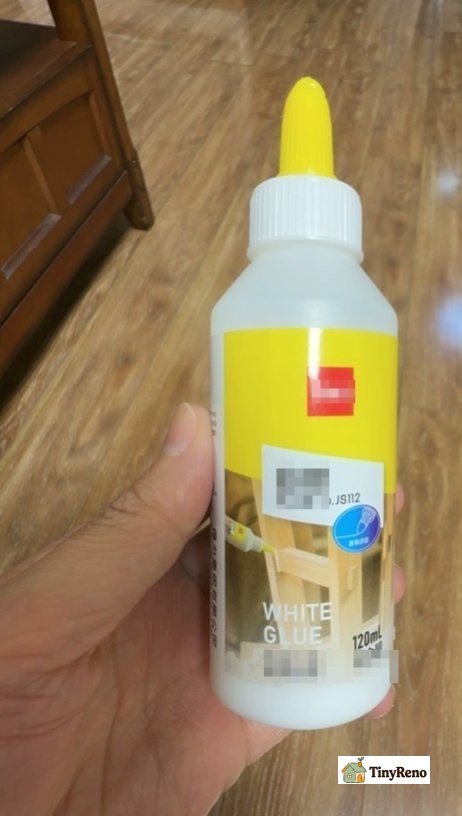
- One 200g bottle of PVA white wood glue (the cheap stuff at any hardware store) - A bag of rubber bands (assorted sizes) - A roll of blue painter's tape - 120-grit sandpaper (for roughing up glossy surfaces) - A damp rag and a dry rag - Plastic wrap (for keeping glue off ratchet straps)
You don't need clamps. You don't need a workbench. You don't need to be handy. You need patience, mostly. The glue does the actual work, but only if you give it 24 hours and keep the joint still.
FAQ
How long does wood glue take to fully cure before you can use the chair?
24 hours for full cure. The glue feels dry to the touch in 30 minutes. It reaches handling strength (you can remove clamps) in about 8 hours. But the polymer network keeps forming for a full 24 hours, and the joint won't reach its final strength until then. Plan your repair so the piece isn't needed for at least one full day.
Can wood glue hold MDF or particle board furniture?
Limited. MDF and particleboard have no wood fiber for the glue to grip. The glue will skin over the surface but bond poorly underneath. For small dings or holes in MDF, use wood filler instead. For loose joints in MDF furniture, your best bet is a mechanical fix: a bigger screw, a wooden dowel with glue, or a screw insert designed for MDF. Wood glue alone won't save a wobbling MDF bookshelf.
Do I need a clamp or can I just press it together by hand?
Hand pressure isn't enough. The joint needs sustained pressure for 8-24 hours, not the squeeze-and-let-go of a hand grip. Without sustained pressure, microscopic gaps remain in the joint and the bond is weak. Substitute for clamps: rubber bands + heavy books, painter's tape wrapped tight, leaning the piece against a wall, or a ratchet strap. The pressure just has to be sustained, not extreme.
How I Glue a Chair Leg (The Actual Steps)
Step 1: Disassemble the joint. Pull the leg out of its socket. Disassembly gives clean access to all surfaces and better results than trying to glue in place.
Step 2: Scrape off the old glue. Use a flat screwdriver, chisel, or sandpaper to remove all residue from both surfaces. You're aiming for bare wood on both contact faces.
Step 3: Dry-fit the joint. Push the pieces together without glue. They should seat fully and solidly. A loose fit means glue alone won't fix it.
Step 4: Apply glue to both surfaces. Spread a thin even film on both contact faces with a finger or a small stick. Wipe off excess with a damp rag before assembly — squeezed-out glue that cures on the wood surface is hard to sand off later.
Step 5: Reassemble and clamp for 24 hours. Push the pieces together firmly. Wipe away squeezed-out glue. Apply rubber bands, painter's tape, or lean against a wall. Leave it alone for a full 24 hours. Don't test it early.
---
For chair legs with a wobble that's beyond what glue alone can fix — the wood has shrunk or the tenon is worn — wood filler paste is the next step before you glue it back in. And if you're touching up paint on the repair, my paint room order guide covers the prep so the paint sticks to the new glue line.


Discussion (0)
Sign in to join the discussion