

Last winter I repainted 4 different rooms for 4 different people over 4 weekends. Carpenter Mike did trim first, walls second. Renter Sara did walls first, trim second. My cousin Jen used a sprayer and painted both at once. My neighbor Carl painted both the same color and skipped the trim step entirely. All four rooms ended up looking fine. All four rooms had completely different orders.
So which is right? The honest answer is "it depends on what you're trying to do." But there's one rule that decides all four cases, and it's the same rule from the broader room painting order — every step is a safety net for the step above it. Once you see it, the trim-vs-walls question stops being a debate and starts being a 30-second decision.
The 4 Real Options for Trim and Walls
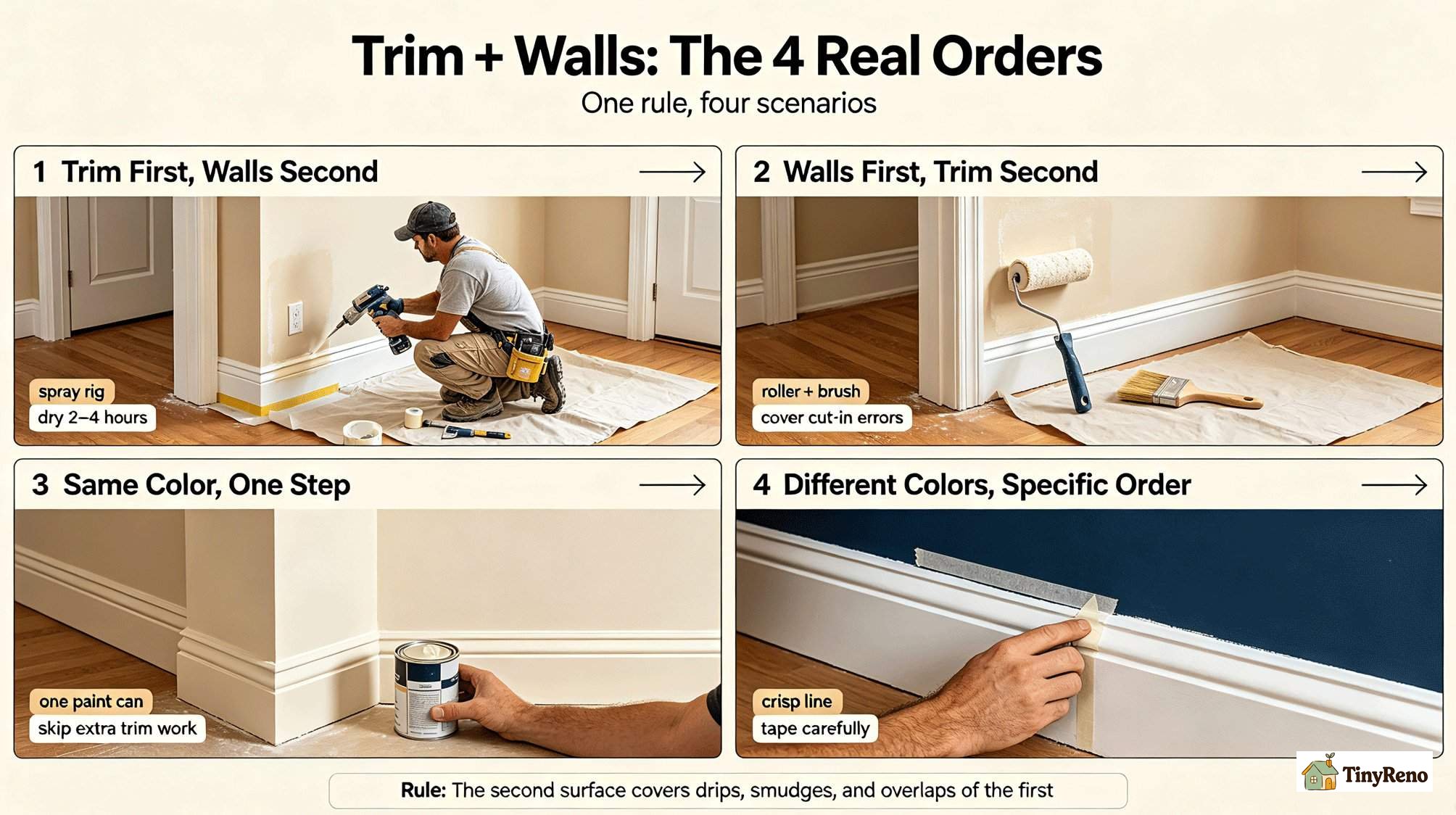
Six painting scenarios, one decision rule. Each cell shows a different trim + walls combination. The right order depends on which scenario you're in.
Most guides tell you there are 2 options: trim first or walls first. That's incomplete. There are 4, and the right one depends on whether your trim and walls are the same or different colors, what tool you're using, and whether you're willing to tape the trim off carefully.
Option 1: Trim first, walls second. This is the pro crew order with spray rigs. You spray the trim — windows, door frames, baseboards — then come back with the wall roller 2-4 hours later. The trim dries enough to handle without smudging, and the wall roller covers any overspray that drifted past the trim onto the wall.
Option 2: Walls first, trim second. This is the renter roller order. You cut in the wall edges (including where the wall meets the trim), roll the wall, then come back with a 2-inch angled brush and paint the trim last. The wall roller covers any brush errors, and the trim paint covers the wall-cut edge.
Option 3: Walls and trim same color, just one step. This is what I did in my last apartment because the original builder painted everything the same off-white. Cut in the wall-to-trim edge with wall paint, then paint the trim with the same wall paint, no second color needed. Saves 25 minutes and one brush.
Option 4: Trim and walls different colors, but in a specific order. This is the hardest case and the one most guides get wrong. The right order depends on which color is darker, which surface is harder to tape, and which surface you want to look crispest. The next two sections break this down.
When Walls First Wins
Walls first is the right choice for most renter projects. Three reasons it works better than trim first when you're using a roller and a brush.
1. Trim paint drips onto your wall if you go trim first. Semi-gloss trim paint, even when applied carefully, drops tiny drips onto the wall surface below. If the wall is already painted with a different color (matte or eggshell), those drips show up as glossy spots that don't blend in. You can see them in raking light. The fix is to sand each drip and spot-prime before the wall coat goes on — adds 30 minutes of work you'd skip if you'd just done the walls first.
2. Wall roller covers brush errors. When you cut in the wall-to-trim edge with a brush, the line is rarely perfect. Some sections are 1/8 inch onto the trim, some are 1/8 inch short of the trim. If you do walls first, these errors get covered when you paint the trim last. If you did trim first, those errors are visible forever — you can't fix brush errors on already-painted trim without repainting the trim.
3. You don't have to tape the trim. When walls are first, you can paint the trim freehand with a 2-inch angled brush. The brush overlaps the wall by 1/16 inch, and nobody sees it because the wall paint is already there to cover. When trim is first, you have to tape the wall-to-trim edge carefully, and tape pulls off paint if you wait too long. Freehand is faster and more forgiving on rentals.
When Trim First Wins
Trim first is the right choice in 3 specific cases. If none of these apply, default to walls first.
1. You're using a paint sprayer. Sprayers don't drip the way rollers do. The spray fan goes where you point it, and you can mask off the wall with one strip of tape and paper. In this case, trim first is faster because the trim gets the same smooth finish as the wall, and you don't have to cut in anything by hand. If you don't have a sprayer, this doesn't apply — skip to walls first.
2. The trim is brand new and unpainted. Bare wood trim needs primer first, then a topcoat. Primer drips less than topcoat, and you can spot-sand drips before the topcoat goes on. If you prime the trim first, let it dry, then do the walls, the topcoat on the trim is the only thing you have to cut in around. This actually saves time if the trim is large (crown molding, wainscoting) because the brushwork is heavy.
3. The trim is a different color from the wall AND you want a crisp color line. Some rooms have a 2-tone look where the wall color stops sharply at the trim — a white trim against a navy wall, for example. In this case, painting trim first lets you mask the trim with tape and roll the wall up to the edge. The result is sharper than freehand, which is harder to do when the wall is already painted (you'd have to tape the wall, which is riskier than taping trim).
The 1 Rule That Decides Anything
Whichever surface you paint first, the second surface covers the drips, smudges, and overlaps of the first.
Trim first? Wall paint covers the trim-paint drips. Walls first? Trim paint covers the wall-cut-in errors. Same color? There's no second surface, so just go with walls and skip the trim step entirely.
The rule is reverse-immutable: you should never paint a surface that, when it drips, falls onto a surface that's already painted in a different color. That's the whole reason "trim first" is risky for rollers — trim paint drips onto walls, and walls are already painted in a different color.
There are 4 cases. The rule sorts them out: same color (do walls, skip trim), different colors with sprayer (trim first), different colors with roller (walls first), brand new trim (prime trim first, then walls, then trim topcoat). All 4 cases are different. All 4 cases are correct under the rule.
3 Things Most Guides Skip
Reading painting articles on this question, I keep seeing the same 3 oversimplifications. Here's what most guides leave out.
"Always paint trim first." This is true for pros with sprayers. It's wrong for renters with rollers. The trim-first order exists because spray fans don't drip the way a brush does. For a renter cutting in with a 2-inch angled brush, trim-first means every brush load that runs off the trim onto the wall creates a visible glossy spot you have to sand off. The advice is right for a different tool than you have.
"Buy a special angled brush for trim." You don't need a 5-dollar angled sash brush for trim. A 2-dollar 2-inch angled brush from the Big Box store works just as well for most trim. The angled tip helps with mitred corners and inside corners, but for straight runs of baseboard, a flat brush works fine. Spend the extra money on the wall roller cover, not the trim brush.
"Mask the wall with tape before painting trim." If you do walls first, you don't need to mask anything. The wall paint is already there, and the trim brush overlaps the wall by 1/16 inch — nobody sees that overlap under normal light. Tape is for when you've painted trim first and need to roll the wall up to it without touching the trim. If you skip the trim-first step, you skip the tape.
FAQ
Is it OK to paint walls and trim the same color?
Yes — and it's the move most renters make. In older apartments, the original builder painted everything the same off-white, and matching that single color is the easiest way to get your deposit back. The downside is that the wall and trim blend into one surface, so any uneven patches in the wall show up more clearly. The upside is that you save 25 minutes of trim work and you only need one can of paint.
Should I paint trim before or after installing it?
Almost always after. Pre-painted trim (painted before installation) gets scratched during the install — nail holes, screw heads, corner chips. Touching those up after the trim is up is faster than masking the wall to roll paint on raw trim. If you're a renter, you're not installing trim anyway — you're painting the trim that's already there. After install, every time.
What color should I paint trim if I'm a renter?
Same color as the wall, or the same off-white the trim was originally. Changing the trim color is harder to undo than changing the wall color because trim is semi-gloss and the wall is matte — they need different primers if you want to switch back. Most landlords expect trim to stay whatever color it was. If the trim is yellowed from age, you can paint it white, but check the lease first.
The Pick-Your-Order Checklist
Before you paint, decide your order from this list:
- Trim and walls same color? Walls first, skip trim entirely.
- Using a paint sprayer? Trim first, then walls.
- Trim is brand new and unpainted? Prime trim first, walls, then trim topcoat.
- Different colors, using roller and brush? Walls first, trim last.
- Different colors, want a sharp color line? Trim first, mask with tape, then walls.
5 cases. 1 rule: whichever surface you paint first, the second surface covers the drips. If you're a renter with a roller and a brush, the answer is almost always walls first. If you want the full 7-step room painting order, that's a separate article — the trim step is step 6 in the larger sequence, and the tape removal rule from step 7 applies whether trim or walls came first.
For the small holes where the curtain rod pulled out the anchor, you don't need to repaint anything — just patch the anchor holes with super glue and skip the entire wall repaint. 5 minutes of work, zero paint, no deposit risk.


Discussion (0)
Sign in to join the discussion